
Need more Info?
3 Hour Private Game Drive in Pilanesberg National Park
ZAR 5,500
ZAR 5,500
1
Customizable Private Johannesburg Day Tour with Guide
ZAR 4,500
ZAR 4,500
1
Private Transfer Cradle of Humankind & Sterkfontein Caves Tour
ZAR 1,920.65
ZAR 1,920.65
1
No results available Reset filters?
Johannesburg is often the first place travellers see when they arrive in South Africa, but many leave without getting to know the city. They land at OR Tambo International Airport, spend a night at a hotel, and head straight to Kruger National Park or another safari destination.
That is understandable. Johannesburg can seem busy, spread out, and a little overwhelming when you first arrive. It is not always obvious where to go, which neighbourhoods to explore or how much time to allow.
Yet there is much more to Johannesburg than an airport and a convenient overnight stop.
This is the city where South Africa’s gold-mining history began, where some of the country’s most important political struggles unfolded, and where art, music, food and everyday life continue to shape modern South African culture.
You can spend the morning learning about apartheid history in Soweto, have lunch in a lively neighbourhood, and visit a museum or historic landmark in the afternoon.
For travellers planning a safari, Johannesburg also offers convenient access to Pilanesberg National Park and serves as a starting point for longer journeys to Kruger.
The key is knowing where to spend your time.
Yes. Johannesburg is worth visiting, particularly if you are interested in South African history, culture, food, and local experiences. Most first-time visitors will find that one or two full days give them enough time to explore several of the city’s main attractions without feeling rushed.
A guided Johannesburg and Soweto tour is often a good introduction, especially if you have limited time or are unfamiliar with the city’s layout.
Johannesburg is also a practical starting point for wildlife safaris, with Pilanesberg National Park accessible as a day trip and Kruger National Park better suited to a longer journey.
Travel question | What we usually recommend |
Is Johannesburg worth visiting? | Yes, especially for history and culture |
How long should you stay? | 1–3 days for most first-time visitors |
Best first-time experience | Johannesburg and Soweto guided tour |
Best areas to stay | Rosebank, Sandton or Melrose |
Best for South African history | Apartheid Museum, Soweto and Constitution Hill |
Best nearby wildlife experience | Pilanesberg National Park |
Best way to explore | Guided tours and pre-arranged transport |
Best time to visit | April–May and September–October for generally mild weather |

Johannesburg is different from South Africa’s better-known holiday destinations.
Cape Town has its mountains and coastline. Kruger is known for wildlife and the bush. Johannesburg offers something else: a closer look at the people, history and cultural changes that have shaped the country.
The city has a character of its own. It can be noisy, energetic and unpredictable, but it is also full of interesting places and stories.
Few cities tell South Africa’s modern history as clearly as Johannesburg.
The discovery of gold in 1886 changed the region almost overnight. A mining settlement grew into a major industrial and financial centre, drawing workers and communities from across Southern Africa and beyond.
Gold brought wealth, but it also contributed to deeply unequal living conditions and labour systems that shaped the city’s development.
Later, Johannesburg became central to the struggle against apartheid.
Places such as Soweto, Constitution Hill and the Apartheid Museum help visitors understand this history through personal accounts, preserved buildings, photographs and exhibitions.
These are not simply attractions to tick off a sightseeing list. They offer context for understanding South Africa today.
Johannesburg’s cultural life is spread across its neighbourhoods.
In areas such as Rosebank, Braamfontein, Newtown and Maboneng, visitors can find art galleries, restaurants, music venues, markets and creative spaces.
Some areas are more suitable for independent exploration than others, and local conditions can change. It is worth planning where you want to go rather than wandering between unfamiliar neighbourhoods.
Many travellers begin their South African safari in Johannesburg.
OR Tambo International Airport has connections to domestic and regional destinations, while road transfers and guided tours connect the city with nearby wildlife reserves.
Pilanesberg is one of the more practical options for travellers who want to experience a game drive without committing to several nights away.
Kruger National Park is considerably farther. Although some road-based itineraries start in Johannesburg, a multi-day safari is usually a better choice than trying to visit Kruger in a single day.

Sandton is a major business and shopping district with a large selection of hotels and conference facilities. It has a Gautrain station with an airport connection, making it convenient for short stays and business travel. However, many historical attractions are elsewhere, so you will still need transport for sightseeing.
Rosebank is another popular visitor base. This area combines hotels, restaurants, shopping, galleries and market-style experiences in a relatively compact area. Rosebank also has a Gautrain station and can be a good choice if you want access to both Sandton and central Johannesburg.
Melrose and Melrose Arch offer restaurants and shops in a managed mixed-use precinct. The area can appeal to travellers looking for a contained base with dining options nearby. It does not have the same direct Gautrain convenience as Sandton or Rosebank, so factor road transfers into your plans.
Johannesburg CBD, Braamfontein and Newtown have important cultural and architectural sites. Constitution Hill is between Braamfontein and Hillbrow, while Newtown has long played a role in the city’s cultural life. Conditions can differ from one block to another, so plan specific destinations and transport.
Maboneng developed as a creative precinct on the eastern side of the inner city and is associated with art and urban culture. Businesses and street conditions can change, so seek current local advice and consider visiting as part of a guided experience.
Soweto is not one compact tourist district but a vast and historically significant part of Johannesburg with many different neighbourhoods and communities. Most first-time visitors find it easier to explore with a guide.
Johannesburg’s major attractions are spread across the city. It’s best to choose a few places that match your interests and allow time to understand what you are seeing.
The Apartheid Museum examines the rise and fall of apartheid through photographs, documents, film, personal accounts and historical exhibits. It is one of the most important places to visit if you want to understand twentieth-century South African history.
The subject matter is complex and often emotionally demanding, so allow enough time for the visit.
Constitution Hill occupies the site of a former prison complex where political prisoners and ordinary citizens were held under colonial and apartheid governments. The precinct now includes museums, preserved prison buildings and South Africa’s Constitutional Court.
A visit connects the country’s history of political repression with its constitutional democracy. Guided visits can be useful because much of the meaning is found in the stories behind the buildings and exhibitions.
Soweto played a central role in the struggle against apartheid and is an important part of Johannesburg’s identity. Places commonly included in a visit are Vilakazi Street, the Hector Pieterson Memorial and sites connected with Nelson Mandela and Desmond Tutu.
Soweto is also a living urban community. A thoughtful visit should include its contemporary life and neighbourhoods alongside its political history.
Johannesburg has a strong contemporary art scene, with galleries, studios, university collections and independent cultural spaces spread across different districts. Rosebank and nearby areas are useful starting points, while parts of the inner city offer a more urban creative experience.
Gold Reef City draws on Johannesburg’s gold-mining history while also operating as an entertainment complex. It may appeal to families and travellers who want a recreational attraction alongside the city’s museums and heritage sites.
Gold Reef’s character is different from that of a historical museum, so decide whether the theme-park and entertainment format suits your Johannesburg itinerary.
Johannesburg’s food reflects migration from across South Africa and the wider continent. Depending on where you stay, you can find traditional South African dishes, contemporary restaurants, street food, township dining and cuisines from many African countries.
Markets and pop-up events can be useful places to try local food and browse crafts or design products. Operating days change, so confirm current schedules before making a special journey.

Soweto is one of the most significant places to visit during a Johannesburg trip.
The name comes from South Western Townships, and the area developed through decades of segregation, forced removals, and unequal urban planning.
Today, Soweto is home to diverse communities, businesses, cultural landmarks and residential neighbourhoods.
It is important not to see Soweto only through the history of apartheid. That history matters enormously, but it is not the whole story.
A visit can also introduce travellers to local food, community life, entrepreneurship and the changes taking place across the area.
Popular stops include:
Not every Soweto tour includes all these places, and some museum entrances or activities may cost extra.
For most first-time international visitors, a guided Soweto tour is the more practical choice.
Soweto covers a large area, and the historical landmarks are not all within easy walking distance.
A knowledgeable local guide can explain the events associated with each site, help with transport and provide a more balanced understanding of the neighbourhoods.
You can explore parts of Soweto independently, but it is worth arranging reliable transport and planning your route.
Travellers wanting a more personal experience can consider a Johannesburg day tour that combines Soweto with other city attractions.

A short stopover allows you to see one or two major attractions. You might choose the Apartheid Museum or Constitution Hill rather than trying to cross the city several times in one day.
With two days, you can combine central historical attractions with a Soweto visit or spend one day on history and another exploring art, food and different neighbourhoods.
With three or more days, you can visit more cultural sites and potentially add a nearby excursion.
There is no fixed number of days that suits every visitor. If Johannesburg is mainly your international gateway, one or two nights will be sufficient. If history or contemporary culture are central to your interests, a longer stay can be worthwhile.
O.R. Tambo International Airport is the principal international airport serving Johannesburg and a major entry point for South Africa. The airport handles international and domestic flights, making it possible to connect with other parts of the country without travelling into the city first.
The Gautrain connects the airport with Sandton and the wider rail network, including Rosebank, Johannesburg Park Station and Pretoria. The Gautrain is useful when your accommodation or onward transport is close to a station, but it doesn’t reach every attraction. You will still need an e-hailing service or hotel transfer for the final part of the journey.
Private transfers are a straightforward choice if you have luggage or want to travel directly to your hotel. Confirm the driver and meeting point in advance rather than accepting an unsolicited offer in the arrivals area.
E-hailing services and reputable taxi operators are commonly used for trips between hotels and attractions. Check the vehicle and driver details before getting in and arrange pick-ups from a sensible, well-lit location.
Car hire may be useful if Johannesburg is the start of a wider road trip. If you are unfamiliar with the city, pre-arranged transport is simpler for the first few days.
Johannesburg covers a large area, and attractions that appear close on a map still need a drive. Build your day around one part of the city where possible instead of repeatedly travelling from north to south.
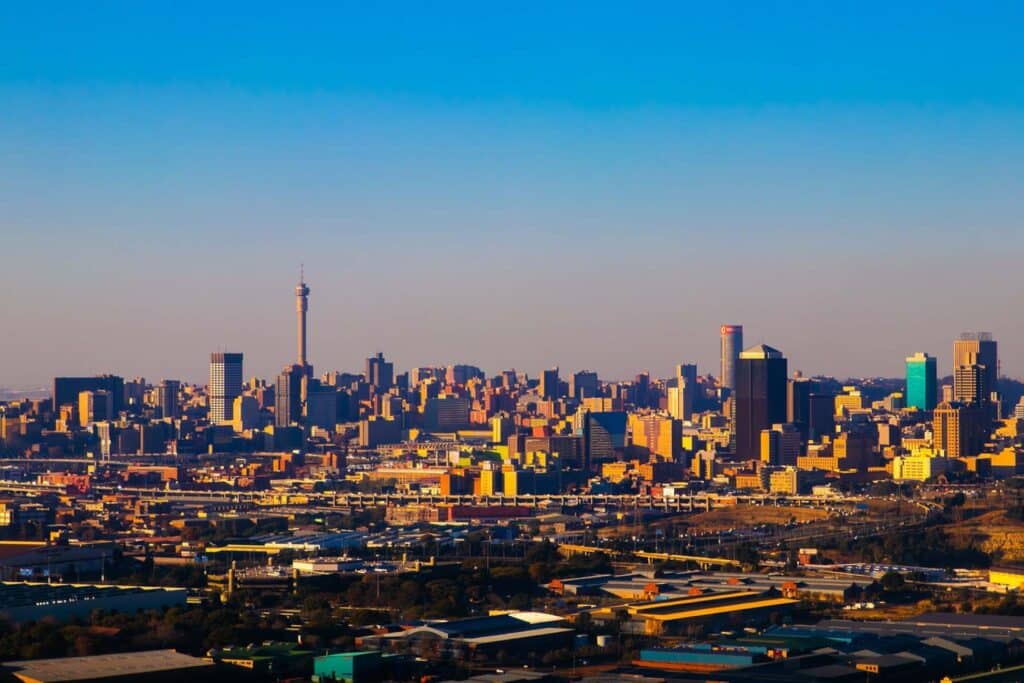
Choosing the right neighbourhood can make a noticeable difference to your Johannesburg visit.
The city is spread out, and distances between attractions are often greater than visitors expect.
For international travellers, Rosebank, Sandton and Melrose are generally practical areas to consider because they offer accommodation, restaurants and access to established transport services.
Area | What to expect | Who it suits |
Rosebank | Hotels, galleries, restaurants and Gautrain access | First-time visitors, couples |
Sandton | Business hotels, shopping and restaurants | Business travellers, short stays |
Melrose | Restaurants, boutique accommodation and a quieter atmosphere in parts | Couples, leisure travellers |
Braamfontein | Cultural venues, student life and urban attractions | Art and culture enthusiasts |
OR Tambo Airport area | Convenient for early flights and late arrivals | Overnight transit guests |
Maboneng | Creative venues and urban character, with variable street conditions | Visitors with planned transport |
Rosebank is often a good choice if you want a balance between sightseeing, restaurants, and access to transport.
Sandton tends to appeal to travellers who prefer large hotels, shopping facilities and a more business-oriented environment.
Both areas offer convenient accommodation options, but neither removes the need to plan transport carefully, particularly after dark.
An airport hotel makes sense when you arrive late, depart early, or only need somewhere to sleep before a safari transfer.
For travellers spending two or three days exploring Johannesburg, staying closer to Rosebank or Sandton may be more convenient.

Johannesburg has genuine crime and security concerns, but the risk varies considerably by area, time of day and how you travel. A useful approach is to plan deliberately instead of treating the entire city as either safe or unsafe.
Choose accommodation in an area that fits your itinerary and ask the hotel or host for current local advice. Use reputable, pre-arranged or app-based transport, especially after dark. Avoid walking alone in unfamiliar or quiet areas and do not display phones, cameras, jewellery or large amounts of cash unnecessarily.
If you hire a car, keep the doors locked, leave valuables out of sight and plan your route before setting off. Be cautious when stopping and avoid following unverified directions into unfamiliar areas.
Conditions can change, especially in parts of the inner city. A guided visit is a practical option when you want local knowledge as well as historical or cultural interpretation.
Before departure, check current official travel advice from your own government. Your accommodation or tour operator can then help translate general advice into practical decisions about the areas on your itinerary.
Johannesburg is a common starting and finishing point for safaris because of its airport connections and road links. Whether you explore the city before or after your safari depends mainly on your flight schedule and preferred pace.
Visiting Johannesburg first gives you historical and cultural background before travelling into a wildlife area. It can also create a buffer between a long international flight and a road transfer or domestic connection.
Going on safari first is a good idea for travellers who want to begin with wildlife and return to the city before flying home. A final Johannesburg night can reduce the pressure of coordinating a distant safari transfer with an international departure on the same day.
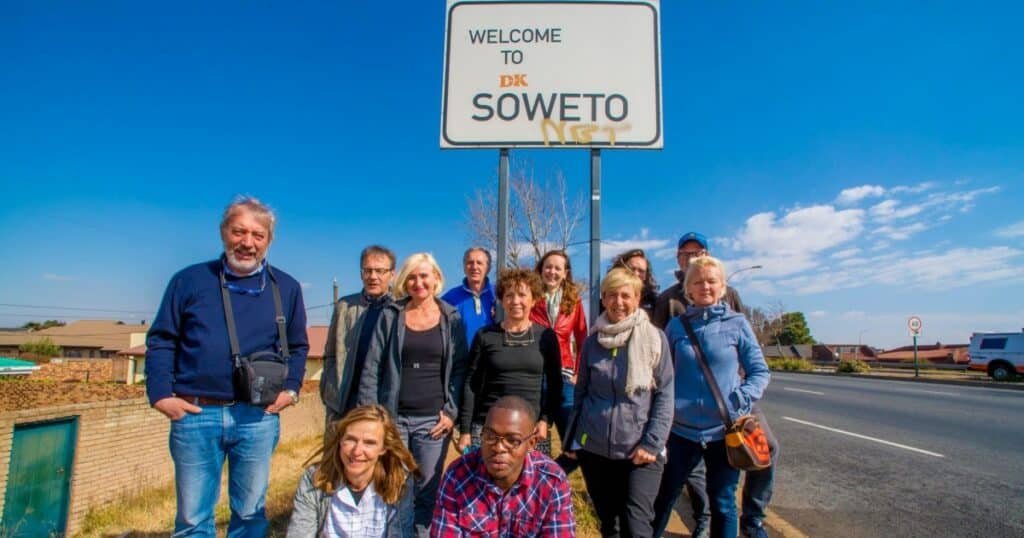
Soweto is an essential part of Johannesburg’s history, but it shouldn’t be treated as a single attraction detached from the rest of the city.
Travellers visit to understand its role in political resistance and the development of modern South Africa. The Hector Pieterson Memorial and Vilakazi Street are well-known stops, but a good visit also provides context about present-day Soweto and the differences between its neighbourhoods.
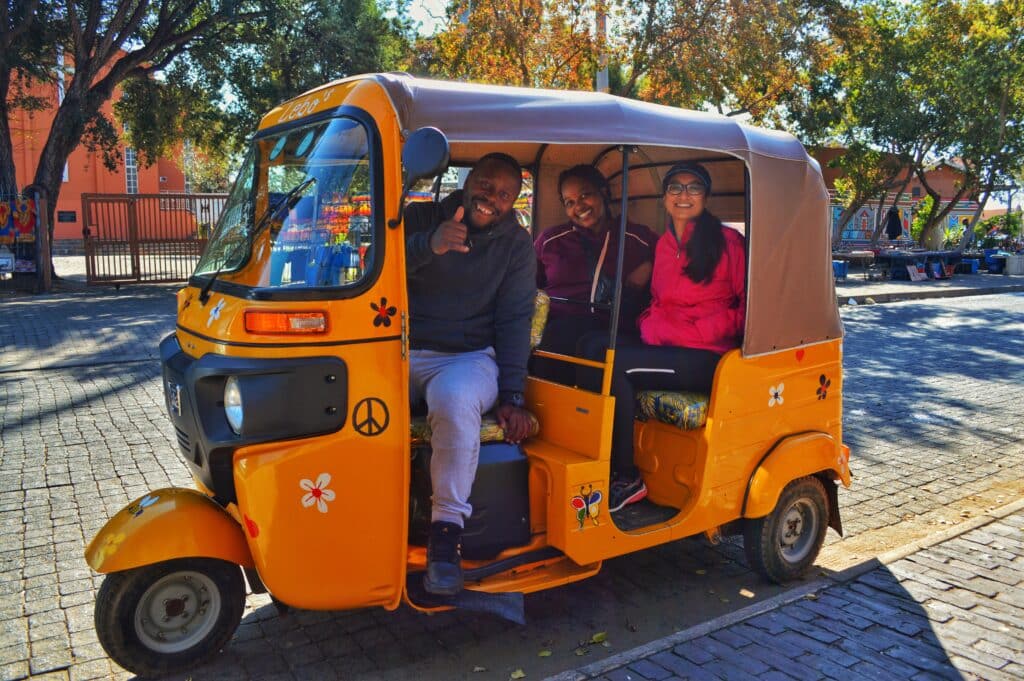
A guided experience can be valuable because it combines transport with local knowledge. It can also help you understand why particular streets and buildings are important instead of moving between photo stops.
Johannesburg is a year-round destination, although the seasons affect temperatures, rainfall, and the way you spend your days.
Because the city sits at a relatively high altitude, its climate differs from many coastal destinations in South Africa.
Summers are generally warm, with afternoon thunderstorms. Winters are dry, with sunny days and cold mornings and evenings.
Season | Months | Typical conditions | Travel considerations |
Summer | December–February | Warm days, afternoon rain | Good for city visits with flexible outdoor plans |
Autumn | March–May | Cooling temperatures and generally decreasing rainfall | Comfortable for sightseeing |
Winter | June–August | Dry, sunny days and cold mornings | Good for outdoor activities with warm layers |
Spring | September–November | Warming weather and increasing rainfall | Pleasant for city sightseeing, with occasional storms |
April, May, September, and October are often comfortable months for sightseeing.
Temperatures are generally manageable, and you can spend time exploring outdoor attractions without the colder winter mornings or the heat and rain of midsummer.
Winter can also be enjoyable, particularly if you prefer dry weather.
If your Johannesburg stay forms part of a Kruger safari, your safari priorities may influence the best time to travel more than the city’s weather.
You do not need specialised equipment for a Johannesburg city visit, but a few practical items will make your stay more comfortable.
If you are combining Johannesburg with a safari, pack warmer clothing for early morning game drives. Even during otherwise pleasant weather, open safari vehicles can feel cold before sunrise.
Arriving at OR Tambo International Airport
OR Tambo is the main international airport serving Johannesburg and a common entry point for visitors to South Africa.
Allow enough time for immigration, baggage collection, and onward transport.
For late arrivals, a pre-arranged hotel transfer is often the simplest option.
South Africa uses the rand (ZAR).
Cards are widely accepted in hotels, restaurants, and established shops, but carrying a small amount of cash can still be useful.
Use reputable banking facilities and avoid displaying large amounts of cash in public.
South Africa has 12 official languages, including South African Sign Language.
English is widely used in Johannesburg’s tourism industry, although many residents speak isiZulu, Sesotho, Setswana, and other languages in everyday life.
South Africa uses 230V electricity, with several plug types in use, including Type M and Type N.
International travellers should bring a suitable adapter and check whether their electronic devices support the local voltage.
Mobile data is useful for transport bookings, maps, and communication.
An international roaming plan or local SIM/eSIM can make getting around easier. Check network coverage and device compatibility before travelling.

For most international travellers, we recommend spending at least one full day exploring Johannesburg rather than treating it only as a place to sleep between flights.
Soweto, Constitution Hill and the Apartheid Museum provide an introduction to the country’s history, while areas such as Rosebank offer a different view of everyday city life.
There is no need to visit every attraction.
A well-planned day with a knowledgeable guide is often more rewarding than spending hours driving between places without enough time to appreciate them.
If you are travelling onwards to a safari, consider the timing carefully. A long international flight followed immediately by several hours on the road can be tiring.
An overnight stay in Johannesburg may be the more comfortable option, especially for families or travellers arriving late in the day.
MoAfrika Tours has been introducing travellers to Southern Africa’s wildlife destinations and cultural attractions for over two decades. Our local safari specialists and professional guides help guests plan experiences that suit their interests, available time, and travel style.
Guest feedback is particularly useful when choosing a Johannesburg tour. Look for comments about the guide’s local knowledge, punctuality, transport arrangements, time at attractions, and the overall pace of the experience.
Read MoAfrika Tours guest testimonials to learn more about previous travellers’ experiences.
⭐⭐⭐⭐⭐
Leonardo E – Italy
“Amazing day trip! Must try whenever you stay in Johannesburg! We got to see 3/5 Big Five, plus a rare sighting of the cheetah. Our guide Desmond was very knowledgeable and energetic. Would love to do another tour with MoAfrika the next time we visit South Africa again!”

Johannesburg is a city that rewards a little planning.
It is not always the easiest destination to explore without local knowledge, but visitors who make time for its history, neighbourhoods and cultural experiences often discover a side of South Africa they would otherwise have missed.
Whether you have a single day between flights or several days before your safari, the right itinerary depends on what interests you most.
Explore our Johannesburg tours or speak to the MoAfrika Tours team about arranging a guided city experience, a visit to Soweto or an onward safari.
There is no need to squeeze everything into one trip. Johannesburg has enough history and character to make even a short visit worthwhile.
Yes. Johannesburg is particularly worthwhile for travellers interested in South African history, culture and local experiences. One or two full days are usually enough to visit several important attractions without rushing.
Two days is a good starting point for most first-time visitors. It gives you time to explore Soweto, visit historical attractions, and experience another part of the city. One day works for a shorter introduction, while three days allows more flexibility.
Johannesburg has areas where tourists can visit comfortably with sensible precautions, but crime remains a concern. Choose accommodation carefully, use reliable transport, avoid walking alone in unfamiliar places after dark, and follow current local advice. Guided tours can simplify travel arrangements, but they cannot eliminate risk.
Popular attractions include the Apartheid Museum, Constitution Hill, Soweto, Vilakazi Street, the Hector Pieterson Memorial and Johannesburg’s art districts. The right choices depend on whether you prefer history, culture, food or family activities.
Rosebank often suits leisure travellers who want restaurants, galleries and convenient transport connections. Sandton is popular for business hotels, shopping and larger accommodation properties. Both can work well for international visitors.
Yes, but a guided visit is often easier for first-time travellers. Soweto is large, and many important attractions are spread across different neighbourhoods. A local guide can explain the historical context and help with transport.
Johannesburg can be visited throughout the year. April, May, September and October often offer comfortable sightseeing weather. Winter is generally dry but can be cold in the mornings, while summer brings warmer conditions and afternoon thunderstorms.
Yes. Pilanesberg is a popular day-trip safari destination from Johannesburg, although it requires an early departure and a long day. If your schedule allows, staying overnight gives you more time to enjoy the reserve.
Kruger National Park is several hours from Johannesburg by road. The journey to southern Kruger typically takes much of a morning or afternoon, depending on your route and destination. A multi-day safari is generally more practical than a road-based day trip.
Not necessarily. Guided tours, private transfers, app-based transport, and the Gautrain can cover many visitor needs. Hiring a car gives you more independence, but you will need to manage navigation, traffic, parking, and security.



WhatsApp Now