
Need more Info?
Botswana safaris offers one of the most diverse wildlife experiences in Africa. From the serene waterways of the Okavango Delta to the game-rich plains of Chobe National Park, each destination presents a unique encounter with nature.
The variety of landscapes is extraordinary. Expect vast salt pans, lush wetlands, dry woodlands and remote desert terrain. Each habitat supports distinct ecosystems, offering year-round game viewing opportunities.
Botswana’s low-impact, high-quality tourism model ensures a more intimate and eco-conscious safari experience, often in private concessions far from the crowds.
Beyond the wildlife, cultural experiences add depth to your journey. Meet local guides from the San and Batswana communities and gain insight into traditional survival skills, beliefs and ways of life.
We also offer luxury Botswana safaris whether you’re on a luxury mobile camp or staying in a thatched lodge beside a river, Botswana safaris promise remarkable encounters, rich scenery and a sense of untamed wilderness that’s difficult to match.
Botswana is home to some of Africa’s most celebrated safari destinations, each offering a distinct atmosphere, ecosystem, and wildlife experience.
From wetlands to deserts, the variety is unmatched. These ten destinations together capture the essence of Botswana safaris – untamed, diverse, and deeply immersive:

The Okavango Delta is a UNESCO World Heritage Site and one of the world’s largest inland deltas.
Seasonal floods transform the landscape into a maze of lagoons and channels, ideal for mokoro excursions and boat Botswana safaris. It’s a haven for birdlife, hippos, elephants, and elusive predators like leopards and wild dogs.
The Delta is renowned for exclusive lodges and intimate encounters with nature.
Located in northern Botswana, Chobe is famous for its large elephant population, often seen bathing along the Chobe River. It also supports large herds of buffalo, prides of lion, and a thriving bird population.
Chobe’s accessibility makes it a favourite for both first-time and seasoned safari-goers. Sunset cruises and game drives offer excellent viewing.


As part of the Okavango Delta ecosystem, Moremi blends permanent water with drier savannahs, offering excellent biodiversity.
Moremi is known for its dense populations of herbivores and predators, along with scenic landscapes that include mopane forests, floodplains, and lagoons.
It is one of the best places in Africa to spot wild dogs.
These outstretched salt flats were once an ancient lake. In the dry season, the pans appear stark and moonlike but when the rains arrive, they attract migratory birds and one of Africa’s largest zebra migrations.
Meerkat colonies, baobab trees, and quad-biking adventures across the pans add to their allure.

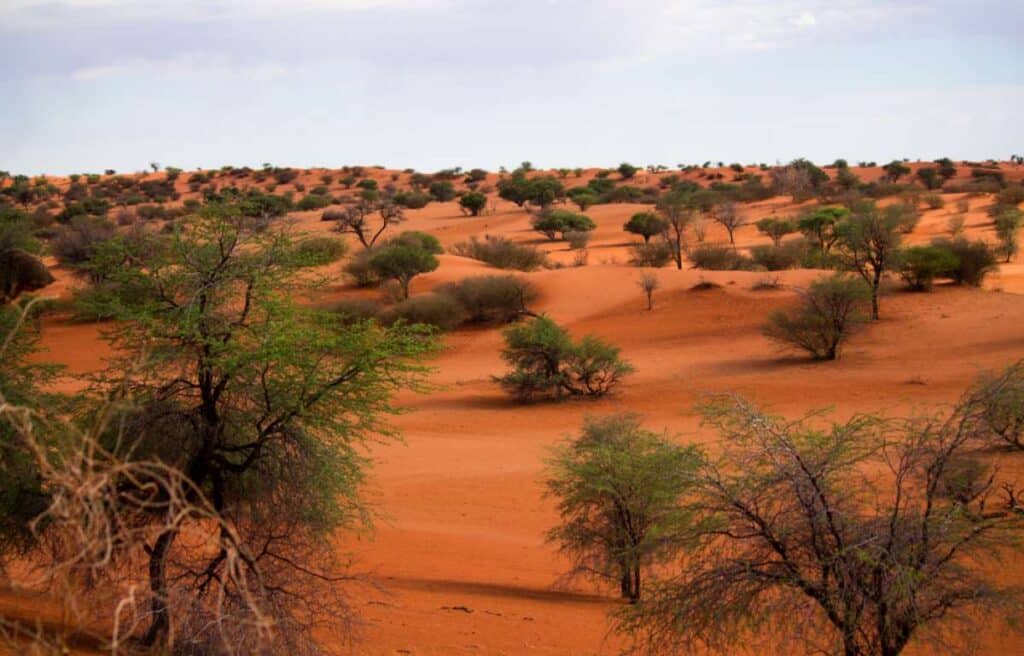
Covering a significant portion of Botswana, this remote reserve is characterised by arid savannah and fossil river valleys.
The reserve offers a more rugged, off-grid Botswana safaris experience. It is ideal for those seeking solitude and a chance to see black-maned lions, cheetahs, and oryx.
Situated near the Chobe and Linyanti Rivers, this private reserve is known for high concentrations of elephant and buffalo during the dry season. The marshy terrain supports lions, leopards, and wild dogs.
Its private concessions ensure fewer vehicles and excellent guiding standards.

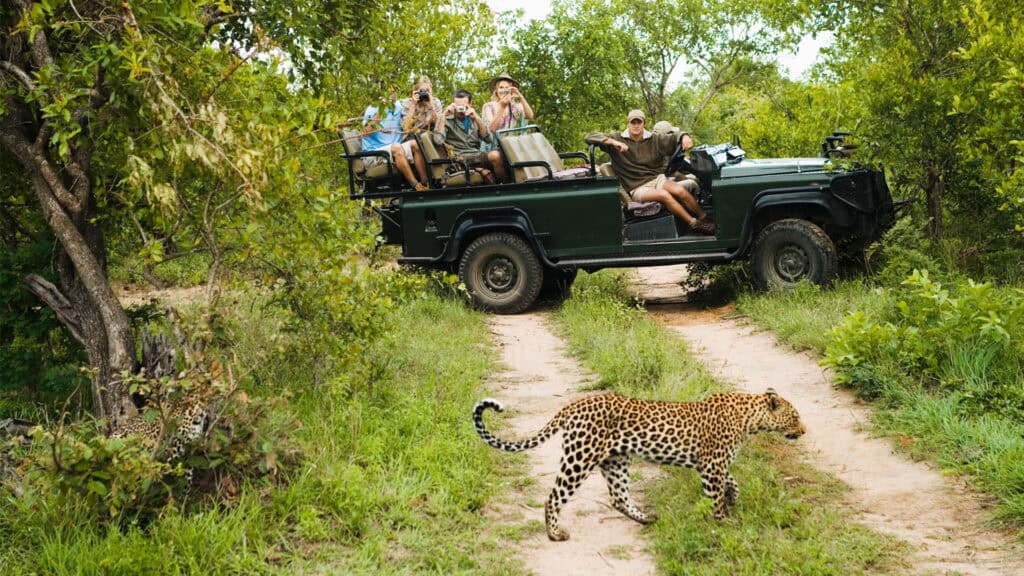
As a part of Chobe National Park, Savuti is a predator hotspot. Lions, hyenas, and cheetahs are regularly seen, particularly during the annual zebra migration.
Shaped by the unpredictable Savuti Channel, the landscape shifts between open plains and marshes.
This park features open grasslands and iconic Baines’ baobabs. During the rainy season, large herds of zebra, wildebeest, and springbok gather here, often followed by predators.
Nxai Pan is known for its wide horizons and exceptional photographic opportunities.
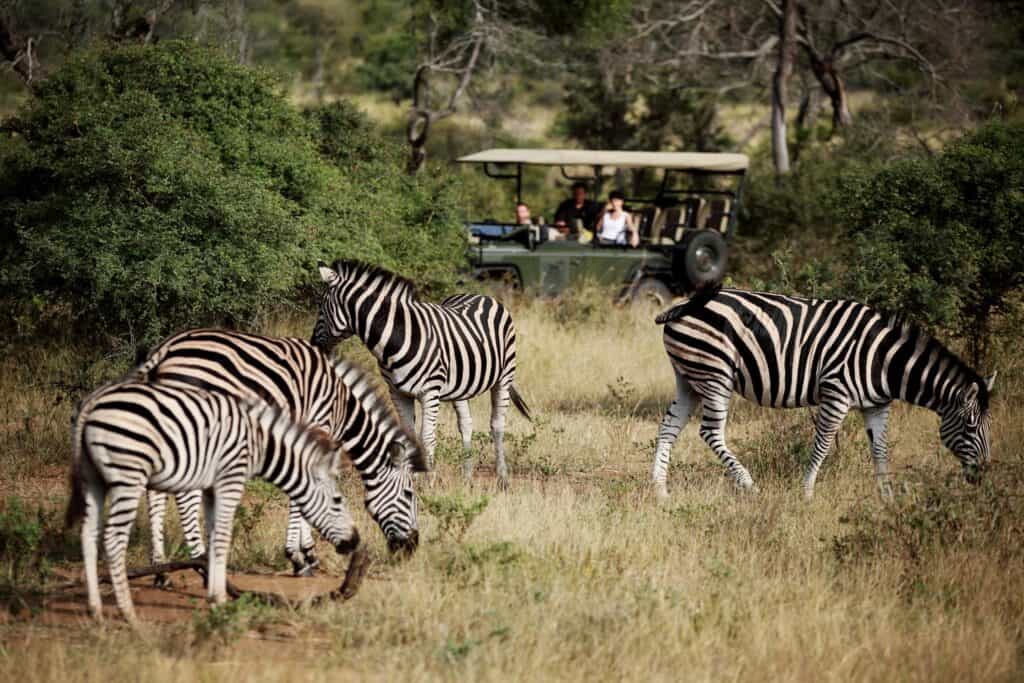

Located in eastern Botswana, the Tuli Block combines rocky outcrops, rivers, and riverine forests. It is a unique blend of wilderness and cultural heritage and the ideal destination for walking Botswana safaris and horse riding.
Leopard sightings are frequent, along with elephant and bat-eared foxes.
A sacred site and UNESCO-listed, Tsodilo Hills features over 4 500 ancient rock paintings.
Though not a traditional safari spot, the area is rich in history and local legend.
Wildlife includes klipspringer, hyrax, and occasional predators, making it a destination that offers a blend of culture, spirituality, and wilderness.

Botswana gained its independence in 1966, prior to that it was known as the British protectorate of Bechuanaland. The current president of Botswana is President Ian Khama, who is the son of the first president of Botswana. He is the child of an inter-racial marriage that caused quite a stir at the time, when Sir Seretse Khama married a white banking clerk from London, Ruth Williams. The marriage caused an outcry at a time when political relationships between apartheid-governed South Africa and Botswana were strained. The couple were forced to live in exile in London until 1956.
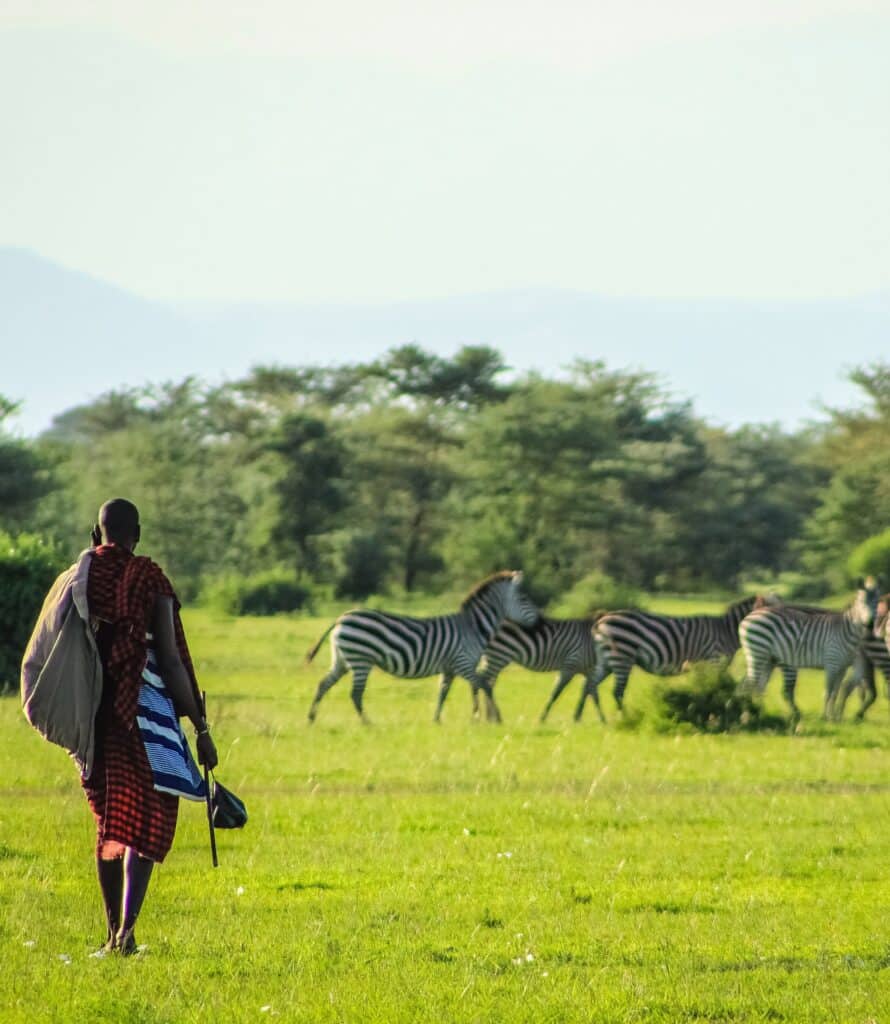
The original inhabitants of Botswana were the Bantu-speaking people who were living in the Katanga area (which today is part of the DRC and Zambia). Two groups, the Nguni and Sotho-Twana, crossed over the Limpopo into what was then the northern region of South Africa. The Nguni settled in the eastern coastal regions while the latter settled in what today is known as the Highveld, the central plateau of South Africa.
In the south-eastern region of Botswana, a new cultural group settled at site known as Moritsane Hill near Gabane. Archaeological finds from this time reflect historical western and Iron Age influences, where raising cattle and hunting took precedence over farming. The Moritsane culture is historically associated with the Khalagari (Kgaladadi) chiefdoms, which is the western-most dialect-group of the Sotho-Tswana speaking tribes.
The tribes that settled around Totuswe Hill between 600-700 AD and 1 200-1 300 AD were a more prosperous grouping, thriving on a growing farming culture. There is evidence of cattle farming, with large corrals found in what would have been the capital town and on small hilltop villages. The Mapungubwe cultural hub grew off the back of the early gold trade, capitalising on the flow of traders from the inland area around the Zimbabwe ruins to the Indian coastal belt (now Mozambique). These traders were supplied with fresh meat hunted by Khoean hunters.
The Mapungubwe settlement had been developed since 1 050 AD but its status as a trading station was short-lived as the power of Great Zimbabwe grew. The Butua state based at Kame near Bulawayo (in western Zimbabwe) controlled trade in salt and hunting dogs from about 1 450 AD onwards, establishing stone-walled command posts from the eastern Makgadikgadi pans to the northern regions.
Hostile battles broke out in the late 19th century between the Shona inhabitants of Botswana and the Ndebele tribes who had migrated into the territory from the Kalahari Desert. The volatile tribal relationships escalated with the arrival of the Boer settlers from the Transvaal. The Batswana leaders appealed for assistance from the British Government in 1885 and Bechuanaland was placed under its protection. The Bechuanaland Protectorate remained under direct administration by the British until it gained its independence and finally became Botswana.
In 1965, the seat of government was moved from Mafikeng in South Africa to the newly-established capital city, Gaborone. The first general elections were held in 1965 which saw Seretse Khama take over leadership of the independent state.
All citizens of Botswana, regardless of tribal affiliation, are known as Batswana (plural) or Motswana (singular). The prefix ‘ba’ means “the people of…”, so the Herero are known as Baherero, the Kgalagadi as Bakgalagadi and so on for the eight major tribes of Botswana. Botswana currently has a population of just over 2 million people.
The second largest ethnic group of Botswana are the Bakalanga, a powerful land-owning group who are thought to descend from a tribe known as Rozwi who originated from Great Zimbabwe and instilled a culture of building and development. The largest group of Bakalanga people are found around Francistown.
The Baherero are thought to originate from eastern and central Africa and migrated across the Okavango River into the north-eastern region of South West Africa (now Namibia). In the 1880s, conflict arose in the German-occupied region where the Herero grazing lands were systematically expropriated. The four-year conflict that ensued only ended with an act of genocide that saw the remaining tribe flee across the border to Botswana.
The Herero refugees settled among the Batswana and after an initial period of unease, regained their independence. Today the Herero are among the wealthiest cattle herders in Botswana.
The inhabitants scattered around the Chobe and Linyanti Rivers and across the Okavango panhandle are a mix of Basubiya, Wayeyi and Mbukushu. The Basubiya were a dominant force for a long period of time, pushing the Wayeyi out of the Chobe area and into the Okavango Delta. Today, the three tribal groups have reached an amicable state of existence.
The rule of law in Botswana is based on the Kgotla system, which is deeply entrenched in the Setswana culture.

Each village in Botswana is governed by a community council or traditional law court, headed by the village chief or headman. The system is characterised by democratic rights and free speech, where every person in attendance has the right to speak their mind, and community decisions are always arrived at by consensus.
Allow us to help you plan your travel itinerary to any destination in South Africa, Botswana and Namibia. We offer bus tours and transfers from Pretoria, Johannesburg, Durban, Port Elizabeth, and Cape Town.
Choosing the right Botswana safari is a key step in crafting a rewarding safari experience. With options ranging from opulent lodges to rugged mobile Botswana safaris, understanding your preferences and travel style will help you select the most suitable package:
Budget is often a traveller’s first consideration. Luxury Botswana safaris offer elegant tented camps, personalised service, and fly-in access to remote areas. These often include gourmet meals, private guides, and exclusive game-viewing areas.
On the other hand, budget-friendly options provide excellent value through guided group tours, basic lodgings, and scheduled road transfers. While the comforts differ, both options offer memorable wildlife encounters.
🏅Feature | 📌Budget Safari | 🍾Luxury Safari |
Accommodation | Basic tents, campsites, or simple lodges; sometimes shared facilities | High-end lodges or luxury tented camps with en-suite bathrooms, private decks, and sometimes pools or spas |
Group Size | Usually larger groups (6–20 travelers) | Small groups or private safaris with personalized service |
Transport | Shared safari vehicles, such as vans with pop-up roofs | Private open 4×4 safari vehicles with extra space and comfort |
Game Drive Experience | Fixed schedules with shared guiding | Flexible schedules with experienced guides and trackers |
Meals | Simple buffet or set meals, often communal dining | Gourmet meals, bush dinners, sundowners, and premium drinks |
Travel to Parks | Usually, long drives to reach the parks | Often includes fly-in safaris using small bush planes |
Exclusivity | Public national parks with more vehicles at sightings | Private reserves with fewer vehicles and more exclusive wildlife viewing |
Comfort Level | Functional and simple, but still comfortable | High-end comfort with luxury amenities and personalized service |
Best For | Backpackers, students, families on a budget, and adventure travelers | Honeymooners, luxury travelers, photographers, and those wanting a premium experience |
The duration of your trip also shapes your experience. Short Botswana safaris of 3 to 5 days focus on one or two destinations, such as the Okavango Delta or Chobe National Park, and are ideal for those with limited time.
Longer expeditions, often lasting 10 to 14 days, allow for deeper exploration, covering multiple ecosystems from desert to delta and increasing your chances of witnessing rare wildlife.
Your main interests should guide your itinerary. Wildlife photography tours cater to enthusiasts with patient guides, well-equipped vehicles, and optimal light scheduling.
Bird watchers benefit from wetlands like the Okavango and river systems around Linyanti.
For those seeking a cultural dimension, tours that include visits to San villages or interpretive walks with local guides offer deeper insight into Botswana’s heritage.
Your travel companions influence the style of Botswana safaris that suits you best.
Families should look for child-friendly lodges, guides experienced with young travellers and flexible itineraries that balance adventure with comfort.
Couples often opt for romantic fly-in Botswana safaris with private chalets and candlelit dinners in remote settings.
Solo travellers may prefer group departures for social engagement and cost efficiency.
When selecting a tour operator, prioritise those with a strong track record in Botswana, transparent pricing, and a commitment to conservation and local community support.
Reputable operators like MoAfrika Tours, offer detailed itineraries, clear inclusions and exclusions, and safety measures tailored to your needs.
Look for packages that balance travel time with meaningful experiences, avoid excessive transfers, and allow for unhurried game viewing.
Botswana’s safari model emphasises quality over quantity, so choose a tour that reflects that ethos.
Ultimately, the best Botswana tours align with your personal rhythm and interests, offering a journey that’s as seamless as it is unforgettable.
Botswana safari’s packages cater to a range of travel styles, offering unforgettable journeys through some of Africa’s most pristine wilderness areas. Whether you’re seeking a luxury escape or an adventurous expedition, there’s a Botswana safaris package to suit your needs.
Each of these Botswana packages offers a unique perspective, ensuring your safari is not only thrilling but also perfectly tailored to your travel aspirations:

These guided Botswana safaris offer a wonderful experience of the wild, moving from one destination to another in fully equipped mobile camps.
Itinerary highlights often include game drives in Moremi, Chobe, and Savuti, as well as mokoro excursions in the Okavango Delta. Accommodation consists of spacious dome tents or luxury canvas suites with en-suite facilities. Activities focus on wildlife tracking and scenic exploration.
Prices typically range from USD 2,540 – USD 4,450 per person for 7–10 days.
These include full-board camping, park fees, expert guides, and overland transport between safari regions.
Ideal for those short on time or seeking high comfort, these Botswana safaris use light aircraft to access remote lodges in the Delta, Linyanti, and Kalahari.
Itineraries often feature exclusive game reserves, sundowner boat cruises, and guided bush walks. Accommodation includes high-end lodges with plunge pools, private decks, and fine dining. Expect personalised service and small guest numbers.
Prices typically range from USD 5,715 – USD 12,700 per person.
Prices vary based on lodge tier and duration and often cover flights within Botswana, all meals, private guides, and premium game viewing.
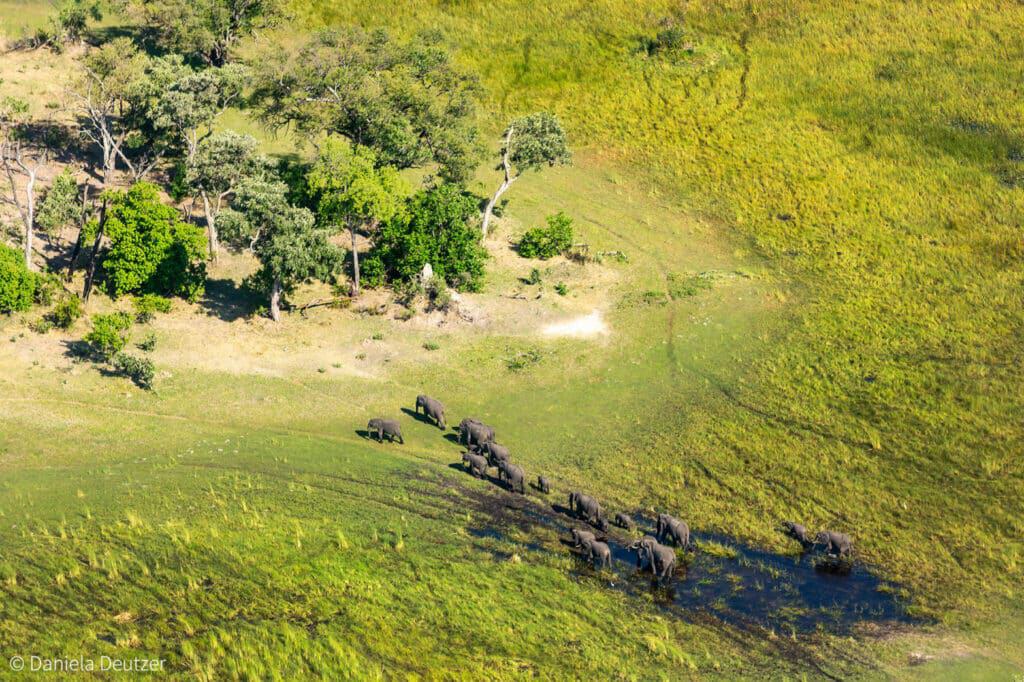

Tailored for photographers, these Botswana safaris are led by specialist guides and include private vehicles for optimal angles and extended game-viewing time.
Destinations like Khwai, Savuti, and the Makgadikgadi Pans provide diverse backdrops and lighting conditions. Accommodation ranges from mid-range tented camps to luxury lodges.
Packages usually span 7–12 days and cost USD 3,810 – USD 8,890 per person.
This includes specialist photographic guides, private vehicles, and stays in mid to high-end camps.
Designed with younger travellers in mind, these packages focus on shorter drives, educational activities, and flexible routines.
Lodges selected are child-friendly, offering family suites and interactive bush experiences. Popular stops include Chobe and the Delta.
Pricing is generally between USD 3,175 – USD 6,350 per adult, with discounted rates for children.
These packages include family-friendly accommodations, flexible activity schedules, and shorter transfer distances.
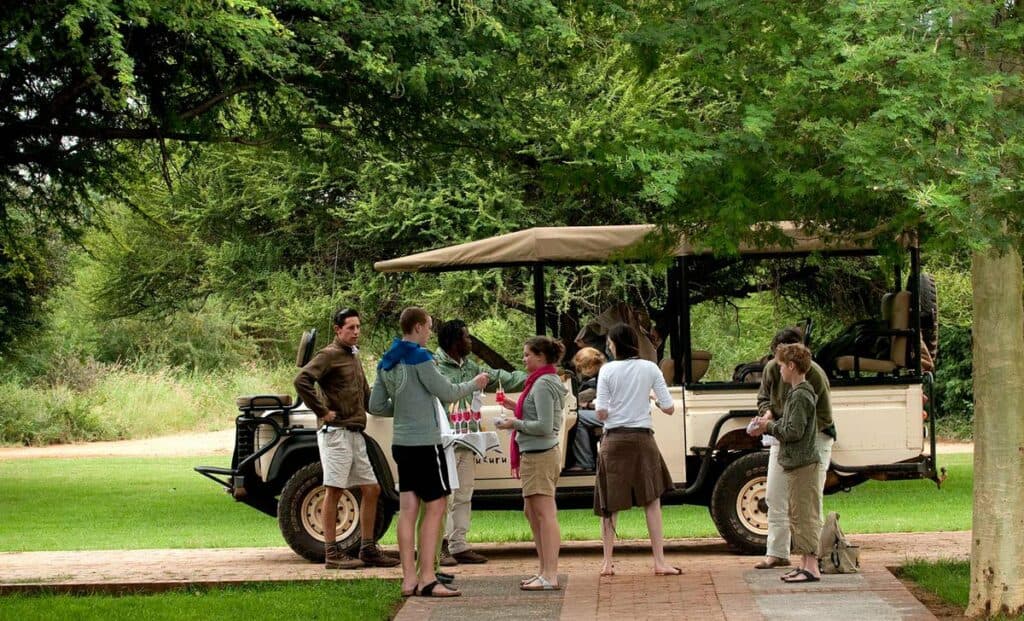

For a completely different experience, some Botswana Safaris include guided walks with San trackers or cultural visits to local communities.
These are often combined with wildlife activities for a balanced journey.
Accommodation is usually in eco-camps or smaller lodges. Cost varies from USD 2,540 – USD 5,080 per person for a 7-day itinerary.
These typically feature eco-camp stays, San-led walking experiences, and a mix of wildlife and cultural highlights.
🦁Safari Type | 🔍Itinerary Highlights | 🏠Accommodation | 📌Included Activities | 💵Price Range (USD) |
Classic Mobile Safari | Okavango Delta, Moremi, Chobe, Savuti | Dome tents or luxury mobile camps | Game drives, mokoro rides, bush dining | $2,540 – $4,450 |
Fly-in Luxury Safari | Private Delta concessions, Linyanti, Central Kalahari | High-end lodges with pools and fine dining | Scenic flights, boat safaris, walking safaris | $5,715 – $12,700 |
Photographic Safari | Khwai, Savuti, Makgadikgadi Pans | Mid to luxury camps with photo facilities | Private game drives, photo guiding, and extended sightings | $3,810 – $8,890 |
Family Safari | Chobe, Okavango Delta, family-friendly regions | Child-friendly lodges with family units | Shorter game drives, bushcraft lessons, nature walks | $3,175 – $6,350 (adults) |
Cultural & Walking Safari | San Bushmen areas, Kalahari, Delta fringe | Eco-camps and community lodges | Guided walks, cultural visits, wildlife viewing | $2,540 – $5,080 |
Botswana’s seasons offer distinct safari experiences, each with its own charm and rewards. Choosing the best time to visit depends on what you wish to see and do:

The dry season, from May to October, is widely regarded as the best time for game viewing. During this period, skies are clear, temperatures are mild to warm, and vegetation is sparse, making it easier to spot wildlife.
Animals congregate around permanent water sources, particularly in the Okavango Delta, Chobe River, and Linyanti region. This is the prime time to see elephants, big cats, and large herbivore herds.
The dry months also bring fewer mosquitoes, which adds to visitor comfort.
However, it’s the most popular travel window, so early bookings are essential.
The wet season, from November to April, transforms Botswana’s landscapes.
Rainfall rejuvenates the plains, attracting migratory birds and creating vibrant green backdrops perfect for photography.
This is the best time for bird watching, especially in areas like the Makgadikgadi Pans and the Delta.
It’s also the calving season for many species, offering dramatic predator-prey interactions. While some remote lodges may close due to access challenges, the wet season offers fewer crowds and lower prices, appealing to adventurous travellers.
Wildlife behaviour shifts with the seasons, and each brings unique moments, whether it’s elephants bathing in dry-season rivers or flamingos arriving on flooded pans. Botswana rewards visitors year-round, depending on what kind of safari you’re seeking.
Packing for Botswana safaris requires careful planning to ensure comfort, safety, and practicality across diverse landscapes and temperatures.
Being prepared ensures your Botswana safaris is both comfortable and unforgettable. Days can be hot, while early mornings and evenings are often cool, especially during the dry season.


From thrilling predator sightings to tranquil moments watching elephants at sunset, Botswana safaris deliver unforgettable encounters with the natural world—whether you’re an avid photographer, birding enthusiast or first-time visitor.
Botswana safaris offer some of the finest wildlife viewing opportunities in Africa, set against magnificent backdrops ranging from floodplains to desert pans. Whether you’re exploring by vehicle, boat or mokoro, the country’s varied habitats support a remarkable diversity of species.
The Big Five are a major draw. Botswana is home to large populations of elephants, particularly in Chobe National Park and Linyanti, where herds gather in huge numbers during the dry season.
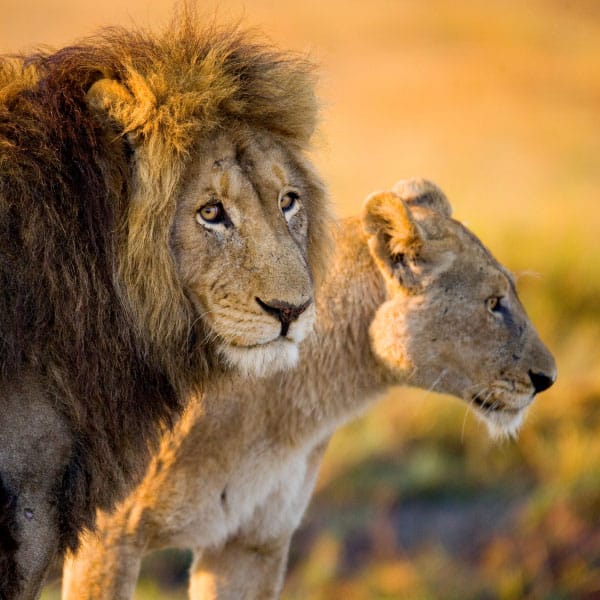
Lions are frequently seen in Savuti, known for dramatic predator-prey encounters, while leopards favour the tree-lined waterways of the Okavango Delta. Buffalo roam in large herds across Moremi and the Delta, especially in the cooler months.
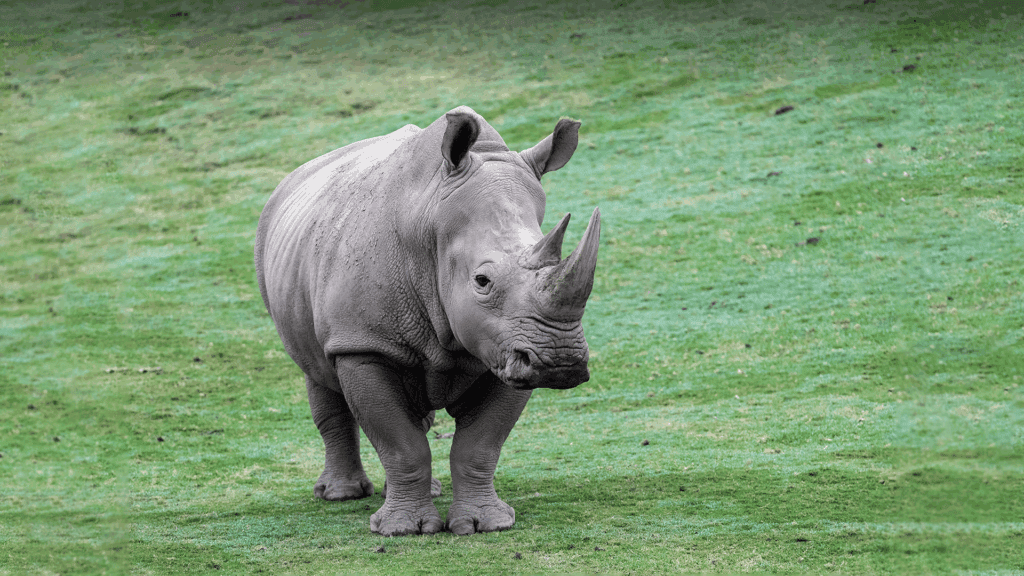
Although rhinos are more elusive due to conservation efforts, they can be spotted in selected private concessions within the Delta and Khama Rhino Sanctuary.
Beyond the Big Five, Botswana boasts impressive sightings of African wild dogs, particularly in Moremi and Selinda, where stable packs hunt across open terrain.
Cheetahs are often seen in the Central Kalahari Game Reserve, where the expansive plains suit their speed.
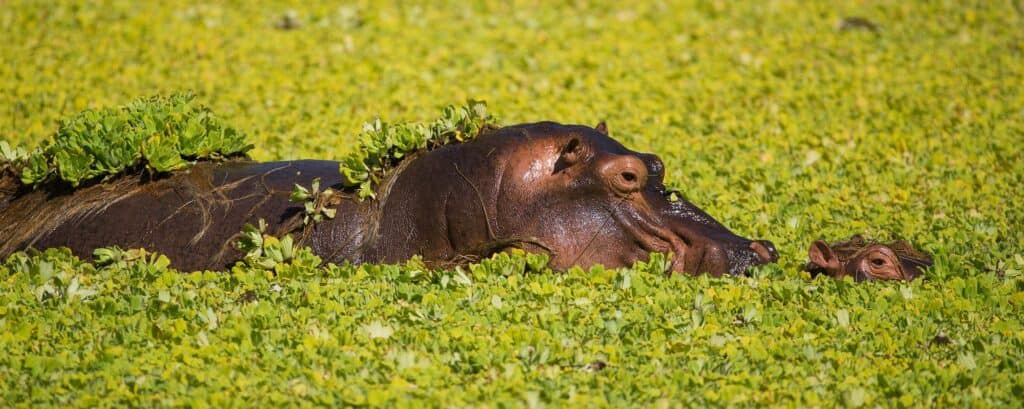
The Okavango channels and lagoons teem with hippos and crocodiles, best viewed during boat or mokoro excursions.
With over 580 recorded species, Botswana is a premier birding destination.
The wet season (November to April) is especially rewarding, with migratory species arriving in full plumage.
Look out for African fish eagles, lilac-breasted rollers, carmine bee-eaters, and large flocks of flamingos in the Makgadikgadi Pans when seasonal rains arrive.
The best time to see most wildlife is during the dry season (May to October) when animals gather at water sources, and vegetation is sparse.
However, the wet season brings newborn animals, lush scenery, and spectacular birdlife.
Botswana’s main cities and towns serve as important hubs for travellers exploring the country’s wild and remote regions. While Botswana safaris often take centre stage, the following urban centres provide vital logistical support and a glimpse into everyday life in Botswana:
Gaborone, the capital city, is located near the country’s southern border with South Africa.
Though not a tourist destination in itself, Gaborone offers a convenient entry point with a major international airport, embassies, shopping centres, and reliable infrastructure.
It’s an ideal stop for organising permits, connecting with local tour operators, or spending a night before heading northwards.
Maun is widely known as the gateway to the Okavango Delta. This laid-back town blends rustic charm with modern conveniences.
It is the starting point for many fly-in Botswana safaris and mokoro excursions into the Delta.
Maun’s airport handles regional flights, and the town offers a range of accommodations, restaurants, and essential services, including safari outfitters and vehicle rentals.
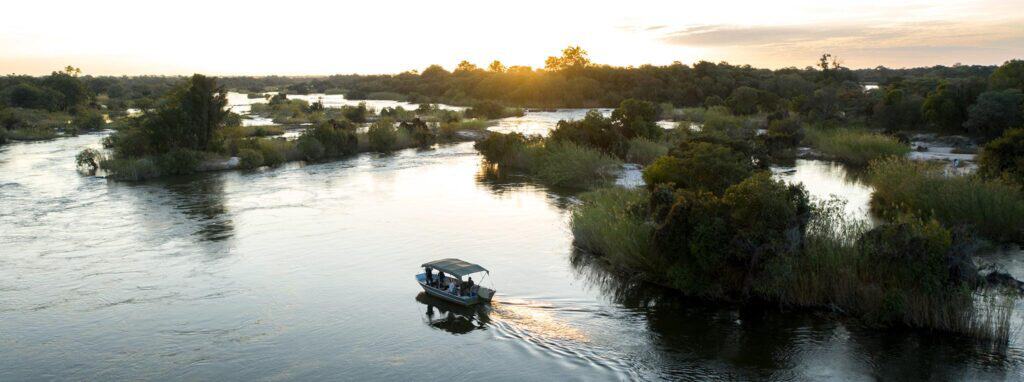
Kasane, situated on the banks of the Chobe River, borders Chobe National Park and lies close to four countries: Botswana, Namibia, Zambia, and Zimbabwe. Its strategic location makes it a popular base for travellers exploring Chobe’s wildlife or combining visits with Victoria Falls.
Kasane also has an airport, a selection of lodges, and options for boat cruises, border transfers, and guided tours.
Together, these towns form a crucial travel triangle, linking Botswana’s iconic wilderness areas with accessible and well-equipped urban bases.
When planning Botswana Safaris it is essential to prepare properly for the practicalities of travel to ensure a smooth and rewarding experience. Below is a guide covering key travel details every visitor should know:
The vast majority (80%) of Botswana is made up of sand drifts from the Kalahari Desert. Although a predominantly dry and arid region, parts of Botswana are spectacular when the glorious rain works its magic. Two rivers flow into the country from the far north to create the spectacular delta and swamp lands of Botswana.
The Okavango River rises in the highlands of Angola and flows more than 1 500 kilometres to form the Okavango Delta. The delta region was once an ancient inland lake that was fed by the Zambezi River before tectonic activity forced it to change its course.
Today, it is a collection of large and small islands, channels, and floodplains boasting an array of vegetation that includes thick riverine woodland. The dry, semi-arid floodplains are transformed into a lush, magical oasis that supports a wide variety of wildlife.
The Kwando River also rises in the Angola highlands, turning east and spilling out into the Linyanti swamps before flowing into Lake Liambezi to become the Chobe River. This great river serves as the northern boundary of the Chobe National Park and is renowned for the extensive herds of elephants that descend on the river during the dry season.
The Chobe National Park was proclaimed a wildlife reserve in 1968 and is regarded as a premier Botswana safaris destination.
The Chobe region is characterised by four distinct ecosystems:
The dry Savuti Channel and the Linyati, Serondella and Nogatsaa region.
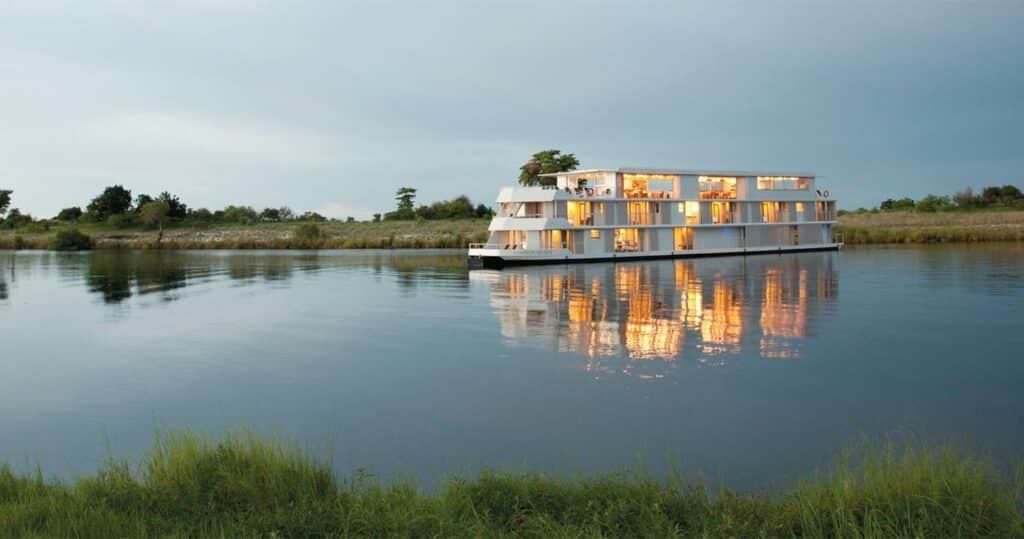
The Savuti Channel flows out of the Linyanti region and makes its way through the arid woodlands north of the delta. From there it empties into the Savuti Marsh nearly 100 kilometres away in the Mababe Depression.
The Savuti has a historic reputation of drying up for years before flowing again which has been attributed to tectonic activity.
For the moment, the Savuti Marsh is dominated by acacia savannah but this is expected to change as the Savuti Channel has started to flow again.
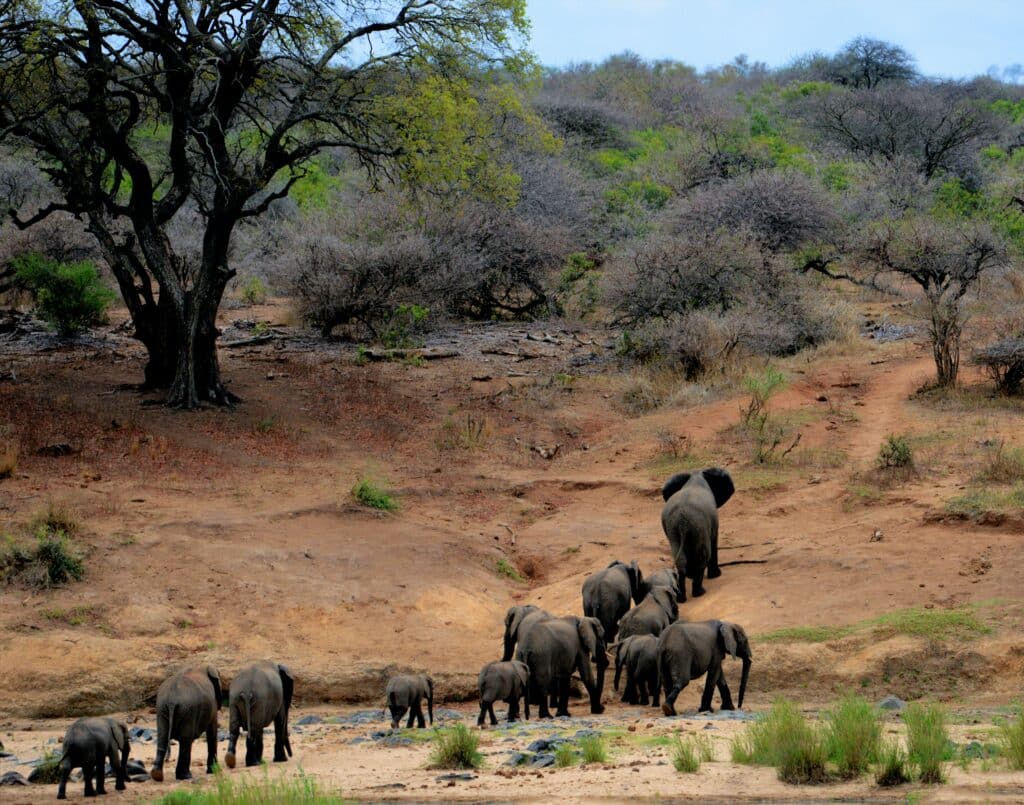
Linyanti is renowned for its spectacular floodplains, palm islands and lush grasslands.
The private game reserve that makes up the vast area is not fenced and the herds of elephants that roam the Chobe River can come and go as they please.
The area south of the delta and swamplands is dry and arid; barren landscapes melting into the Kalahari Desert where water is scarce.
It is in this region the famous Makgadikgadi Salt Pans are found; once an ancient inland lake but now a vast landmark of salt-crusted plains.
The edges of the salt pans are dominated by short grasses while the Central Kalahari is covered by arid savannah grassland and woodlands.
In terms of human habitation, Botswana is one of the world’s least-crowded countries; with just 3.5 people per square kilometre.
The vast dry floodplains and desolate regions are only inhabited by the hardiest; many of them descendants of the San people (Bushmen).
Three small alluvial diamonds were found in 1955 along the Motloutse River in the Tuli Block which spurred a rush of prospectors to the area. In 1967, a team of De Beers’ geologists found abundant quantities of elmenite and garnet which are the two chief indictors of diamondiferous kimbilite.
The Orapa Discovery Pit was the first site of extensive excavations and led to the formation of the De Beers Botswana Mining Company in 1968.
Botswana is the world’s biggest diamond-producing country in terms of value and the second biggest in terms of production. Revenue from diamond mining in Botswana accounts for almost half of its GDP and provides the government with the means to ensure every child in Botswana receives free education up to the age of 13 years.
Today, the richest diamond mine in the world, Jwaneng Diamond Mine, is located in the south of Botswana (Jwaneng meaning ‘place of small stones’). The Botswana diamond mine operation is run by a company called Debswana which is a 50/50 joint venture between De Beers Consolidated Mines Ltd and the Botswana government. In 2017, Debswana celebrated 48 years of existence and mutually-beneficial operations between the mining magnates and the people of Botswana.
Diamonds contribute to more than 70% of Botswana’s foreign exchange and are the lifeblood of the country, providing its citizens with a higher standard of living and a better quality of life. An agreement signed in 2006 extended the mining license for the Jwaneng Mine to 2029, and the licenses for four other key mines will run concurrently.
For foreigners, diamonds represent status and prestige but for the people of Botswana they represent food on the table, a decent home, better healthcare, safe drinking water and roads that connect remote villages. Debswana is the largest private sector employer in Botswana, employing over 5 000 people.
Whether you are planning a last minute breakaway or your family holiday next year, contact MoAfrika Tours for our 2026/2027 rates and availability. We offer a wide selection of family packages and romantic breakaways.
Botswana has a well-earned reputation for being the ‘elephant capital’ of Africa. Botswana facts regularly highlight that the country has the highest elephant population in Africa, concentrated along the Chobe River which supports up to 50 000 elephants in the dry season.
The Chobe River basin was once part of the ancient elephant migration routes but civil war in countries like Angola and the war of liberation in Namibia had a significant impact on numbers with uncontrolled poaching decimating the herds.
More than a decade ago, the Botswana government decommissioned portions of the fence surrounding Nxai Pan National Park that is located close to Chobe River which allowed wildlife to move unhindered between the salt pans and the Okavango Delta.
The elephant herds have grown year-on-year as they re-adapt to their ancient migration paths.

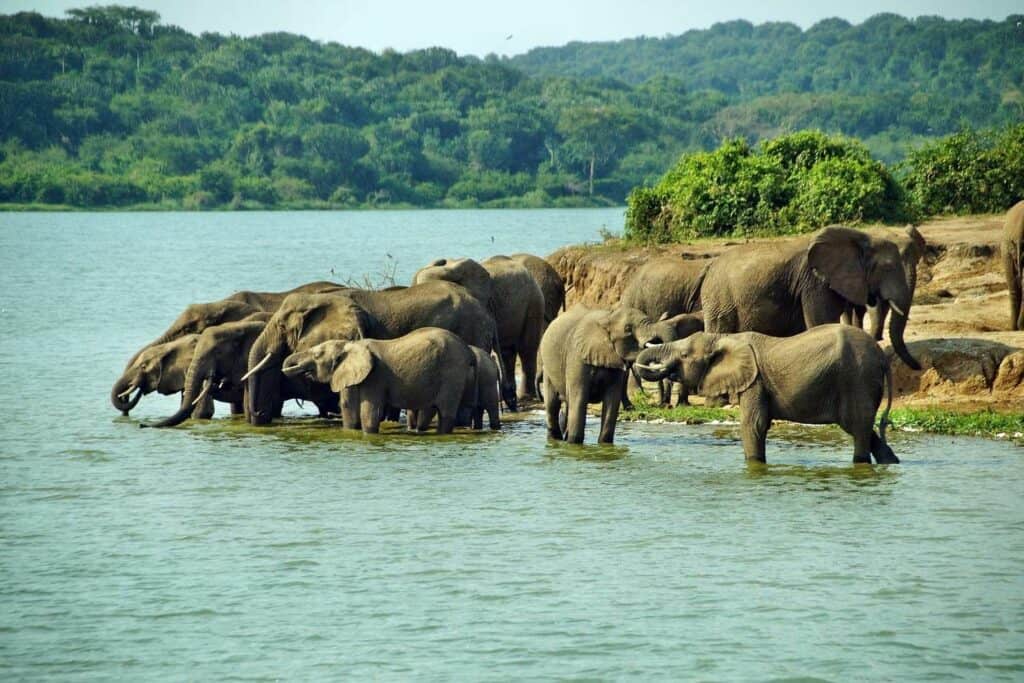
Recent aerial footage has picked up a significant increase in elephant bulls in Makgadikgadi Pans and Nxai Pan National Park.
The reason given for this is the rejuvenated Boteti River system offers a greatly improved habitat for the larger elephants.
Current statistics puts the Botswana elephant population at about 150 000 with five elephants per square kilometre.
The number increases between the Linyanti and Savuti Rivers with about eight elephants per square kilometre.
While these numbers are a happy result of the Botswana government’s initiatives, conservationists remain concerned that the sizes of the herds are not growing at the expected rate with elephant poaching being the root cause.
The Botswana government has a deep respect for the value of safari tourism and has renewed its pledge to protect its valuable natural resources.
The Botswana economy is dependent on two primary sources of revenue: diamond mining and tourism. With a healthy respect for the value of its natural resources, the Botswana government has spearheaded a progressive approach to wildlife conservation that is not commonly seen in the rest of Africa.
Protecting its natural resources as a means of protecting its economic stability is an attitude that has been deeply instilled in the Botswana people. The government relies heavily on community-based conservation initiatives to drive this and so far has reaped the rewards.
Nata Sanctuary is one such initiative and the first one put into effect in the early 1990s. The conservation project is managed and staffed by residents of four local communities in the Nata, Maphosa, Sepako and Manxotae districts. By strictly managing anti-poaching initiatives and eradicating the consumption of bush meat, the villagers directly benefit from revenue earned from tourism to the region.
To establish the Nata Sanctuary, the four communities agreed to move some 3 000 head of cattle out of the area. By eradicating the problem of overgrazing, the grasslands and woodlands flourished and the wildlife numbers steadily increased. Thousands of Botswana safaris tourists descend on the region to enjoy spectacular sightings of wildlife migrations, birds and, of course, the sea of flamingos that descend on the pans.
Simple camping facilities were built that are reasonably priced and are managed by villagers trained in tourism and hospitality. This community-managed wildlife sanctuary is an excellent example of how humans can successfully co-exist with wildlife and also generate sufficient revenue to provide local people with a good lifestyle.
Botswana is also well-known for its abundance of predators, where the numbers have increased as a result of conservation efforts to protect and boost wildlife in the country. The Suvuti-Chobe National Park, in particular, is regarded as one of the best places in Africa to see lion, cheetah and leopards. Lions have adapted to the dry, arid habitat and thrive in the northern Okavango Delta.
Studies of lions in the Okavango Delta reveal that these big cats have adapted physically to their environment, with front quarters more developed than lions in other regions. This is because much of their hunting is in deep river channels and floodplains. The lions have to cross rivers or wade through deep water to hunt and as a result have busted the myth that big cats hate water.

The Makgadikgadi Pans are the largest salt pans in the world and are split between two pans; the Ntwetwe Pan and the Sowa Pan. The pans are the remaining dry beds of the ancient Lake Makgadikgadi that covered most of the northern Botswana. To put it into perspective, this vast landscape that spans some 12 000 sq/kilometres is about the size of Portugal.
The stark, flat and featureless terrain is largely uninhabited by humans and, for most of the year; the desolate area is dry, arid wasteland. When the rains come, the area transforms into a magical oasis; attracting an abundance of birds and wildlife. The most spectacular sight is the hundreds of thousands of flamingos that settle in the Sowa and Nata Sanctuary, creating a magical pink carpet for a period of time.
The rainwater that pours down on the pans is supplemented by seasonal river flows from the Nata, Tutume, Semowane and Mosetse Rivers in the east. In an exceptional rainy season water from the Okavango floods the pans, sweeping in via the Boteti River in the west. The pans become a powder-blue lake with water gently lapping the shorelines and trickling over the pebble beaches that are remnants of a prehistoric lake; a relic of what researchers say was once the biggest inland lake in Africa.
The first European explorer to discover these magnificent pans was Dr David Livingstone. He crossed over this vast expanse of arid wasteland in the 19th century, guided by a massive baobab beacon known as Chapman’s Tree. This incredible specimen is believed to be 3 000 to 4 000 years old and is the only landmark for hundreds of miles.
The Makgadikgadi region is made up of a series of pans, the largest of which are Sowa and Ntwetwe Pans. Both are surrounded by a myriad of smaller pans. North of these two pans are Kudiakam pan, Nxai Pan and Kaucaca Pan. Sand dunes, rocky islands and peninsulas and desert terrain give the regions its unique character.
Vegetation cannot grow on the salty surface of the pans but the fringes are covered with grasslands. Massive baobab trees create striking features and dramatic photo opportunities in the setting sun. Extensive grasslands and acacia woodland characterise the western end of Ntwetwe, which falls into the Makgadikgadi Pans Game Reserve.
Large herds of zebra and wildebeest begin their westward migration to the Boteti region at the start of the rainy season. Other species that make the great trek include gemsbok, eland, red hartebeest, kudu, bushbuck, duiker, giraffe, springbok and steenbok. Accompanying them on their migration is a selection of predators, including the rare brown hyena. Large numbers of elephants join the wondering herds and predators, making this time of year an outstanding safari experience.
What to do in Botswana? Our friendly staff at MoAfrika will make sure your itinerary is full of adventure and sightseeing. Contact us for your child-friendly or even wheelchair friendly Botswana safaris.
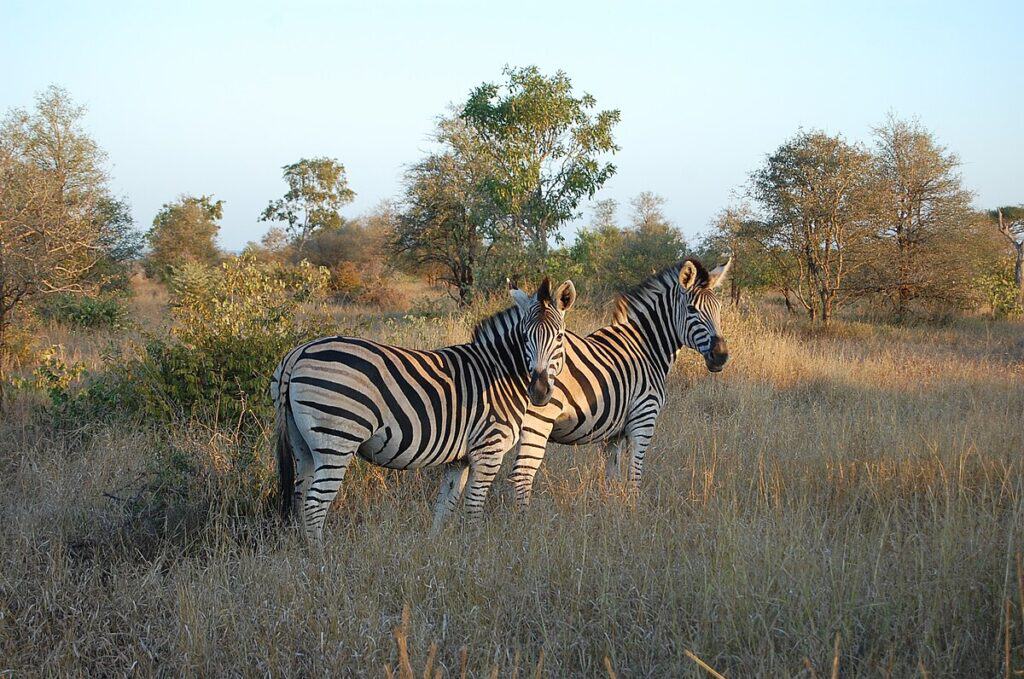
Botswana is a land of extremes and attracts a wide spectrum of tourists; from wildlife enthusiasts to birders, photographers and extreme adventurers. Your options for Botswana safaris tour are endless so Moafrika Tours has narrowed the list down to their favourite Botswana tourist destinations.
The Okavango Delta received World Heritage status in 2014 when it became the 1 000th site inscribed on the World Heritage List. This magical oasis is visible from space and boasts the prestigious title of being one of the Seven Natural Wonders of Africa. The vast natural wonderland is 15 000 square kilometres of spectacular waterways, marshlands and narrow river channels with an abundance of bird and wildlife that have synchronised their biological cycles with the seasonal rains and floods.
The delta is regarded as an exceptional example of the interaction between climatic, hydrological and biological processes,
and is home to some of the world’s most endangered species of large mammal such as the cheetah, white and black rhinoceros, African wild dog and lion.

The vast waterway system experiences annual flooding from the Okavango River, and during this time, the easiest way to get around the delta is on a traditional canoe known as a mokoro.
The vast waterways cannot be explored in a four-wheel vehicle so most Botswana safaris tour operators in Botswana offer boat cruises.
Botswana safaris tours of Okavango Delta involves leisurely days spent floating down tranquil, lily-covered lagoons and narrow channels hemmed in by papyrus reeds, floating alongside river banks teeming in bird and wildlife.
Millions of years ago, the Okavango River flowed into a large ancient inland lake called Lake Makgadikgadi (now Makgadikgadi Pans). The flow of the river was disrupted by tectonic activity and faulting which caused it to backup and change course. This created a unique system of waterways that breaks up the vast, dry Kalahari savanna.
The origin of the flooding occurs in October when rainwater from Angola makes its way through from the northern territory to the bottom end of the delta near the town of Maun. The flood water crosses over the border between Botswana and Namibia in December and submerges into the deep Kalahari sand at the end of the delta in July, which is a period of nine months from beginning to end.
The drop in elevation from the source of the flooding to the delta is minimal which means the water slowly meanders towards its end destination. It is the only delta in the world that dead-ends in a desert, as opposed to an ocean. Over 95% of the flood water eventually evaporates and seeps into the sandy floodplains.
The Okavango Delta is divided into three main habitats: the main river, permanent rivers, and dry lands. Depending on where you are in the delta, you have the option of luxury lodges built on the dry islands or rustic campsites dotted along the waterways.
Papyrus and Phoenix palms flourish in the area and the waterways provide an ideal ecosystem for spectacular birdlife and sought-after game fish such as tiger fish.
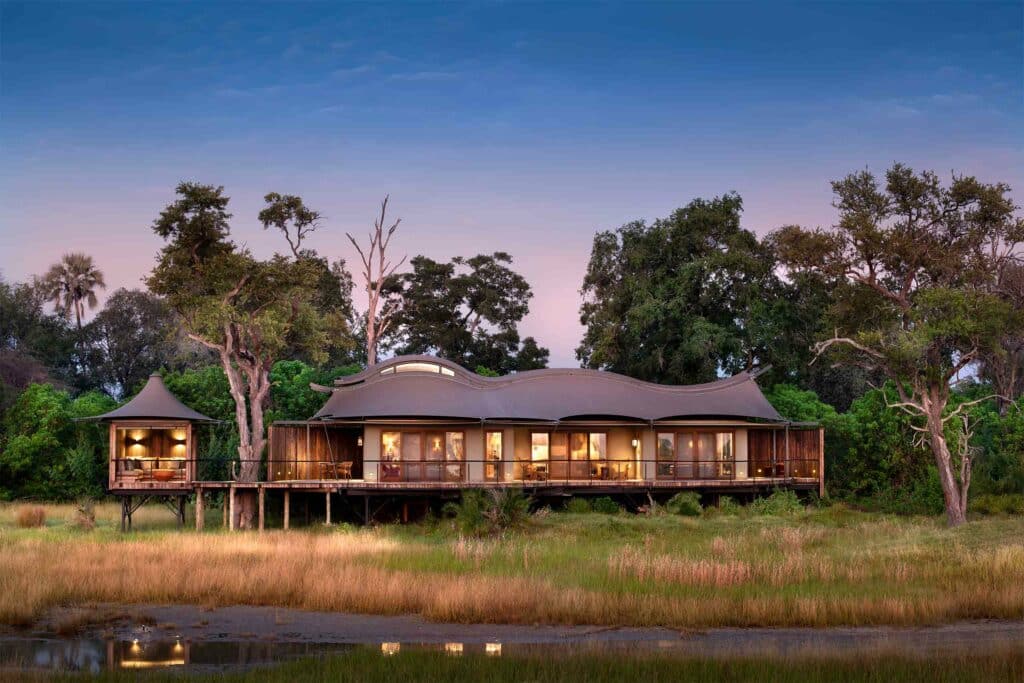
This world-famous Botswana safaris tourist destination has something for everyone, from birdwatching and game viewing to fishing, photography, night drives and walking Botswana safaris.
Most Botswana safaris tourists are there to see the Big 5 but the sound of millions of frogs, the nervous giggle of hyena, the call of fish eagles and the grumpy grunting of bossy hippos are usually what travellers remember best.
The Okavango Delta can be visited all-year round but the dry winter months and early spring (May to November) is considered the best time to visit the region.
Birders descend in their droves in the summer months (November to March) to catch the seasonal arrival of the migrant species.
This incredible wonderland stretches from the banks of the Boteti River which is the main river flowing out of the Okavango Delta. It collects the water that flows through the savanna grasslands in the Maun region and continues 250 kilometres south-eastwards until it reaches Lake Xau in the extreme south-western edge of the extensive salt pans.
In the mid-1980s flood water levels decreased significantly as the region entered into a period of drought. An agonising cycle of low rainfall in the catchment area created an arid landscape punctuated by a few waterholes in the river beds that were fed by underground seeps. The Boteti River only flowed strongly again in 2009 when the highest flood levels in the Okavango Delta that were recorded in the last 25 years.
The Makgadikgadi Pans National Park is a harsh, arid region but animals such as the oryx, kudu and elephants have adapted to living in such extreme conditions.
Thousands of zebra and wildebeest migrate to the river flood plains at the end of winter when the dry desert landscape transforms into a magical oasis.
Thousands of migratory bird species make their way over extremely long distances to enjoy the spoils of a glorious rainy season.
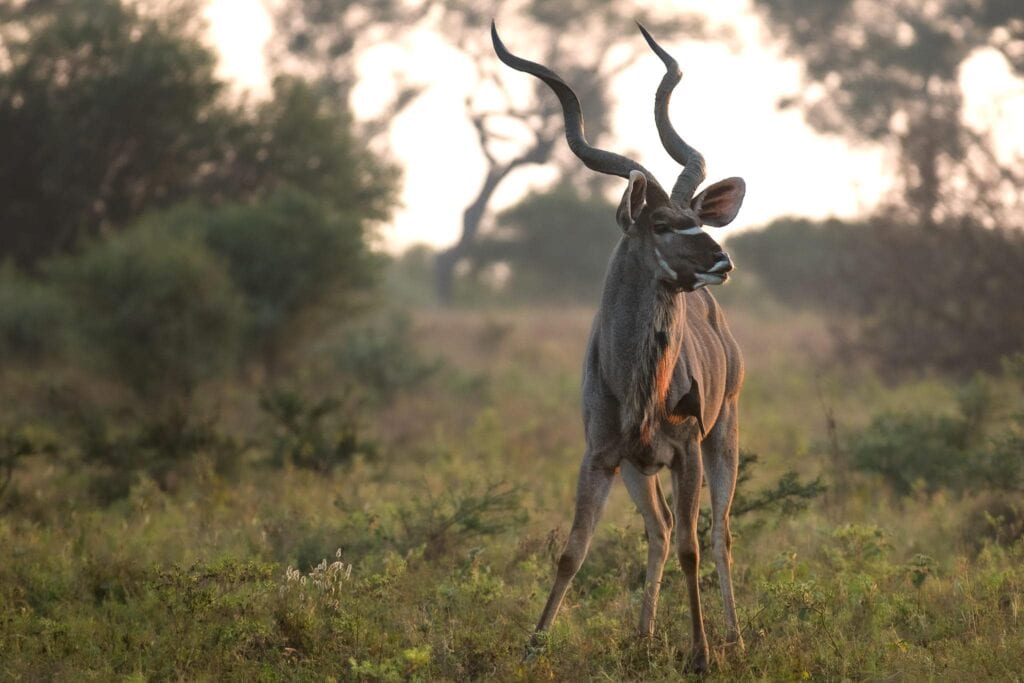
The Makgadikgadi Pans National Park is home to the second-largest zebra migration in the world, with some 25 000 making the journey to the Boteti River in search of better grazing. The Boteti River system is a unique ecosystem that is renowned for its seasonal peaks of being bone dry or in full flood.
Over centuries, the wild game and migratory birds have adapted their migratory habits to accommodate seasonal fluctuations.
Kubu Island is located near the south-western shore of Sowa (or Sua) Pan. It is one of the most popular Botswana safaris destinations in Botswana, known for its forest of ancient baobabs that surrounds the white-washed salt pans. The name Kubu means ‘large rock’ in Kalanga or ‘hippopotamus’ in Tswana, which perfectly describes the dry granite rock island that is a standout landmark in the Makgadikgadi Pan.
Kubu Island is a national monument and is considered by the indigenous people living in the region to be a sacred site. The crescent-shaped island has terraced slopes with fossil beaches that are rich in archaeological history, where stone tools, arrowheads and dry stone walls (cairns) dating back to the era of Homo sapiens have been discovered (from around 1 400-1 600 AD).
Archaeologist Alec Campbell presented a theory that the remote island was used as a ‘circumcision camp’ where boys from the ancient tribes were taken for the circumcision ceremony marking their entry into adulthood. It is still common practice for men over 16 years of age who live in the neighbouring villages to visit the island to make contact with God, singing a particular song for rain and leaving sacrificial offerings at the sacred site.
If you are planning to stay overnight at Kubu Island, be warned that the only accommodation available is for seasoned campers. Lekhubu Camp can accommodate a limited number of visitors at 14 campsites, with basic braai facilities and a pit latrine toilet per campsite. Kubu Island is only accessible by four-wheel drive vehicles.

This premier Botswana safaris destination is located in northern Botswana and forms part of the Makgadikgadi complex. The salt-crusted basin is spread over two pans that were once ancient salt lakes that have since been covered in grass and support an abundance of bird and wildlife. The 2 580 square kilometre national park is characterised by swathes of natural forest, savanna woodland, and expansive grasslands.
The two pans are Nxai Pan and Kgama-Kgam Pan. The pans are believed to have been formed some five million years ago when the Okavango, Chobe, and Zambezi Rivers flowed along a different course. Tectonic activity re-directed the rivers and left behind a vast expanse of dry riverbeds. The terrain seems to stretch endlessly until it meets the watery horizon and, for much of the year, is a desolate destination. Only with the magical summer rains does it transform into a spectacular destination for wildlife Botswana safaris.
The Nxai Pan National Park was once state land, but it was proclaimed a wildlife reserve in 1970. Its boundaries were extended in 1992 to incorporate Baines’ Baobabs, and the area was granted national park status. The main attraction for tourists is the staggering number of herbivores that descend on the region during the rainy season. Wildebeest, zebra, and gemsbok in their thousands congregate around the water hole at Nxai Pan or roam across the open grasslands and acacia woodlands.
Travellers have a choice of two small public camping sites with ablution facilities, but these can only be reached with a four-wheel drive vehicle. There are no facilities available, such as shops and fuel stations, and tourists are advised to travel fully equipped to camp in this remote region.
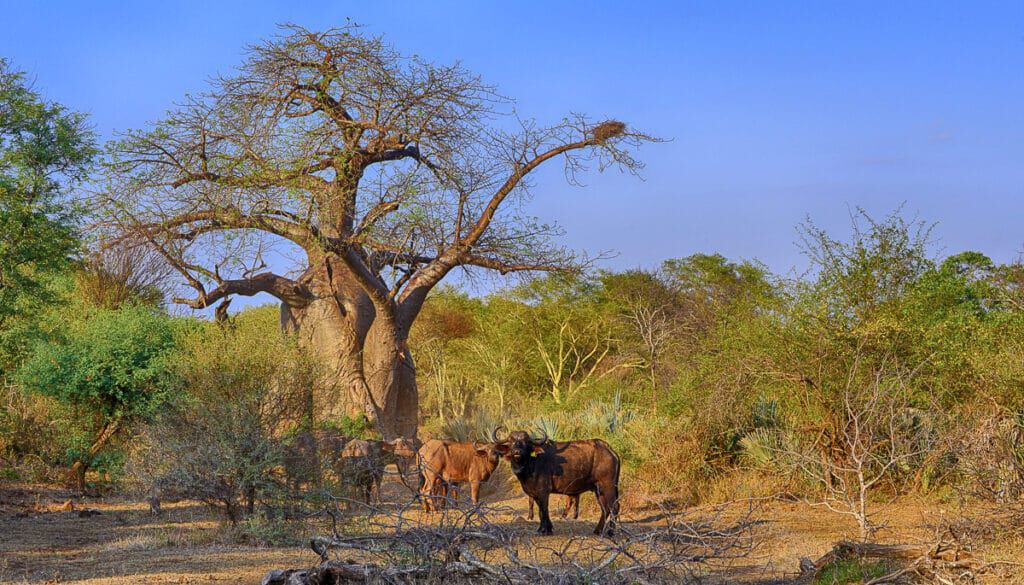
This awe-inspiring destination is located 30 kilometres from Nxai Pan National Park and is a highlight of any Botswana safaris tour. Seven massive, ancient baobab trees stand sentry on an island overlooking the white, salt-crusted Kudiakam Pan.
The island and baobab outcrop were named by the 19th-century explorer, Sir Thomas Baines, who came across them on his travels while completing a two-year journey from Namibia to Victoria Falls (1861-63). Baines was an artist and cartographer, and famously captured them in pencil-drawn sketches, which also include ox-drawn wagons and people attending to their horses. His diaries, sketches, and paintings are a historic record of Africa at that time.
With his travelling companion James Chapman, Baines endured extreme hardships in the arid region and nearly succumbed to illness, thirst, and starvation. Despite this, the intrepid explorer wrote that the journey “filled him with a deep appreciation of the beauty of Africa”.
Accommodation at Baines’ Baobabs is a few basic campsites with rustic ablution facilities, a pit latrine, and a shower. The campsite is not fenced or developed, and travellers are advised to come fully equipped for a real bush camping experience.

Tsodilo Hills is often referred to as the ‘Louvre in the desert’ with some 4 500 rock art paintings found in the dry corner of the Kalahari Desert. The region was inhabited by the Stone Age people, the Hambukushu and San communities and evidence of their existence can be found in abundance.
Tsodilo Hills gained UNESCO World Heritage status in 2001 for its unique religious and spiritual significance. Rock art, rock shelters, depressions and caves record unique evidence of human settlement over many millennia.
The heritage site includes other significant hills such as Child Hill, the Female Hill and the Male Hill. These are considered sacral sites to the San people of the Kalahari.
The majority of Botswana is covered by the Kalahari Desert that extends some 900 000 square kilometres from Namibia to the northern regions of South Africa. It gets its name from the Tswana word Kgala, meaning “the great thirst” or Kgalagadi, meaning “a waterless place” which aptly describes the vast arid landscape that is covered in red sand without any permanent surface water.
The Kalahari Desert came into existence approximately sixty million years ago along with the formation of the African continent. The existence of early humans dating back to the Stone and Iron Age can be found, and many of the tribal groups that live in the area are descendants of the early San people.
The only permanent river in the desert is the Okavango River which flows into the delta. Ancient river beds called omuramba meander through the arid central-northern region and create standing pools of water that fill up in the rainy season.
Seasonal rains create huge tracts of grasslands that are excellent grazing for animals, meaning the Kalahari is not a true desert such as the Namib Desert to the west.
Summer temperatures are scorching and in the rainy season, the wettest areas receive no more than about 500 millilitres of water.
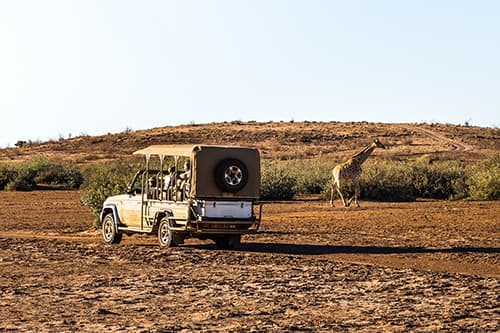
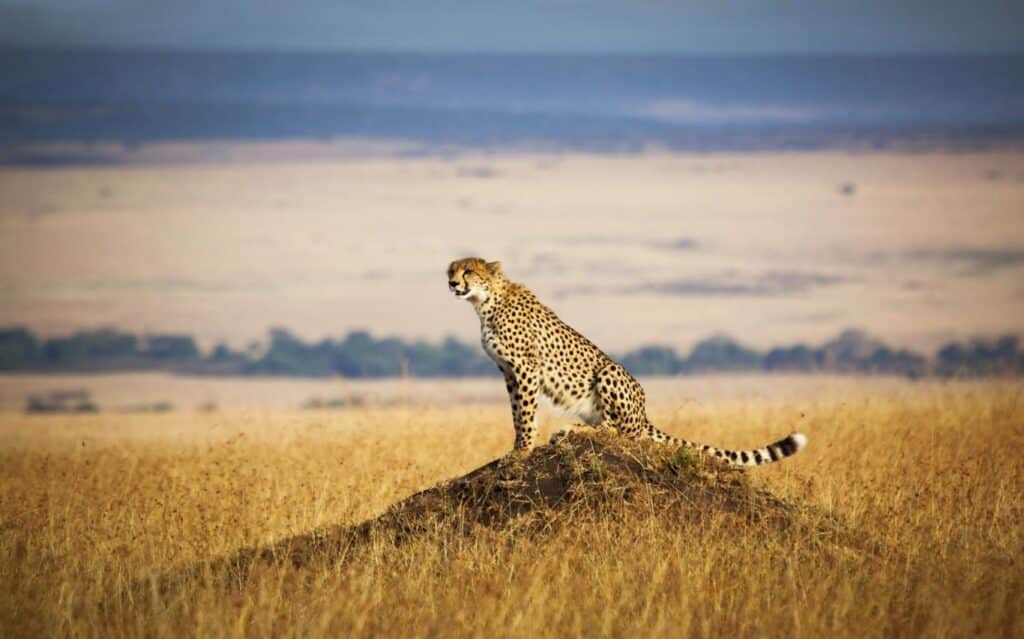
The Kalahari Desert is home to many migratory birds and animals, and a haven for elephants, giraffe and predators such as lions and cheetah.
These animals have adapted in unique ways to the arid desert habitat and exhibit remarkable survival skills.
The north and east regions of the Kalahari Desert is characterised by dry forests, savannas and ancient salt lakes.
The south and west regions are dominated by xeric savanna. Although referred to as a desert, the Kalaharian climate is subtropical with average annual temperatures greater than or equal to 18°C. Night temperatures plummet to -18°C in the coldest months of the year.
Summer temperatures are very hot, but in comparison to a true desert such as the Sahara Desert, daily temperatures are considered to be relatively mild (reaching up to 45°C).
The Kalahari Desert supports a variety of plants that include an abundance of acacia trees, the horned melon, African cucumber, jelly melon and hedged gourd.
These plants are endemic to the Kalahari Desert and a valuable source of sustenance to the San people.
The Kgalagadi Transfrontier National Park is spread over 3.6 million hectares that is characterised by massive sand dunes and dry riverbeds. It is located in the southern region of Botswana on the border of South Africa, with one-quarter of the park lying in South Africa. The national park is made up of two adjoining national parks, namely the Kalahari Gemsbok National Park in South Africa and the Gemsbok National Park in Botswana.
The Kalahari Gemsbok National Park in South Africa was established in July 1931 to protect the migrating game from poaching, with a special emphasis on the dwindling numbers of gemsbok. By 1999, representatives from what is now SANParks (South African National Parks) and the Department of Wildlife and National Parks in Botswana had set up a joint management committee to manage the expansive conservation region in both countries as one single ecological unit.
A historic bilateral agreement signed by both countries in 1992 created a formal entity whereby the two national parks would be managed according to mutually-beneficial conservation principles.
In 2000, President Festus Mogae of Botswana and then-President of South Africa, Thabo Mbeki, formally launched South Africa’s Peace Park which was named the Kgalagadi Transfrontier Park. In 2014, the world was shocked to hear that more than half of the Botswana portion of the peace park had been sold for shale gas fracking.
Kgalagadi means “place of thirst” and alternates between being dry and sun scorched to a magical oasis that comes alive in the rainy season. The largest portion of the national park lies within the southern Kalahari Desert and is dominated by sparse vegetation and scrub trees. The dry riverbeds of the Nossob and Auob Rivers are said to flow only about once in a century, although underground water sustains plant life in the area.
The national park has a reputation of being one of the best places in Botswana to see the Big Cats, including large numbers of cheetah, lion, leopard and hyena.
The Kgalagadi National Park offers the choice of three tourist lodges known as rest camps. They are fully-serviced lodges with standard amenities such as air conditioning, a convenience store and a swimming pool.
There are an additional six wilderness camps in the national park that are suited for seasoned bush travellers and those that prefer a more isolated, rustic experience.
In October 2002, an area of some 580 kilometres was set aside within the national park for the native Khomani San and Mier communities.
The main lodge is named !Xaus Lodge (meaning ‘heart’ in the local dialect) and revenue generated by tourism to the settlement area benefits the native communities.
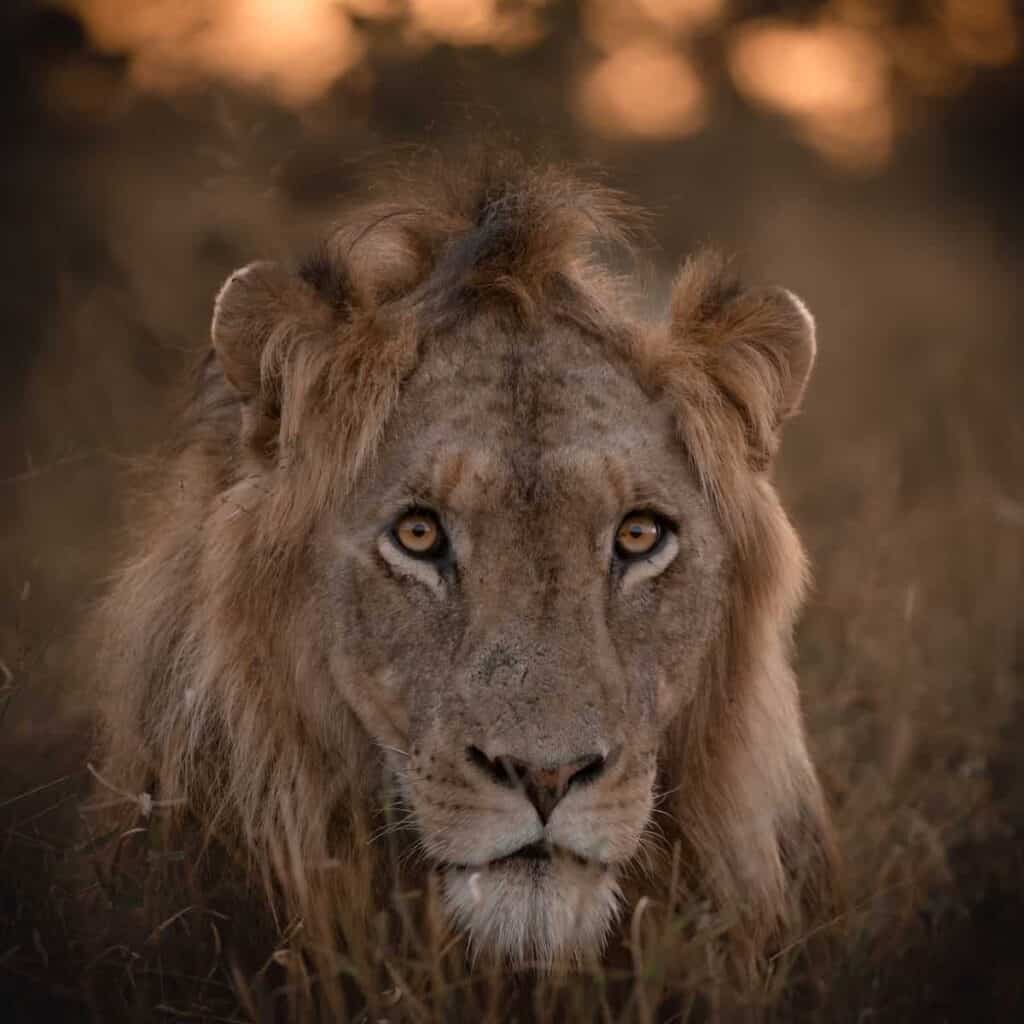
This premier Botswana safaris destination in Botswana lies on the eastern side of the Okavango and is regarded in leading tourism circles as one of the ‘best game reserves in Africa’. The Moremi conservation sanctuary is known as a game reserve, as opposed to a national park, which means the local BaSarwa (Bushmen) tribes that have always lived in the area are allowed to stay in the reserve.
Moremi Wildlife Reserve is the first wildlife sanctuary in Africa that was established by the native residents. The people were so concerned about the rapid depletion of wildlife in their ancestral lands brought about by unchecked hunting and the encroachment of cattle in the wild areas that, under the leadership of the late Chief Moremi III’s wife, took action and sought to proclaim Moremi a protected game reserve in 1963.
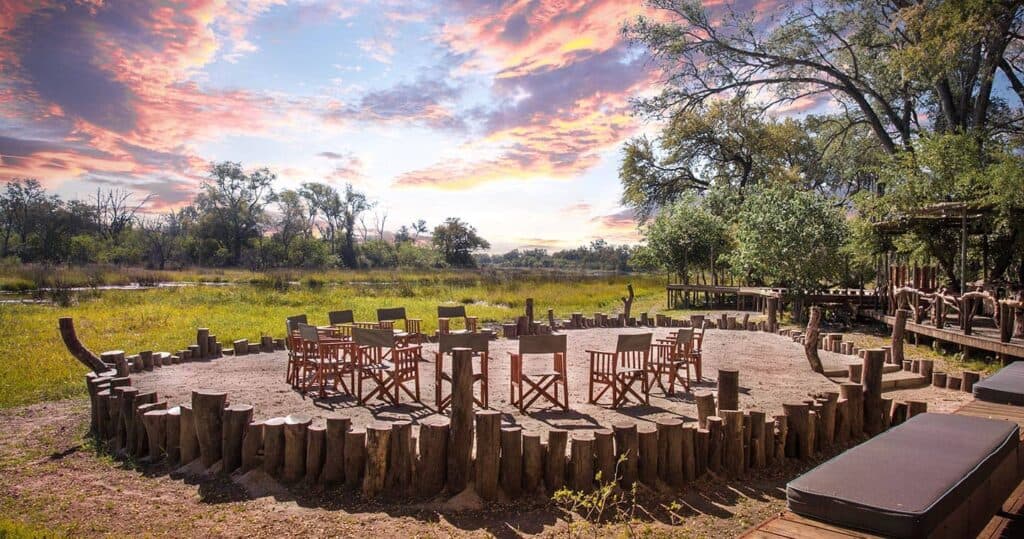
It is the only protected area within the Okavango Delta that allows the native inhabitants to continue to reside in the reserve.
It is situated in the central and eastern region of the delta and includes the prestigious Moremi Tongue and the chief’s island, which is regarded as one of Africa’s richest and most diverse ecosystems.
The Moremi Wildlife Reserve is a ‘Big Five’ Botswana safaris destination and world-renowned for spectacular game viewing and birdwatching. In addition, it is a sanctuary for the endangered black and white rhino of the country.
The reserve covers an area of approximately 3 9000 square kilometres and merges into the Okavango Delta which enjoys seasonal flooding. During the rainy season, an expanse of waterways, lagoons, pools and pans create a visual feast, interspersed by magnificent riverine and mophane forests.
The thickly wooded areas are home to the endangered Cape wild dog and leopard that traverse between the reserve and the Chobe National Park in the northeast.
It is not the largest park in Botswana but it is hugely popular as it supports nearly 500 species of birds and large numbers of Cape buffalo, the Angolan giraffe, Southwest African lion, elephant, black rhino, hyena, jackal and the red lechwe.
The Chobe River runs along the northern border of Chobe National Park that is located in northern Botswana. This lush green belt creates a spectacular natural landmark that supports an array of birds and wildlife. The most popular time to visit the Chobe National Park is during the dry season (April to October) when game concentrations are high.
The Chobe National Park was the first proclaimed national park in Botswana and the third largest in the country. It is regarded as the most biologically diverse of the top three national reserves in Botswana, made up of three distinct biospheres:
The original inhabitants of the Chobe area were the San Bushmen (also known as the Basarwa people).
They were nomadic hunter-gatherers who adapted to the extreme arid conditions of the semi-desert, moving constantly in search of better grazing and food sources. Rocky outcrops and hills in the region showcase the ancient paintings from this historic period.
At the beginning of the 20th century, the region had become Botswana and was divided into different land tenure systems. To protect the dwindling numbers of wild animals and promote the region as a premier Botswana safaris destination, the region was proclaimed a protected area in the early 1930s.
It was proclaimed a national park in 1967 and all hunting in the region was prohibited.
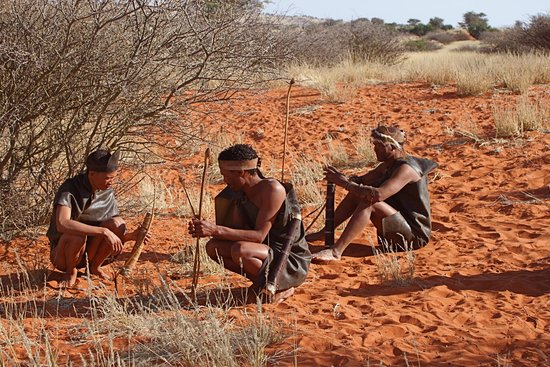
Local inhabitants were moved out of the Chobe district and farming activity that was dominated by the timber industry was closed down.
Today, the Chobe National Park is regarded as one of the most spectacular Botswana safaris destinations for sightings of the Big Five.
This secluded and uncrowded reserve lies to the north of the Okavango Delta in the furthest corner of Chobe National Park. The landscape is dominated by papyrus-lined lagoons, reed beds and large-canopy trees that flank the majestic river frontage.
Spanning an area of some 1 250 square kilometres, the reserve is bordered by the Linyanti River in the north on the Namibian border and the Chobe National Park in the east. It supports large concentrations of migratory birds and wildlife with other unusual sightings of rare species such as the aardvark.
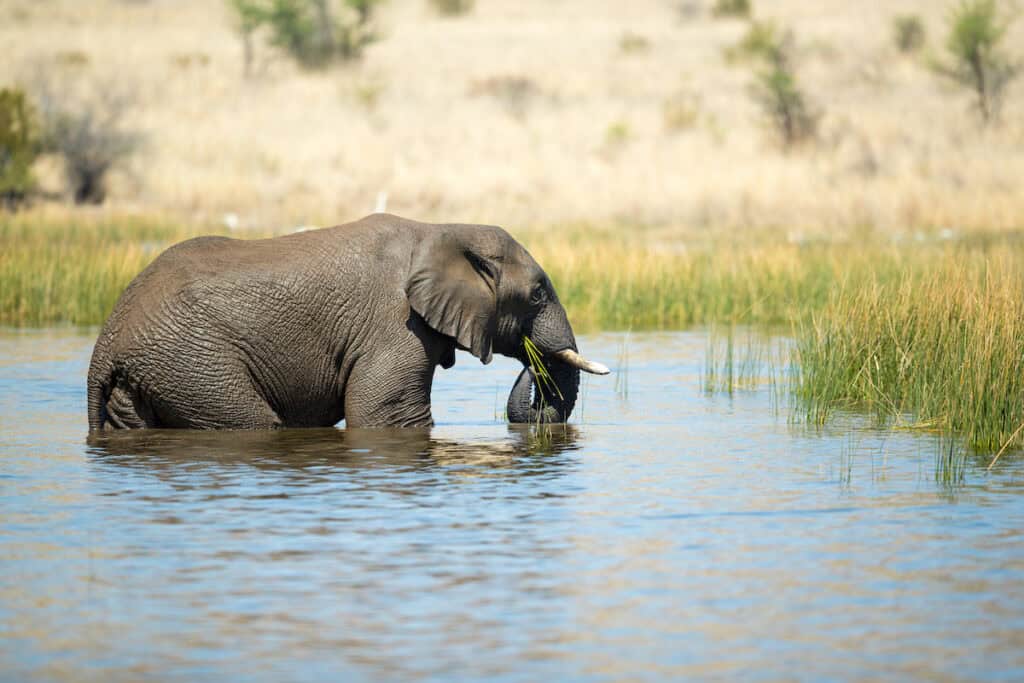
The Linyanti Wildlife Reserve is very different from the Okavango Delta and is characterised by open grasslands and waterholes that are fed by the Savuti and Linyanti Rivers.
Stunning forests of mopane and leadwood trees create a wild oasis for the massive herds of elephant that descend on the area in the winter months (June to October).
The Linyanti Wildlife Reserve is situated in a remote area that is not easily accessible, it is highly prized as a Botswana safaris destination for travellers who prefer the tranquillity and solitude of the pristine grasslands.
Botswana safaris tourists have the choice of a few small private camps that offer an exclusive experience for the lucky few.
The Khama Rhino Sanctuary was established by the Botswana government in 1992 as a community-based project to help protect and restore the numbers of both white and black rhino in Botswana. The emphasis of the rhino sanctuary is on sustainable tourism, and the community derives economic benefits from tourism in the region.
In addition to rhino, the 8 585 hectare wildlife sanctuary supports a wide array of bird species and wild game.
There is a variety of accommodation available at Khama Rhino Sanctuary, with the most popular being the well-managed campsite.
This option is ideal for wildlife enthusiasts who prefer to avoid the crowds for the tranquillity and solitude of the wild region.

Maun, which means the “Place of Reeds”, is the gateway to the spectacular Okavango Delta. Maun has developed from a very small rural village into a busy city with a growing population and good infrastructure.
The town of Maun was avoided for a long period of time when a tsetse fly invasion drove villages out of the settlement and kept people away. The tsetse fly plague was eradicated in the 1930 and 1940s and the town began to thrive.
Maun first attracted traders and hunters but today it is regarded as the “safari tourist” hub of the country. The town has grown as an administrative capital and is home to the North West District Council (NWDC) that administers the vast region.
Make this holiday breakaway the best one ever! Enquire now about our affordable 2026/2027 holiday packages with the best guided Botswana safaris.
Gaborone is the capital and largest city of Botswana, and the administrative and legislative seat of government. It boasts a population of some 230 000 people, which represents about 10% of the total population. It is also the headquarters of the Botswana Stock Exchange and the South African Development Community (SADC), which is a regional economic community established in 1992.
Since its independence, Botswana has gained international fame for having one of the fastest growth rates in per capita income in the world. The government is responsible for transforming the country from being one of the poorest in Africa to being a middle-income, economically stable country.
Botswana is rich in natural resources and has established good economic frameworks to capitalise on mining and tourism in the region.

Botswana’s businesspeople enjoy a high level of economic freedom compared to other African countries, and the government is regarded as relatively free of corruption.
The government abolished exchange controls, which resulted in the creation of new investment options that proved highly attractive to multi-national mining groups and other international trading enterprises.
Botswana received the highest sovereign credit rating in Africa and has stockpiled foreign exchange reserves amounting to almost two and a half years of current imports.
After mining, tourism is the cornerstone of Botswana’s economy.
Botswana safaris-based tourism is tightly controlled, and wildlife conservation is strongly supported as a means of securing revenue for the people of Botswana who otherwise would have no other means of supporting their families.
The climate of Botswana is divided simply into the dry, hot months and the rainy, wet months. Rainfall can be erratic, unpredictable and differs vastly from one region to another.
The summer season begins in November and ends in March.
The day temperatures are scorching hot and there is little cloud cover to ease one’s pain. Light rain showers occur but only for short periods of time.
The winter season begins in May and ends in August. This is regarded as the dry season when virtually no rain falls in the area. Winter days are sunny and warm, but not as unbearably hot as the summer days.
Temperatures drop at night, often to below freezing in the cooler regions in the southeast which is gets the cold, night winds from the Atlantic Ocean on the Namibian coastline.
The best time to visit Botswana for spectacular game viewing is during the in-between months, namely April/May and September/October. The climate is more temperate, with cooler days and warmer nights.
The best time to visit Botswana if you are an enthusiastic birder is during the wet summer months, between November and March. This is when the Okavango Delta is teeming with migratory birds.
The rainy season is in summer, with the highest rainfall usually experienced in January and February. Rainfall is affected by how far west and south you go. Humidity levels in summer range from 60 to 80% at the hottest time in the day to between 30 to 40% in the afternoons and early evenings.
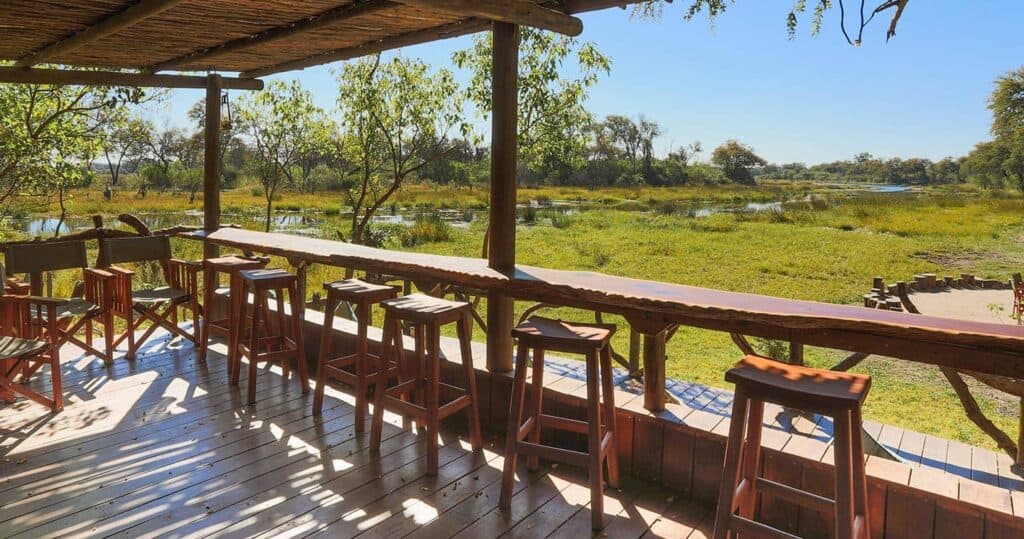
For tourists, the best time to visit Botswana is from April through to October. This is an ideal time both for weather and game viewing. In the dry spells, an abundance of migratory bird species and animals descend on the floodplains, natural waterholes and river channels.
Botswana is a malaria area and Botswana safaris tourists are advised to take prophylactics for the prevention of malaria. Travellers are also advised to use insect repellent and to wear long-sleeved clothing, long trousers and socks when outside at night.
Any person visiting from or having travelled through a country that is a yellow fever infected region must be in possession of a valid International Certificate of Vaccination against yellow fever.
Tap water in Botswana is purified and is safe to drink at hotels, lodges and other public places.
All major credit cards are accepted at hotels, shops and restaurants in the major city centres. However, banking facilities are limited in the more remote regions. Take an adequate amount of cash to pay for fuel as some remote petrol stations do not take credit cards.
Botswana is regarded as one of the safest countries to travel around in Africa. The government and its citizens are acutely aware of how much they depend of tourism and generally a zero-tolerance to crime and corruption is exhibited. Regardless of its safety record, tourists are advised to follow the usual precautions to stay safe and to keep their valuables safe.
Maun is the fifth largest town in Botswana and is regarded as the “tourist capital” of the country. It is the headquarters of the majority of Botswana safaris and air-chartered operations who take international tourists to the popular tourist destinations. The town has shopping centres, hotels and banking facilities but it has a reputation for being somewhat of a “wild west outpost”. Are you convinced now to book your botswana safaris?
MoAfrika Tours specialises in tours to the major destinations and tourist attractions in South Africa. With our latest 2025/2026 South Africa Tour packages we can work out an itinerary that will suit your travel needs.
The best time to go on a Botswana safari is during the dry season, from May to October. Wildlife is easier to spot as animals gather at water sources and vegetation is sparse.
Most travellers from countries such as the UK, USA, Canada, EU nations, Australia and South Africa do not require a visa for stays of up to 90 days. Always check the latest requirements before you travel.
Botswana is home to the Big Five—lion, leopard, elephant, buffalo and rhino—along with wild dogs, cheetahs, hippos, crocodiles and hundreds of bird species. Wildlife sightings vary by region and season.
Yes, many safari lodges and tour operators cater for families. Some offer child-friendly activities, but age restrictions may apply for certain camps or walking safaris. Always check in advance.
Botswana packages range from luxury fly-in safaris to affordable self-drive tours. Options include guided game drives, mokoro trips, boat cruises and cultural experiences, with a variety of accommodation styles.
Botswana is considered one of the safest safari destinations in Africa. Professional guides, secure lodges and a stable political environment contribute to a safe travel experience.,
Pack light, neutral-coloured clothing, comfortable walking shoes, a warm jacket for mornings, insect repellent, sun protection, a camera, binoculars, and a soft-sided bag for light aircraft transfers.


WhatsApp Now