
Uganda safaris offer something quite different from the open grasslands many travellers associate with Africa. Here, you can spend a morning tracking mountain gorillas through thick rainforest, watch elephants along the Nile, and explore national parks where lions, buffalo and antelope move through a mixture of savannah, woodland and wetlands.
For many visitors, gorilla trekking is the main reason to travel to Uganda. But there is much more to experience if you allow enough time. Chimpanzee tracking in Kibale, game drives in Queen Elizabeth National Park and boat safaris at Murchison Falls can turn a short primate trip into a varied wildlife holiday.
The important part is choosing the right combination of destinations. Uganda’s national parks are spread across the country, and travelling between them can take longer than expected.
Yes. Uganda is particularly well suited to travellers who want to combine gorilla trekking, chimpanzee tracking and traditional African wildlife safaris in one trip.
Bwindi Impenetrable National Park and Mgahinga Gorilla National Park offer opportunities to track mountain gorillas, while Kibale is known for chimpanzees. Queen Elizabeth, Murchison Falls and Kidepo Valley provide more traditional game-viewing experiences.
Most first-time visitors will find that seven to ten days allows for a more balanced Uganda safari. Shorter trips can work well if gorilla trekking is the main priority.
Unlike some East African safari destinations, Uganda involves a mixture of forest walks, game drives, boat excursions, and longer road transfers. It is a rewarding combination, but one worth planning carefully.
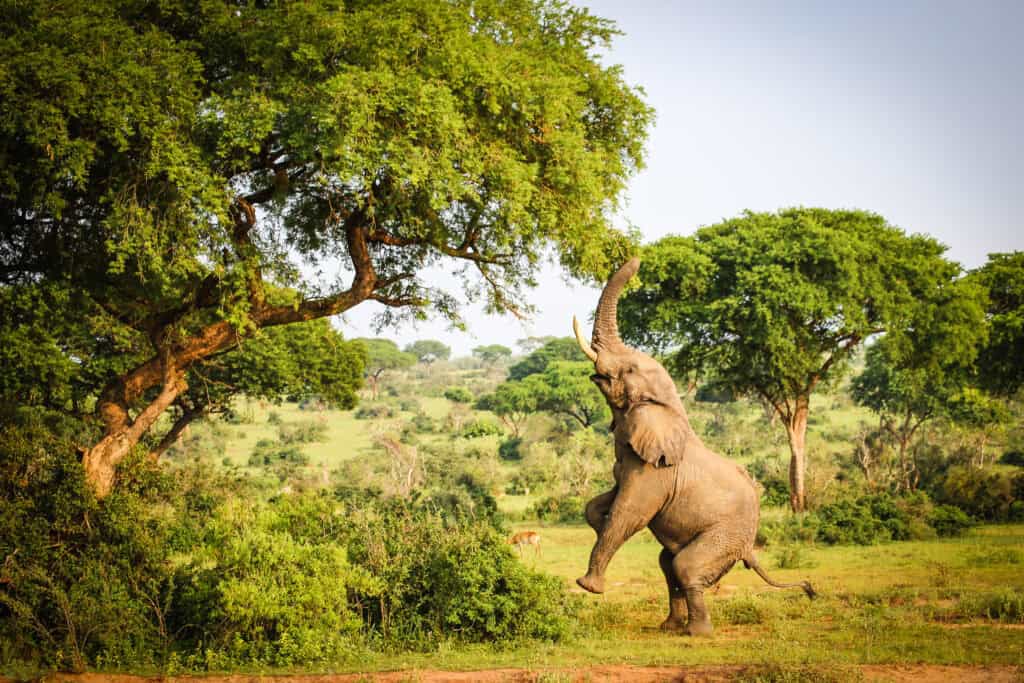
Wildlife moves freely, so sightings and the course of any trek cannot be guaranteed.
Gorilla trekking is a specific experience on some Uganda safari itineraries; it’s not included in every Uganda safari.
A traditional wildlife safari usually centres on game drives and sometimes boat activities. Gorilla trekking takes place on foot in mountainous forest, with a booked permit for a particular date and trekking location.
Planning question | Gorilla trekking | Wildlife safari |
How do you explore? | On foot with a guided trekking group | Mainly by safari vehicle, with boat activities where available |
What anchors the itinerary? | The permit date and trekking location | Your chosen parks, accommodation and activity schedule |
What physical effort is involved? | Several hours of walking, potentially on steep or muddy ground | Less sustained walking on a drive-based itinerary |
Where should you stay? | Within practical reach of the assigned trekking starting point | In or near the parks on your route |
Is it automatically included? | No; the permit must be explicitly confirmed | Only the drives and activities listed in your quotation are included |

For many travellers, the moment they first see a mountain gorilla is the reason they booked the trip.
But gorilla trekking is not a conventional game drive. You need to be prepared for the walking, changing weather, and uncertainty that come with tracking wild animals in a forest.
Uganda has two main gorilla trekking destinations.
Bwindi Impenetrable National Park lies in southwestern Uganda and is recognised as a UNESCO World Heritage Site.
Its mountain forests support endangered mountain gorillas, forest birds, butterflies and a remarkable variety of plant life.
The park has four principal gorilla trekking sectors:
Each sector has different accommodation options, access routes, and terrain.
One of the most common planning mistakes is booking a lodge without checking which trekking sector the permit has been allocated to.
Bwindi is a large forest area. Staying near the wrong sector can result in a difficult or impractical early-morning transfer.
What guides usually recommend: Confirm the gorilla trekking permit and sector before finalising accommodation. It is much easier to plan the lodge around the permit than to discover later that the two are far apart.
Mgahinga Gorilla National Park is situated in southwestern Uganda, near the borders with Rwanda and the Democratic Republic of Congo.
The park forms part of the Virunga mountain landscape and offers gorilla trekking in a different setting from Bwindi.
Volcanic scenery, bamboo vegetation and mountain slopes give Mgahinga its own character.
Golden monkey tracking is another attraction.
Mgahinga can be a good choice for travellers interested in both primates and mountain scenery, although trekking availability is more limited.
Feature | Bwindi | Mgahinga |
Landscape | Dense mountain rainforest | Volcanic slopes and bamboo forest |
Gorilla trekking | Multiple trekking sectors | More limited trekking availability |
Accommodation | Broad selection across sectors | Smaller selection |
Additional experiences | Forest walks, birding, community activities | Golden monkey tracking, mountain scenery |
Planning consideration | Permit sector and lodge location | Limited permit availability |
Often suits | Most first-time gorilla trekkers | Travellers seeking a quieter mountain setting |
Neither park can guarantee an encounter. Both involve wild gorillas living in protected natural habitats.

Gorilla trekking can range from a manageable forest walk to a strenuous hike.
The difficulty depends on the location of the gorilla family, the terrain, recent rainfall, and how far the animals have moved.
You may encounter:
You do not need to be an experienced mountain climber, but a reasonable level of fitness is important.
Travellers with mobility concerns should discuss their needs before booking. Porters and, in some circumstances, specialised assistance may be available, but arrangements need to be confirmed in advance.
Gorilla trekking has a minimum age of 15 under Uganda Wildlife Authority regulations.
Most trekking days follow a similar pattern.
The length of the day can vary considerably.
Some treks are relatively short. Others require patience, stamina, and a willingness to deal with uncomfortable walking conditions.
It is also important to follow the health and distance rules designed to protect gorillas from human illnesses.
A gorilla trekking permit is required for visitors joining an authorised trek.
Permits are managed by the Uganda Wildlife Authority and are issued for specific dates and trekking arrangements.
Availability can become limited during popular travel periods, particularly when visitors are planning around fixed international flights.
A standard permit generally covers:
Transport, accommodation, porter services, tips and other travel expenses are normally separate unless included in a confirmed itinerary.
Permit rates vary according to visitor residency category and the type of experience.
Before paying for a safari, ask for confirmation of the current permit price, availability, trekking date, and sector. Rates and booking rules can change, so these should be verified directly against Uganda Wildlife Authority requirements.
Bwindi is a key choice when mountain gorillas are the goal. Choose the trekking sector and accommodation together rather than booking a lodge first and hoping a nearby permit becomes available.
Mgahinga is another gorilla trekking option in Uganda’s southwest, in the Virunga mountain region. Compare this reserve with Bwindi according to permit availability and the accommodation you prefer.
Queen Elizabeth is a top choice for travellers who want game drives alongside a Kazinga Channel boat safari. Queen Elizabeth National Park fits naturally into a western Uganda itinerary that also includes primate experiences, although travel time still needs to be allowed for.
Murchison Falls combines savannah game viewing with river activities and the waterfall vistas. This experience anchors a wildlife-focused trip without gorilla trekking, or can form part of a longer journey that continues into western Uganda.
Kibale is an important destination for chimpanzee tracking and forest primates. This is a popular choice for travellers interested in combining chimpanzees with gorillas.
Consider Kidepo if a remote northern region is interesting to you. Kidepo’s position away from the southwestern primate circuit means it needs deliberate routing. Ask whether a dedicated northern trip or a flight-supported extension makes more sense than adding it to a short road itinerary.
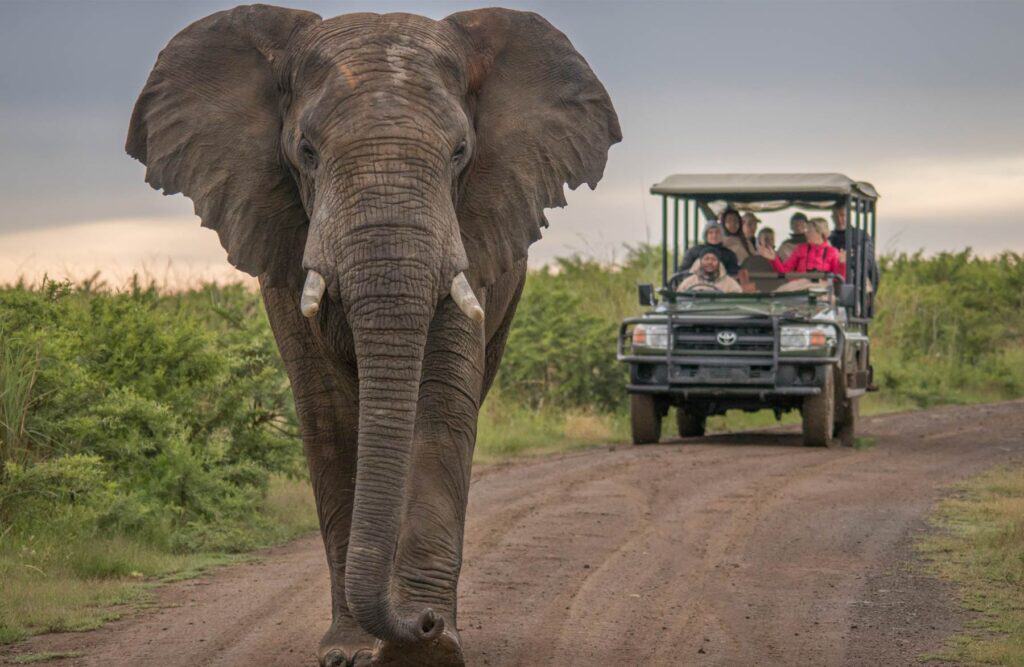
Uganda safari costs depend on the route, number of travellers, accommodation standard, transport and activities. A short wildlife trip and a longer journey with gorilla and chimpanzee trekking have very different budgets.
The main factors to compare are:
Permit charges should be checked against the UWA tariff applicable to your travel dates and nationality or residency category. UWA has tariff changes covering 2026–2027, including seasonal provisions and changes with different effective dates, so older online prices should not be treated as a current quotation.
Request a dated quote in a stated currency, with inclusions, exclusions and payment terms. This gives you a useful basis for comparing Uganda safari packages.
Safari style | Typical accommodation | Transport approach | Main trade-off |
Budget | Simple guesthouses and lodges | Primarily road transfers | Lower comfort and potentially longer travel days |
Mid-range | Comfortable safari lodges | Private or organised road transfers | Balance of cost and comfort |
Luxury | Higher-end lodges and camps | Private transport, sometimes domestic flights | Higher overall cost |
Fly-in | Lodges near suitable airstrips | Domestic flights and local transfers | Less road travel, higher transport costs |
There is no single reliable price for every Uganda safari.
A meaningful quotation should specify the exact itinerary, accommodation, permit costs, transport arrangements, and inclusions.
What should you check before accepting a quote?
Ask whether gorilla permits, chimpanzee permits, park fees, meals, transfers and domestic flights are included.
A lower headline price is not always better value if important activities have been excluded.
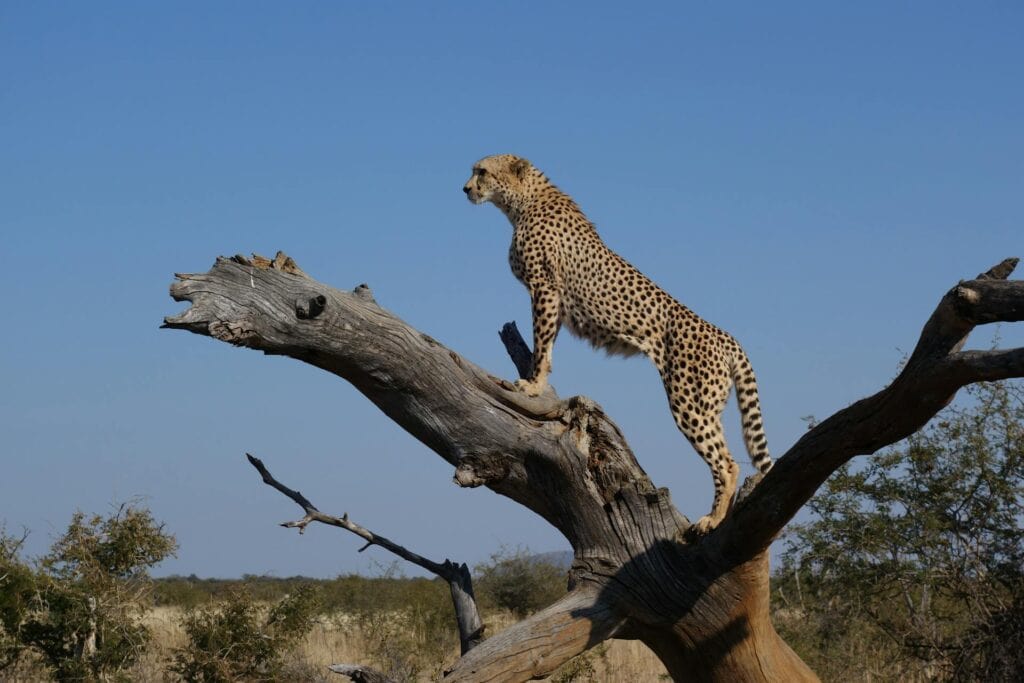
The drier travel periods are June to September and December to February. Wetter periods fall in March to May and October to November, although rainfall varies by region and September can be transitional. Forest rain is still possible throughout the year.
Drier conditions can make trekking trails and road transfers easier, and game can be easier to spot in savannah parks. Popular travel periods also bring more demand for permits and accommodation, so enquire early if your dates or lodge preferences are fixed.
Wetter months bring prefer greener scenery and quieter lodges. Accommodation savings may be available, but slippery trails and slower road journeys need to be weighed against the price. Ask for any seasonal permit offer to be checked for your exact dates and visitor category.
The northeast follows a different rainfall pattern from the southwestern forests. If Kidepo is central to your trip, plan around that region instead of using one national weather calendar.
The drier months are popular because forest paths are often easier to manage and travel conditions can be more comfortable.
June to August and December to February are commonly preferred for gorilla trekking.
However, Uganda’s rainforests can receive rain at any time of year.
A dry-season booking does not mean every trekking day will be dry.
The wetter months bring lush vegetation, green landscapes, and interesting photographic conditions.
Some lodges may offer more favourable rates outside peak travel periods.
The main drawback is the walking.
Steep forest paths can become muddy and slippery, and rain can make a gorilla trek more physically demanding.
For travellers who are comfortable with those conditions, the wetter months can still be rewarding.
For first-time visitors, the drier periods are generally easier to plan around, particularly when gorilla trekking is the main activity.
If your travel dates are flexible, start by checking permit availability rather than choosing accommodation first.
The right trekking date and sector can have more influence on the practical success of the itinerary than a small difference in lodge standard.
These are planning ranges rather than fixed packages. Your arrival time, departure flight and choice of road or air transfers can change the outcome.
Time available | A realistic focus | What to keep in mind |
3–4 days | A short wildlife trip centred on one park | Transfers take up part of the trip; avoid squeezing in distant destinations |
4–5 days | A gorilla-focused itinerary | Allow for arrival, travel to the trekking area, the trek and return arrangements |
Around 7 days | Gorillas plus one complementary wildlife or primate destination | Select the route carefully; adding both chimpanzees and several game parks can make it rushed |
10–12 days or longer | A broader wildlife and primate journey | More time allows several parks, less compressed transfers and some breathing room |

The following is an illustrative route rather than a currently advertised MoAfrika package.
It shows how travellers might combine Uganda’s best-known primate experiences with traditional wildlife viewing.
Day | Destination | Suggested activity |
Day 1 | Entebbe | Arrival and overnight stay |
Day 2 | Kibale region | Transfer to Kibale and settle into accommodation |
Day 3 | Kibale / Queen Elizabeth | Chimpanzee tracking, followed by onward travel if timing allows |
Day 4 | Queen Elizabeth | Morning game drive and Kazinga Channel boat safari |
Day 5 | Bwindi | Travel towards Bwindi, potentially through Ishasha |
Day 6 | Bwindi | Gorilla trekking |
Day 7 | Entebbe | Return journey or domestic flight connection |
Important planning note: This is a fairly busy seven-day itinerary. The return from Bwindi to Entebbe by road is a long journey, and domestic flights can make the final day more manageable. Flights, trekking sectors, and transfer times must be checked before confirming the route.
For travellers who prefer a slower pace, adding one or two nights is often worthwhile.
The following are starting points for an enquiry. As example routes, they are not confirmed departures or guaranteed package inclusions.
Combine a gorilla trek in the southwest with game drives and a Kazinga Channel boat safari if you want a forest experience paired with more traditional wildlife viewing.
A seven-day outline could include arrival and an overnight near Entebbe, a transfer to Queen Elizabeth, a day of game viewing and boating, then travel to the confirmed gorilla trekking area. Allow a dedicated trekking day, a return travel day and time for departure. The order may change to match permit availability, and some routes benefit from an extra night.
Build the trip around Kibale and either Bwindi or Mgahinga. This gives primate enthusiasts two distinct forest experiences, with separate permits and travel between the destinations. Consider a quieter night between demanding activities.
Choose Murchison Falls or Queen Elizabeth for a shorter trip, or discuss combining both with more time. This option is a strong choice for travellers hoping for game drives and boat safaris. Gorilla permits are not required for an itinerary that excludes gorilla trekking.
A longer circuit can combine Murchison Falls, Kibale, Queen Elizabeth and a southwestern gorilla trekking destination. The extra days accommodate the distances involved. If Kidepo is also on your wish list, ask about extending the trip or revising the route.
Uganda offers opportunities to see several of the Big Five, but it is not usually the first destination recommended for travellers whose sole objective is to see all five species.
Lions, leopards, elephants and buffalo occur in various protected areas.
Wild rhinos are not part of the usual game-viewing experience in Uganda’s main national parks. Rhino conservation and viewing opportunities are associated with specialist facilities such as Ziwa Rhino Sanctuary, subject to current access arrangements.
If seeing all five species on conventional game drives is your main priority, other safari destinations may be more suitable.
Uganda’s strength lies in the variety of experiences, particularly its forest primates
Packing for Uganda requires a little more thought than packing for a traditional open-vehicle safari.
Gorilla trekking means walking through the forest, sometimes in wet conditions, while game drives can bring warm days and cooler mornings.
Avoid bringing more luggage than necessary, especially if your itinerary includes domestic flights.
Smaller aircraft may have strict luggage weight and bag-type requirements.

Most international visitors arrive through Entebbe International Airport.
From Entebbe, safari routes may continue by road or domestic flight, depending on the destination.
Road transfers can be scenic, but they are not always quick.
Travel times depend on road conditions, traffic, weather, and the exact location of the lodge.
Entry requirements depend on nationality.
Travellers should check the current Ugandan immigration requirements well before departure and use official government channels for visa applications.
Passport validity, entry permissions, and any applicable regional visa arrangements should be confirmed before travelling.
Travellers should seek current advice from a qualified travel health professional before visiting Uganda.
Yellow fever documentation, malaria prevention, and routine travel vaccinations may need attention depending on individual circumstances and applicable entry requirements.
Because gorillas and chimpanzees are vulnerable to human illnesses, visitors must also follow the health rules set by park authorities.
Many visitors enjoy organised safaris in Uganda, but safety conditions vary by region and can change.
Travellers should review current official travel advisories, particularly for border areas, and follow local guidance.
Using experienced local operators, confirming transport arrangements, and understanding the route before departure are sensible precautions.

Inclusions vary by itinerary. A quotation csn cover accommodation, specified meals, airport transfers, a safari vehicle and driver-guide, park entry and selected game drives or boat activities.
Gorilla and chimpanzee permits are included only when expressly listed and confirmed.
Also check whether domestic flights, international flights, visas, travel insurance, drinks, tips, porter services and optional excursions are included or payable separately. An itinerary description explains what you will do; the written quotation will describe what you are paying for.
The difference between a comfortable Uganda safari and an exhausting one often comes down to the route.
Travellers sometimes underestimate how much time is needed to move between national parks.
They may also book accommodation before checking trekking permits or assume that every gorilla trekking sector is easily accessible from the same lodge.
These details matter.
A well-planned itinerary should account for:
For many guests, spending an extra night in the right location is more valuable than trying to squeeze another destination into the itinerary.

MoAfrika Tours is an established South African safari operator with more than two decades of experience helping travellers explore wildlife destinations in Southern Africa.
Our safari approach focuses on practical planning, realistic wildlife expectations and helping guests understand the differences between destinations and travel styles.
Uganda requires particular attention to permits, routes and travel times.
Our Uganda safari packages are currently being developed. Travellers interested in visiting Uganda can submit an enquiry to discuss their preferred travel dates, safari interests and accommodation expectations.
Available options, partner arrangements, permit requirements and quotations must be confirmed before any booking is made.
A Uganda safari can be as focused as a gorilla trekking visit or as varied as a longer journey through rainforest, savannah, and river landscapes.
The right choice depends on how much time you have, which animals matter most to you, and how comfortable you are with longer travel days.
If mountain gorillas are your main priority, start with permit availability and the trekking location. If you want a broader wildlife experience, allow enough time to combine Bwindi or Mgahinga with Kibale, Queen Elizabeth, or Murchison Falls.
Speak to MoAfrika’s safari team about your Uganda travel plans. Tell us when you hope to travel, how long you have, and what you most want to experience. We can help you understand the options as our Uganda safari offering develops.
Yes, especially if you want to see mountain gorillas or chimpanzees alongside traditional wildlife. If your main interest is extensive savannah game viewing, Kenya, Tanzania, or South Africa may be a better first choice.
Seven to ten days is a good starting point for a safari combining gorilla trekking, chimpanzee tracking, and game drives. Three to four days can work for a focused gorilla trekking trip, although travel time may be considerable.
June to August and December to February are generally popular because conditions tend to be drier. Rain remains possible throughout the year, particularly in forest areas.
Gorilla trekking requires a permit, and the cost depends on the visitor category and current Uganda Wildlife Authority rates. Confirm the latest permit price before booking, along with transport, accommodation, and any additional charges.
No. Gorilla trekking takes place in natural forest habitats, and wildlife movements remain unpredictable. Experienced trackers work to locate habituated gorilla families, but encounters cannot be guaranteed.
It can be. Some treks are relatively manageable, while others involve steep slopes, mud, and several hours of walking. A reasonable level of fitness and suitable footwear are important.
Gorilla trekking has a minimum age of 15 under Uganda Wildlife Authority rules. Families travelling with younger children should plan alternative activities for those who cannot participate.
Yes. Lions and elephants occur in several Ugandan national parks, including Queen Elizabeth and Murchison Falls. As with any safari, sightings depend on animal movements and local conditions.
Both countries offer mountain gorilla trekking. Uganda often appeals to travellers who want to combine gorillas with chimpanzees and savannah wildlife, while Rwanda can be attractive for shorter gorilla-focused itineraries because of access from Kigali. Permit costs, travel time and accommodation should all be compared.
MoAfrika Tours is currently developing its Uganda safari packages. You can submit an enquiry with your travel dates and interests, and the team can advise on the next steps. Availability and booking arrangements must be confirmed before a safari can be offered.




WhatsApp Now