
Many travellers visit Mpumalanga for a safari in Kruger National Park and only discover the Panorama Route while planning the journey. It’s easy to underestimate how much there is to see. A few scenic viewpoints can quickly turn into a full day exploring waterfalls, mountain passes, forested valleys and one of South Africa’s most remarkable canyon landscapes.
The Panorama Route follows the dramatic escarpment of the Mpumalanga highlands, where the land drops away towards the Lowveld. Along the way, you’ll find well-known attractions such as God’s Window, Bourke’s Luck Potholes, the Three Rondavels and Blyde River Canyon.
It’s a very different experience from a game drive in Kruger. Instead of watching the bush for wildlife, you’re looking out across mountains, valleys and rock formations shaped over millions of years.
For many travellers, the two experiences work particularly well together.
Yes. The Panorama Route is one of South Africa’s most rewarding scenic drives, particularly if you’re already visiting Kruger National Park or travelling through Mpumalanga.
Most visitors allow a full day to explore the main attractions. If you enjoy photography, short walks or visiting historical towns, two days give you more time without feeling rushed.
The most popular stops include:
The route can be explored independently or with a local guide. Both are worthwhile, although guided tours remove the need to navigate unfamiliar mountain roads and work out which stops to prioritise.
The Panorama Route is in northeastern South Africa, in Mpumalanga’s escarpment region around Graskop, Sabie, Pilgrim’s Rest and the Blyde River Canyon.
Graskop is a popular base for the best-known viewpoints. Sabie is farther south and popular for waterfall visits, while Pilgrim’s Rest includes the region’s gold-mining history. North of Graskop, the route follows the escarpment towards Bourke’s Luck Potholes and the Three Rondavels viewpoint over the canyon.
There’s also a longer journey beginning in Mbombela, formerly Nelspruit, and continuing through White River, Sabie, Pilgrim’s Rest and Graskop towards the Swadini area. Many travellers explore only the central stretch around Graskop and the canyon.
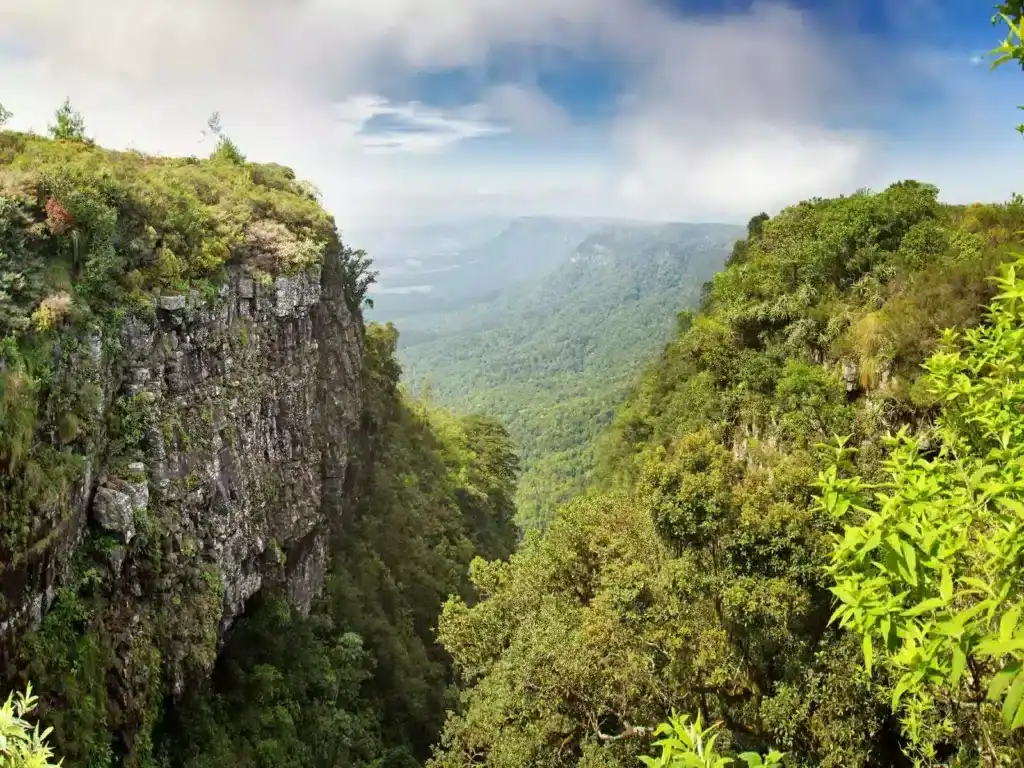
Think of the Panorama Route in three parts: the southern towns and waterfalls, the viewpoints around Graskop and the canyon farther north.
Route section | Suggested stops | Planning advice |
Southern approach | Mbombela and White River, or Sabie if arriving from Gauteng | Your approach depends on your overnight base. You don’t need to visit every town. |
Sabie and the historic-town detour | Sabie-area waterfalls and Pilgrim’s Rest | Give Pilgrim’s Rest its own block of time rather than squeezing it between northern viewpoints. |
Graskop area | Graskop Gorge, The Pinnacle and God’s Window | The R534 scenic loop connects the escarpment viewpoints with the R532. |
North along the R532 | Lisbon Falls, Berlin Falls and Bourke’s Luck Potholes | Select waterfalls according to your available time. |
Canyon viewpoints | Three Rondavels and other authorised canyon viewpoints | Leave time to enjoy the landscape before continuing to your accommodation. |
Onward journey | Return to Graskop or continue towards Hoedspruit, the lower canyon or Kruger | Check the actual road journey to your next stop; nearby places on a map can be separated by the escarpment. |
Reverse the order if you’re arriving from Hoedspruit. In misty weather, adjust your plans rather than spending the morning moving between viewpoints with the same obscured view.
The visit times below are suggested planning allowances. They exclude driving between attractions and the time spent increase with queues and photography or slower walking.
God’s Window looks out across the Lowveld from the escarpment. On a clear day, it’s one of the most astounding places to understand the change in elevation between the mountains and the plains below.
Allow 45–75 minutes if you want to explore beyond the first viewpoints. Expect steps and uphill walking. God’s Window is a great option for travellers who enjoy scenery and short walks, but anyone with limited mobility should confirm access arrangements before visiting. Low cloud can hide the view completely.
Lisbon Falls drops over a broad rock face near Graskop. It’s a good choice if you want a waterfall stop without committing to a long hike.
Allow 20–40 minutes for the designated viewing areas and photographs. Lisbon Falls fits well into a northern driving day and is a good option for families or travellers who want shorter stops between the larger attractions. Follow local signs and barriers rather than assuming paths down into the gorge are open.
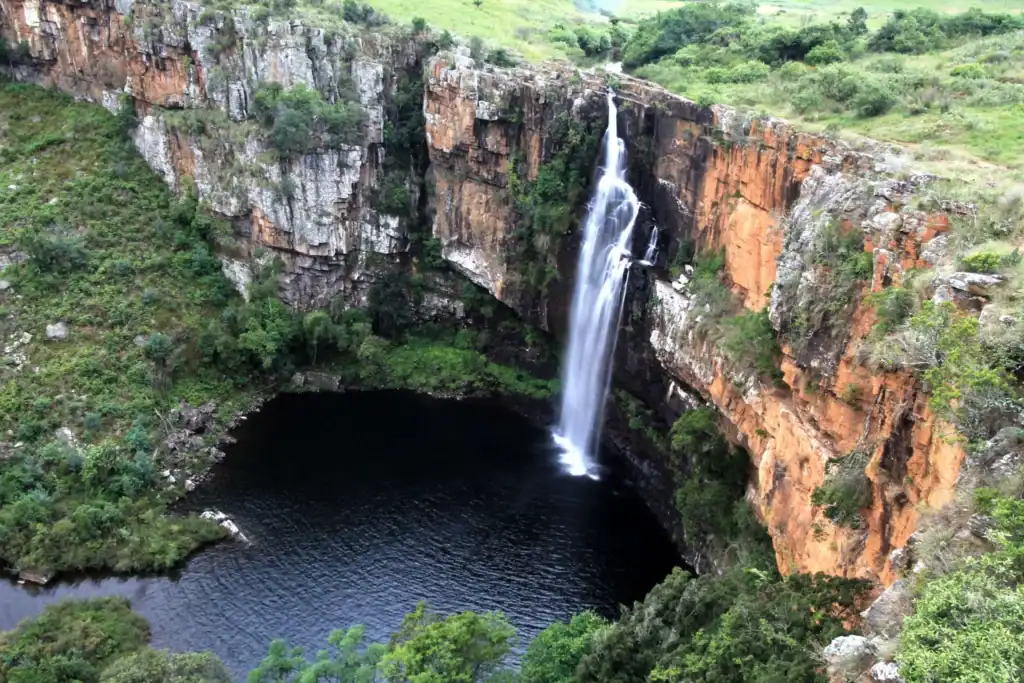
Berlin Falls offers a different waterfall profile, with water descending into a deep pool below the cliffs. The observation area makes it a rewarding companion to Lisbon Falls if you have time for both.
Allow 20–30 minutes. If your itinerary is already crowded, choose one waterfall and spend longer there.
The Pinnacle is a freestanding quartzite column rising above a wooded ravine. Unlike the wide outlook at God’s Window, this stop centres on a distinctive rock formation.
Allow 15–30 minutes. The Pinnacle is popular with photographers and travellers looking for a relatively brief scenic stop on the R534 loop. Mist can still affect visibility.
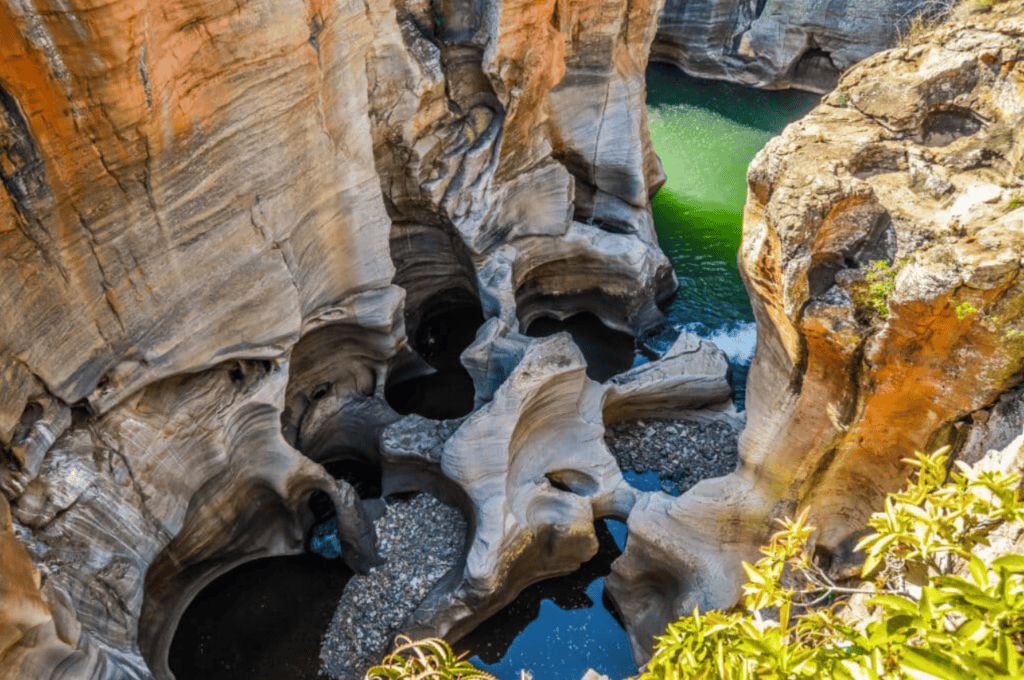
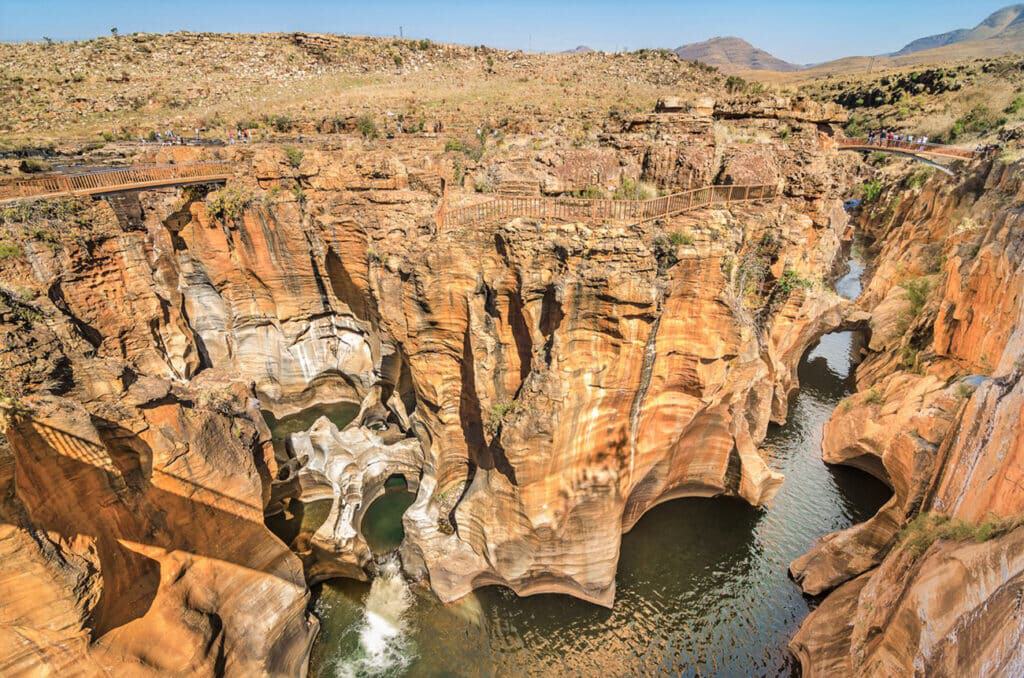
At the meeting of the Blyde and Treur rivers, swirling water has worn rounded hollows into the rock. Bridges and walking paths give you a closer view of these formations than you’ll get from the route’s distant overlooks.
Allow 60–90 minutes. This is a great stop for anyone interested in geology and for families whose children enjoy exploring on foot. Wear shoes with good grip and expect uneven surfaces and exposed sections.
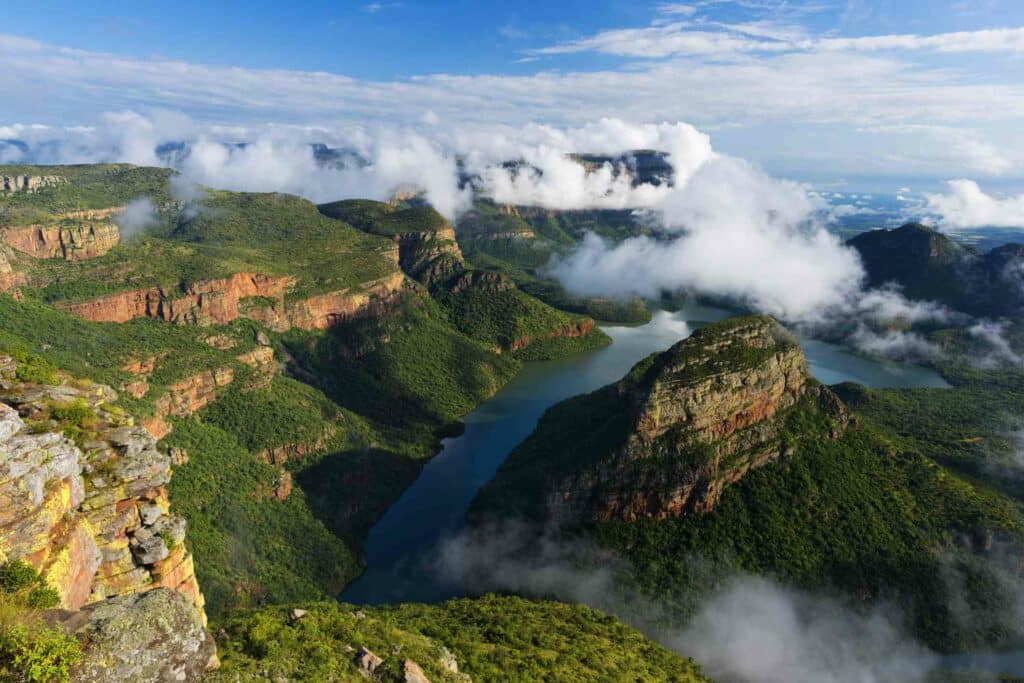
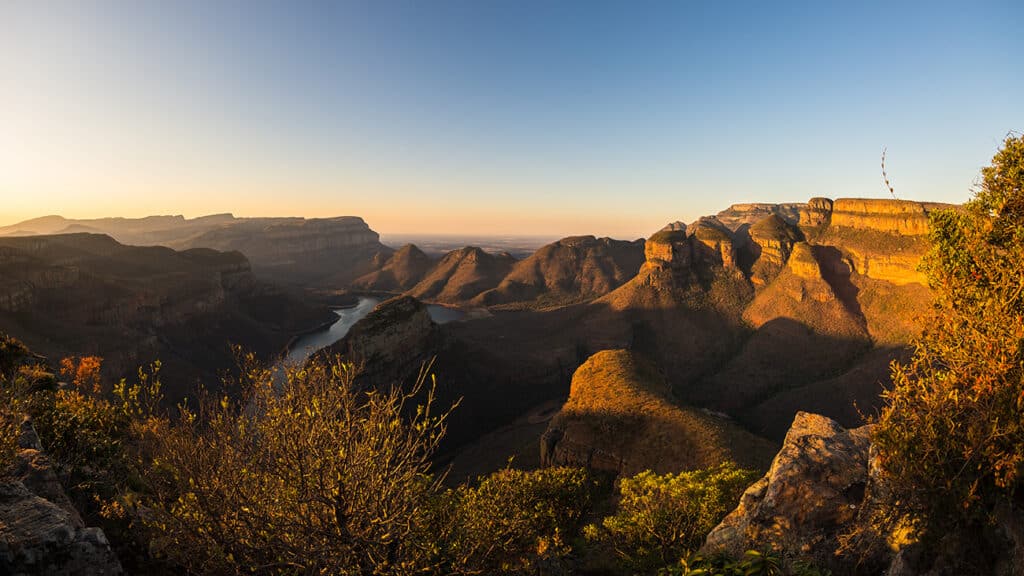
The Three Rondavels viewpoint overlooks three rounded rock formations resembling traditional thatched dwellings, with the canyon and dam forming part of the wider scene.
Allow 30–60 minutes. It’s a strong choice if you have time for only one northern canyon viewpoint. Give yourself time to look beyond the familiar photograph and take in the surrounding landscape.
The Blyde River Canyon is the landscape that anchors the northern Panorama Route. Visiting the Three Rondavels gives you a view over its reach, but hiking or exploring the lower canyon requires additional planning.
Allow 30–60 minutes for another viewpoint, or a separate half-day or longer for a booked activity. A boat trip near the lower canyon isn’t simply an extra stop along the escarpment road: you need to allow for the drive down and the activity’s departure time.
Pilgrim’s Rest moves the focus from scenery to the region’s gold-rush history. The town’s historic streets and buildings make it an enjoyable break from a day dominated by viewpoints.
Allow one to two hours, or longer for museum visits and lunch. Pilgrim’s Rest attracts travellers interested in heritage and small towns.
Graskop Gorge offers a viewing lift into indigenous forest, followed by elevated walkways with interpretation displays and waterfall views. Adventure activities are available separately.
Allow one and a half to three hours, depending on your activities and whether you stay for a meal. The Gorge suits families, forest enthusiasts and travellers who want a more involved stop.
Not every attraction deserves the same amount of time, especially if you’re visiting between safari activities.
Attraction | Main highlight | Suggested visit time | Particularly good for |
Blyde River Canyon | Mountain and canyon scenery | 30–60 minutes | Landscape lovers |
Three Rondavels | Canyon viewpoint | 30–45 minutes | Photography |
God’s Window | Lowveld panorama | 30–60 minutes | Scenic views and short walks |
Bourke’s Luck Potholes | Geological formations | 45–75 minutes | Families and geology |
Lisbon Falls | Tall waterfall | 20–30 minutes | Photography |
Berlin Falls | Waterfall and gorge | 20–30 minutes | Scenic stops |
Pinnacle Rock | Quartzite rock formation | 15–30 minutes | Geology and photography |
Graskop Gorge Lift | Forest and gorge experience | 1.5–3 hours | Families and activities |
Mac Mac Falls | Waterfall | 20–30 minutes | Sabie-area visitors |
Pilgrim’s Rest | Gold-rush heritage | 1–2 hours | History enthusiasts |
These are suggested times at the attractions, not driving times. Entrance queues, weather, and walking pace may change how long you need.

The Panorama Route isn’t a single attraction or one short road. It’s a network of scenic roads linking towns, waterfalls, and viewpoints across the Mpumalanga escarpment.
The R532 is particularly important for visitors exploring the main attractions, while the R534 provides access to several viewpoints around God’s Window.
Most travellers organise their sightseeing around Graskop.
If you’re staying in Hazyview, a sensible approach is to travel towards Graskop before exploring the main escarpment attractions.
A typical sightseeing route might include:
The return journey depends on your accommodation and whether you’re continuing towards Hoedspruit or returning to Hazyview.
You don’t need to visit every attraction in this order. Weather, opening times and traffic can make a different sequence more practical.
Travellers starting in Hoedspruit often approach the canyon from the northern side.
The Three Rondavels and Blyde River Canyon can be visited before continuing south towards Bourke’s Luck Potholes, the waterfalls and God’s Window.
This makes Hoedspruit a convenient departure point for guests staying at safari lodges in the surrounding region.
The main consideration is driving time. A full-day excursion is generally more comfortable than trying to combine several viewpoints with an additional game drive on the same day.
Allow one full day for selected highlights, two days for a more comfortable visit or three days if you want additional activities and a slower pace. Your travel days to and from the region are separate.
Time available | A realistic approach |
One day | From a nearby base, prioritise God’s Window, one waterfall, Bourke’s Luck Potholes and Three Rondavels. Adjust for weather and opening times. |
Two days | Separate Sabie, Pilgrim’s Rest or Graskop Gorge from the main northern viewpoint day. Overnight locally to reduce driving. |
Three days | Add a forest walk, another waterfall, a booked canyon activity or more time in the towns. Keep space for weather changes. |
Parking, ticket purchases, walking and lunch all take time. A navigation app’s driving estimate won’t include any of them.
A full day is usually enough to see the main Panorama Route attractions without spending too much time at any one stop.
The following itinerary is a planning example for travellers starting around Hazyview or Graskop.
Approximate time | Activity |
07:30–08:30 | Depart accommodation and travel towards Graskop |
08:30–09:15 | Visit Pinnacle Rock and God’s Window |
09:15–10:30 | Explore Lisbon Falls and Berlin Falls |
10:30–11:30 | Travel north towards Bourke’s Luck Potholes |
11:30–12:30 | Explore Bourke’s Luck Potholes |
12:30–13:30 | Lunch or refreshment stop, depending on route |
13:30–14:30 | Visit the Three Rondavels and canyon viewpoints |
14:30 onwards | Return towards accommodation, allowing for the full drive |
The schedule is illustrative rather than a fixed tour programme. Some departure points require a different order, and the return drive can take several hours.
A half-day visit can still be worthwhile, particularly if you’re staying near Graskop.
Focus on a smaller group of nearby attractions rather than attempting the entire route.
God’s Window, Pinnacle Rock and one or two waterfalls can make a manageable shorter outing.
Travellers starting in Hoedspruit may prefer to concentrate on the northern canyon viewpoints instead.
Trying to include both ends of the route in a few hours usually means spending more time driving than enjoying the scenery.
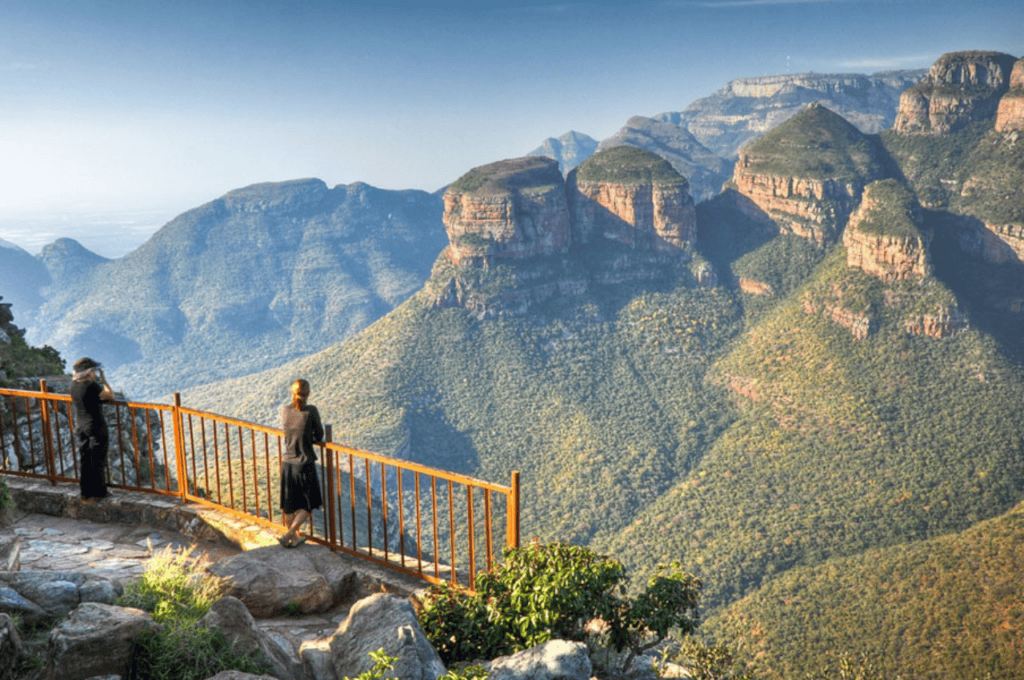
One full day is enough for most first-time visitors to see the main Panorama Route highlights. Two days are better if you want to explore more slowly.
The right amount of time depends on where you’re staying and what interests you.
Time available | What you can reasonably experience | Main limitation |
Half day | Selected nearby viewpoints | Limited coverage |
One full day | Main canyon viewpoints, waterfalls, and geological attractions | Less time for longer activities |
Two days | Main attractions, historical towns, and additional walks | Requires more accommodation time |
Three days or longer | Slower exploration, hiking and regional activities | More time away from other destinations |
For many travellers combining the route with Kruger, one dedicated sightseeing day offers a good balance.
There’s no need to see every waterfall if it means rushing through the canyon viewpoints.
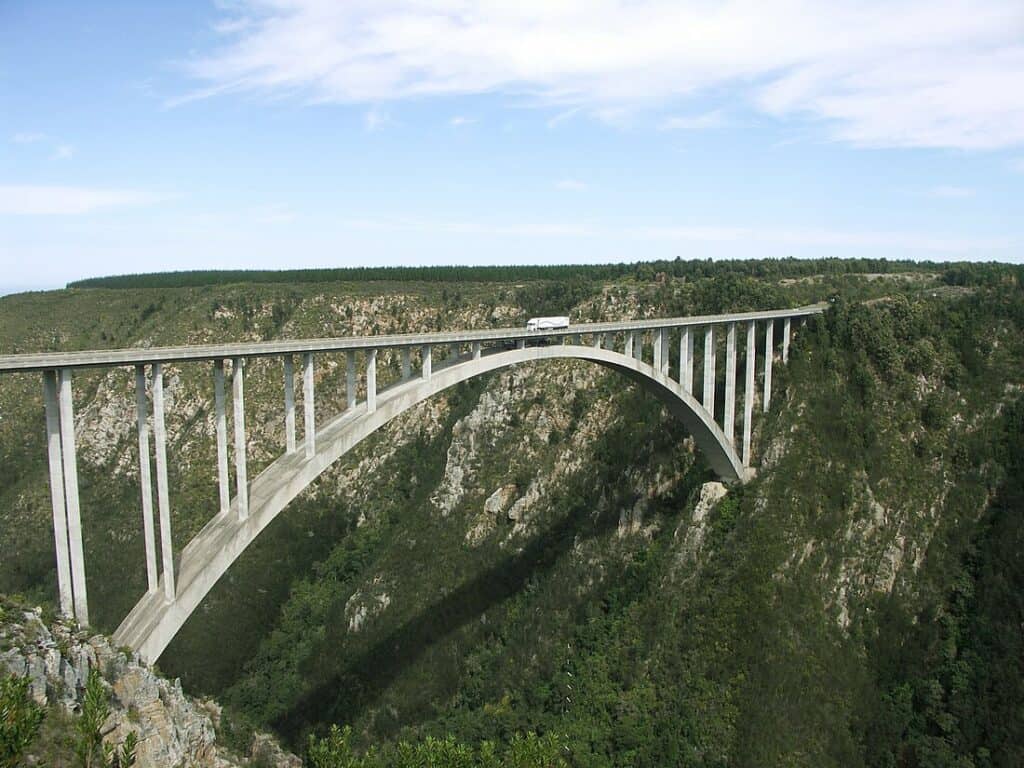
The main northern sightseeing stretch from Graskop to the Three Rondavels turn-off is roughly 55–60 km one way, before attraction access roads and additional stops. A return sightseeing day can therefore involve well over 100 km of driving.
Plot your overnight accommodation and each intended stop to calculate your own distance. Don’t confuse the canyon’s length with the length of the driving route.
The best starting point is the one that fits your arrival and onward journey with the least unnecessary backtracking.
Travel towards Sabie or Graskop and overnight before your main sightseeing day. As a planning allowance, give yourself around five to six hours from Johannesburg to Graskop, with additional time for breaks, traffic or roadworks. Check your exact journey from Pretoria separately.
A return trip from Gauteng with a full sightseeing circuit is too rushed for most travellers. Arriving the previous day gives you a much better morning on the route.
Mbombela is a good option for travellers arriving in the southern Lowveld. You can approach through White River and Sabie, then continue towards Graskop. Staying closer to Graskop can reduce repeated journeys if the northern viewpoints are your highlight.
Your starting camp and exit gate are more important for your planning than the general label “Kruger”. Hazyview is a helpful link with the southern Kruger area, while a northern itinerary works better through Hoedspruit.
Allow for the drive inside the park as well as the public-road journey. Avoid combining a distant camp departure, every Panorama Route stop, and a same-day return through a timed park gate.
Hoedspruit is a good option for visitors staying in the northern Lowveld or nearby private reserves. You can approach the canyon end first, then work south towards Graskop.
The lower canyon and escarpment viewpoints are reached by different roads. Check the journey to the specific attraction.

You can visit the Panorama Route year-round, but the seasons affect the scenery, visibility, and weather.
The most important consideration is often not temperature but cloud cover.
The escarpment can experience mist even when nearby towns are sunny.
The drier winter months generally bring cooler temperatures and less rainfall.
These conditions can make walking between viewpoints particularly comfortable.
Clear days are often excellent for photography, although morning mist and occasional low cloud can still affect visibility.
Waterfalls may carry less water after extended dry periods.
Summer brings warmer temperatures, greener landscapes and more frequent rainfall.
The waterfalls can be particularly impressive during wetter periods, and the surrounding vegetation is often at its most colourful.
The trade-off is less predictable visibility.
Mist, rain and cloud can obscure the major viewpoints, sometimes for extended periods.
Heavy rainfall can also affect roads, trails and attraction access.
Factor | Dry season | Green season |
Typical temperatures | Cooler, especially in the mornings | Warmer |
Rainfall | Generally lower | More frequent |
Landscape | Often drier | Greener |
Waterfalls | Flow can be lower | Often stronger flow |
Viewpoint visibility | Often favourable, not guaranteed | More variable |
Walking comfort | Generally comfortable | Can be hot or humid |
Weather disruptions | Usually fewer rain-related disruptions | Greater chance of storms and mist |
If clear canyon views are your main priority, the drier months are often a sensible choice.
If you enjoy green scenery and waterfalls, summer can be beautiful. Keep your schedule flexible where possible.
The weather doesn’t always cooperate with a carefully planned itinerary.
The Panorama Route is accessible to independent travellers, and you don’t need a guide to appreciate the scenery.
However, there are practical differences between exploring independently and joining an organised tour.
Self-driving gives you control over your day.
You can stop for photographs, spend longer at your favourite attractions, and change plans when the weather shifts.
It also allows you to explore smaller towns and attractions that might not be included in a standard guided itinerary.
The main responsibility is planning.
You’ll need to navigate mountain roads, check attraction access, manage entrance fees, and allow enough time to return before dark.
Guided tours are useful for travellers who prefer not to drive or who have limited time.
A local guide can help explain the geology, history, and geography of the region while managing the route and transport.
Guided tours can also be convenient for visitors combining the Panorama Route with a Kruger safari.
The trade-off is flexibility. Shared tours usually follow a planned schedule, and the amount of time spent at each attraction may be limited.
Feature | Self-drive | Guided tour |
Route flexibility | High | Depends on tour type |
Driving responsibility | Traveller | Driver or guide |
Local interpretation | Self-guided | Included with knowledgeable guide |
Photography stops | Flexible | Scheduled or arranged |
Planning required | Higher | Lower |
Cost | Vehicle, fuel and entry fees | Tour price and possible exclusions |
Suitable for first-time visitors | Yes, with preparation | Particularly convenient |
If you’re comfortable driving in South Africa and enjoy travelling independently, self-driving is a good option.
If you’re visiting for the first time, have a tight schedule, or would rather concentrate on the scenery, a guided tour may be worth the additional cost.
Explore MoAfrika’s Panorama Route Tours.
Fees and opening hours are time-sensitive. Confirm these with the relevant attraction or the Mpumalanga Tourism and Parks Agency shortly before your visit.
There isn’t one ticket covering the entire Panorama Route. Budget for separate attraction entries, fuel, meals and any optional activities. At activity venues, check whether general admission includes your chosen experience or whether this needs an additional ticket.
Before setting out:
Use designated parking areas and leave enough daylight for the journey to your accommodation. Confirm accessibility directly if you need step-free paths or facilities suitable for a wheelchair or pushchair.
Choose your overnight base according to the attractions you most want to see and the direction you’re travelling next.
Base | Best for | What to consider |
Graskop | A first visit focused on the main viewpoints and northern sightseeing circuit | Convenient for early starts, nearby attractions and meals between excursions. |
Sabie | Waterfalls, forest activities and a southern approach | Northern canyon stops require a longer drive than from Graskop. |
Pilgrim’s Rest | Heritage visits and a slower small-town stay | Check meal options and allow for the detour when planning northern attractions. |
Upper Blyde River Canyon area | More time around the canyon viewpoints | Confirm the property’s precise location and road access. |
Lower canyon or Hoedspruit area | Lower-canyon activities and onward travel to northern safari areas | Being near the canyon doesn’t necessarily mean being close by road to its upper viewpoints. |
Graskop is a good base for a straightforward two-night visit. On a one-way journey, changing accommodation can make more sense than driving back over the same ground.
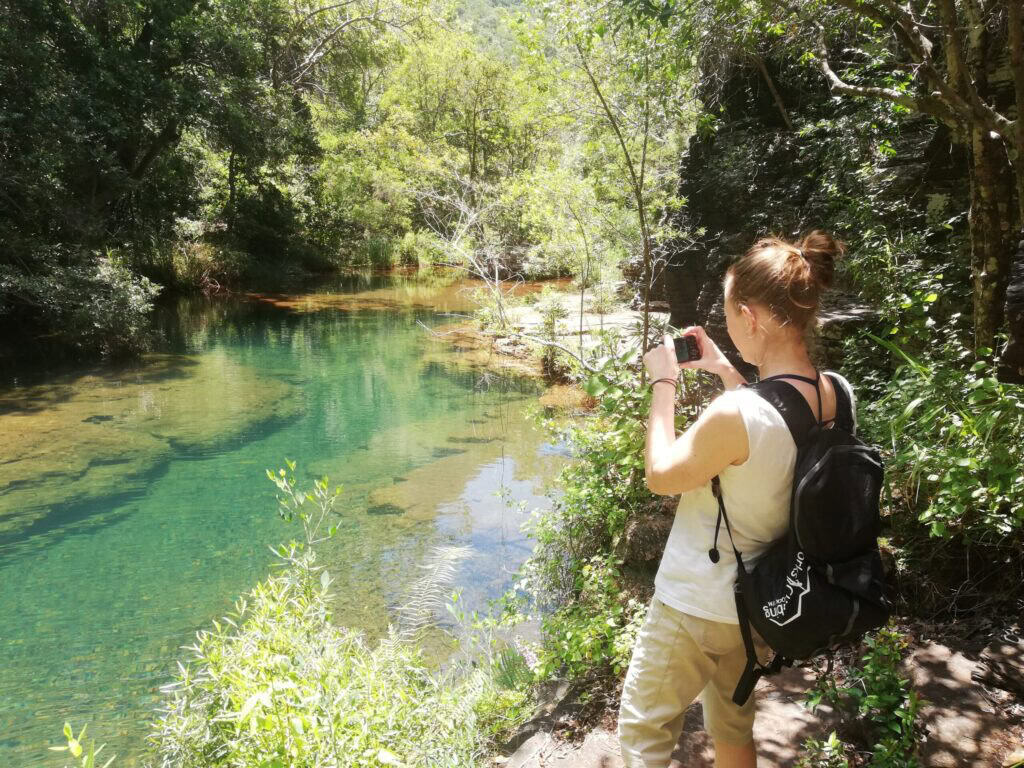
You don’t need specialist hiking equipment for the main viewpoints, but comfortable clothing and a few practical items will make the day easier.
A large suitcase isn’t necessary for a day excursion.
Pack for changing weather rather than assuming conditions will remain the same from morning to afternoon.
Start Early, but Don’t Rush
An early departure gives you more time to explore and can help you avoid arriving at popular viewpoints during their busiest periods.
However, leaving early doesn’t guarantee clear views. Mist sometimes takes time to lift from the escarpment.
Mountain roads are different from highways.
Sharp bends, slower vehicles, poor visibility, and occasional roadworks can affect your journey.
Plan your route conservatively and avoid relying on the shortest travel time shown by a navigation app.
Some viewpoints and walking areas may close temporarily because of heavy rainfall, maintenance, or safety concerns.
Entrance fees and operating hours can also change.
Check current information with the Mpumalanga Tourism and Parks Agency or your tour operator before setting out.
Stay behind barriers and use designated paths.
Some locations have steep drops, slippery rocks, and uneven walking surfaces.
A photograph isn’t worth stepping beyond a safety barrier.
Where possible, complete your sightseeing and return journey during daylight.
Mountain roads can be difficult to navigate after dark, particularly in rain or mist.
The Panorama Route has more attractions than most visitors can comfortably explore in a single day.
Choose the places that interest you most.
A relaxed visit to Blyde River Canyon, Bourke’s Luck Potholes, and God’s Window is often more satisfying than rushing through ten different stops.
⭐⭐⭐⭐⭐
Alexandria T. – USA
“Well organized. Pickup was right on time. Our guide was knowledgeable and engaging and provided lots of helpful commentary. He communicated with other guides to find out where there were animal sightings. He was also an excellent driver over the varied terrain.”
Travellers often ask whether the Panorama Route deserves a full day when they’re already visiting Kruger.
For most first-time visitors with four or five days in the region, it does.
The canyon viewpoints offer scenery you won’t experience on a game drive, and the waterfalls and rock formations add another side to the trip.
If you’re short on time, concentrate on the Three Rondavels, Blyde River Canyon, Bourke’s Luck Potholes and God’s Window, provided the attractions are open and weather conditions are suitable.
The waterfalls are worthwhile additions, but you don’t need to stop at every one.
For guests staying in Hazyview or Hoedspruit, a guided day tour can be convenient because the driving and route planning are taken care of.
If you’re travelling independently, give yourself enough time to enjoy the stops rather than treating the route as a checklist.
The scenery is the reason to come. Make time to look at it.
MoAfrika Tours has been introducing travellers to South Africa’s wildlife destinations and scenic regions for more than two decades.
Our local safari specialists and professional guides help guests explore destinations such as Kruger National Park and the Panorama Route, with practical advice on routes, travel times, and the experiences that suit different itineraries.
For travellers combining a safari with sightseeing, having transport and accommodation arrangements coordinated can make the journey easier.
MoAfrika offers Panorama Route day tours from selected departure points, as well as multi-day Kruger and Panorama Route combinations.
The right choice depends on how much time you have, where you’re staying, and whether you prefer a private or shared travel experience.
The Panorama Route is one of those places where the journey matters as much as the individual stops.
You might arrive looking forward to the famous view at God’s Window, then find that the canyon, a waterfall, or an unexpected stretch of mountain road becomes the part you remember most.
If you’re visiting Kruger National Park, it’s worth considering whether you can spare a day to see this side of Mpumalanga.
MoAfrika Tours offers guided Panorama Route excursions and selected Kruger safari packages that include scenic sightseeing.
Most travellers need a full day to explore the main attractions. Although the driving itself can be completed more quickly, stops at God’s Window, Bourke’s Luck Potholes, the waterfalls, and Blyde River Canyon take time. Two days is more comfortable if you want to explore historical towns or enjoy longer walks.
Yes, particularly if you’re already travelling to Kruger National Park or Mpumalanga. The route offers canyon views, waterfalls and mountain scenery that are very different from the Lowveld bush. It’s a worthwhile addition for travellers who enjoy nature and photography.
Yes. The main attractions are accessible by public roads, and many visitors explore independently in a normal passenger vehicle. You should still check road conditions, weather, attraction access, and your planned return time before leaving.
The drier months from May to September often provide comfortable sightseeing conditions and clearer views. Summer brings greener scenery and stronger waterfall flows, but mist and rain can affect visibility. Both seasons have advantages.
Yes. The route lies west of the Kruger region, and towns such as Hazyview and Hoedspruit are popular departure points for sightseeing excursions. Travel time depends on your accommodation and which attractions you want to visit.
Blyde River Canyon, the Three Rondavels, God’s Window, and Bourke’s Luck Potholes are among the main highlights. Lisbon Falls, Berlin Falls, and Pinnacle Rock are also popular stops.
No. You can explore independently if you’re comfortable driving and planning your own itinerary. A guided tour is useful if you’d rather not navigate unfamiliar roads or want local information about the region’s history, geology and attractions.
Yes. Several attractions charge entrance fees, and prices can change. Some organised tours include these fees, while others may exclude certain activities. Check what is included before booking.
It’s possible to visit a small section of the Panorama Route and spend some time in the Kruger region on the same day, but trying to fit a proper game drive and the main scenic attractions into one day is usually too rushed. A separate day for each experience is more enjoyable.
Yes. Many of the main attractions involve relatively short walks from parking areas, making them suitable for families. Some paths have steps, uneven surfaces, and steep drops, so children need supervision. Families with younger children may prefer fewer stops and a more relaxed schedule.




WhatsApp Now