Most people plan a Kruger trip around camps, animals, and gate times. The roads only become important once the drive has started and the map begins to feel a little less simple than it looked at home.
A main road can help you get from one camp to another without wasting daylight. A gravel loop can take longer, but that’s often where the less frequent sightings happen. Knowing the difference makes the day easier to plan and less rushed.
What are the road conditions like in Kruger National Park?
Most Kruger roads are manageable in an ordinary car. The tar roads make it easier to travel between camps, while the gravel roads are better for unhurried game drives and less traffic.
Road quality is generally good, but rain can change things quickly in summer, especially on the dirt sections.
MoAfrika Safari Expertise
For over two decades, MoAfrika Tours has helped travellers see Southern Africa’s wildlife destinations with people who know the routes, parks, animals, and local conditions. The safari specialists and guides take thousands of guests on African safari experiences each year.
The distance between two sites in Kruger might be deceptive. A simple journey might take most of the morning due to slow speed restrictions, extensive picture stops, and dirt roads with glimpses of animals.

Understanding Kruger’s Road Network
Kruger’s roads are an integral aspect of the game-watching experience. The park contains tarred roads, gravel roads, loops, and access paths that transport tourists across all the various ecosystems and wildlife watching locations.
The road network is made up of:
- Tar roads (H roads)
- Gravel roads (S roads)
- Camp access roads
- Restricted management roads
Most visitors will spend their time on the tar and gravel road systems.
Kruger Road Types Explained
Road Type | Surface | Condition | Best For |
H Roads | Tarred | Excellent to Very Good | Camp transfers and long-distance travel |
S Roads | Gravel | Good to Very Good | Viewing wildlife |
Camp Roads | Mixed | Good | Access to facilities |
Management Roads | Restricted | Varies | Not available to general visitors |
For most self-drive visitors, the choice is usually between tar roads and gravel roads.
What kind of car do you need for Kruger?
Don’t let the lack of a 4×4 stop you from planning a trip to the Kruger National Park. A normal car is suitable for most self-drive routes, and MoAfrika’s self-drive Kruger safaris provide further guidance on planning the journey.
Most visitors successfully drive:
- Sedans
- Hatchbacks
- SUVs
- Rental vehicles
Many public roads are maintained for ordinary vehicles.
Vehicle Suitability Guide
Vehicle Type | Suitable for Kruger? |
Small Hatchback | Yes |
Sedan | Yes |
SUV | Yes |
Minibus | Yes |
4×4 | Yes, but not necessary |
Sports Car | Not recommended |
Many experienced visitors use standard rental sedans without any issues.
Tar Roads vs Gravel Roads
This is where many self-drive visitors face their first decision.
Tar Roads
Tar roads connect major camps and gates.
Benefits include:
- Faster travel times
- Easier navigation
- Better comfort
- Reliable year-round access
Popular tar roads include:
- H1-2 Skukuza to Pretoriuskop
- H4-1 Skukuza to Lower Sabie
- H1-3 Satara to Skukuza
- H10 Lower Sabie to Tshokwane
Tar Road Pros and Cons
✅Pros | ❌Cons |
Faster travel | More traffic |
Easy navigation | Less immersive |
Comfortable driving | Wildlife may be further away |
Efficient camp transfers | Busier sightings |
Gravel Roads
Many experienced safari travellers prefer gravel roads. Why? Because wildlife encounters often feel more natural and less rushed.
Gravel roads typically offer:
- Fewer vehicles
- Better photography opportunities
- More wilderness atmosphere
- Slower-paced exploration
Gravel Road Pros and Cons
✅Pros | ❌Cons |
Fewer vehicles | Slower travel |
Better safari atmosphere | More dust in dry season |
Excellent wildlife opportunities | Longer route times |
Better birdwatching | Rougher surface |
Some of Kruger’s most memorable sightings tend to happen on roads that many visitors drive past.

What Speed Limits Apply in Kruger?
Speed limits are there to protect both visitors and wildlife, and visitors should follow the official Kruger speed limits at all times.
Official Kruger Speed Limits
Road Type | Maximum Speed |
Tar Roads | 50 km/h |
Gravel Roads | 40 km/h |
Camp Areas | 20 km/h |
Most experienced safari guides drive much more slowly.
What Guides Usually Recommend
Wildlife is often easier to spot at:
- 20–35 km/h on tar roads
- 15–25 km/h on gravel roads
Driving slowly gives your eyes time to adjust to the bush. That’s when tracks, birds, small movements, and hidden animals become easier to spot.
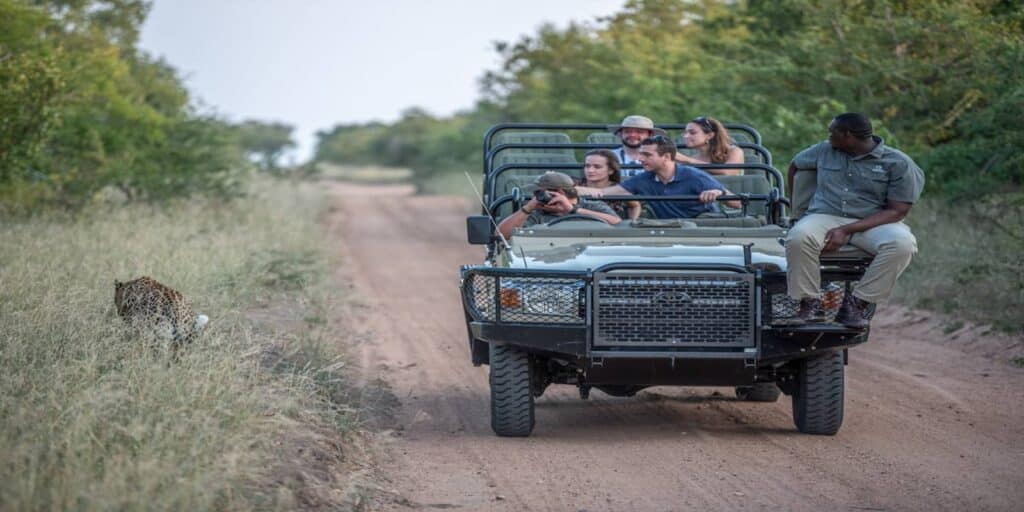
What to Expect from Kruger’s Roads in Different Seasons
Road conditions are generally good throughout the year, but seasonal changes can affect driving, so comparing Kruger’s dry and green seasons can help visitors choose conditions that suit their plans.
The Dry Months in Kruger National Park (May to September)
Most visitors find road conditions easiest during winter.
Advantages include:
- Minimal rain
- Less mud
- Better visibility
- Comfortable driving conditions
Dry Season Road Conditions
Condition | Typical Situation |
Tar Roads | Excellent |
Gravel Roads | Dry and firm |
Visibility | Excellent |
Closures | Rare |
Green Season (October to April)
The summer brings rain and occasional storms. While the road conditions are still manageable, visitors should expect:
- Wet sections
- Puddles
- Reduced visibility during storms
- Temporary road closures in isolated areas
Green Season Road Conditions
Condition | Typical Situation |
Tar Roads | Good |
Gravel Roads | Occasionally muddy |
Visibility | Variable |
Closures | Possible after heavy rain |
A closed road in Kruger doesn’t always mean the entire day is ruined. Many routes open again once the park team has checked the area and conditions have improved.

Planning Your Route for Better Wildlife Sightings
Don’t choose every Kruger road by how smooth it looks on the map. A road’s position in the park can tell you more than the surface, especially near rivers, dams, open grassland, or busy animal routes.
Top Wildlife Roads in Southern Kruger
Road | Region | Why It is Popular |
H4-1 | Skukuza–Lower Sabie | Leopards, lions, general game |
S28 | Crocodile Bridge | Predators and open grasslands |
H10 | Lower Sabie | Big Five sightings |
S100 | Satara | Lion territory |
S114 | Skukuza Region | Productive mixed habitat |
Common Self-Drive Road Mistakes
Most issues on the road in Kruger are not about needing a bigger vehicle. The trouble usually starts with planning, route choice, speed, distance, and not knowing what the park roads are like.
Mistake #1: A Packed Route Can Ruin a Kruger Day
What seems short on the map might take a lot longer once you are in the park.
A 100 km route may take:
- Several hours
- Multiple wildlife stops
- Photography breaks
- Traffic delays at sightings
Mistake #2: Driving Too Fast Can Cost You Sightings
Fast driving reduces:
- Wildlife sightings
- Photography opportunities
- Birdwatching success
It also makes the safari feel rushed.
Mistake #3: Ignoring Gravel Roads
Many visitors stay exclusively on tar roads.
That often means missing:
- Quieter habitats
- Less crowded sightings
- More immersive safari moments
Mistake #4: Forgetting Gate and Camp Times
Gate closing times are strictly enforced.
Always leave extra time for:
- Animal sightings
- Traffic at popular sightings
- Delays along the route

Self-drive Road Safety in Kruger
- Stay inside your vehicle unless at designated areas.
- Observe all speed limits.
- Keep a safe distance from wildlife.
- Never block roads around sightings.
- Avoid driving after gate closing times.
- Carry drinking water during longer drives.
- Check daily road notices before departure.
Driving yourself around Kruger isn’t difficult. Travellers who would rather have a guide manage the route, regulations and wildlife search can instead consider a Kruger Park day tour.
How Should First-time Visitors Plan a Kruger self-drive route?
Day | Route |
Day 1 | Paul Kruger Gate to Skukuza |
Day 2 | H4-1 and Lower Sabie area |
Day 3 | S114 and surrounding gravel roads |
Day 4 | H1-2 towards Pretoriuskop and exit |
This combination provides a good balance between tar and gravel roads.
Guest Reviews
⭐⭐⭐⭐⭐
James – Australia
“Before our trip, I worried we would need a 4×4. We hired a standard sedan and had no problems at all. The biggest surprise for us was the dirt roads. We assumed the major roads would be better, but some of our best sights were after we pulled off and slowed down. “
Make Your Kruger Self-Drive Safari Easier to Plan
The roads in Kruger are easier than many visitors expect. The real planning work is choosing a route that leaves time for driving slowly, animal sightings, rest stops, and any changing road conditions along the way.
The fastest way to overlook what is going on around you in Kruger is to dash from one camp to the next. The value of a self-drive safari frequently lies in going slow, taking the gravel roads, and being patient.
Frequently Asked Questions
Do you need a 4x4 for Kruger National Park?
No. A normal car is enough for most Kruger trips, especially on the public tar and gravel roads used by visitors every day.
Are gravel roads safe to drive?
Yes. Regular maintenance means most gravel roads are suitable for self-drive visitors using an ordinary car, provided normal park speed limits are followed.
Which roads are best for first-time visitors?
Start from the regions near Skukuza, Lower Sabie, Satara, and Crocodile Bridge. The routes are manageable, the camps are well situated, and the animal encounters are regular enough to make a first trip to Kruger less tedious.
Are Kruger roads affected by rain?
Yes. Rain can impact Kruger roads, particularly the gravel roads. After a heavy summer rain, certain roads may be difficult to navigate, muddy, or temporarily blocked.
Is driving difficult inside Kruger?
No. The roads are straightforward, and the park has obvious signposts, making it easy to travel between gates, campers, picnic sites, and viewpoints.
Can I drive at night in Kruger?
No. Once the gates shut, Kruger’s public roads are off limits to private motorists. Visitors should be back at camp or on authorised night drives.
How much time should I allow between camps?
Give yourself a decent buffer between camps. The GPS may show the distance, but Kruger has speed limits, changing road surfaces, and sightings that can hold you up.
Are tar roads or gravel roads better for wildlife sightings?
Both can be good for sightings. Tar roads make it easier to travel between areas, while gravel roads often give you a slower drive with less traffic and more time to watch out for wildlife.