Is Kruger National Park Safe? What Travellers Need to Know
Most people feel a little nervous before their first visit to Kruger National Park. You are driving through a wilderness area with elephants, lions, buffalo and other wild animals, sometimes with nothing more than a car door between you and them.
Once you’re inside Kruger, things usually feel far less intimidating.
The park has established roads, rest camps, entrance gates and clear visitor rules. Thousands of travellers explore Kruger every year, including families, international visitors and people driving themselves.
That doesn’t mean you should become casual about safety. Kruger is still a wild place, and some of the most important precautions have little to do with lions.
Is Kruger National Park Safe?
Yes. Kruger National Park is generally safe for tourists who follow SANParks rules, respect wildlife and use sensible travel precautions.
Inside the park, visitors should stay in their vehicles except at designated places, keep a safe distance from animals, obey speed limits and return to camp or an exit gate before closing time.
There are other things to consider too. Kruger lies in a malaria-risk area, summer temperatures can be very hot, and travellers driving to the park need to plan their route carefully.
For first-time visitors who would rather not manage these details themselves, a guided Kruger safari can take much of the uncertainty out of the trip.

Is Kruger National Park Safe to Visit in 2026?
For most tourists, yes.
It helps to separate safety inside Kruger from getting to Kruger.
Once you’re inside the national park, you are travelling in a controlled conservation area managed by SANParks. There are gates, speed limits, designated rest areas, camps and rules governing how visitors interact with wildlife.
Outside the park, normal South African travel precautions apply. Road conditions, route choice, driving after dark and the entrance gate you use should all form part of your planning.
Travel conditions can change, so check current SANParks notices and relevant travel advice shortly before departure rather than relying entirely on information you read several months earlier.
What Our Safari Team Tells First-Time Kruger Guests
Many first-time guests worry about being attacked by animals.
In practice, one of the most useful things you can do is simply follow the park rules.
Stay inside your vehicle unless you’re somewhere that specifically allows you to get out. Give elephants plenty of room. Don’t crowd animals for photographs. Drive slowly and keep an eye on the time so you’re not rushing back to camp before the gates close.
After a few hours in Kruger, most people settle into the rhythm.
The bush starts feeling less threatening and more fascinating. You also begin to understand that safe safari behaviour is mostly about patience, distance and respecting the fact that the animals have right of way.
Wildlife remains unpredictable. That’s part of being in a genuine wilderness area.

Kruger National Park Safety at a Glance
Safety concern | What travellers should know | Sensible precaution |
Wild animals | Encounters are generally safe when park rules are followed | Stay in your vehicle and give animals space |
Elephants | Can become defensive when crowded or blocked | Keep your distance and leave an escape route |
Self-driving | Common throughout Kruger | Follow speed limits, gate times and road rules |
Malaria | Kruger is in a malaria-risk area | Get professional medical advice before travelling |
Summer heat | Temperatures can become very hot | Carry water, sunscreen and sun protection |
Rest camps | Established visitor facilities | Keep valuables secure and supervise children |
Roads outside Kruger | Conditions and security can vary by route | Plan your route and check current travel advice |
Children | Families visit Kruger regularly | Keep children supervised around camps and wildlife |
Getting out of the vehicle | Restricted in most of the park | Only exit at designated places |

Is Kruger National Park Safe From Crime?
Crime is not usually what visitors spend most of their time thinking about once they are inside Kruger, but normal precautions still make sense.
Don’t leave valuables clearly visible in an unattended vehicle. Keep passports, money, phones and camera equipment secure, particularly around busy camps and public areas.
The journey to Kruger deserves more attention.
Travellers arriving from Johannesburg, Mbombela, Hoedspruit or surrounding areas should plan their route before setting off rather than relying blindly on a navigation app.
Conditions on roads outside the park can change. Ask your accommodation or safari operator about the recommended route and check current official travel information before departure.
If you are uncertain about driving independently, an organised transfer or guided safari may be the more comfortable option.
Is It Safe to Drive to Kruger National Park?
Yes, many visitors drive to Kruger independently.
The important part is choosing your route carefully and allowing enough time to reach your gate or accommodation during daylight.
A few practical habits make a difference:
- Fill up before travelling through remote areas.
- Avoid unnecessary driving after dark.
- Keep doors locked when travelling outside the park.
- Don’t leave luggage visible when stopping.
- Check your route before leaving.
- Ask your lodge or safari operator about current road conditions.
- Leave enough time for unexpected delays.
Don’t assume the shortest route on your phone is automatically the route local safari operators would recommend.
Local advice matters.

Choosing a Safe Route and Kruger Entrance Gate
Kruger has several entrance gates, and the most convenient one depends on where you are staying.
Paul Kruger Gate, Phabeni Gate, Malelane Gate, Crocodile Bridge, Orpen Gate and other entrances serve different parts of the park.
Your accommodation should normally determine the gate you use rather than simply choosing the nearest entrance on a map.
Before travelling, check:
- Your lodge or rest camp location.
- Your planned entrance gate.
- Current SANParks gate times.
- The recommended road to that gate.
- Estimated driving time with a sensible buffer.
- Current local travel or security advice.
International travellers sometimes underestimate South African distances. A route that looks manageable on a map can become a long day once stops, roadworks and slower sections are included.
Is Self-Driving in Kruger Safe?
Self-driving is a normal way to explore Kruger National Park.
For many visitors, it is one of the park’s great attractions. You can choose your own roads, spend time at sightings that interest you and stop whenever something catches your eye.
There are rules, though.
SANParks‘ speed limits are 50 km/h on tar roads and 40 km/h on gravel roads. For actual game viewing, experienced safari travellers usually drive considerably slower.
At 50 km/h, you can pass a leopard lying under a bush without ever knowing it was there.
Basic Self-Drive Safety
- Obey all speed limits.
- Stay on designated roads.
- Keep doors closed around dangerous wildlife.
- Don’t lean excessively out of windows.
- Never feed animals.
- Don’t drive off-road.
- Keep track of camp and gate closing times.
- Carry drinking water.
- Make sure you have enough fuel.
- Give large animals plenty of space.
The last point is particularly important around elephants.

How to Stay Safe Around Elephants
Elephants are responsible for some of the encounters that make first-time visitors most nervous.
Most elephant sightings are calm. You may watch a herd feeding beside the road or see a bull crossing slowly in front of your vehicle.
Problems are more likely when people get too close, block an elephant’s path or fail to notice warning behaviour.
Give elephants room.
If an animal is blocking the road, wait. Don’t edge closer because you want a photograph.
Be particularly cautious around breeding herds and young calves. Mothers can be highly protective.
If an elephant appears uncomfortable with your presence, create more distance rather than trying to hold your position.
A photograph isn’t worth turning a peaceful sighting into a stressful encounter.
Are Lions and Leopards Dangerous to Safari Visitors?
They are wild predators, so they should always be treated with respect.
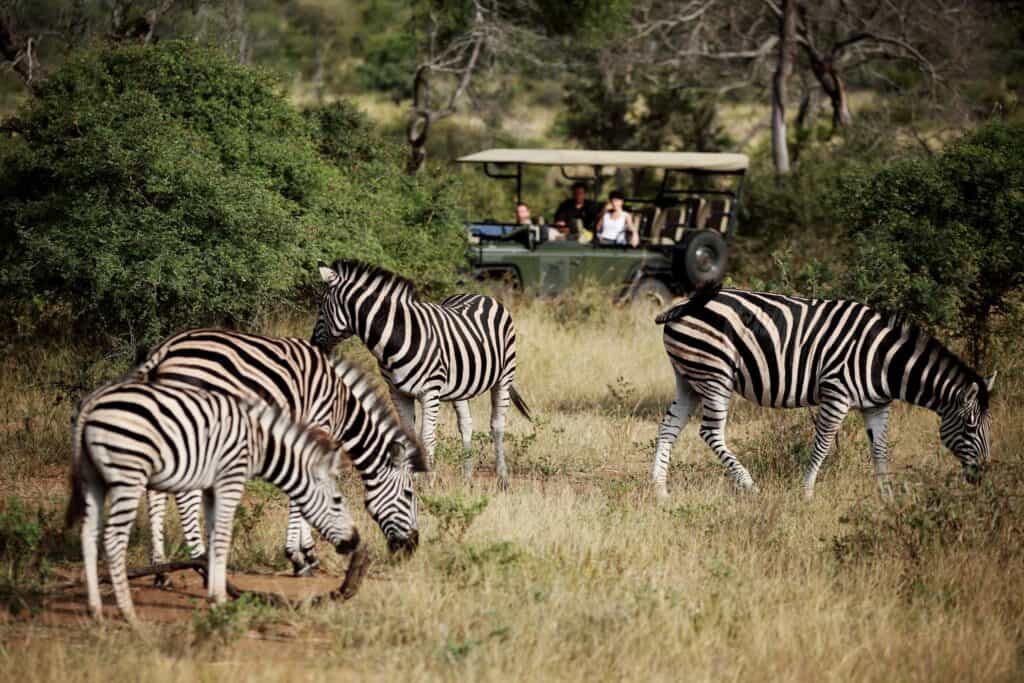
Inside a closed vehicle, however, visitors regularly observe lions and leopards at close range.
Don’t get out.
It sounds obvious, but people sometimes become overconfident when an animal appears relaxed. A lion sleeping beside the road is still a wild lion.
Keep your arms and body inside the vehicle, avoid unnecessary noise and follow any instructions from SANParks staff or your safari guide.
The same principle applies to leopards.
A leopard lying quietly in a tree may look completely uninterested in you. Let it stay that way.
What About Buffalo?
Buffalo deserve considerably more respect than first-time visitors sometimes realise.
They are large, powerful animals and can be unpredictable when threatened.
From a vehicle, sightings are normally straightforward. Problems are more relevant when people are outside vehicles in areas where wildlife is present.
If you’re on a guided bush walk, follow your armed guide’s instructions exactly.
Never approach buffalo or other large wildlife on foot without appropriately qualified guides.
Are Monkeys and Baboons Dangerous?
Monkeys and baboons around rest camps can become surprisingly bold when they associate people with food.
Don’t feed them.
A baboon that learns tourists carry easy meals can become a nuisance, and leaving food accessible encourages the problem.
Keep accommodation doors and windows secure where advised and don’t leave food unattended.
This is less dramatic than a lion encounter, but it is one of the more practical camp issues travellers actually encounter.
What About Snakes and Scorpions?
Kruger has snakes and scorpions, but most visitors never have a serious encounter with either.
Still, use normal bush common sense.
At camps:
- Wear shoes outside after dark.
- Use a torch at night.
- Don’t put your hands into holes or spaces you cannot see.
- Check footwear if it has been left outside.
- Don’t attempt to catch or handle a snake.
If you see a snake around accommodation, give it space and contact camp staff.

Can You Get Out of Your Vehicle in Kruger?
Only in designated places.
One of Kruger’s most important rules is that visitors should remain in their vehicles unless they are at a location where getting out is specifically permitted.
These include rest camps, picnic sites and designated viewpoints or get-out points.
Don’t stop on an ordinary road and step outside because the scenery looks good.
The bush can appear empty while an animal is standing surprisingly close in vegetation you haven’t noticed.
Are Kruger Rest Camps Safe?
Kruger’s main rest camps are established tourism facilities with accommodation, shops, restaurants, or other visitor services depending on the camp.
For most guests, they feel comfortable and easy to navigate.
Normal precautions still apply.
Keep valuables secure, lock accommodation when you leave and supervise children.
You’ll also need to remember that being inside a fenced camp doesn’t mean you’re completely separated from nature. Monkeys, baboons and smaller wildlife can still appear.
That is part of Kruger.

Is Kruger National Park Safe for Families With Children?
Kruger can work very well for families.
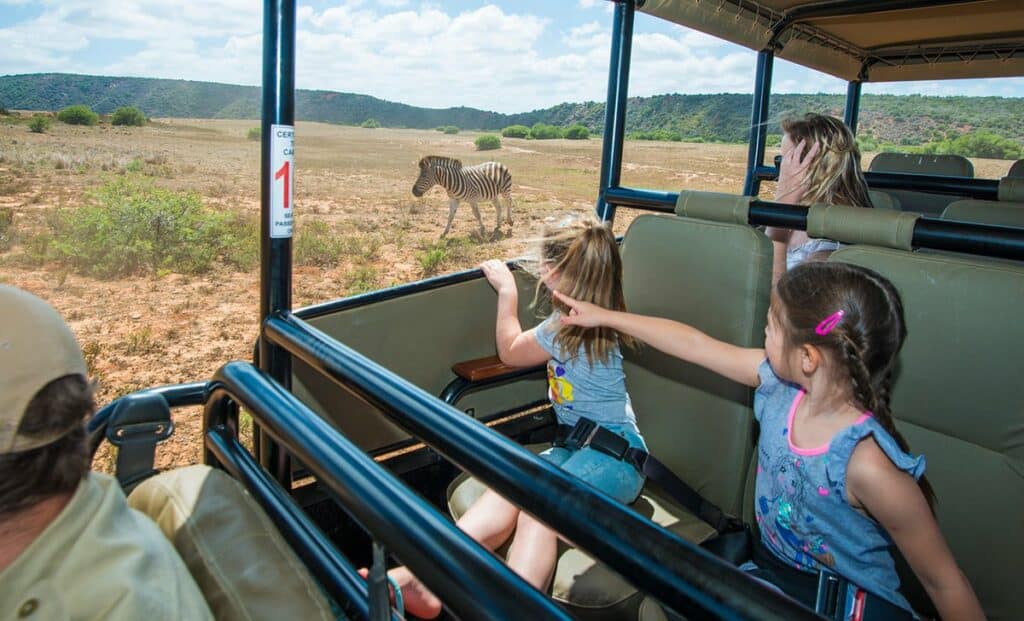
Children often enjoy elephants, giraffes, zebras and smaller animals just as much as the predators adults tend to focus on.
The safety principles are straightforward:
- Supervise young children.
- Don’t allow them to wander around camps alone.
- Keep children inside the vehicle on game drives.
- Follow age restrictions for activities such as guided walks.
- Carry plenty of water and sun protection.
- Build breaks into long driving days.
One of the bigger challenges with children isn’t dangerous wildlife. It’s asking them to sit quietly in a vehicle for too many hours.
Shorter game drives and regular camp stops often work better.
Is Kruger Safe for Solo Travellers?
Many solo travellers visit Kruger.
A self-drive gives you independence, while guided safaris can be particularly useful if you don’t want to manage routes, driving and wildlife spotting on your own.
Solo travellers should follow the same precautions they would elsewhere in South Africa: plan transport carefully, avoid unnecessary night driving outside the park and make sure someone knows your itinerary.
Inside Kruger, keep track of fuel, gate times and distances.
Is Malaria a Risk in Kruger National Park?
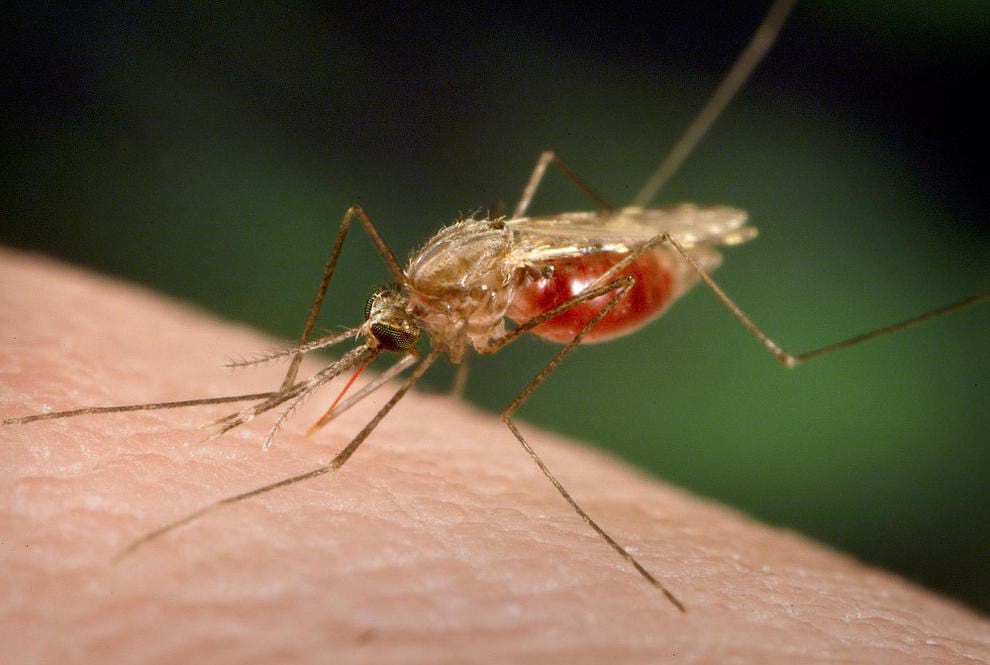
Yes. Kruger National Park is in a malaria-risk area.
The level of risk varies with season and environmental conditions, so this isn’t something to assess from a travel article alone.
Speak to a doctor or travel clinic before your trip. They can advise you on malaria prevention based on your health, travel dates and itinerary.
You can also reduce mosquito bites by:
- Using insect repellent.
- Wearing long sleeves and trousers in the evening.
- Keeping screens and doors closed where appropriate.
- Using mosquito nets where supplied.
- Following the advice of your doctor or travel clinic.
Don’t wait until you arrive in Kruger to start thinking about malaria.
Summer Heat and Dehydration
Summer in Kruger can be hot.
Visitors travelling between roughly October and March should be prepared for high daytime temperatures, although conditions vary.
Carry more water than you think you’ll need, particularly on a self-drive.
A hat, sunscreen and light clothing also help. If you’re travelling with children or older family members, keep an eye on how they’re coping with the heat.
Air conditioning is useful. Water is more important.
Guided Safari vs Self-Drive: Which Is Safer?
Both guided safaris and self-drive trips can be safe when done properly, but they suit different travellers.
Factor | Guided Kruger Safari | Self-Drive Kruger Safari |
Driving responsibility | Guide | Traveller |
Route planning | Guide handles it | You plan it |
Wildlife knowledge | Professional guide | Depends on experience |
Animal behaviour interpretation | Strong advantage | Requires your own judgement |
Flexibility | Depends on safari type | High |
First-time confidence | Usually higher | Can take time to settle in |
Wildlife spotting | Guide experience helps | You do your own spotting |
Cost | Higher | Usually lower |
If you’ve driven in South Africa before and enjoy exploring independently, self-driving can be rewarding.
If it’s your first safari and you’d rather concentrate on the wildlife than road signs, routes and animal behaviour, a guide makes life easier.
Neither option guarantees better sightings. Wildlife doesn’t work that way.

What to Pack for a Safe Kruger Safari
You don’t need specialist expedition equipment for an ordinary Kruger safari.
Bring practical things you’ll actually use.
Safari Safety Packing Checklist
- Drinking water
- Sunscreen
- Hat
- Insect repellent
- Comfortable walking shoes
- Light, breathable clothing
- Warm layer for winter mornings
- Personal medication
- Basic first-aid items
- Phone and charging equipment
- Binoculars
- Torch
- Travel documents
- Emergency contact information
Neutral clothing is practical, particularly for guided walks, but you don’t need to dress head-to-toe like a safari guide simply to sit in a game-drive vehicle.
Comfort matters more.
Common Safety Mistakes First-Time Visitors Make
Getting Too Close to Wildlife
People sometimes forget how quickly a large animal can move.
If an elephant or other animal appears uncomfortable, move away when it is safe to do so.
Driving Too Fast
Speeding isn’t only unsafe. It also makes for a poorer safari.
Slower travellers usually see more.
Leaving Too Late
Don’t plan to arrive at your camp with seconds to spare.
Wildlife can block a road, traffic can build around a sighting and gravel routes often take longer than expected.
Getting Out Where You Shouldn’t
Never leave your vehicle unless you are at a designated location.
Feeding Animals
Don’t feed monkeys, baboons or any other wildlife.
Treating Wildlife Like Zoo Animals
An animal appearing relaxed doesn’t mean it is tame.
Give it space.
Forgetting About the Journey Outside Kruger
Plan the route to your gate as carefully as the game drives you plan inside the park.

What Should You Do in an Emergency?
If something goes wrong inside Kruger, contact SANParks staff or the nearest rest camp as soon as possible.
Save relevant emergency and accommodation numbers before travelling, particularly if you’re self-driving.
If your vehicle breaks down, remain with the vehicle unless officials instruct you otherwise. Don’t walk down the road looking for help.
For medical emergencies, seek assistance immediately.
International visitors should also travel with appropriate medical and travel insurance.
A Realistic View of Kruger Safety
Safari safety isn’t about being frightened of everything around you.
It’s about understanding where you are.
Kruger is a wilderness area that has been organised so ordinary travellers can experience wildlife from remarkably close range. That works because visitors follow rules that maintain a sensible boundary between people and animals.
Respect that boundary and the experience usually feels surprisingly relaxed.
The animal standing beside the road doesn’t need you to be afraid of it.
It needs you to give it space.

Guest Experience
⭐⭐⭐⭐⭐
Dan M – Australia
“I was initially terrified at the prospect of heading on a safari to Kruger National Park, but booking through MoAfrika Tours completely put my mind at ease. From our very first interaction, their team was incredibly patient, warm, and thorough—taking the time to address all my safety concerns, break down every detail of the itinerary, and share invaluable practical advice. By the time I actually set off, my anxiety had completely vanished and was replaced by pure excitement.”
Should You Be Worried About Visiting Kruger?
For most travellers, no.
Be prepared rather than worried.
Follow SANParks rules, plan your route properly, get professional malaria advice, respect wildlife and don’t turn a good sighting into a risky one because you want a closer photograph.
A first safari can feel unfamiliar for the first hour or two. Then something changes. You stop wondering what might be hiding behind every bush and start learning how to look at the bush properly.
That’s usually when Kruger starts to make sense.
Plan Your Kruger Safari With Local Advice
If you’re still deciding between driving yourself and joining a guided safari, think about how much responsibility you want to carry during the trip.
Some travellers love having their own vehicle and map. Others would rather leave the driving to someone who knows Kruger’s roads and spend their time looking for wildlife.
Neither choice is right for everyone.
Speak to MoAfrika’s safari team if you want help choosing a Kruger safari, transfer or travel plan that suits the way you prefer to travel.
Frequently Asked Questions
Is Kruger National Park dangerous for tourists?
Kruger contains dangerous wild animals, but visiting the park is generally safe when travellers follow SANParks rules. Stay in your vehicle outside designated areas, respect wildlife and don’t take unnecessary risks for photographs.
Is it safe to self-drive in Kruger?
Yes. Self-driving is common in Kruger. Follow the park’s speed limits and gate times, stay on designated roads and make sure you have enough fuel and drinking water.
Is it safe to drive from Johannesburg to Kruger?
Many travellers make the journey, but route planning matters. Travel during daylight where possible and ask your accommodation or safari operator about the recommended route to your chosen gate before leaving.
Is Kruger safe for children?
Kruger is popular with families. Young children need close supervision in camps and must remain inside vehicles during ordinary game drives. Some safari activities have minimum age restrictions.
Can lions attack safari vehicles?
Lions regularly rest or walk close to vehicles and usually pay them little attention. Stay inside, don’t provoke wildlife and follow your guide’s or SANParks’ instructions.
What should I do if an elephant approaches my car?
Stay calm and avoid crowding the elephant. Give it space and make sure you haven’t blocked its route. If you can safely increase the distance between your vehicle and the animal, do so.
Is malaria a problem in Kruger?
Kruger is in a malaria-risk area. Speak to a doctor or travel clinic before travelling for personalised advice on malaria prevention.
Can I get out of my car to take photographs?
Not on ordinary Kruger roads. Visitors may only leave vehicles at designated camps, picnic sites, viewpoints and other authorised locations.
Are Kruger rest camps safe at night?
Rest camps are established visitor facilities, but normal precautions still apply. Lock your accommodation, secure valuables, supervise children and use a torch when walking outside after dark.
Is a guided Kruger safari safer than self-driving?
A guided safari can feel easier for first-time visitors because the guide handles the driving, routes and interpretation of animal behaviour. Self-driving is also common and can be safe when park rules are followed.