Pilanesberg is sometimes treated as a convenient safari option near Johannesburg. Spend a little time there, though, and you realise there is far more to the reserve than its location.
The landscape sits within an ancient volcanic complex. The Big Five live here. Wildlife was reintroduced during one of South Africa’s most ambitious game-restocking projects, and today the reserve gives travellers a genuine bush experience within a few hours’ drive of Johannesburg.
For first-time safari visitors, families and travellers with limited time in South Africa, that combination is difficult to ignore.
Here are 50 fascinating facts about Pilanesberg Game Reserve, from its unusual geology and wildlife to its conservation history and the things travellers tend to notice once they are actually out on a game drive.
What Is Pilanesberg Game Reserve Famous For?
Pilanesberg Game Reserve is a malaria-free Big Five wildlife reserve in South Africa’s North West Province, within easy driving distance of Johannesburg and Pretoria.
What makes Pilanesberg particularly unusual is its setting. Much of the reserve lies within the remains of an ancient volcanic complex, creating a series of hills, valleys, open plains and water sources that support varied wildlife habitats.
It is also closely associated with Operation Genesis, the major wildlife reintroduction programme that helped restore large numbers of animals to the area.
Pilanesberg at a Glance
Fact | Pilanesberg |
Location | North West Province, South Africa |
Approximate size | 55,000+ hectares / around 570 km² |
Safari type | Big Five reserve |
Malaria | Malaria-free area |
Landscape | Ancient volcanic complex |
Wildlife viewing | Guided game drives and self-drive |
Famous conservation project | Operation Genesis |
Nearby attraction | Sun City |
Access | Roughly 2.5–3 hours from Johannesburg, depending on traffic and departure point |
Good for | Day trips, families, first safaris and short safari stays |
Why Travel With MoAfrika Tours?
MoAfrika Tours has been introducing travellers to Southern Africa’s most iconic wildlife destinations for over two decades. Our local safari specialists and professional guides help thousands of guests experience authentic African safaris every year.
In Pilanesberg, that local knowledge matters.
The reserve is compact compared with Kruger, but that does not mean wildlife simply appears on demand. Guides still need to read the landscape, watch animal behaviour and make sensible decisions about where to spend time.
Wildlife sightings never come with certainty.
Geography and Geology Facts About Pilanesberg
1. Pilanesberg is in South Africa’s North West Province
The reserve lies northwest of Johannesburg and Pretoria, making it one of the most accessible major safari destinations for travellers staying in Gauteng.
That location is a big part of its appeal. You do not necessarily need a domestic flight or a long cross-country transfer to get into the bush.
2. The reserve covers roughly 55,000 hectares
Pilanesberg stretches across more than 500 square kilometres.
It is much smaller than Kruger National Park, but large enough to support a diverse collection of wildlife and several distinct habitats.
3. Pilanesberg sits inside an ancient volcanic landscape
This is one of the facts that makes the reserve genuinely unusual.
The surrounding hills are remnants of an ancient volcanic complex, giving Pilanesberg a landscape quite different from the flatter bushveld many travellers expect on their first South African safari.
4. The volcanic structure is exceptionally old
The geological formations underlying Pilanesberg date back more than a billion years.
The volcano itself is long extinct. What visitors see today are the heavily eroded remains of a geological event from an almost unimaginable period in Earth’s history.
5. The landscape forms visible rings
One of the most interesting features of Pilanesberg is its roughly concentric arrangement of ridges.
You notice this more clearly from elevated viewpoints, where the unusual shape of the landscape starts making sense.
6. The hills create different wildlife habitats
Pilanesberg is not one continuous stretch of identical bush.
There are rocky slopes, valleys, grasslands, wooded areas and wetter habitats. Different animals make use of these areas in different ways.
7. Mankwe Dam is an important feature of the reserve
Mankwe Dam is one of Pilanesberg’s best-known water sources and a regular stopping point on safari routes.
Water naturally draws wildlife, particularly in drier conditions, although what you find there changes from one visit to the next.
8. The reserve sits in a transition zone
Pilanesberg lies where different vegetation types meet.
That helps explain why relatively varied plant communities and wildlife habitats can occur within one reserve.
9. The landscape changes noticeably with the seasons
Winter tends to bring drier bush, cooler mornings and thinner vegetation.
Summer changes the appearance completely. Rain brings greener landscapes, thicker vegetation, summer birdlife and warmer conditions.
10. Pilanesberg can feel larger than it looks on a map
The reserve is relatively compact by South African safari standards, but game drives rarely follow a straight line.
Wildlife stops, gravel roads and the rugged terrain change how you experience distance.
Wildlife Facts About Pilanesberg
11. Pilanesberg is home to the Big Five
Lion, leopard, elephant, rhino and buffalo occur within the reserve.
Seeing all five on one visit is never guaranteed. Even in a reserve with healthy wildlife populations, animals decide where they want to be.
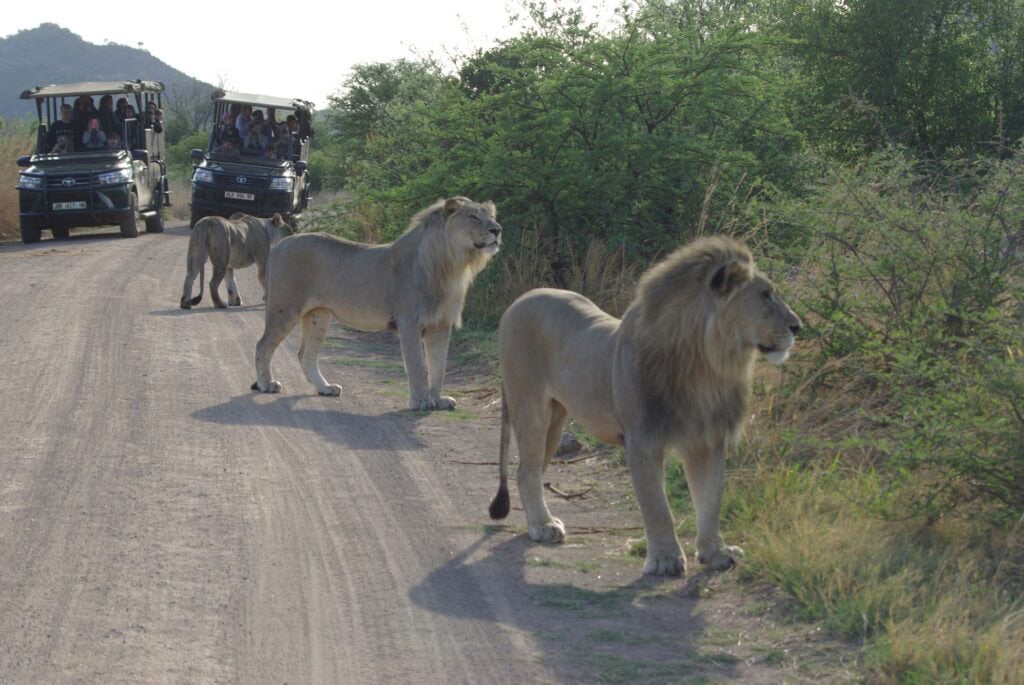
12. Lions were reintroduced to Pilanesberg
Modern Pilanesberg’s wildlife population was shaped heavily by conservation and reintroduction programmes.
Lions form part of the predator population travellers now hope to encounter on game drives.
13. Leopards live here too
Leopards are present in Pilanesberg but can be much harder to find.
They are solitary, well camouflaged and very good at disappearing into surprisingly little cover.
A leopard sighting tends to stop conversation in a safari vehicle fairly quickly.
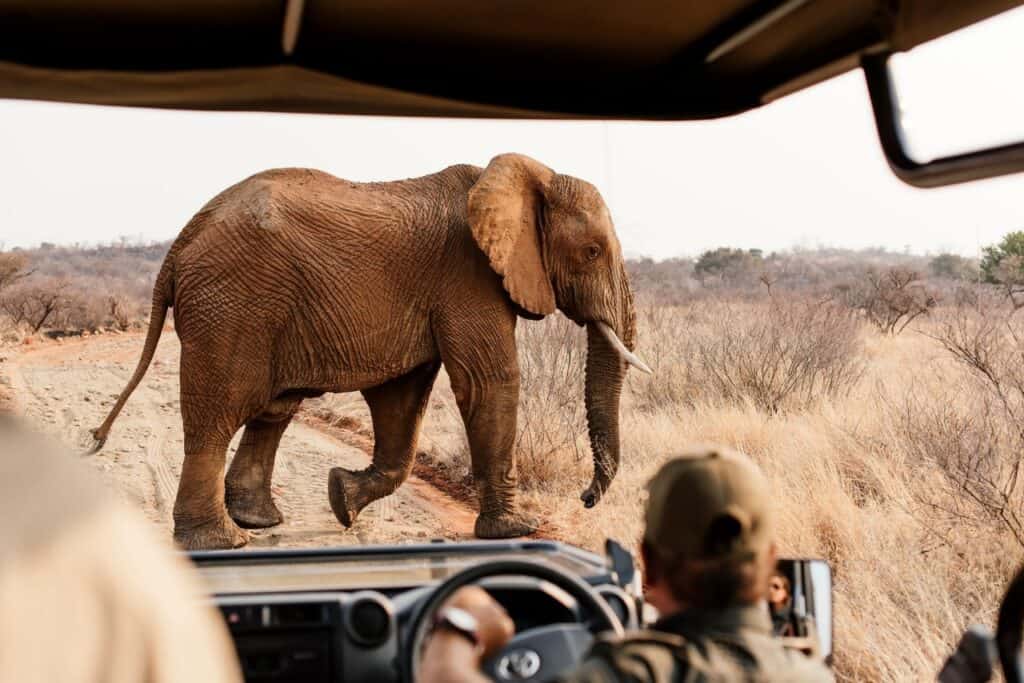
14. Pilanesberg supports elephants
Elephants are among the reserve’s most recognisable residents.
You may find individuals, breeding herds or bulls moving between feeding areas and water, depending on conditions.
15. Both black and white rhino occur in the region
Pilanesberg has long played a role in rhino conservation.
Rhino information should always be handled responsibly. Precise locations and sensitive conservation details are best left out of public travel content.
16. Buffalo form part of the Big Five population
African buffalo occur throughout suitable parts of the reserve.
They may be encountered individually or in groups, often around grazing areas and water.
17. Cheetahs occur in Pilanesberg
Cheetahs are another predator travellers may encounter.
They tend to favour more open terrain where their speed gives them an advantage, although sightings remain unpredictable.
18. Brown hyenas are one of Pilanesberg’s more interesting predators
Not every safari needs to revolve around lions and leopards.
A brown hyena sighting can be particularly rewarding because many first-time visitors have never even heard of the species before arriving in southern Africa.
19. Spotted hyenas also occur in the reserve
Spotted hyenas play an important ecological role as both hunters and scavengers.
Watch them for a while and the old stereotype of a simple scavenger quickly falls apart. Their social behaviour is considerably more complex.
20. Giraffes are commonly associated with the reserve’s woodland areas
Giraffes feed selectively from trees and shrubs and can cover considerable distances.
Their height also makes them considerably easier to spot than a leopard tucked into the same landscape.

Herbivores and Smaller Wildlife
21. Zebra are widespread in Pilanesberg
Plains zebra are a familiar sight on many game drives.
They are often found in mixed grazing areas and can occur near wildebeest and other herbivores.
22. Blue wildebeest are another familiar resident
Wildebeest are well suited to the reserve’s grassier areas.
They are sometimes overlooked once travellers start searching for predators, but watching a herd interact can be just as interesting.
23. Impala are an important part of the ecosystem
Impala may become so familiar that guests stop paying attention to them.
That is a mistake.
They are an important prey species and often tell an experienced guide what is happening nearby. Sudden alarm calls can change the mood of a game drive in seconds.
24. Kudu occur in Pilanesberg
Greater kudu favour areas where woodland and cover provide feeding opportunities.
The bulls are particularly striking, with their long spiral horns.
25. Waterbuck are often associated with wetter areas
As their name suggests, waterbuck tend to stay reasonably close to water.
Their distinctive white rump marking makes them fairly easy to identify once you know what to look for.
26. Hippos occur around suitable permanent water
Hippos spend much of the daytime in water and become more active on land after dark.
Never mistake their bulky appearance for slow movement. They are powerful wild animals and need plenty of space.
27. Warthogs are common safari favourites
Warthogs rarely receive top billing before a safari, but guests tend to enjoy them once they start watching their behaviour.
Seeing one disappear into the bush with its tail upright is one of those small safari moments people remember.
28. Baboons are highly social
Chacma baboons live in organised troops and spend much of their time feeding, grooming and interacting.
If you have time, watch the troop rather than simply driving past. There is usually something happening.
29. Vervet monkeys occur in the reserve
Vervet monkeys are another social primate found in Pilanesberg.
Around camps and picnic areas, visitors should avoid feeding them. Habituating wild animals to human food creates problems for animals and people.
30. Some of the best sightings are not Big Five sightings
This becomes obvious after a few game drives.
A jackal hunting, an eagle taking off, young animals playing or a herd reacting to a predator can become far more memorable than simply ticking another species off a list.
Birdlife Facts About Pilanesberg
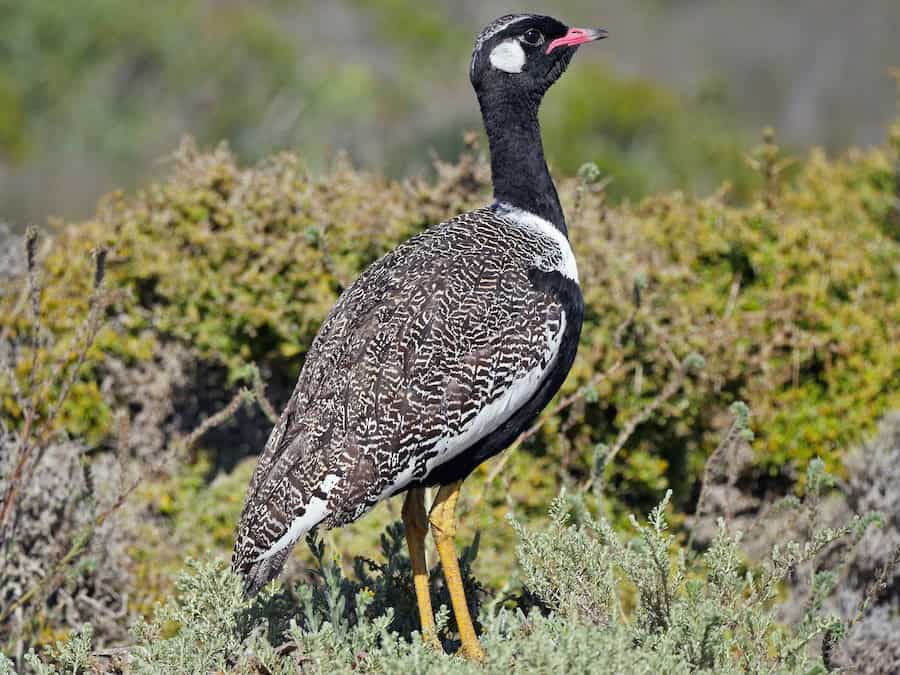
31. Pilanesberg has rich birdlife
Hundreds of bird species have been recorded in and around the reserve.
That variety makes Pilanesberg worthwhile even when the larger mammals are quiet.
32. Summer brings additional bird activity
The warmer, wetter months bring migratory species and breeding activity.
The bush is thicker, which can make some mammals harder to spot, but birders often have plenty to keep them busy.
33. Raptors are part of the Pilanesberg experience
Eagles and other birds of prey can be seen around the reserve.
Guides often scan prominent trees and open skies as carefully as they watch the ground.
34. Water areas attract a different mix of birds
Dams and wetland areas support species you are less likely to find on dry ridges or open grassland.
This is one reason stopping near water can be worthwhile even when no large mammals are immediately visible.
35. You do not need to be a birder to enjoy Pilanesberg’s birds
Many travellers arrive insisting they are not interested in birds.
Then someone spots a colourful kingfisher, hornbill or large eagle.
Safaris have a habit of changing people’s lists.
History and Conservation Facts
36. Pilanesberg’s modern wildlife story is closely tied to Operation Genesis
Operation Genesis was a major wildlife translocation programme associated with the development of the reserve.
Animals were moved into the area to help rebuild wildlife populations on land that had been heavily altered by previous human activity.
37. Thousands of animals were moved during the restocking programme
The scale of the project helped establish the foundation for the wildlife reserve travellers experience today.
It remains an important part of Pilanesberg’s conservation story.
38. Conservation transformed the landscape
Pilanesberg did not simply become a major wildlife destination by fencing off an untouched wilderness.
Its modern form involved active restoration, wildlife management and long-term conservation work.
That history makes the reserve more interesting once you understand it.
39. Pilanesberg shows how landscapes can recover
The return of wildlife demonstrates what sustained conservation can achieve.
That does not mean management stops once animals are reintroduced. Protected ecosystems continue to require careful monitoring.
40. Conservation here involves more than the Big Five
Large mammals attract visitors, but healthy ecosystems depend on far more.
Plants, insects, birds, reptiles, smaller mammals, predators and herbivores all form part of the same system.

Facts Travellers Should Know Before Visiting Pilanesberg
41. Pilanesberg is considered a malaria-free safari destination
This is one of the reserve’s major practical advantages for families and travellers who prefer a malaria-free safari area.
Visitors should still seek appropriate medical travel advice for their wider South African itinerary where necessary.
42. You can visit Pilanesberg as a day trip from Johannesburg
Its proximity to Gauteng makes a Pilanesberg day safari practical for travellers with limited time.
It is a long day, particularly with the road transfers, but you can leave Johannesburg in the morning, spend meaningful time on safari and return in the evening.
43. Staying overnight changes the experience
A day safari works when time is tight.
Staying one or more nights gives you more opportunities for early and late game drives and removes some of the pressure to find everything in a few hours.
If wildlife is the main reason for your visit, more time usually helps.
44. Sun City is next door
Pilanesberg sits alongside Sun City, one of South Africa’s best-known resort destinations.
That makes it possible to combine a resort stay with game drives without undertaking a major transfer.
45. Self-drive safaris are possible
Visitors can explore designated routes in their own vehicles.
Self-driving gives you independence, but first-time safari travellers sometimes underestimate how difficult spotting wildlife can be.
A good guide notices tracks, alarm calls, habitat and animal behaviour that newcomers often miss.
46. Guided open-vehicle drives offer a different perspective
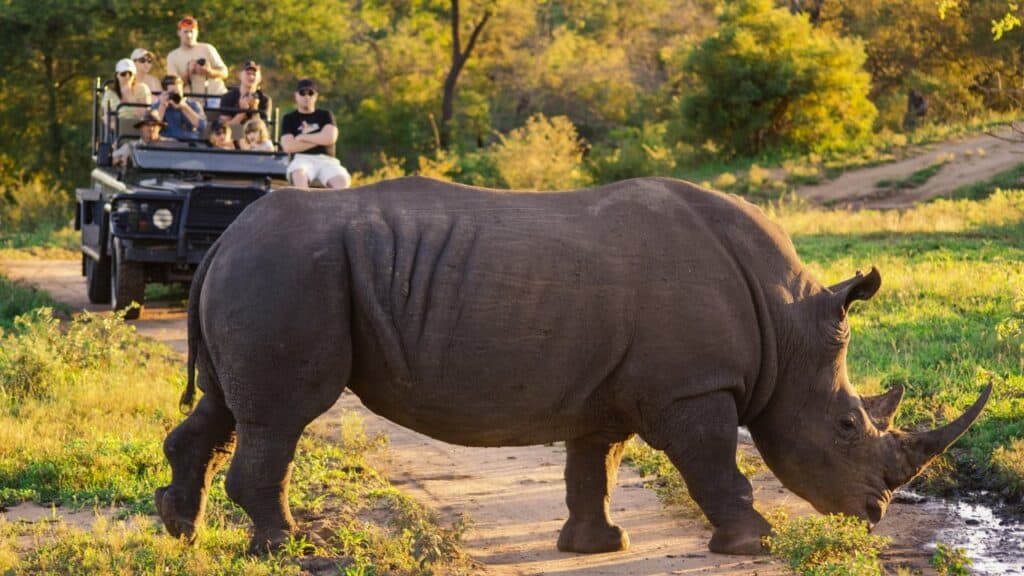
Open safari vehicles generally provide elevated seating and better visibility than an ordinary car.
You also have a guide concentrating on wildlife while you concentrate on looking.
For a first safari, that can make the day easier.
47. Early game drives are worth the alarm clock
Cooler early-morning conditions can produce useful wildlife activity, and the softer light is better for photography.
Winter mornings can be cold on an open vehicle. Bring layers.
48. Winter and summer offer very different safaris
The dry winter months generally bring thinner vegetation and easier visibility.
Summer is greener and warmer, with thicker vegetation, dramatic skies and stronger birding.
Neither season controls what wildlife you will see.
49. Pilanesberg works particularly well for first-time safari travellers
The combination of accessibility, Big Five wildlife, guided safari options and a malaria-free setting makes the reserve an approachable introduction to safari.
It is especially practical if your wider South African itinerary already includes Johannesburg, Pretoria or Sun City.
50. Pilanesberg is not simply a smaller version of Kruger
This is probably the most useful fact to finish with.
Kruger is much larger and offers a very different sense of scale, habitat diversity and safari planning. Pilanesberg’s strength is different: it puts a substantial wildlife reserve within easy reach of Gauteng.
The right choice depends on your time, budget and the kind of safari you want.

Pilanesberg vs Kruger National Park
Factor | Pilanesberg | Kruger National Park |
Access from Johannesburg | Easier for short trips | Longer journey |
Big Five | Yes | Yes |
Malaria | Malaria-free area | Seasonal malaria risk exists |
Reserve size | Around 570 km² | Nearly 20,000 km² |
Day-trip suitability from Johannesburg | Very good | Poor |
Multi-day safari depth | Good | Excellent |
Self-drive | Yes | Yes |
Guided game drives | Yes | Yes |
Best suited to | Short safaris, families, first-timers | Longer, more immersive safari trips |
There is no need to force a winner.
If you only have a day or weekend available from Johannesburg, Pilanesberg makes far more practical sense. If you have several days and want the scale and variety of a much larger ecosystem, our Kruger vs Pilanesberg comparison explains how the two reserves suit different trips.
What Guides Usually Tell First-Time Pilanesberg Visitors
Do not spend the whole drive asking where the lions are.
Predators matter, of course, but watching only for the Big Five means you miss much of what makes a game drive interesting.
Look at what the impala are doing. Listen when animals start calling. Watch the trees as well as the road. Spend time around water and do not assume a quiet first hour means the drive will stay quiet.
Wildlife rarely works to a timetable.
What to Pack for a Pilanesberg Safari
You do not need complicated safari clothing for Pilanesberg.
Bring:
- Comfortable neutral-coloured clothing
- A warm jacket or fleece for winter mornings
- Hat
- Sunscreen
- Sunglasses
- Binoculars
- Camera or phone
- Comfortable closed shoes
- Water bottle
- Light rain protection during the summer months
Layers are more useful than one heavy outfit. An open vehicle can feel surprisingly cold shortly after sunrise and considerably warmer a few hours later.
A Simple One-Day Pilanesberg Safari
Time | What to Expect |
Early morning | Depart Johannesburg |
Morning | Arrive at Pilanesberg and begin game viewing |
Late morning | Continue through productive wildlife areas |
Midday | Lunch and short break |
Afternoon | Second period of game viewing |
Late afternoon | Leave Pilanesberg |
Evening | Return to Johannesburg |
The exact schedule depends on the safari you book and where you are collected.
There are a number of lodges to choose from, ranging from Budget to Luxury options.
Real Guest Reviews
⭐⭐⭐⭐⭐
Derek C. – USA
“The Full Day Pilanesburg Experience was absolutely amazing! To begin, pickup from our hotel went seamlessly. Though the drive to the park was about 2.5 hrs, our driver, Simon, did a great job of telling us fun facts about the tour. At first, we were worried the rainy/cool weather would keep most the animals in hiding. But the sky began to clear up as soon as we arrived at the park. Our guide, Petrus, was incredibly informative and very skilled at spotting animals even in the distance. We saw rhinos, giraffes, elephants, hippos, wildebeast, zebra, and a mix of other flaura and fauna. We didn’t see the lions, but the trip was still very worthwhile! All in all, I cannot recommend this tour with MoAfrika tours enough!”
⭐⭐⭐⭐⭐
Aron B – USA
“What a great experience! I had an amazing time in Pilanesburg Park seeing the Big 5. Our guide Chris was amazing and explained so much about the animals, their habits and things to look out for during the drive. I will definitely come back for another safari in South Africa!”
⭐⭐⭐⭐⭐
Julia H. – China
“I booked a day trip to Pilanesberg National Park with MoAfrika Tours, and it was an unforgettable experience from start to finish. Our driver Nicky was incredibly friendly, punctual and made the ride very enjoyable. Once in the park, we were guided by Kathy, who was absolutely fantastic. Her passion for wildlife and deep knowledge of the park were truly impressive. Thanks to her, we got to see so many animals and learn and laughed so much, you could really feel how much she loves what she does! Everything was perfectly organized, and I felt well taken care of throughout the entire day. 100% recommended. I would book with MoAfrika Tours again anytime!”
Planning Your Pilanesberg Safari
Pilanesberg sometimes gets chosen because it is convenient. That is fair enough — being able to reach a Big Five reserve from Johannesburg in a few hours is a genuine advantage.
But convenience is only part of the story.
Once you are inside the reserve, the volcanic ridges, changing habitats, conservation history and wildlife give Pilanesberg its own character. It does not need to pretend to be Kruger.
If you only have a day, make the most of the time with an early start and a guided game drive. If wildlife is a bigger part of your South African trip, consider staying longer. An extra morning or afternoon in the bush gives nature another chance to surprise you.
View MoAfrika’s Pilanesberg safari options or speak to our safari team if you would like help choosing between a day safari, private game drive or multi-day stay.
Frequently Asked Questions
Is Pilanesberg a national park or a game reserve?
Pilanesberg is commonly referred to as both Pilanesberg National Park and Pilanesberg Game Reserve in tourism material. It is a protected wildlife area in South Africa’s North West Province rather than part of the SANParks-managed Kruger system.
Does Pilanesberg have the Big Five?
Yes. Lion, leopard, elephant, rhino and buffalo occur in Pilanesberg. Having all five species in the reserve does not mean you will see all five on one game drive. Wildlife sightings remain unpredictable.
Is Pilanesberg malaria-free?
Pilanesberg is generally regarded as a malaria-free safari destination, which is one reason it is popular with families and travellers looking for an accessible safari near Johannesburg.
How far is Pilanesberg from Johannesburg?
Allow roughly 2.5 to 3 hours by road in normal conditions, depending on where in Johannesburg you leave from and the traffic. For a day safari, that means an early start.
Can you visit Pilanesberg in one day?
Yes. Pilanesberg is one of the most practical Big Five day-safari destinations from Johannesburg. A multi-day safari gives you more time in the bush, but one full day can still provide a worthwhile introduction.
Can you self-drive in Pilanesberg?
Yes. Pilanesberg has a network of roads that visitors can explore by car. A guided safari is often easier for first-time visitors because an experienced guide can concentrate on tracks, habitat and animal behaviour while you enjoy the drive.
What is Pilanesberg most famous for?
Three things tend to stand out: its Big Five wildlife, its ancient volcanic landscape and the conservation history associated with Operation Genesis. Its proximity to Johannesburg and Sun City adds another practical advantage.
What is the best time of year to visit Pilanesberg?
The dry winter months are popular because vegetation becomes thinner and animals can be easier to spot. Summer brings greener scenery, warmer weather and stronger birding. There isn’t one correct season for everyone.
Is Pilanesberg good for children?
For many families, yes. The malaria-free location and relatively easy access from Johannesburg are practical advantages. Parents should still consider drive length, early starts and how comfortable younger children will be sitting in a safari vehicle.
Is Pilanesberg better than Kruger?
They suit different trips. Choose Pilanesberg when you want a shorter, easily accessible safari from Johannesburg or Sun City. Choose Kruger when you have several days available and want a much larger, more varied safari environment.