Need more Info?
No results available Reset filters?
An overview of Botswana’s tourism industry quickly makes it clear why the country remains one of the favourite destinations and why tourists would queue to board planes for visits.
Knowing what to expect and when to visit due to the purpose of your visit to Botswana, makes it necessary to first know exactly what the country and the industry offer.
Botswana’s tourism industry is one of the most successful in the world and began to develop in the 1990s to become one of the most popular in Africa. Botswana implemented a successful tourism policy to increase tourist numbers, government revenue, and employment opportunities by focusing on attracting up-market international tourists to increase revenue.
The Okavango Delta region and Moremi Game Reserve is popular tourist destinations and its popularity with tourists has stimulated the growth of infrastructure facilities and services in the region.
Unlike busier safari nations, Botswana safaris maintain a sense of untouched grandeur. Protected areas like the Okavango Delta and Chobe National Park offer an exclusive visitor experience, often with fewer people and more space to explore.
One of Botswana’s most celebrated features is its eco-conscious travel philosophy. Rather than focusing on mass tourism, lodges and operators here offer low-volume, high-value stays. That means smaller camps, personalised guiding, and a greater opportunity to observe animals without crowding.
Beyond wildlife, you can visit local communities such as the BaSarwa people, who continue traditional ways of harvesting wild honey or showcasing ancient tracking skills.
Add to that the country’s political stability, excellent infrastructure, and English-speaking population, and Botswana appears as a traveller-friendly yet wild destination.
Cultural tourism is also expanding in Botswana, with the potential to make tourism as a whole even more sustainable by reducing the pressure off existing wildlife attractions while creating a more equitable distribution of development throughout the country.
Cultural tourism provides tourists with opportunities to learn about art, heritage, and local traditions and village based tourism focuses on exposing tourists to traditional crafts and daily life. Revenue from village based tourism creates opportunities for vocational training and entrepreneurship for local women.
Many of the lodges are spectacular in a stylish and simplistic way that blends into the ecosystem in a sustainable and environmentally friendly way. They are also known for excellent service by staff and local guides with extraordinary knowledge.
Botswana has a genuine commitment to conservation of the environment, its wildlife and its cultural heritage, which has the potential to make the country a leader in eco-tourism.
Following the fact that Botswana is serious about its value as tourist destination, the country has made sure that the most attractive areas are suitably developed for that purpose. By development is not necessarily meant modern amenities, but rather pristine, exclusive experiences.
A visitor would find several kind of destinations worthwhile to visit.
Among the country’s famous parks count the following:
The Central Kalahari Game Reserve is a large national park in Botswana’s part of the Kalahari Desert. The reserve was established in 1961 and covers an area of 52 800 square km, making it one of the largest game reserves in the world. The park contains wildlife such as leopard, lion, cheetah, wild dog, brown hyena, giraffe, warthog, blue wildebeest, eland, gemsbok, red hartebeest and kudu.
The Chobe National Park is situated in northwest Botswana and is known for having of the largest games concentrations on the African continent. Established in 1968, it was the country’s first national park and is the third largest park in the country after the Central Kalahari Game Reserve and the Gemsbok National Park. It is definitely the most diverse.
Chobe National Park covers approximately 11 700 square kms, and comprises swamps, floodplains and woodland. The Chobe River on its northern boundary is probably one of Africa’s most beautiful rivers.
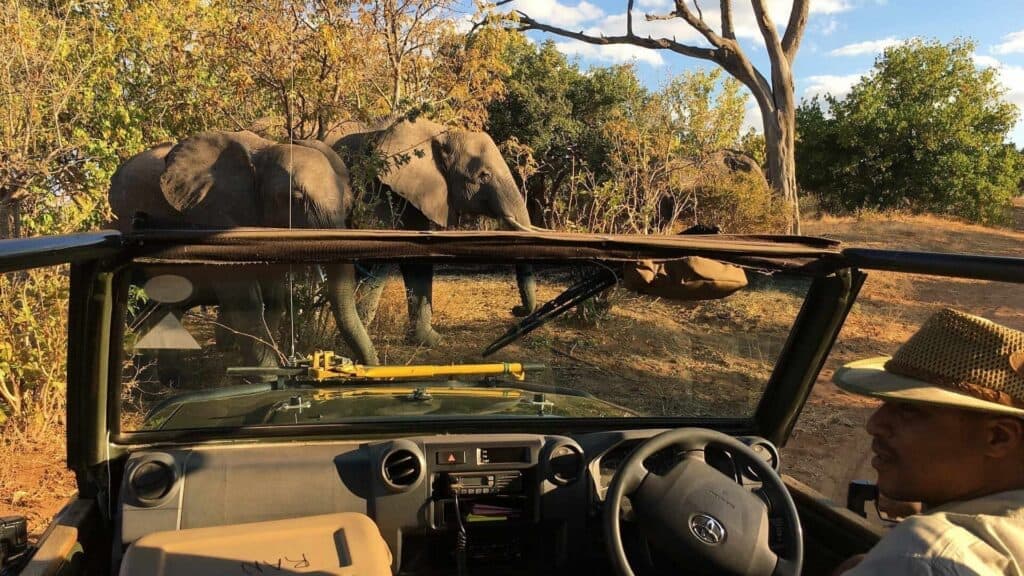
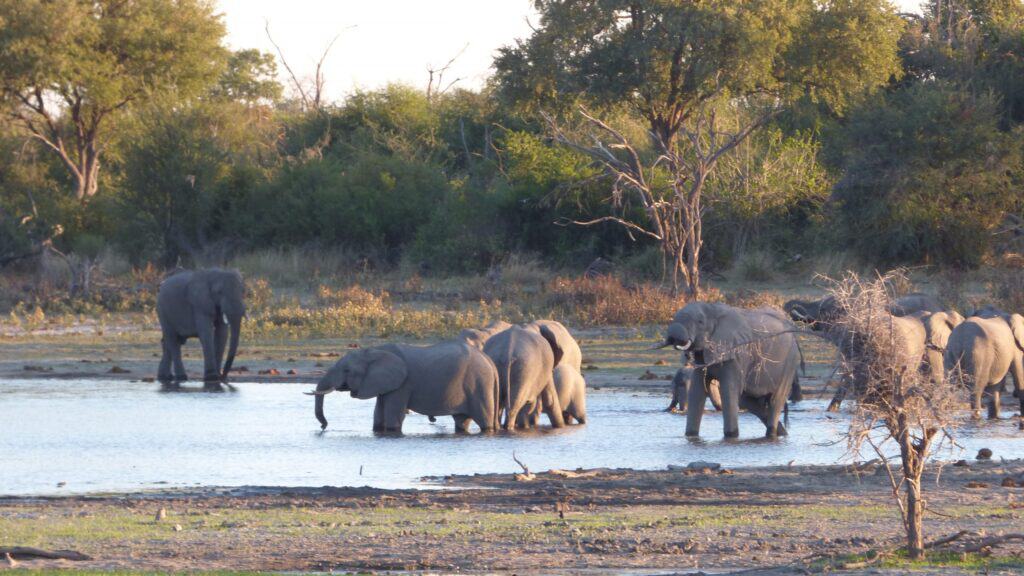
The park itself is famous for its large herds of elephants, often up to 100 000. During the dry winter months of May through to September enormous numbers of these large animals congregate at the river to bathe, drink water and play. Elephant sightings are thus practically guaranteed here, and you may even have very close encounters with them while they are crossing your road or stroll past your establishment on their way to the water.
Chobe however is also home to huge herds of buffalo as well as the associated predators such as large prides of lion.
The Kgalagadi Transfrontier Park is a large conservation and wildlife area in southern Africa, which stretches across the border between South Africa and Botswana and comprises two adjoining national parks, in total about 38 000 square kilometres. Approximately three-quarters of the park is in Botswana and the rest in South Africa.
The Central Kalahari Game Reserve is where you go to feel Botswana’s scale. Covering over 50,000 square kilometres, this is one of the world’s largest protected wilderness areas. Far from tourist crowds, it offers solitude and a sense of space you won’t find anywhere else. The terrain varies from rolling dunes and ancient riverbeds to grass plains.
Wildlife may not always be as dense as in the Delta or Chobe, but Deception Valley area attracts springbok, oryx, giraffe and large prides of lions known for their imposing size. Cheetahs thrive in the open grasslands, while bat-eared foxes and honey badgers surprise those with sharp eyes. Birdlife is excellent, especially during the summer rains.
One of the Reserve’s most powerful appeals is its silence. Days pass without seeing another vehicle and nights are filled with stars and the distant whoop of hyenas.
Accommodation varies from basic bush camps to exclusive mobile safaris that offer total seclusion. Most visitors enter via Rakops or Maun and need to be fully self-sufficient if self-driving.
Nxai Pan lies just north of the Makgadikgadi system and shares many of its characteristics—wide open spaces, salt pans, and seasonal drama. During the rains, the flat, grassy landscape becomes rich feeding ground, attracting thousands of zebras, wildebeest and springbok. Predators like lions and cheetahs follow in their wake, creating action-packed sightings.
The park is also famous for Baines’ Baobabs—a small group of ancient baobab trees painted by explorer Thomas Baines in the 1860s.
Game drives in Nxai Pan during the green season can be extraordinary. Elephants dig for water in the dry months, while migratory birds arrive in impressive numbers between November and March. The open terrain is perfect for photography.
Accommodation is limited to the state-run campsite or the exclusive Nxai Pan Camp, which offers guided safaris and scenic air transfers. The park is accessible by 4×4 vehicles from Maun, but drivers should be experienced and prepared, especially during or after rain.
The Moremi Game Reserve was proclaimed in 1963, making it the oldest and first protected reserve of the Okavango Delta. It is one of the most diverse reserves and a favourite with all Africa-travellers.
Covering nearly 5 000 square kilometres within the eastern side of the Okavango Delta, Moremi Game Reserve is a mosaic of mopane forests, floodplains and lagoons. It is one of the most diverse wildlife areas in Botswana.
Moremi offers a more structured safari experience than some other areas in the Delta. Game drives here often produce exceptional sightings of elephants, leopards, buffalo, red lechwe and an impressive variety of birds. Wild dogs are seen regularly, especially around the Khwai region, where rivers and marshes sustain large prey populations.
Unlike national parks, Moremi allows walking safaris in some private concessions and mokoro excursions in specific water-dominated areas.
Lodging in Moremi ranges from seasonal tented camps to high-end lodges overlooking lagoons. Many of these are eco-friendly, solar-powered and community-supported. For self-drivers, the South Gate and Third Bridge campsites are popular, but 4×4 vehicles and good preparation are essential due to the sandy tracks and occasional flooding.
The dry season is ideal for most visitors, but early wet months (November to January) also reward with beautiful greenery and plenty of animal activity.
The Okavango Delta, a UNESCO World Heritage Site, is Botswana’s crown jewel. It is one of the world’s largest inland deltas, formed where the Okavango River spills across the Kalahari Desert.
What makes it truly exceptional is its seasonal flooding cycle. Unlike most river deltas that drain into oceans, the Okavango’s waters never reach the sea. Instead, they fan out into a maze of lagoons, islands, and water channels, creating a habitat teeming with life.
Visiting the Okavango offers a distinctive type of safari. Instead of game drives alone, you can glide through reeds in a traditional mokoro (dugout canoe) with a local guide. This allows for intimate sightings of sitatunga, elephants wading through water, and colourful kingfishers.
On foot or in a vehicle, you may come across lions, leopards and even elusive wild dogs in Moremi Game Reserve, which protects part of the Delta.
Accommodation here ranges from mobile safari tents to ultra-luxurious lodges perched on remote islands. Many are only accessible by small aircraft, which adds a dramatic aerial perspective to your arrival.
Stretching across the eastern side of Botswana, the Makgadikgadi Pans form one of the largest salt flat systems in the world. These pans are the remnants of an ancient lake that dried up thousands of years ago, leaving behind a stark, otherworldly landscape that changes dramatically with the seasons.
During the dry season, the pans are an expanse of cracked white earth under vast skies, but when the rains arrive, the area transforms into shallow lakes that attract wildlife in surprising numbers.
One of the most striking sights is the zebra migration. From December to March, herds of thousands of zebras and wildebeest pass through the Makgadikgadi, drawn by fresh grazing and water. Flamingos also flock to the pans in breeding season.
Key areas to explore include Ntwetwe Pan, Sowa Pan, and the Boteti River region. During dry months, quad biking and walking with San guides offer a rare type of adventure.
Accommodation includes desert lodges like Camp Kalahari and Jack’s Camp (an opulent throwback to 1940s safari style), along with simple campsites for self-drivers. Access is easiest via Maun or Gweta, and some camps are only accessible by air.
Tsodilo Hills rise dramatically from the flat expanse of north-western Botswana, near the Namibian border. This sacred site is not about big game or luxury lodges, but about time, spirit and story. These rocky outcrops, known as the Male, Female and Child hills, are covered in more than 4,000 ancient rock paintings, some dating back over 20,000 years.
To the San people, Tsodilo is the “Mountain of the Gods.” Many of the paintings depict animals, hunting scenes, and spiritual symbols that still carry meaning today. Walking along marked trails with a local guide, you not only view the rock art but hear the oral histories passed down over generations.
A small museum and visitor centre provide context, but the real experience lies in walking the trails, climbing rocky slopes and imagining the lives once lived here. Sunsets from the top of the Female Hill are extraordinary, casting golden light across the plain.
Facilities are limited—basic campsites are available, but most visitors come on guided day trips from Shakawe or Maun. You’ll need a 4×4 to reach the site during the rainy season, and it’s best to bring your own food and water.
Tsodilo Hills Archaeological site
The Tsodilo Hills are another of Botswana’s UNESCO World Heritage Sites, since it was declared as such in 2001. It is famous for its religious significance due to a number of rock paintings (more than 4 500 cave drawings), shelters, depressions and caves.
Gcwihaba means “hyena’s hole” in the language of the San people and these caves that are located in the Gcwhihaba valley are home to a fossil river feature. It has on occasion been described as the wildest and most remote destination in Botswana, and comprises an underground labyrinth of caverns and pits, linked passages, fantastical stalagmite and stalactite formations, and beautifully coloured flowstones almost like waterfalls of rock.
About 50 kilometres from the Gcwihaba caves, along the border between Namibia and Botswana, you will also find the Aha Hills. The Aha Hills cover an area of approximately 245 square kilometres, mostly in Botswana, and are rough and jagged, with numerous faults and fractures.
The sanctuary near the little town of Nata is home to more than 160 different species of birds, as well as wildlife such as kudu, springbok and other antelopes. It is a community-run project that was established in 1988 could be visited since 1993.
Its magic lies in the close to 250 000 Lesser Flamingos and Greater Flamingos that visit the sanctuary every year during mating season.
Located in the northeast of Botswana near the borders of Namibia, Zambia and Zimbabwe, Chobe National Park is famous for having one of the largest elephant populations in Africa.
Chobe is divided into four distinct regions, each with its own charm. The Chobe Riverfront is the most popular and easily accessible, offering exceptional game viewing from land and water. Boat safaris along the river are a highlight, where you can spot hippos, crocodiles, elephants and even lions.
Inland areas like Savuti and Linyanti are more remote and attract seasoned travellers for their wild atmosphere and predator density.
This park also excels in birdwatching with over 450 species having been recorded, including African fish eagles, carmine bee-eaters and African skimmers. Birdlife is especially active during or just after the wet season.
Chobe’s infrastructure allows for varied accommodation options—from budget camping sites and mobile safaris to luxury river lodges with sunset decks and gourmet dining. It is also one of the few parks in Botswana where self-driving is common, particularly near Kasane, the main gateway town.
The best time to visit Chobe is during the dry season (May to October), when animals are easier to find along the river.
A Chobe River Safari is one of the most relaxing game viewing experiences in Africa. It gives tourists the opportunity to watch hippos, crocodiles and elephants (often swimming with their trunks held high as snorkels) and abundant birdlife with pied kingfishers, fish eagles and herons, directly from your bedroom.
Staying on a houseboat, you are permanently on safari, while you can experience wildlife and see Chobe from a different perspective.
Even with this little bit of research, it becomes clear that Botswana has excelled with luxury in the most wonderful of places, making it a must on every traveller’s itinerary.
But a few questions remain, and this article will further explore the factors that would influence your decision to visit the country, like the ever present budgetary considerations; with what purpose in mind you would like to visit – be it to go on a wildlife safari, a luxurious holiday or just a relaxing break; your age; and how the weather conditions may influence your choice of destination or time of visit.
Botswana follows a high-value, low-volume tourism strategy in an effort to lessen negative environmental impacts on its unspoiled wildlife areas while maximizing socioeconomic benefits.
This implies that beds allowed per concession area are restricted compared to other countries, a camp can only host a certain number of guests and only runs a small-scale vehicle operation to minimise the human impact on nature.
This in turn leads to a lower number of tourists and makes the guests’ experience much more exclusive but automatically also more expensive.
Government conservation fees and leases for land are high, locations in the unspoilt wilderness results in high maintenance costs, food delivery and waste management must often be done by air, and a high staff to guest ratio all contributes to higher cost of holidaying in the country.
Considering the above, a visitor will need to decide how important factors like exclusiveness, solace, modern amenities and luxury is while planning a visit.
Due to the fact that many destinations are almost inaccessible or roads at the very best not easy to negotiate, older people may need to consider whether they are fit enough for such a challenge. Fortunately, many destinations can be reached for fly-in safaris.
Last, but not least, weather circumstances, rainy and dry seasons and day temperatures will not only determine whether it is comfortable or uncomfortable to visit a certain place, it will also depend on the season whether you will find what you came for.
There are best times to visit each and every one of the tourism destinations offered by this country, and there are not-so-good times, but never a time to stay away. In a nutshell, one can say that June to September may be a good time to visit the Okavango Delta, Moremi Game Reserve and Chobe National Park, while March to May would also be a fine time to visit the other, drier parks.
July to October generally counts as high season, but still you should not feel too crowded, except perhaps for Chobe. Low season can in general be seen as from December to April, and some lodges and camps even stay closed down during this period. Bad weather, if one may call it “bad”, might be experienced since these months may bring heavy rains.
The best tourist weather may be experienced in April and May, because during these months one can bargain on moderate temperatures, little to no rainfall, and only a few clouds to enhance your photographs.
The worst weather for travellers may be experienced between October and November and between January and February. During these months it can get very hot and January and February are the peak months of the country’s wet season.
The months from May through to October marks the country’s dry season and winter. During these months, there is less vegetation all around and animals tend to concentrate around water sources, making them much easier to find or spot.
On top of that, the skies are clearer, rain is absolutely rare, and the threat of mosquitoes, which can cause malaria, is much lower.
November to April is summertime in Botswana and being in a summer rainfall area, that means also the wet season. This may not be the high season but has its benefits for visiting: The scenery is greener, and you can expect slightly lower rates during this season.
And although we said that wildlife was easier to spot in the dry season, you should still see plenty of them during these months, with the added bonus that there could be a lot of new-born animals and migratory birds.
Except for the months of January and February, rain seldom interferes too much with any trip. During these months continuous rains may be experienced, lasting for days on end.
It can get very hot during October and November, with some lodges and camps even closing down during part of the wet season.
One may suggest that the best time to visit Botswana is during the dry season, that is between May and October, when travellers can expect warm, sunny days (between 22 and 35 degrees Celsius) and chilly nights. These are also the months when the water levels in the Okavango Delta are at their highest, resulting in the waterways and channels Botswana is famous for.
If you don’t mind the odd rain shower or two, the so-called green season, which is from November to April, is just as great a time to travel through the country. Visitors are less and prices are lower, the scenery will not disappoint, and animals give birth to their young.
But why would one try to avoid the wet season in the first place? Botswana’s rainy season from December to April is after all typical of a sub-tropical climate: the days are hot and humid and as humidity build, it may lead to spectacular thunderstorms, which in turn will take the edge off the heat. Moreover, it transforms the landscape into a lush utopia of life and vitality, not to mention the stunning photographic opportunities it offers.
For those who see their way open to brave this season, a special gem awaits too. This is the season when the annual zebra migration takes place from northern Botswana into the Kalahari and Makgadikgadi, to find fresh grazing in the grasslands of Botswana’s grassland-like interior. With around 25 000 animals on the move this is the second largest Zebra migration after the great migration of East Africa.
Visiting the Central Kalahari and Makgadikgadi Pans are also generally seen as better in the wetter season when there is plenty of wildlife to see. More antelope of course also bring more predators like lions, hyena, cheetah and leopard, so if you are really lucky you may find them hunting the plains game that feed off the nutrient-rich grasses.
On the wet pans you may also see thousands of Flamingos breeding, after having crossed half the continent from the Walvis Bay Lagoon in Namibia. The area will in general be alive with wildlife activity as the season of plenty is also the time for territorial or mating disputes and the birth of many young as nature is regenerating itself after the dry winter.
The Okavango Delta permanently has water and can be visited all year round but in winter the thinned out plains and paradoxically higher water levels offer better visibility. In winter, water-based game viewing activities normally take centre stage.
The famous Savuti region of southern Chobe is also good to visit all year round but perhaps just a little bit better during the drier times when the animals are drawn to waterholes and rivers. After the first rains of November, when the young grasses taste at their very best, it draws large herds of zebra, impala and other plains game, followed by the predators!
Northern Chobe is dominated by the Chobe River and also best in the dry season when the animals migrate from the south to be near the river for their daily water supplies. Then huge herds of up to 300 elephants and 600 buffaloes, along with hundreds of zebra, impala and other antelope, move onto the river’s flood plains bringing lions and other predators after them.
Other animals, like crocodile, hippo, baboons, bushbuck, lechwe and waterbuck as well as lots of birds, stay next to the Chobe River all through the year.
The reason why one would see more animals during the dry winter months, is simple: Water is scarce, so wildlife congregates around remaining water sources. And of course, the bush is thin and sparse, so you can SEE the animals. But if you want a different safari experience with fewer people around, a lavish landscape and a new wildlife perspective, then Botswana in the wet season is definitely a very good option.
Botswana’s dry season extends from May to October and, depending on variations in local weather patterns, November may turn out to either be dry, very wet or a stimulating combination of both.
Nights and mornings can be cool to cold with occasional frost, but the days are usually clear, dry and warm. And since you are not confronted with a wall of foliage like in summer, the winter bush has died back and thinned out to dramatically improve your game viewing opportunities.
Typical minimum and maximum temperatures experienced during the twelve months of the year in Botswana, together with the average rainfall during those months, are the following:
January: minimum temperature 20 degrees Celsius, maximum temperature 33 degrees Celsius, rainfall average 94 mm
February: minimum temperature 19 degrees Celsius, maximum temperature 31 degrees Celsius, rainfall average 81 mm.
March: minimum temperature 17 degrees Celsius, maximum temperature 31 degrees Celsius, rainfall average 56 mm.
April: minimum temperature 14 degrees Celsius, maximum temperature 28 degrees Celsius, rainfall average 44 mm.
May: minimum temperature 8 degrees Celsius, maximum temperature 25 degrees Celsius, rainfall average 11 mm.
June: minimum temperature 5 degrees Celsius, maximum temperature 22 degrees Celsius, rainfall average 4 mm.
July: minimum temperature 5 degrees Celsius, maximum temperature 23 degrees Celsius, rainfall average 3 mm.
August: minimum temperature 7 degrees Celsius, maximum temperature 26 degrees Celsius, rainfall average 2 mm.
September: minimum temperature 12 degrees Celsius, maximum temperature 29 degrees Celsius, rainfall average 14 mm.
October: minimum temperature 16 degrees Celsius, maximum temperature 31 degrees Celsius, rainfall average 40 mm.
November: minimum temperature 18 degrees Celsius, maximum temperature 32 degrees Celsius, rainfall average 69 mm.
December: minimum temperature 19 degrees Celsius, maximum temperature 32 degrees Celsius, rainfall average 82 mm.
The Okavango Delta, Moremi and Chobe are the places most visitors to Botswana want to go and see, therefore it would make sense that, while planning a trip to Botswana, the best time to visit these destinations, would determine their preferred time of travel.
Apart from just preference, like the tendency to visit between May and September (the dry season and winter) due to more moderate temperatures, there may be factors that plainly make it imperative to visit certain areas. For example, the Okavango is often flooded from June to October. Wildlife viewing, on the other hand, is normally good year-round, but can differ for some parks.
The country has a clear seasonal rhythm, and each period delivers something different, whether it is wildlife abundance, lush landscapes or budget-friendly travel.
This is the high season in Botswana, particularly from June to September. With little to no rain, wildlife concentrates at permanent water sources like rivers, lagoons and waterholes, making it perfect for spotting elephants, lions and wild dogs.
Vegetation becomes thin, improving visibility and the chance to see rare species. Early mornings and evenings can be cool—sometimes as low as 5°C—so layering clothing is key. Daytime temperatures are mild and pleasant.
Lodges often fill up well in advance and prices are at their highest during these months.
Also called the wet season, this offers a different kind of beauty. Afternoon rainfall brings the landscape alive, and it becomes a paradise for bird watchers, as migratory species flock in their hundreds.
The Okavango Delta swells, turning trails into waterways perfect for mokoro trips. Although wildlife is more dispersed, predator activity such as wild dog hunting and elephant calves is more frequent.
With fewer tourists, lodges may offer lower rates – sometimes 30% less than in peak season. Just remember to carry a light waterproof jacket and expect some afternoon storms, especially from December to February.
These brief transitional months offer their own benefits. You get moderate weather – not too hot or cold – wildlife activity is still high, and prices aren’t at full-rate.
April follows the rainy season, leaving lingering green, whereas November begins the rains and sees rising water levels.
Season | Months | Best For | Wildlife Sightings |
Dry Season | May – October | Big game viewing, mokoro trips | Elephants, lions, leopards, wild dogs |
Green Season | Nov – April | Birding, landscape photography | Flamingos, zebras, predators with young |
Shoulder Season | April & Nov | Fewer crowds, mixed conditions | General game viewing, fresh scenery |
In general, Moremi, Okavango and Chobe are the most popular parks among tourists, and all of them offer year-round wildlife viewing. It is also generally accepted that they are at their best during the dry wintery season when wildlife is easier to spot, and the Okavango is flooded.
The other, drier parks may be best to visit during or just after the traditional wet season, because then the fresh grasses should attract wildlife.
Game viewing during January, February, March and April is good in the Chobe National Park and absolutely excellent during May, June, July, August and September. During the last three months of the year, October, November and December it is also good, but not as good as during the previous months.
The first five months of the year, January, February, March, April and May, offers excellent game viewing opportunities in the Central Kalahari Game Reserve. Viewing normally is still good during June, July, August, September, October and November, and excellent again in December.
If you want to have the absolute best opportunity for game viewing in the Kgalagadi Transfrontier Park, you should plan your visit during the months of March, April or May, since they are categorised as the “excellent” months to visit those parks.
During the months June, July, August, September and October, viewing opportunities may be a bit less, but still good, and even during January and February, or November and December, the so-called “low” months, you may still see a fair number of plains game.
With the famous Makgadikgadi Pans National Park your luck is in, because each and every month of the year (from January through to December, are good for visiting. Depending on the annual rainfall, you may find the pans filled with water or dry, but both provide an unforgettable view and experience.
The months of January, February and March are fairly good times of the year to visit the Moremi Game Reserve. The following months of April, May and June can be classified as good months, but July, August, September and October are seen as excellent times to steer that way. November and December are still good months to visit, but not quite as good as the previous few.
The first three months of the year, January, February and March, as well as the last, December, are seen as the excellent times to visit the Nxai Pan National Park. April and May, as well as October and November, still offer good opportunities, while June, July, August and September are seen as the “fair” months for visiting.
As with the previous attractions and destinations, there are not really a bad or no-go time to visit the Okavango Delta, but some months of the year just give one that extra that you may not find during the others.
Thus, January, February and March are classified as the fair times to visit the Delta, while April, May and June are better and classed as good. July, August, September and October are the excellent months and you would hit the jackpot if you are able to visit during one of these months. But don’t despair, since even during November and December, circumstances for visiting are still good.
If you are bound to take your holiday during a specific month, a month-by-month guide to travelling through Botswana may help you to decide which destination(s) would be the best to fit into your itinerary.
With January being hot, with long sunny days sprinkled with short thunderstorms, it may be the time for a relaxing holiday, with ample opportunity to sit back under canvas with a drink to watch the lightning play in the sky. Some migratory birds might be breeding nearby, and the young calves have to keep out of predators’ ways.
February is the month for mercury to soar, still with lots of sunshine and dramatic storms that cause photogenic skies and call for photographs. The Central Kalahari may start coming to life and ripening fruit will lure both birds and animals to congregate around trees.
By March the rains start to ease off, but both days and nights might still be very hot and dry. Whether you are in a national park or in the delta, shade would still be sought, but game viewing might be satisfactory.
This is Africa and days may continue to be hot and sunny, but nights will start to get cooler in April. At least sleeping becomes more comfortable and the evenings become ideal for sitting outside with a sundowner as long as possible.
It is almost breeding season for antelope, so you might be treated on some males butting heads and strutting around to impress females.
By May, summer is officially gone and with it the rains. Day temperatures begin to fall, and evenings can even be cool. By now you will begin to pack a jacket if you go on a night safari.
Although June is supposed to be mid-winter in Botswana, don’t expect anything like in the higher latitudes of the Northern Hemisphere or down south in the inland of South Africa. Rather expect nice warm days without being sweltering and be ready for nights that may get quite close to freezing. Waterholes start shrinking and are frequented by both prey and predators.
While warmer days may still be the standard, early mornings and evenings will be very chilly. Paradoxically, although it is now the middle of the dry season in Botswana itself, the Okavango floodwaters begin to rise – it filters through from the central uplands of Angola – and fill up the channels, so the time arrives to get out on the water in a mokoro.
Botswana starts to heat up again in August. On occasion a bit of night-time frost may still occur, but during this time of year days can already get very hot.
With spring in the air, one can expect shiny blue skies, ultra-bright sunshine and quite high temperatures during the day. As in April, the best place to spend the balmy evenings would be outside on a veranda or balcony. The only difference being now that the soil is dusty since it was a long time since any rains had fallen, and the plains game constantly battle for survival as they are agitated by just as hungry predators.
The heat increases rapidly during October, and activities should be timed to avoid the middle part of the day when thermometers can hover above 40°C.
It is however also the time for the annual catfish run, which sees them migrating upstream in numbers to avoid the falling water levels, devouring smaller fish as they go.
November days and nights are hot and for the first part of the month the land may be very dry and dusty, hopefully to be transformed by expected rains that will come to soak up the dust and bring back greenery to the landscape.
Many young are born in this months, sadly just as often picked by the ever-present predators.
Thunderstorms make their welcome return to Botswana and torrents of rain nourish the grass as part of the eternal show of changing seasons. The survived new-borns will quickly gain weight and at least get to stand a fighting chance against the predators now.
Let’s say you have the freedom to choose whenever you want to visit Botswana, then you will plan your trip according to the activity you want to pursue.
If bird watching is your purpose for a visit, the summer months would be the time to visit, since these just are the best for bird watching in Botswana. This is when all the migrant species have arrived back from the northern climates and you should be able to tick off quite a number on your list of unique sightings.
Since there are always large concentrations of prey animals in all the parks and game reserves, you will actually find a place in Botswana for predator viewing during every single season.
The Okavango Delta flood starts to peak after July and is at its highest in the months of August and September. Most tourism establishments in the Delta will offer Mokoro safaris at this time, but there are also places and channels that have water year round where Mokoro trips will be available at any time.
If you are lucky enough to possess a 4×4 vehicle, you will be able to access the northern parks of Botswana during any season. There may however be some places that are inaccessible during the wet and rainy season, due to heavy rains and flooding which occurs from time to time.
Wildlife is plentiful in Botswana all year round, hence as with predator safaris, there will be areas where general game viewing is excellent despite what season it may be.
The rainy season officially begins in December and lasts until March, but the weather can also be a bit unpredictable during these summer months. Severe droughts are not that uncommon, and while it would always be extremely warm, there’s also a chance that the rain doesn’t come at all.
The best way to see and experience the Okavango Delta remains by boat and tour operators offer cruises that traverse the length of the Delta in comfortable custom-designed game viewing boats.
So, is there a best time for a safari to Botswana?
With its unique attractions and locations Botswana is an ideal safari destination all year round, everything will depend on what the visitor wants to go and do or see there.
Hence, a last factor that may influence the time of visit, may be more of a cultural nature: cultural festivals, of which there are quite a few:
Many of Botswana’s traditional village festivals were combined to make more modern events, and now the fascinating displays of African music and dance draw thousands of tourists.
Two of the favourite festivals are Gaborone’s Maitisong Festival and the Maun Festival.
Maitisong Festival is Gaborone’s major festival and takes place in March, with performing arts, traditional music, dance and theatre all over the city and its suburbs. The event lasts for nine full days.
The Maun Festival comprises traditional poetry, music and dance and is held over two days in April.
The Tjilenje Cultural Festival takes place in May the north-eastern regional town of Nlapkhwane. The traditional event involves ancient games, dances and stalls crammed with local food and drink.
Botswana’s President’s Day is celebrated in July as a four-day national holiday across the country. Inhabitants return to their home villages for celebrations, speeches, traditional dance and singing.
The Kuru Dance Festival takes place for three days in August on the Dqae Game Farm in the Kalahari Desert and comprises traditional dance and music.
Botswana Day is celebrated every year on September 30 with traditional events, street parties and parades.
Game drives remain the classic safari experience in Botswana. Conducted in open 4×4 vehicles, they allow you to cover ground quickly and access remote areas where wildlife congregates. Drives are typically scheduled in the early morning and late afternoon, aligning with peak animal activity. In private concessions, you can also do night drives for a glimpse of nocturnal species.
Botswana’s low visitor numbers mean fewer vehicles at each sighting, which makes the experience more intimate and less rushed.
A mokoro safari is one of Botswana’s most peaceful and enchanting activities. These dugout canoes glide silently through the reed-lined channels of the Okavango Delta, offering an entirely different perspective on the environment. Because you move slowly and close to the water, it’s possible to spot frogs, water lilies, tiny reed frogs and even elephants crossing channels nearby.
Led by polers who often come from local villages, mokoro trips focus on the small, delicate parts of the Delta that game drives might miss. Some excursions last a few hours, while others can be multi-day journeys with wild camping on remote islands.
With a qualified armed guide, you can learn to identify tracks, plants and animal behaviours from the ground level. Walks are especially popular in the private concessions surrounding Moremi and the Delta. You may not see as many large animals, but the experience is immersive, educational and exhilarating.
Botswana is home to over 590 bird species. The Okavango Delta and Chobe River are hotspots, particularly during the green season. From African jacanas to Pel’s fishing owl and carmine bee-eaters, birding in Botswana offers rare finds and dazzling displays.
In areas like the Makgadikgadi or the Okavango’s fringes, you can visit villages where San communities demonstrate survival skills, storytelling and crafts. These encounters are respectful and enriching when done with trusted operators who value local partnerships.
Photographers will find Botswana a dream landscape. Specialised camps and vehicles cater to amateurs and professionals, offering bean bags, swivel chairs and guided light setups. Morning mists, golden light and dramatic skies make Botswana a photographer’s paradise.
Botswana offers a wide range of safari accommodation options that suit various budgets, travel styles and expectations.
The tourism model in Botswana is built around low-impact, high-value travel. This means that even budget-friendly options often include excellent guiding, stunning locations and personalised service. Many lodges operate in private concessions, allowing off-road driving, night safaris and walking activities, which are not always permitted in public national parks.
Below is a breakdown of the key accommodation types you can expect on safari in Botswana:
Most of these options fall into the category of public campsites, community camps and basic lodges, often in or near wildlife-rich areas.
Campsites like those in Savuti, Ihaha, Third Bridge or Khwai are often booked out months in advance, because of their wild setting. They offer access to prime wildlife territory at a fraction of the cost of lodges.
Facilities usually include ablutions with solar-heated showers, a braai area and simple shelters. Wildlife frequently roams through unfenced camps, so this option suits travellers comfortable with wild conditions and basic amenities.
Community-run camps like Kaziikini Camp near Moremi or Meno A Kwena Tented Camp on the Boteti River provide an ethical and affordable way to support local development. While still rustic, some of these have canvas tents with en suite bathrooms, hot water and proper beds. Meals and guided activities can be arranged, though they are often paid separately.
For self-drive tourists or overlanders, these camps are both practical and enriching. It is essential to travel with a well-equipped 4×4 vehicle and have provisions, as many camps are remote and do not have restaurants or shops.
The mid-range bracket offers full-board safari lodges that combine good levels of comfort with access to great game viewing. This category is ideal for travellers who want a hassle-free holiday without overspending. You can expect quality guiding, en-suite bathrooms, three-course meals, and activities like game drives, boat trips or mokoro excursions included in your stay.
Examples include Ghoha Hills Savuti Lodge, Chobe Bakwena Lodge and Thamalakane River Lodge near Maun. These lodges are typically eco-friendly, blending in with their surroundings and offering excellent service.
Rooms may be built from canvas, timber or stone, with fans or solar-powered cooling systems. Some have swimming pools, raised viewing decks or fire pits for storytelling after dark.
Mid-range lodges are often located just outside national parks or in community-run concessions. Many of these lodges work closely with nearby villages, employing staff from the region and contributing directly to conservation.
It is also common in this category to find seasonal mobile camps that follow wildlife movements. These offer the atmosphere of traditional safari expeditions with walk-in tents, bucket showers and lantern-lit dinners, giving guests a sense of intimacy with the environment.
For those who want the very best in safari luxury, Botswana has some of Africa’s most exclusive camps. These properties are often set in private concessions where visitor numbers are limited, allowing a more secluded, tailored experience. The emphasis is on privacy, expert guiding, gourmet dining and top-tier service.
Camps such as Vumbura Plains, Sanctuary Chief’s Camp, Duba Plains, and Mombo Camp offer high-end accommodation with features like plunge pools, butler service, Wi-Fi, air conditioning, and wine cellars.
Many are designed to be environmentally sustainable while still providing modern comforts. Interiors often reflect a fusion of African artistry and minimalist elegance, using natural materials and panoramic windows to keep you connected to the wilderness.
Activities at these camps go beyond standard game drives. Guests might enjoy heli-flips, specialist photographic vehicles, private sundowner cruises or cultural exchanges with nearby communities. Wildlife is often visible right from the camp, whether it is elephants drinking from a waterhole at dawn or hippos grunting just beyond your tent at night.
These luxury experiences come at a premium, with nightly rates starting around BWP 10,000 (ZAR 14,000 or £560) per person and going up considerably depending on season and exclusivity. Flights to and from camps are typically included in tailored itineraries arranged through safari operators.
Travelling to Botswana can range from moderate to premium pricing, depending on your style and season of travel.
A cost indication at a glance:
Type of Traveller | Average Daily Cost (BWP) | ZAR Equivalent | Approx. GBP |
Budget | 1,200 – 2,000 | ZAR 1,600 – 2,700 | £70 – £110 |
Mid-Range | 3,000 – 5,500 | ZAR 4,000 – 7,400 | £160 – £280 |
Luxury | 8,000 – 15,000+ | ZAR 10,800 – 20,000+ | £430 – £800+ |
These prices cover accommodation, meals, game drives, and local transfers. Flights, visas and park fees are usually extra.
Visiting during the green season can reduce costs significantly, with some lodges offering discounts of up to 40%.
Yes, Botswana is one of Africa’s safest countries for tourists, with stable governance and low crime rates in most areas.
Most travellers from the UK, EU, USA and South Africa do not need a visa for stays of up to 90 days.
Yes, you can self-drive, especially in Chobe and Moremi, but a 4×4 and experience are essential.
The official currency is the Botswana Pula (BWP).
Botswana’s main international airport is in Gaborone, but most safari travellers fly into Maun or Kasane via Johannesburg.
The best safari season is the dry months from May to October when wildlife is concentrated.
Yes, it is accessible all year, though water levels peak June to October for mokoro safaris.
Malaria risk exists in northern regions; antimalarial medication and repellent are advised.
Expect large herds of elephants, buffalo, hippos, lions, leopards and diverse birdlife.
A week covers major sights, while 10–14 days allow a deeper and more varied journey.
English is official, with Setswana widely spoken, complemented by minority languages.
WhatsApp Now