
Need more Info?
4 Day Swakopmund & Sossusvlei Adventure Lodge safari In Namibia
ZAR 21,700
ZAR 21,700
1
7 Day Etosha National Park Self-Drive Safari
ZAR 40,200
ZAR 40,200
1
No results available Reset filters?
A Namibia safari is a little different from the classic safari many travellers picture before arriving in Africa.
Wildlife is certainly part of it, particularly in Etosha National Park. But Namibia is also about the journey between places: enormous desert landscapes, gravel roads, red dunes, rugged mountains and a coastline where the Namib Desert meets the Atlantic Ocean.
That variety is one of Namibia’s biggest attractions. It also means you need to choose your route carefully. Distances are long, and trying to see the whole country in one short trip usually means spending too much time driving and not enough time enjoying where you are.
MoAfrika offers Namibia safaris ranging from shorter guided lodge tours to longer self-drive journeys through several of the country’s best-known regions.
Yes. Namibia is an excellent choice for travellers who want wildlife, scenery and a sense of space in the same trip.
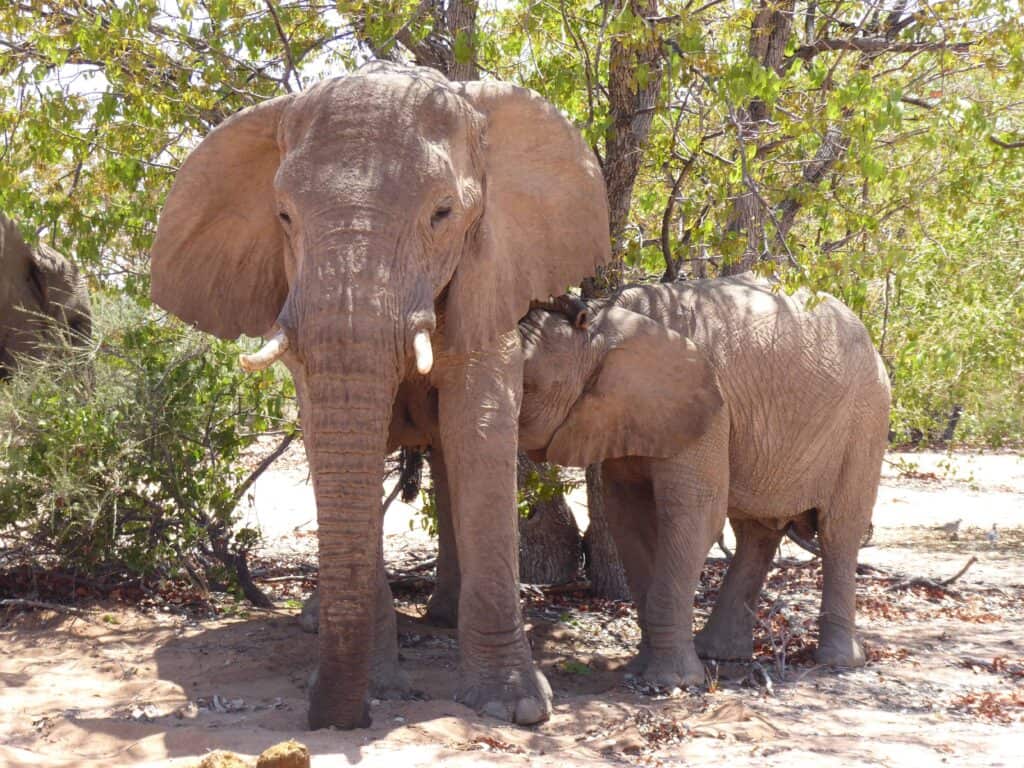
Etosha National Park is the country’s main traditional wildlife destination, with elephants, lions, rhinos, giraffes, zebra, antelope and other species regularly seen around its plains and waterholes.
Elsewhere, the focus changes. Sossusvlei is about desert scenery and photography. Damaraland combines striking landscapes with the possibility of seeing desert-adapted wildlife. Swakopmund and the Skeleton Coast bring the Atlantic coast into the journey.
For a first visit, 7 to 12 days usually gives you a better balance between travelling and actually experiencing Namibia. Four-day trips can work well if you concentrate on one part of the country rather than trying to cover everything.
Wildlife sightings are never guaranteed, and Namibia rewards travellers who are comfortable with longer distances and a slower journey.
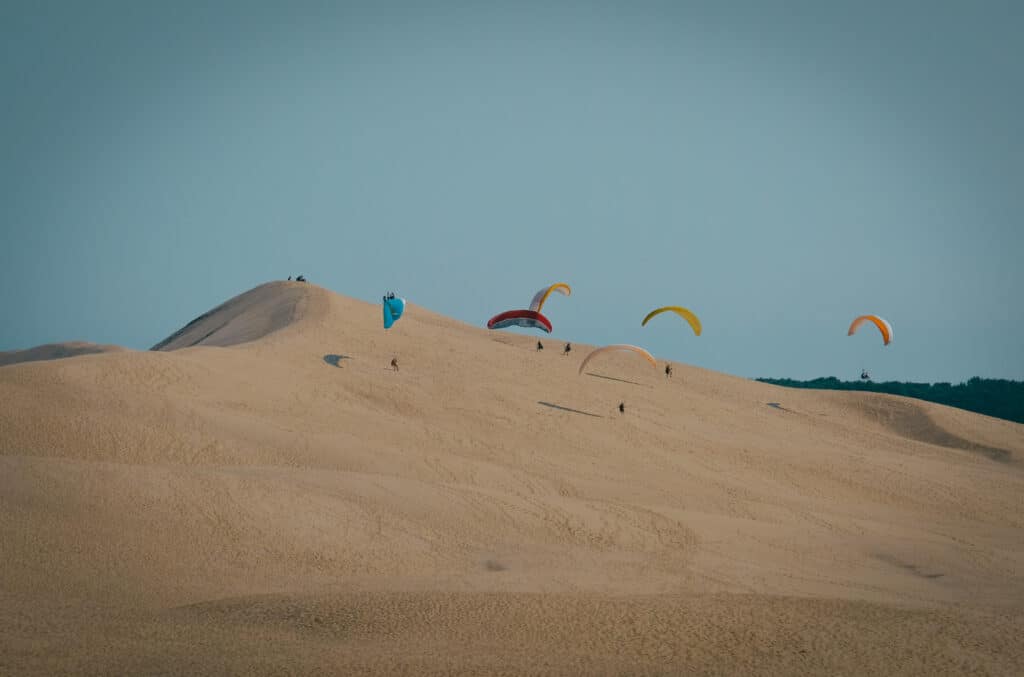
Etosha is the clearest choice if wildlife viewing comes first. Sossusvlei and Swakopmund suit you if Namibia’s dunes and coast are the main draw. With more time, a route through Sossusvlei, Swakopmund, Damaraland and Etosha gives you a broader picture of the country.
A guided road safari gives you local insight without the work of navigating. A fly-in safari saves time and opens up a fascinating view of the environment. An overland safari usually offers the broadest journey for your budget.
Safari style | Best for | What the journey feels like | Main cost considerations |
Guided safari | First-time visitors, couples, families and travellers who prefer someone else to handle the logistics | You travel by road with a professional guide. Shared departures can be sociable and good value, while private tours offer more flexibility. | Group size, private or shared travel, vehicle type, accommodation level, meals and included activities |
Fly-in safari | Travellers with limited time or a preference for remote and premium lodges | Light-aircraft flights replace many long road transfers. The views are a highlight in themselves, and you arrive with more time at each lodge. | Charter or scheduled flights, luggage limits, lodge category, airport transfers and included activities |
Overland safari | Travellers who want to see the country change gradually and don’t mind time on the road | The route becomes part of the safari. You may cross open gravel plains, mountain passes and desert landscapes between stops. | Vehicle and group size, camping or lodge accommodation, meals, park fees and itinerary length |
A shared safari is the more economical choice for travellers who enjoy meeting others along the way. Departure dates and daily timings are usually fixed.
A private Namibia safari costs more, but gives your group its own vehicle and guide. This is a popular choice for families, photographers or friends travelling together, especially when you want a more flexible pace. Private does not always mean luxury – the accommodation level can still be tailored to your budget.
Short safaris work best when they have a clear focus. Choose Sossusvlei and Swakopmund, for example, rather than trying to add Etosha to an already tight schedule. If you want Namibia’s desert, coast and wildlife in one journey, allow at least a week and preferably longer.
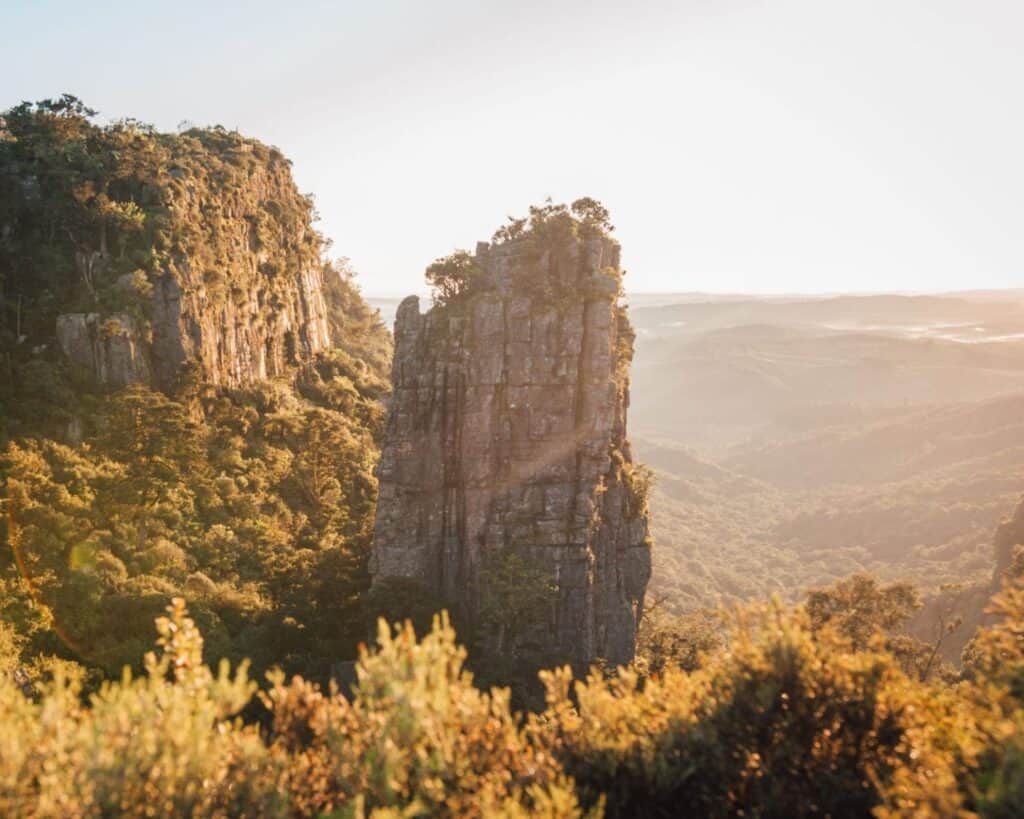
People sometimes compare Namibia with Kruger, Botswana, or the private reserves of South Africa. That isn’t particularly helpful.
Namibia does its own thing.
Etosha gives you the more familiar game-viewing experience, while much of the rest of the country is about landscapes, desert ecology and the scale of the wilderness.
A Namibia safari can include:
For travellers who enjoy the road itself rather than simply getting from one lodge to the next, Namibia makes a lot of sense.
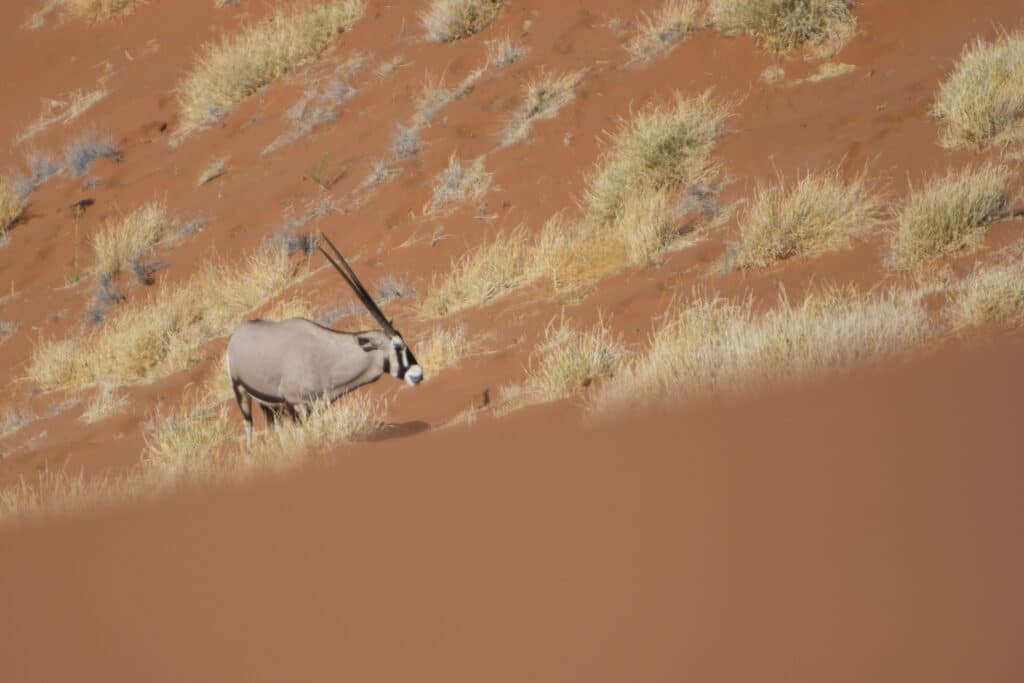
The route will determine your experience more than almost any other decision. Namibia’s major highlights are widely spread, so look beyond the number of places listed and consider how long you will actually spend in each one.
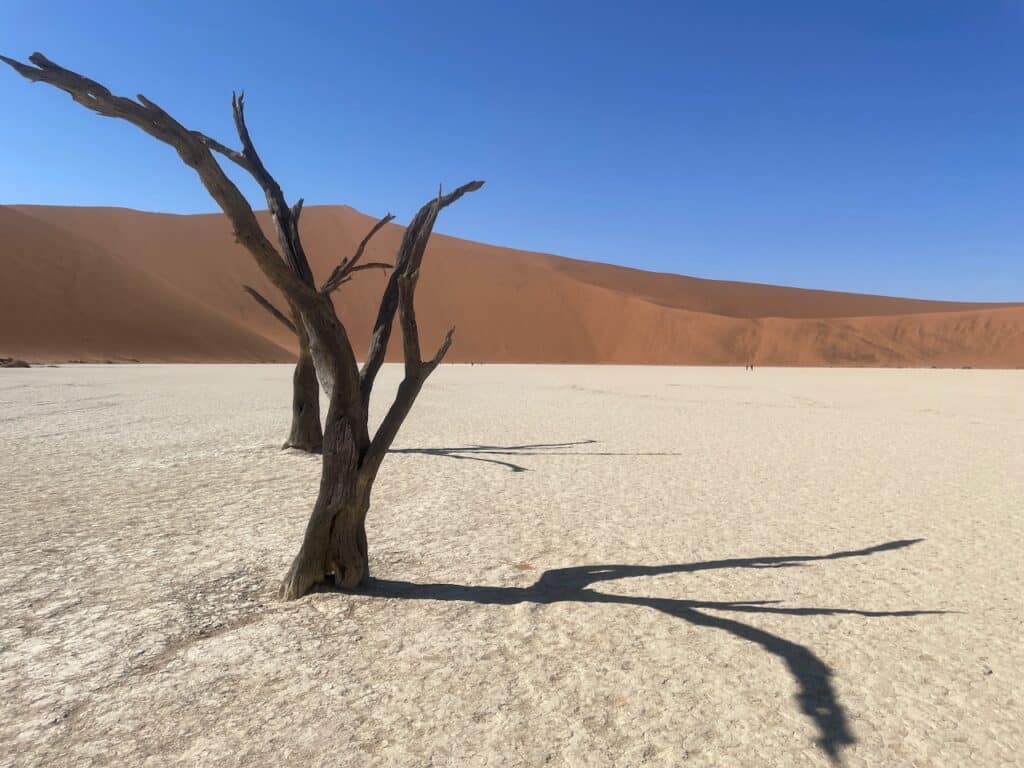
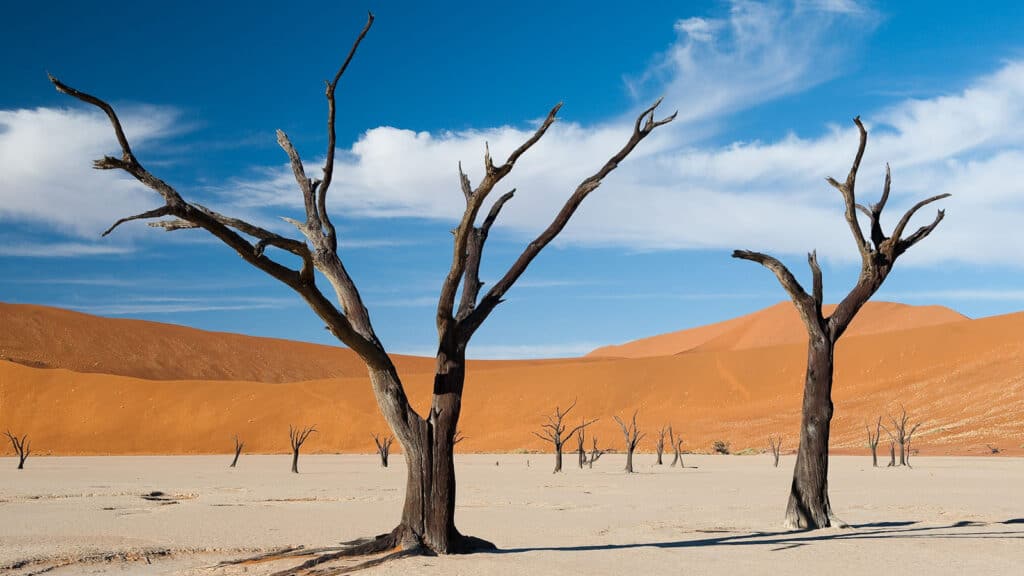
Choose a southern desert route if ochre dunes with pale clay pans and wide, quiet vistas are at the top of your list. Sossusvlei and Deadvlei are usually visited early in the morning, when the temperatures are cooler and the low light defines the dunes. These itineraries often combine the desert with Sesriem Canyon and Swakopmund.
This route is great for photographers as well as first-time visitors and travellers who see Namibia primarily as a landscape destination.
Swakopmund breaks up a road itinerary with cooler coastal air, restaurants and optional activities. Depending on the package, you could take a marine excursion or a desert tour or an adventure activity.
Check whether optional coastal activities are included or left free for you to choose and pay for locally.
Damaraland brings a wilder, more remote character to an extended safari. The rocky valleys with geological formations and desert-adapted wildlife make it far more than a stop between Swakopmund and Etosha. Routes can include Twyfelfontein and community conservancy areas, although exact stops vary.
Choose Damaraland if you enjoy remote scenery and wildlife experiences that are less predictable than a conventional game drive.
Etosha is the natural choice when wildlife viewing is your goal. During the drier months, animals gather at waterholes, and much of the viewing happens across open country.
Some short safaris focus almost entirely on Etosha. Longer Namibia safari itineraries combine it with the desert and coast for a more varied journey.
Skeleton Coast itineraries are about remoteness and atmosphere. Access and routing vary considerably, and some of the most isolated areas are better reached by air. If the Skeleton Coast is important to you, ask exactly which section the itinerary visits and how much time is spent there.
Longer northern routes continue beyond Etosha towards the Zambezi Region or more remote cultural and conservation areas. The scenery becomes greener and river systems play a larger role. These trips are popular with repeat visitors and travellers with more time.
Namibia can be combined with Victoria Falls, particularly on longer routes through the northeast or with connecting flights. This is a good way to add the falls without retracing the entire country.
If Victoria Falls is essential to your trip, compare the combined itinerary with booking it as a separate extension. The better choice depends on your available days and arrival and departure airports.
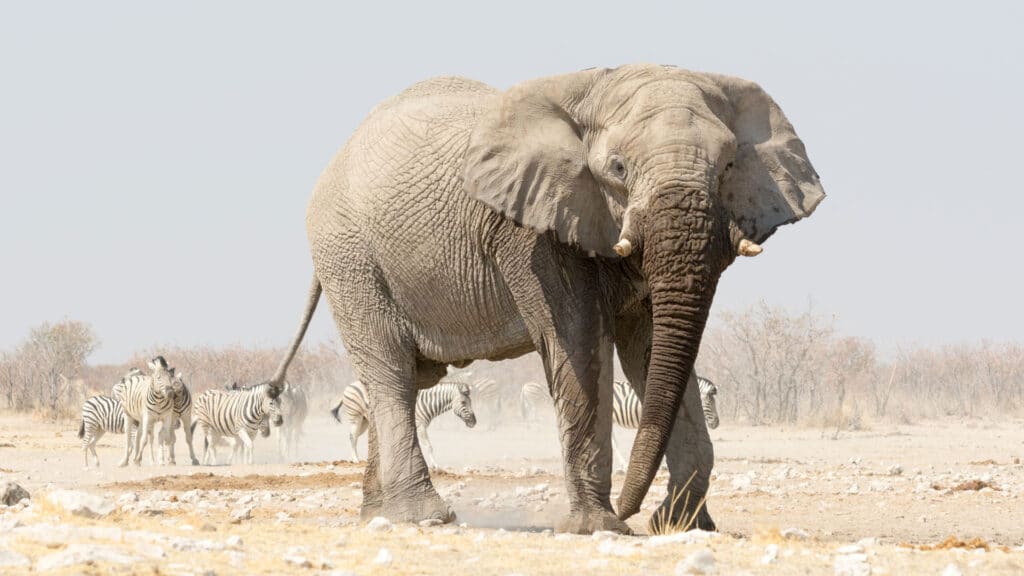
A three- or four-day safari should concentrate on one area or a natural pairing, such as Swakopmund and Sossusvlei or Etosha and a nearby stop. Short trips can be very rewarding, but they are not a condensed version of the whole country.
This is a useful middle ground. You can usually combine two or three major areas, depending on whether you travel by road or air. A well-paced week might link the Namib Desert and coast, or focus on Etosha with selected northern or central highlights.
With eight to ten days, you can begin to connect Sossusvlei, Swakopmund, Damaraland and Etosha. There will still be substantial road travel, but the itinerary can include two-night stays where they make the most sense.
Eleven days or more gives you room to experience Namibia at a calmer pace. You can add the far north, a more remote section of the coast or a cross-border extension. Longer trips are also better for travellers who want to focus on photography and cultural visits or time at individual lodges.
Your accommodation changes both the price and the character of a Namibia safari holiday. Compare what is included as carefully as you compare the room itself.
Guesthouses and established lodges offer comfortable private rooms without the cost of a premium safari. This level often gives guided road travellers the best balance between price and a good night’s rest.
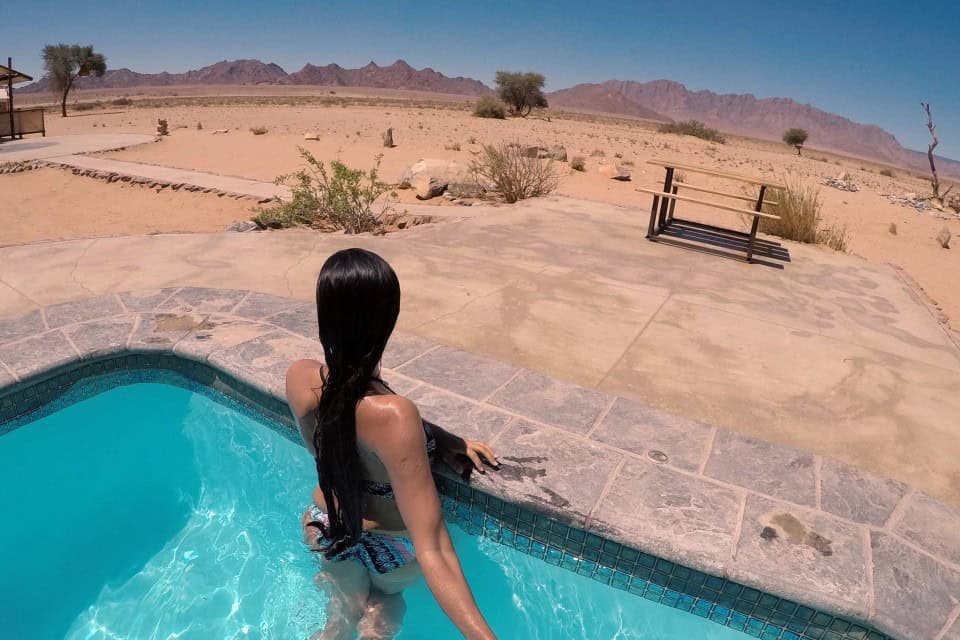
Mid-range packages have more service and facilities. These packages use lodges near national parks, desert camps with views or well-positioned coastal hotels.
Luxury Namibia safari packages combine distinctive lodges with smaller groups or private services and, in some cases, light-aircraft transfers. You are paying not only for the room but also for location and ease of access.
Tell us your preferred route, dates, and budget

Feature | Guided Safari | Self-Drive Safari |
Driving | Handled for you | You drive |
Route planning | Mostly organised | More independent |
Local knowledge | Guide throughout | Depends on your own research |
Flexibility | Moderate | High |
Navigation | Little responsibility | Your responsibility |
Long-distance driving | No | Yes |
Best suited to | First-time and relaxed travellers | Independent road-trip travellers |
Safari atmosphere | Guided and social | Private and flexible |
Neither is automatically better.
If driving several hundred kilometres on unfamiliar roads sounds tiring rather than adventurous, choose the guided option. If the road trip is part of what excites you about Namibia, self-drive may be the better fit.
Area | Best for | Wildlife focus | Landscape | Time to allow |
Etosha National Park | Classic game viewing | High | Salt pan and savannah | 2–4 nights |
Sossusvlei | Desert scenery | Lower | Dunes and clay pans | 2 nights |
Damaraland | Scenery and desert wildlife | Moderate | Rocky semi-desert | 2–3 nights |
Swakopmund | Coastal activities | Lower | Desert and Atlantic coast | 2 nights |
Skeleton Coast | Remote wilderness | Lower | Coastal desert | 1–3 nights |
Zambezi Region | Rivers and wildlife | High in suitable areas | Greener woodland and wetlands | 2–4 nights |
This is one of the most important decisions when planning the trip.
Namibia looks manageable on a map until you start adding the driving times.
Four days work if you focus.
Trying to see Etosha, Swakopmund and Sossusvlei properly in four days makes for a rushed trip.
Instead, choose one strong route or a tightly planned combination.
MoAfrika’s current 4-day options include trips combining Swakopmund and Sossusvlei, as well as Etosha and Swakopmund.
A week gives you more room to settle into the trip.
You can combine several highlights, but you still need to be selective.
A seven-day Etosha-focused self-drive trip makes sense for travellers whose priority is wildlife, while a broader Taste of Namibia itinerary suits guests wanting more variety.
This is where Namibia starts feeling less hurried.
There is enough time to combine wildlife, desert, and coast without turning every second day into a marathon transfer.
For many first-time travellers, this is a comfortable range.
Longer trips let Namibia breathe.
You can spend several nights around Etosha, include Damaraland, visit the coast and continue through the Namib Desert without treating every stop as somewhere to photograph and immediately leave.
If you have the time, this is where the road-trip side of Namibia really starts making sense.
Safari length | What it suits | Main consideration |
4 days | One region or a short combination | Keep the route focused |
6–7 days | Wildlife or selected highlights | Some longer driving days |
8–10 days | First-time highlights | Good balance of variety and pace |
11–13 days | Broader Namibia circuit | Better for seeing several regions |
14+ days | Slower, deeper exploration | Best if time allows |
There are many ways to structure a Namibia trip. A first-time route might look something like this:
Day | Area | Experience |
Day 1 | Windhoek | Arrival and preparation |
Day 2 | Etosha | Travel north and afternoon game viewing |
Day 3 | Etosha | Full day of game viewing |
Day 4 | Etosha | Second full safari day |
Day 5 | Damaraland | Scenic drive west |
Day 6 | Damaraland | Desert landscapes and local attractions |
Day 7 | Swakopmund | Travel towards the coast |
Day 8 | Sossusvlei region | Cross into the Namib |
Day 9 | Sossusvlei | Early desert excursion and Deadvlei |
Day 10 | Windhoek | Return or onward travel |
This is only an example. Namibia routes should be built around the places that matter most to you rather than a checklist of everything the country offers.
Not sure which Namibia Safari is right for you? Compare our 2-Day, 3-Day, 5-Day and 9-Day options.
Namibia is a year-round destination, but the season affects what you see and how you travel. The dry months from around May to October bring cooler conditions and strong wildlife viewing around Etosha’s waterholes. Nights can be cold in the desert.
The warmer summer period can bring dramatic skies and occasional rain. Temperatures can be high, and road conditions can change after heavy rainfall. If your priority is photography or birding rather than classic dry-season wildlife viewing, this period can be very rewarding.
Often more than first-time visitors expect. Namibia’s open spaces are part of its appeal, but distances are long and many routes use gravel roads. Read the day-by-day itinerary and look for the balance between transfer days and two-night stays. Fly-in safaris reduce road time, while overland trips let you experience the scale of the country more fully.
Inclusions differ from one package to another. Depending on the safari, the price may cover:
Use the individual package page as the final authority and ask for a written quotation showing exactly what is included.
Many itineraries begin in Windhoek, while some coastal trips start in Swakopmund or Walvis Bay. Your international flight arrival time is considered here. If a safari leaves early in the morning, an overnight stay before departure could be necessary. The same applies at the end of the trip: avoid a tight connection after a long road transfer.
Visa requirements depend on your passport. Namibia changed its entry regime on 1 April 2025, and travellers from countries including the United States, United Kingdom and a number of European nations are no longer covered by the previous blanket visa-exemption arrangement. Eligible nationals may be able to apply online for a visa on arrival or obtain one at designated ports of entry.
Do not rely on an old visa-free country list. Before booking flights and again before departure, check the current requirements, application process, fees, permitted entry point, and passport rules with the Namibian Ministry of Home Affairs, Immigration, Safety and Security. Entry rules can change, and the correct process depends on your nationality.
Namibia’s wildlife varies considerably between regions.
Etosha is the obvious choice for general game viewing. Other areas are more specialised.
Animals you may encounter include:
Not every species occurs everywhere, and even in productive wildlife areas, sightings can never be guaranteed.
That’s part of safari.
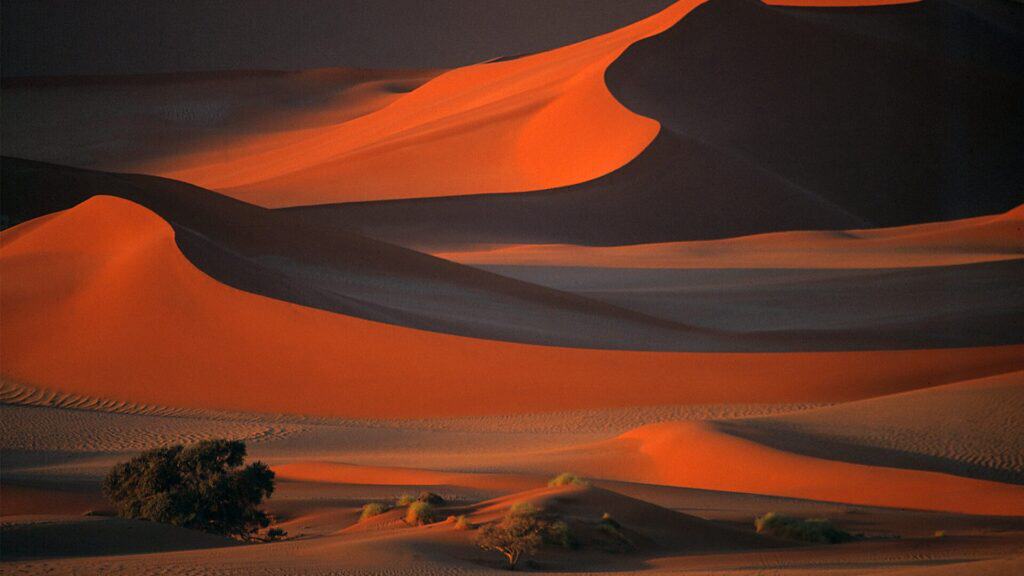
There isn’t one month that suits every traveller.
The drier months are generally popular for wildlife-focused trips, especially in Etosha.
As natural water becomes scarcer, animals often spend more time around established water sources.
Vegetation can also be thinner, making animals easier to spot.
Mornings and evenings may be cold, particularly during winter, so layers matter.
Summer brings higher temperatures and seasonal rainfall to parts of Namibia.
Landscapes can become greener, bird activity increases, and dramatic skies can be excellent for photography.
Wildlife viewing remains possible, although animals may be less concentrated around permanent water.
The right season comes down to what matters more to you: easier game viewing, landscape photography, birding, temperature, or availability.
The most common mistake on a first Namibia trip is trying to fit too much into it.
Distances that look reasonable on a map can take much of the day once you account for gravel roads, stops, fuel, and the simple fact that you’ll want to pull over occasionally and look at the country around you.
If wildlife is your priority, give Etosha enough time.
If the desert is what brought you to Namibia, don’t treat Sossusvlei as a quick photograph before another long drive.
And if you’re self-driving, build some breathing room into the route.
Namibia tends to be more enjoyable when you see slightly less of it at a better pace.
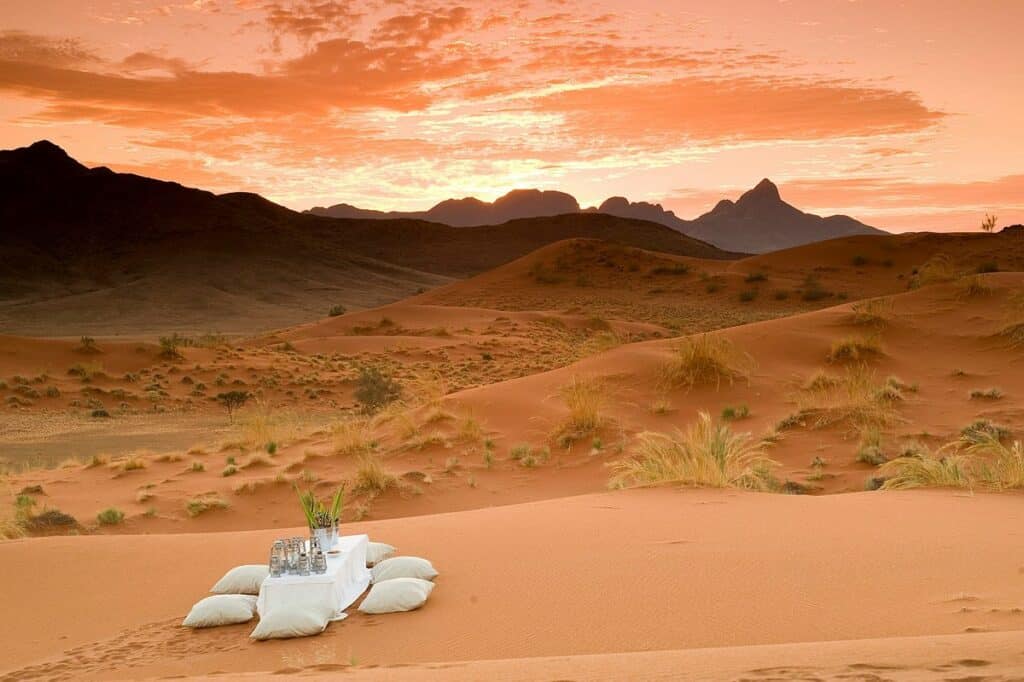
It can be both, but not necessarily on the same day.
This is an important distinction.
Travellers wanting a safari centred almost entirely on dense wildlife viewing may prefer destinations where game drives dominate each day.
Namibia is different. Etosha can provide excellent wildlife viewing, but a broader Namibia itinerary may spend several days travelling through areas where the landscape is the main attraction.
That isn’t a compromise if you know what you’re booking.
For many travellers, it is exactly the point.
Namibia’s dry climate and changing temperatures make layers useful.
Bring:
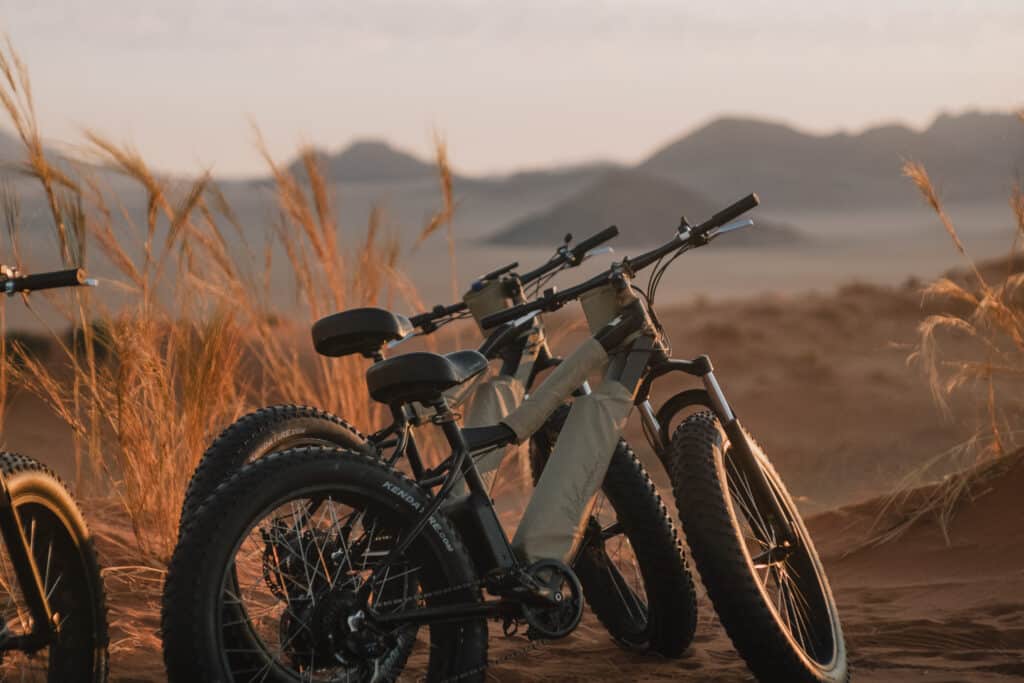
Self-driving is popular for good reason, but Namibia should not be approached like an ordinary city-to-city road trip.
A few things make a big difference:
Your specific rental agreement may contain additional restrictions, so check it carefully before departure.
The price of a Namibia safari depends heavily on how you travel.
The biggest factors are:
A short guided lodge trip can cost considerably less than a two-week private or premium itinerary.
Don’t compare packages on the headline price alone. Check what is included.
A slightly more expensive trip may include transport, park fees, meals or activities that you would otherwise pay for separately.
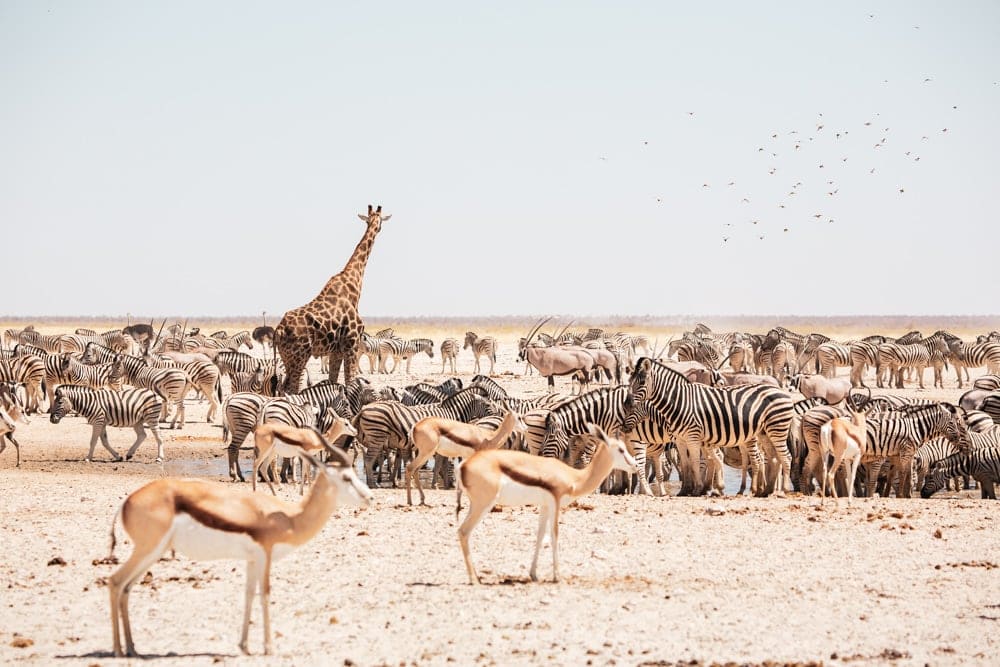
Yes, provided the style of trip suits you.
If your idea of a safari is spending morning and afternoon on game drives every day, choose an itinerary with enough time in Etosha.
If you want wildlife combined with desert landscapes, road travel, photography, and different environments, Namibia can be a very rewarding first trip.
The important thing is arriving with the right expectations.
Namibia is not only a wildlife safari. It is a journey through one of Southern Africa’s most distinctive landscapes.
It can be.
Families generally do better with sensible driving distances and enough downtime between travel days.
Very young children may find repeated long road journeys tiring, while older children who enjoy wildlife, geology, photography, or outdoor activities often have plenty to keep them interested.
A private or self-drive itinerary can also give families more control over the daily pace.
Namibia is widely travelled by both guided and independent visitors, but normal travel precautions still matter.
For self-drive guests, road safety deserves particular attention. Long distances, gravel surfaces, wildlife and changing road conditions mean drivers should avoid rushing.
Travellers should also check current health, immigration and travel requirements before departure rather than relying on older travel information online.
Visa rules changed in 2025 for nationals of several countries, so check the latest requirements with Namibia’s Ministry of Home Affairs, Immigration, Safety and Security before travelling.

MoAfrika Tours has been introducing travellers to Southern Africa’s wildlife destinations for over two decades.
Our safari specialists work with guests travelling in different ways, from shorter guided trips to longer self-drive itineraries. The aim is not to squeeze as many destinations as possible into your holiday. It is to help you choose a route that works with your time, budget, and interests.
That matters in Namibia, where the difference between a good itinerary and an exhausting one often comes down to pacing.
⭐⭐⭐⭐⭐
Rik D. – USA
“Our trip was wonderful, we saw a lot and our guide was really great, this man was so cheerful and gave so much information and really did his best to show us as much as possible.”
The right Namibia safari depends less on how many places you can fit into the trip and more on what you actually want from it.
Choose Etosha if wildlife is the priority. Add Sossusvlei if you want the desert landscapes Namibia is famous for. Give yourself more time if you want to include Damaraland, the coast or the north-east.
And don’t underestimate the distances.
View MoAfrika’s Namibia safari options and compare guided, lodge and self-drive itineraries. If you’re unsure which route suits your available time, speak to our safari team before trying to fit too much into one trip.
Yes. Namibia combines traditional wildlife viewing in places such as Etosha National Park with desert, coastal and mountain landscapes. It particularly suits travellers who want more variety than game drives alone.
Seven days is enough for a focused trip, but around 10 to 12 days gives most first-time visitors a more comfortable pace. Namibia is large, so additional days reduce the amount of rushing between destinations.
Etosha National Park is the country’s best-known traditional safari destination. Its plains and waterholes attract a wide range of wildlife, although sightings remain unpredictable.
For confident drivers, yes. Self-driving gives you considerable freedom and works well with Namibia’s road-trip style of travel. You do need to be comfortable with long distances, gravel roads, and planning fuel and overnight stops.
It depends on how you like to travel. Guided trips remove most of the driving and logistical work. Self-drive trips give you more privacy and independence. First-time visitors who don’t enjoy long-distance driving will often find a guided safari easier.
The dry season is popular for wildlife viewing because animals often gather around water and vegetation is less dense. Summer can be hotter and wetter but brings greener landscapes, birdlife and dramatic photographic conditions. There isn’t one ideal month for every type of traveller.
Namibia supports several Big Five species, and Etosha is known for elephants, lions and rhinos, among other wildlife. Leopard sightings are possible but can be difficult. A Namibia safari should never be booked on the expectation of completing a Big Five checklist.
Not in the traditional game-drive sense. Sossusvlei is primarily a desert and landscape destination. Most travellers combine it with wildlife areas such as Etosha to experience both sides of Namibia.
Yes, although route planning becomes especially important with children. Keep daily driving distances realistic and choose accommodation and activities that leave room for rest.
Visa requirements depend on your nationality and can change. Namibia introduced revised visa requirements in April 2025, so travellers should check the latest rules with the Namibian authorities before departure rather than relying on older travel guides.




WhatsApp Now