
Namibia is a great place to go on safari because it has a lot of wild and beautiful scenery.
These include the Namib Sand Sea, the world’s oldest desert, the Fish River Canyon National Park, which has some of the most beautiful red sandstone canyons in the country, Etosha National Park, which is home to many animals, including four of the famous “Big Five,” and Sossusvlei’s huge sand dunes.
In the north, you can meet the Himba, who are traditional native herders whose unique culture and way of life have stayed mostly the same for hundreds of years.
One of the best parts of any trip to Namibia is taking the time to enjoy the food, the people, and the culture.
A 5-day safari in Namibia is a great way to see a little bit of what this country has to offer.
If you have five days available for a safari in Namibia, you can expect to visit a few of the following attractions, with a tight itinerary that combines some of them:
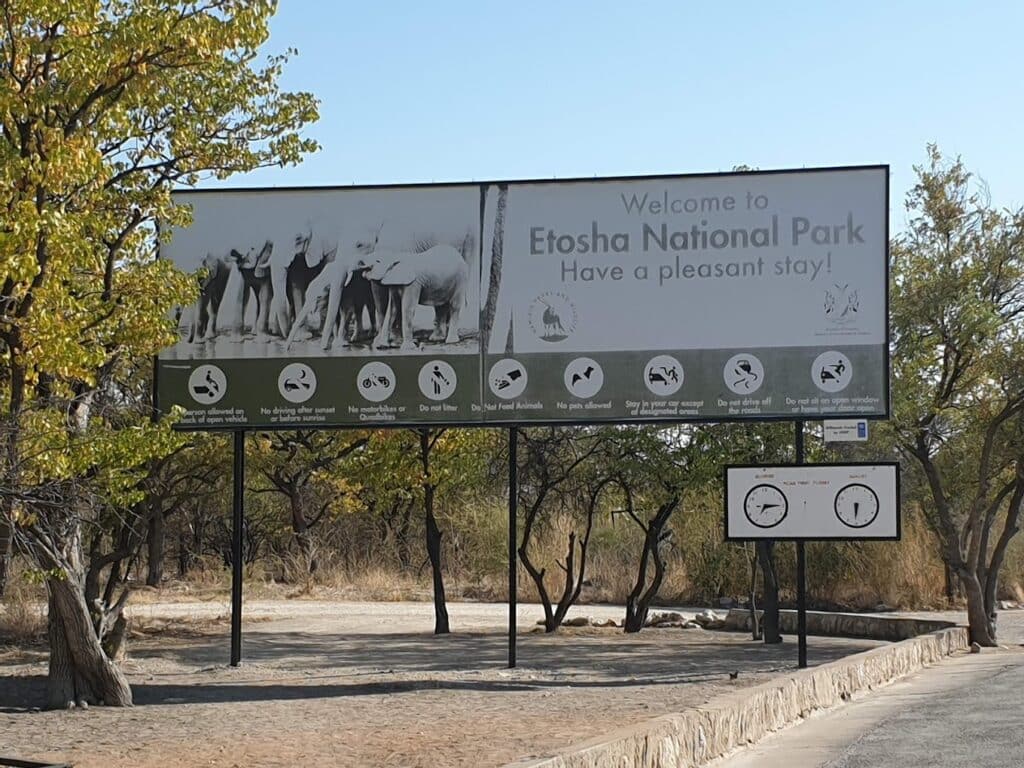
Etosha National Park is one of southern Africa’s most famous safari destinations with its large salt pan an even larger attraction than the large wildlife population itself.
With four of the Big 5 (lions, elephants, rhino and leopard) and plains animals in abundance, Etosha is a safari destination like few others in the world.
Surrounded by Botswana to the south and Angola and Zambia to the north, the Caprivi Strip is a geographic salient protruding from the north-eastern corner of Namibia.
The Zambezi region is rich in wildlife and natural resources with highlights such as the Okavango, Kwando, Zambezi, Chobe, and the Linyanti Rivers.
This region has a few lesser-known national parks, such as Bwabwata and Nkasa Rupara National Parks, as well as tropical woods and wetlands, four of the Big Five wildlife species, and Popa Falls. Activities like game drives, bird viewing, thrilling tiger fishing, and boating can be experienced here.


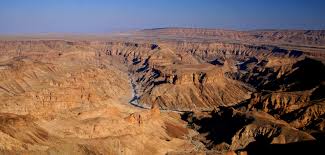
The Fish River canyon in southern Namibia is the largest in Africa, and one of the most visited tourist attractions in Namibia. Hiking the Fish River Canyon is on their bucket list of all avid hikers, while non-hikers find it one of the most stunning places to visit in Namibia.
It is located near the Ais-Ais Hot Springs, another popular tourist destination.
Thea areas of Damaraland and Kaokoland in northwest Namibia are famous for its rocky mountainous land and dry savannahs, ancient sites with rock art, as well as its wide range of wildlife including desert-adapted elephants and lions.
Damaraland is known for its Twyfelfontein rock art, the Petrified Forest and other attractions.
Its small population of Himba and Herero people live in small villages where they survive on a mix of pastoralism and subsistence farming.
The scenery and historic places are the main draw here, rather than animals.
Several shipwrecks and their accompanying legends are connected with the Namibian Skeleton Coast, while the Dorob National Park is a protected area in Erongo, along the central Namibian coast, with popular holiday destinations such as Henties Bay, Swakopmund and Walvis Bay.
It is known among locals and foreigners as a fishing paradise and unique beach holiday destination.
Namib-Naukluft National Park is located in south-western Namibia and houses some of the famous large dunes of the Namib Desert. It is Namibia’s most versatile conservation area and one of the country’s major tourist destinations with world famous Deadvlei, Sossusvlei and so-called Moon Landscapes.
From April to October is the best time to go on a safari in northern and southern Namibia.
During the dry season, the weather is great. The days are warm and sunny, and the nights are cooler.
The dry season is the best time to see animals because there isn’t much vegetation and the animals gather around fixed water sources, which makes them easier to spot.
While it would theoretically be possible to do a safari from the southern attractions to those in the north or Namibia in five days, it would be physically challenging with too little time to enjoy anything.
It would be much wiser to choose to go either north or south to include the following:
Travel through the towns of Usakos, Karibib and Okahandja, with a half-way stop at the well-known Oasis Food Stall near Usakos.


For a 5-day safari you should pack the following:
Don’t forget a camera and extra batteries, good binoculars, and sturdy shoes, so you can fully enjoy the beauty of the scenery and wildlife.
A safari of this nature will keep you confined in a vehicle for many hours. Be prepared to enjoy the scenery despite some discomfort or rather choose other options.
Make sure to bring enough water, even some snacks, as there may not be many places to get them in remote areas.

If you want to go on a safari in Namibia, the first thing you should do is find a good tour operator and discuss your plans thoroughly.
Make sure you know what you want to get out of your trip. Is it the animals or the scenery that you want to see the most and how many hours a day, on average, you are willing to spend in a vehicle.
During a 5-day safari in Namibia you can visit quite a few of Namibia’s famous attractions.
On a 5-day safari in Namibia you will be able to visit the country’s famous Etosha National Park, as well as other nearby attractions.
You can expect accommodation options that range from basic camping to opulent safari lodges, depending on your choice and budget.
It can take from up to the best part of a whole day to travel between some popular tourism destinations in Namibia.
Yes, a 5-day safari in Namibia is feasible. Due to vast distances, you will however not have much time to spend at each attraction. You should ideally spend 7 days or more to explore most of the country’s major tourist attractions.




WhatsApp Now