
Greater Kruger isn’t just a safari destination, it’s a front-row seat to nature’s raw theatre – wild, untamed and astonishingly real. What is more, let MoAfrika Tours unlock the secrets to exploring South Africa’s most legendary wildlife region in style and comfort.
Need more Info?

Greater Kruger is one of Africa’s largest wildlife sanctuaries. It combines the famous Kruger National Park with over 20 unfenced private reserves to the west (such as Sabi Sands, Timbavati and Balule).
In other words, the parks form one huge 20,000+ km² reserve where elephants, lions, buffalo and other animals roam freely. You’ll share the bush with the “Big Five” (lion, leopard, elephant, rhino, buffalo) as well as wild dogs, cheetah, hyena, giraffe and a colourful array of antelope.
Birders will be thrilled by more than 500 bird species in Greater Kruger, from fish eagles and storks to colourful bee-eaters and sunbirds. Even the bold Cape buffalo are abundant – they wallow in waterholes and gather in great herds.
Much of this area lies in South Africa’s Limpopo and Mpumalanga provinces (northern KwaZulu-Natal and Mpumalanga border it on the south and east), while Hazyview, Nelspruit (Mbombela) and Hoedspruit are common launch points for safari tours into the Greater Kruger.
Greater Kruger straddles two provinces in northeast South Africa: Limpopo and Mpumalanga. To the south, it meets the Kruger Park gate at Malelane or Crocodile Bridge; to the north, it reaches the Limpopo River at Pafuri. The private reserves cover scattered lands west of Kruger – for example, Sabi Sands and Manyeleti in Mpumalanga, and Timbavati, Kapama and Balule in Limpopo.
Visitors typically approach from Johannesburg or Pretoria. By road, it’s roughly a 450 km drive (about 5–6 hours) from Johannesburg to the Kruger gates, mostly along the well-maintained N4.
Many travellers fly to Kruger Mpumalanga International Airport (KMIA, near Nelspruit) or Hoedspruit Airport. Airlink and other carriers run 1-hour flights from Johannesburg (one-way fares might be in the R2 000 to R3 000 range, around USD 120 – 180).
MoAfrika Tours can arrange transfers from any of these airports or from Johannesburg.
Greater Kruger delivers on its reputation with lions often lounging in the mopane woodland, and elephants forming vast herds beneath acacia trees.
Early morning and dusk are especially good for animal activity. In Greater Kruger, you can expect to see all members of the Big Five: enormous African elephants, powerful lions, elusive leopards, mighty Cape buffalo and both white and black rhinoceros.
Leopard sightings are common in the private Sabi Sands Reserve – guides even joke it’s one of the world’s best leopard hotspots.
Hippos and Nile crocodiles wallow in the rivers, while buffalo and grazing herds of zebra and antelope roam the plains. Throughout the area, you may spot shy wild dogs, spotted hyenas and flamboyant lilac-breasted rollers or southern yellow-billed hornbills.
Birdwatchers will be delighted: Greater Kruger hosts over 500 bird species, from fish eagles and herons at riversides to migratory bee-eaters and colourful barbets in the canopy.
Safari holidays in Greater Kruger can be very flexible. The core Kruger Park allows self-drive safaris where you drive your own car on well-marked roads and stay in rest camps. If you enjoy exploring independently, this is a fun and budget-friendly option.
However, in the private reserves along Kruger’s edge, only guided tours are allowed. These reserves (Sabi Sands, Timbavati, Manyeleti, etc.) admit only guests who book lodge or camp stays, and every game drive is led by a professional guide.
This means exclusivity: you won’t see day-tour buses or independent cars, and game drive vehicles are limited to two per sighting. Guided tours ensure you benefit from a ranger’s knowledge as they can interpret animal behaviour and often track down shy cats that you might otherwise miss. For example, MoAfrika’s guides in Sabi Sands are adept at finding the spotted leopard in the treetops, while in Timbavati, they often lead you to the rivers for hippos and buffalo.
Both styles have their appeal: a self-drive gives you freedom and flexibility (you can stop any time by a waterhole), while a guided safari is more relaxed and educational – the ranger does the spotting for you.

Below is a quick comparison:
| Self-Drive (in Kruger NP) | Guided Safari (Private Reserves) | |
|---|---|---|
| 🛂 Who Can Enter | Any visitor with a park permit | Only overnight lodge/camp guests |
| 🚗 Vehicle | Your own car on open roads | Open 4×4 safari vehicle with a guide |
| 🗺 Routes | Kruger’s 1500 km road network only | Both park roads and off-road areas |
| 🦁 Guiding | You find animals on your own | An expert guide tracks animals for you |
| 🚦 Capacity | Can be busy; no limit on cars per sighting | Capped at max 2 vehicles per sighting |
| 🌍 Experience | Flexible and independent itinerary | More exclusive, quieter wildlife viewing |
| 🎯 Activities | Just day drives | Also night drives, walking safaris, and cultural visits |
Self-drivers should note Kruger’s strict rules: stay on roads, keep windows closed if you step out at a rest camp, and don’t feed any animal.
Guided safaris in the reserves, on the other hand, allow you to get very close to animals (in the vehicle, though) under expert supervision.
MoAfrika Tours specialises in arranging both styles: we can combine a few nights in a Kruger rest camp (self-drive) with a few nights at a guided lodge in Sabi Sands or Balule, giving you the best of both worlds.
The Greater Kruger area includes many famous game reserves, each with its own character.
Sabi Sands Game Reserve (southwest of Kruger) is perhaps the most famous – it has a riverine bush environment and is world-renowned for leopard sightings.
Timbavati Game Reserve borders Kruger to the north; it has mopane woodland and permanent rivers, so hippos and buffalo are often seen.
Manyeleti Game Reserve (Manyeleti means “Place of Stars” in Shangaan) lies between Timbavati and Sabi Sands and was historically closed to public vehicles – it still feels “true wilderness” with fewer tourists.
Balule, Klaserie and Kapama form part of the Associated Private Nature Reserves (APNR) along Kruger’s western boundary; they offer good Big Five viewing and a mix of luxury and mid-range lodges.
Thornybush is immediately north of Sabi Sands and has a well-developed safari circuit. Further north is the new Makuya concession (in Limpopo province), where the Sand River canyon and Limpopo River provide stunning scenery along with classic game.
Most of these reserves share unfenced borders with Kruger NP, so animals truly roam from park to park. A 4×4 game drive might start tracking lions in Sabi Sands and end spotting elephants near the Kruger boundary.
Every reserve has its own highlights: for example, Thornybush and Kapama often have excellent herds of elephants, while Manyeleti and Timbavati are known to occasionally host wild dogs.
Because the fences are down, you could even see a pride of lions wander from Kruger into Sabi Sands during your stay.
Accommodations range from rustic to ultra-luxurious. Main camp accommodations inside Kruger NP are basic but comfortable: think brick chalets or safari tents with or without private bathrooms and communal kitchens.
Private reserve lodges vary widely. You’ll find budget tented camps (simple safari tents with beds and en suite bathrooms), mid-range lodges (with thatched roofs, pools and verandas) and luxury safari lodges (with spacious suites, spa services and gourmet dining).
MoAfrika Tours works with all of these options. For a budget safari you might stay in a no-frills camp or guest house (often from around R1 000 to R1 500 per person per night, bed-and-breakfast), whereas our comfort and luxury safaris include elegant lodges or even private tented treehouses (typically R3 000 to R5 000 pp/night or more, full board).
Many top lodges offer private plunge pools, nightly bush dinners under the stars, and even “sleep-outs” where a glass window floor lets you view the animals at night.
If you prefer self-catering, there are also farmhouses and chalets in towns like Hazyview, Phalaborwa or Hoedspruit as bases for daily Kruger drives. MoAfrika can book these too.
But wait, why not consider this unique option: some luxury tours include an overnight “treehouse” experience, where you sleep in an open-air tree platform overlooking a waterhole – a way to fall asleep to wildlife sounds without even being in a tent.
Regardless of your style, you’ll likely enjoy simple luxuries such as evening campfires and daily laundry service, even in mid-range lodges.
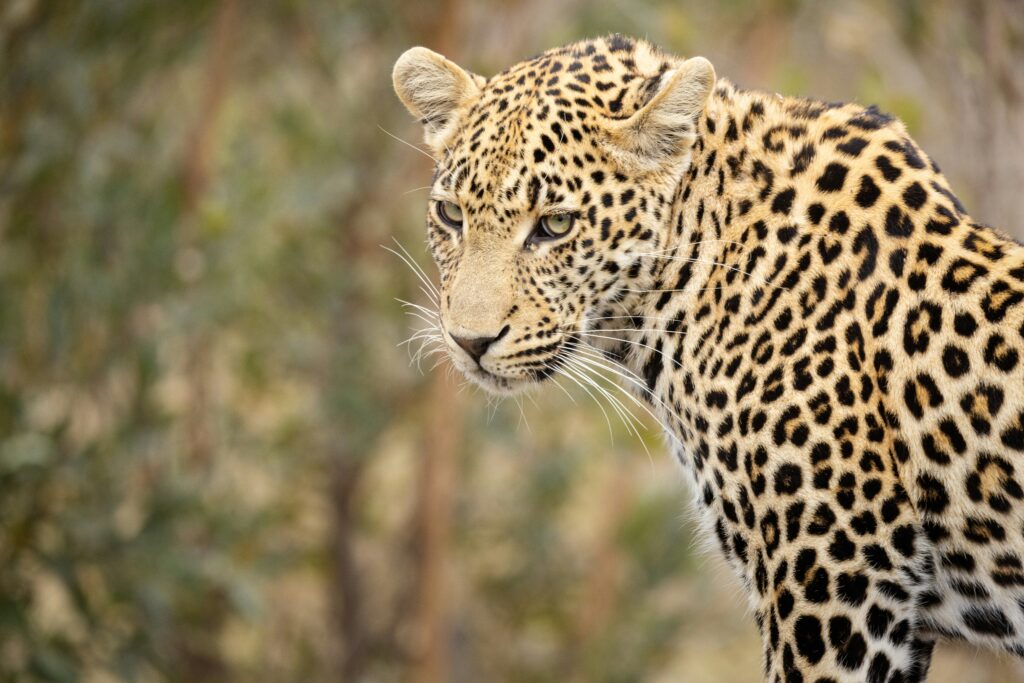
Greater Kruger is a year-round destination, but wildlife viewing varies by season. The dry winter (May to September) is generally best for game as vegetation thins and animals crowd around water, so sightings tend to be clearer.
Many guides say lion and leopard are easier to spot in these months when they rest in open areas. Summer (November to March) brings frequent afternoon showers; the bush becomes lush and green, birdlife peaks with migrant species, and many animals have newborns. If you visit then, be prepared for occasional rain and warm daytime temperatures.
Summer also has its perks – you’ll see the cute cubs and calves, and the daylight is longer for early drives.
MoAfrika Tours can plan your itinerary to match, for example, if you’re a birding enthusiast or honeymooners wanting dramatic sunset skies, summer could be ideal; if you want the classic safari look, choose winter and spring.
Peak safari season (July/August) means busier reserves and slightly higher prices, so booking early is wise.
Kruger and its private reserves are generally safe for tourists, especially on guided tours. Rangers and park staff actively patrol the roads.
Still, always follow guide instructions: never leave a vehicle outside designated areas and keep a safe distance if you see wild animals. Crime near park entrances is low, but as in any wild area, lock your car and lodge doors at night. Greater Kruger is in a malaria zone, especially from about November to April. We recommend travellers cover themselves with insect repellent and consider taking antimalarial tablets. Consult your doctor for the most suitable medication before your trip. Bottled water is usually available, although tap water in Kruger camps is generally safe.
Most lodges and camps have electricity and usually offer Wi-Fi or cell reception at least in common areas, so you can even make that work-from-safari call if needed.
As a local South African safari operator, MoAfrika Tours brings together all these experiences in seamless holiday packages. We design trips from 2 days up to a week (and beyond) that cover Greater Kruger highlights.
We have our own guides who are FGASA-qualified nature experts, and we handle every detail – from park bookings and conservation fees to transport and meals. For example, our popular 4- or 5-day Greater Kruger safaris include daily game drives in open 4×4 vehicles, all park fees, accommodation in a private reserve lodge, and transfers from Johannesburg or a Kruger airport. We also offer speciality tours like family safaris (in child-friendly lodges, no-hike drives), romance packages (private dinners, twin treehouses) or even combining Greater Kruger with Cape Town or Victoria Falls.
Being based in South Africa means we can advise you on the best routes, seasonal events or local attractions: for instance, if you have extra days, we can add a Panorama Route sightseeing trip or a nearby cultural village visit.
In short, MoAfrika Tours makes your Greater Kruger safari easy and memorable. Our goal is for you to relax and fall in love with the African bush.
Greater Kruger refers to Kruger National Park plus the unfenced private reserves on its western boundary, forming one huge wildlife area.
Wildlife spotting is easiest in the dry winter months (May to October), when vegetation thins and animals gather at water. Summer (November to April) is warm and rainy but brings lush scenery, birdlife and baby animals.
Yes, Greater Kruger is a malaria area. We advise using mosquito repellent and consulting a doctor about anti-malarial tablets before you travel.
Most people fly from Johannesburg to Kruger Mpumalanga International (KMIA) or Hoedspruit (about a 1-hour flight) or drive from Johannesburg (±450 km, ±5 – 6 hours via N4). MoAfrika Tours can organise transfers from airports or hotels.
Options range from budget safari tents and huts to mid-range lodges and high-end luxury camps. You can also stay in self-catering chalets in nearby towns. Many lodges offer full-board packages with game drives included.
We offer custom safari packages (2–7 days) including game drives, transfers, lodging and meals. Choices include budget shared safaris, private tours, family packages, treehouse stays, and more, all guided by expert rangers.
WhatsApp Now