
Madikwe Game Reserve lies on the border between South Africa and Botswana. The reserve is located fairly close to both the big cities of Johannesburg and Pretoria, which can be reached by car in approximately 4.5 hours. It is also only a 1 to 2-hour drive from Botswana’s capital city of Gaborone.
Because of its many habitat types and abundance of wildlife, the Madikwe Game Reserve makes for an excellent safari destination. Madikwe Game Reserve is the fifth largest game reserve in South Africa. In spite of its relatively low profile, this park is among Africa’s finest conservation areas, and it offers visitors the chance to see all five of the Big Five over its spacious 750 square kilometres.
Cattle ranching and crop farming that includes cereals, vegetables, and fruit were historically common in the area that is today known as the Madikwe Game Reserve. Because of ineffective farming methods and poor land management, the local farming culture was doomed to failure. There was talk of giving the area to younger, less well-off cow farmers after the vegetation had deteriorated to the point where it was unusable.
However, in 1991, the reserve was made public, and it was counted as part of the Board’s estate as of October 31. An earlier feasibility assessment had concluded that wildlife-based tourism would be the most effective means of reviving the outlying and economically disadvantaged region.
 Madikwe Game Reserve is a vast area of open grassland with scattered trees and a few small fields. The reserve is bounded to the west by the Dwarsberg Mountains, and to the south and east by the rocky Rant van Tweedepoort River. An electric fence, stretching the full 150 km around the reserve, keeps the larger animals within their designated area.
Madikwe’s complex soils and rocks are the consequence of millions of years of erosion on the underlying geological formations, which in turn has had a profound effect on the region’s fauna. The temperature, which varies greatly from one area of Madikwe to another, is another factor in influencing the kind of plants that may be found there. Madikwe’s patchwork vegetation is the result of the different veld management practices utilized by the farms that originally occupied the area.
Despite the devastation caused by farming as well as hunting, animal species that had been gone for almost a century have slowly returned to the Madikwe region thanks to Operation Phoenix. They have literary rose out of the debris of a broker land. This has led to a rich variety of insect life as well as mammalian species. Around 340 bird species have been identified in Madikwe.
Madikwe Game Reserve is home to a broad variety of animals since it contains a number of diverse ecosystems. Mountains, a plateau, rocky hills, a perennial river, seasonal wetlands, bushveld, savannah, and several sand and clay habitats are all included within the reserve’s broad geographical scope.
The “Big 5”, namely lion, leopard, elephant, buffalo and rhino, together with 66 mammal species can be found in Madikwe Game Reserve. Add to this a variety of antelope, giraffes, hippos, crocodiles, cheetahs, wild dogs, and hyenas, and you have the makings of a once-in-a-lifetime safari experience.
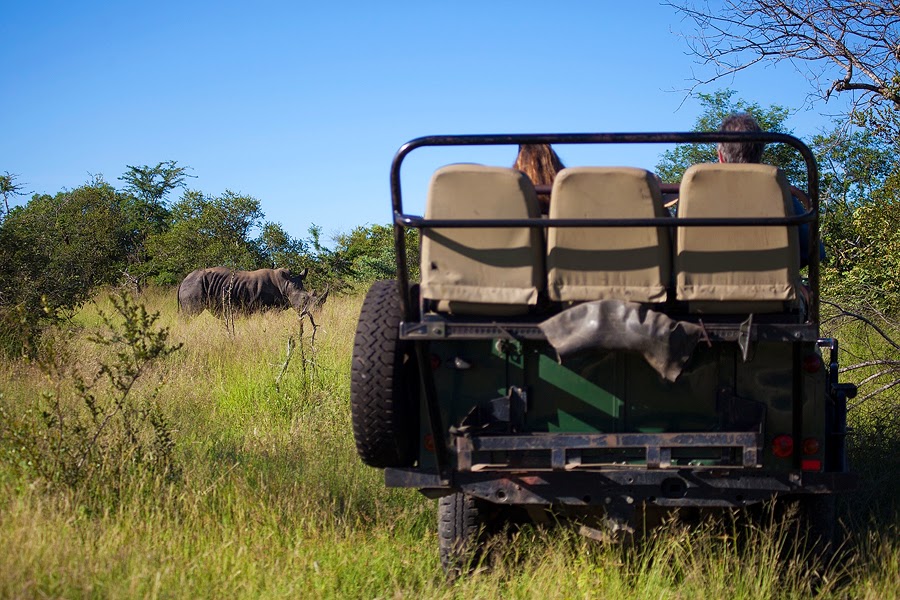
Because day tourists are not allowed inside the park, the Madikwe Game Reserve is considered a somewhat exclusive place for safaris. As a direct consequence of this, the only cars that are permitted inside the park during game drive hours are those that are associated with the park’s lodges.
There is a wide variety of lodging options available for individuals, couples, and families traveling with children, some of which are opulent or even ultra-luxurious. Individuals and families can book these types of accommodations. It is the ideal site for either the beginning or ending of a vacation that is spent in South Africa, as well as for the beginning or ending of a tour that combines South Africa and Botswana.
The absence of malaria in Madikwe is just another perk of going to this reserve, which is highly recommended.