
The Madikwe Game Reserve is a protected area and a more recent addition to South Africa’s park system. It was founded in 1991 and spans 750 km2 of bushland up to the Botswana border, north of the little settlement of Groot-Marico. It is so named because it is situated on the basin of the Madikwe or Marico River.
The South Africa-Botswana boundary is 90 kilometres north of Zeerust in the Madikwe Game Reserve. The reserve is reasonably close to the large cities of Johannesburg and Pretoria, both of which can be reached by car in around 4.5 hours. Also, the distance to Gaborone, the nation’s capital, is only one to two hours by car.
The Madikwe Game Reserve was formerly used as farmland, but farming failed because of the weak soil. Before deciding that a provincial park would be the best use for this area to boost the economy in this otherwise impoverished region, the South African government did extensive research.
In 1992, Project Phoenix began the process of reintroducing wildlife to the region by bringing breeding herds of elephants, Cape buffalo, south-central black rhinos, southern white rhinos, and several antelope species. The number of large mammals in the reserve has increased to over 10,000, In addition there was also the successfully returning of uncommon predatory species like lions, cheetahs, spotted hyenas, and Cape wild dogs. More than 60 different species of mammals can currently be found in the park.
 Few people are aware of it even though it is currently South Africa’s fifth-largest game reserve. The park currently has a total area of 750 km2, of which 680 km2 are included privately owned properties. The entire 150 km of the reserve is surrounded by an electric fence that confines the larger animals to their allocated region.
The scenery, which is studded with lone mountains and rocky outcrops, is dominated by open grasslands and bushveld plains. Due to the presence of all significant species, including the highly sought-after “Big 5”, Madikwe has developed a reputation as one of Africa’s top conservation sites.
Madikwe is distinctive in that it is found in a region where a variety of rare species naturally occur, a transitional location between the bushveld and the Kalahari. Although it can get chilly at night in the winter, the weather is often mild to hot. More than 350 different bird species have been identified at Madikwe. Given their proximity to one another, there is a long-term proposal to build a corridor between the reserve and Pilanesberg Game Reserve.
Madikwe’s varied soils and rocks now are the product of millions of years of erosion on the underlying geological formations. The local fauna has also been significantly impacted by this erosion. The temperature, which varies greatly from location to location, is another factor influencing the type of flora that may be found in Madikwe. The numerous veld management strategies employed by the farms that first populated the area led to Madikwe’s irregular vegetation.
Madikwe Game Reserve is home to a diverse diversity of species because of its multiple unique ecosystems. The reserve’s wide geographic range includes mountains, a plateau, rocky hills, a perennial river, seasonal wetlands, bushveld, savannah, and many sand and clay habitats.
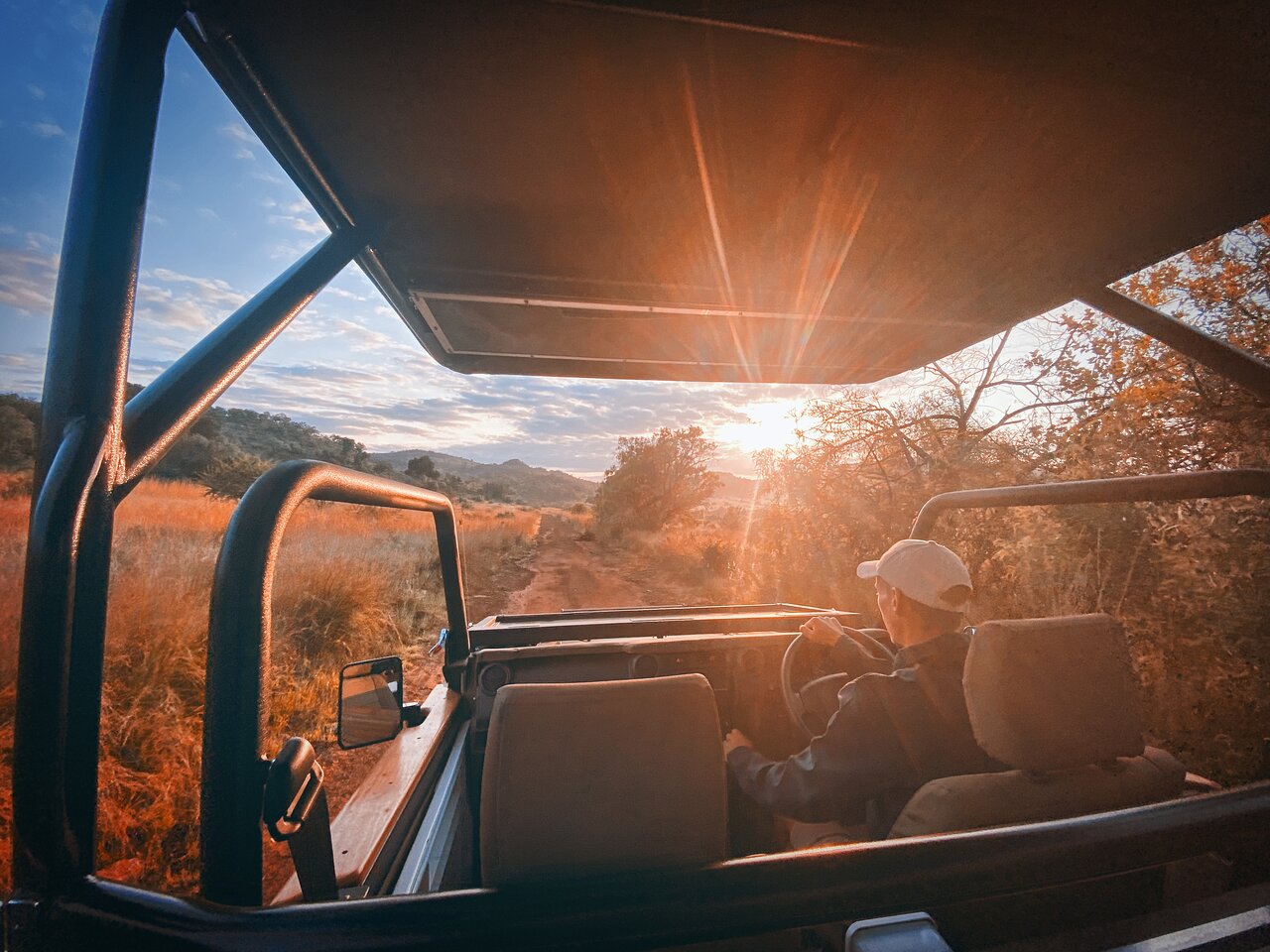
Because to the fact that day tourists are not allowed in the park, the Madikwe Game Reserve is thought of as a very elite destination for safaris. Because of this, only cars connected to the park’s lodges are permitted inside the park when game drives are in operation.
Housing options for singles, couples, and families with children range from eco-friendly wilderness camping to extremely luxury and ultra-luxurious resorts. The absence of malaria in Madikwe is simply one advantage of visiting this reserve.