
Need more Info?
Pretoria sometimes gets overlooked by travellers heading straight from Johannesburg to Kruger, Pilanesberg or another part of South Africa. If you have an interest in the country’s history, though, it is worth making time for.
This is South Africa’s administrative capital, and much of the country’s political story can be traced through the buildings, monuments and museums found around the city. The Union Buildings, Church Square, Kruger House Museum and Voortrekker Monument can all form part of a well-planned day here.
Pretoria is also easier to fit into a South African itinerary than many visitors expect. You do not necessarily need to move hotels or spend several days in the city. Many travellers visit from Johannesburg and return the same day.
Yes, particularly if you are interested in South African history, architecture, and heritage.
For most international travellers, half a day to a full day is enough to see Pretoria’s major historical attractions. The city works particularly well as a day trip from Johannesburg, while travellers with more time can add museums, gardens and nearby nature reserves.
Pretoria is less about rushing between tourist attractions and more about understanding some of the events and people that shaped modern South Africa.
Question | Practical Answer |
Where is Pretoria? | Gauteng, South Africa |
What is Pretoria known for? | Government, history, heritage, jacarandas, and architecture |
How long do you need? | Half a day to 1–2 days |
Can you visit from Johannesburg? | Yes, it works well as a day trip |
Main attractions | Union Buildings, Voortrekker Monument, Church Square and Kruger House Museum |
Best for | History, culture, architecture and first-time South Africa visitors |
Best time to see jacarandas | Usually October into early November, although flowering varies |
Guided or independent? | Both are possible; a guide adds useful historical context |
Can you combine Pretoria with wildlife? | Yes, although a proper safari deserves its own time |
MoAfrika Tours has been introducing travellers to South Africa for more than two decades. Our local guides regularly take guests through Pretoria and Johannesburg, helping them understand the places, people and events behind the landmarks rather than simply driving from one photo stop to the next.
Our guided Pretoria Day Tours include many of the city’s important historical sites, including the Union Buildings, Voortrekker Monument, Kruger House Museum and Church Square.
Pretoria is one of those places where a good guide can make quite a difference. A building may not mean much from the pavement until you understand what happened there.
Pretoria was established in 1855 by Marthinus Pretorius and named after his father, Voortrekker leader Andries Pretorius. It became the capital of the South African Republic, also known as the Transvaal Republic, and later developed into an important centre of government.
Following the creation of the Union of South Africa in 1910, Pretoria became the country’s administrative capital. It retains that role today as one of South Africa’s three capital cities. Cape Town is the legislative capital, while Bloemfontein is traditionally regarded as the judicial capital.
Pretoria’s landmarks reflect competing accounts of South African history. Church Square and the Voortrekker Monument are closely connected with the former South African Republic and colonial conflict. The Union Buildings represent the formation of the modern South African state, while Freedom Park tells a story of conflict, resistance, sacrifice and democracy.
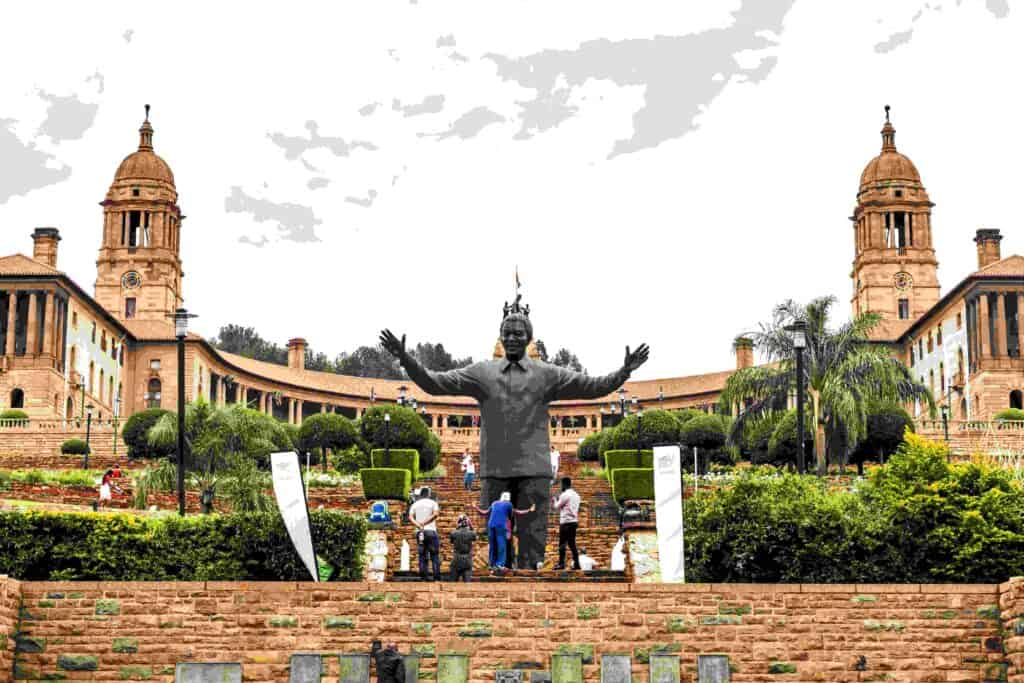
The city also played a central role during apartheid. As the seat of government, Pretoria was closely associated with the administration of apartheid policy. It later became the setting for important moments in South Africa’s democratic transition. Nelson Mandela was inaugurated as president at the Union Buildings in 1994, and a large statue of him now stands on the grounds.
Understanding this complex history makes a visit more meaningful. Pretoria’s monuments reveal how different periods and communities have interpreted South Africa’s past.
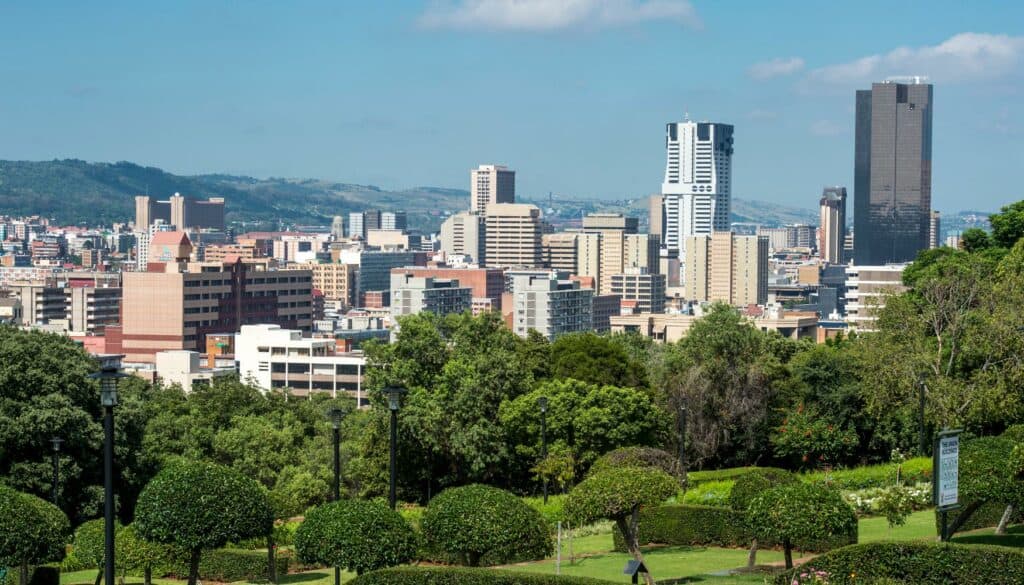
Pretoria’s principal attractions are spread across the city. Choose the places that interest you most and plan transport between them.
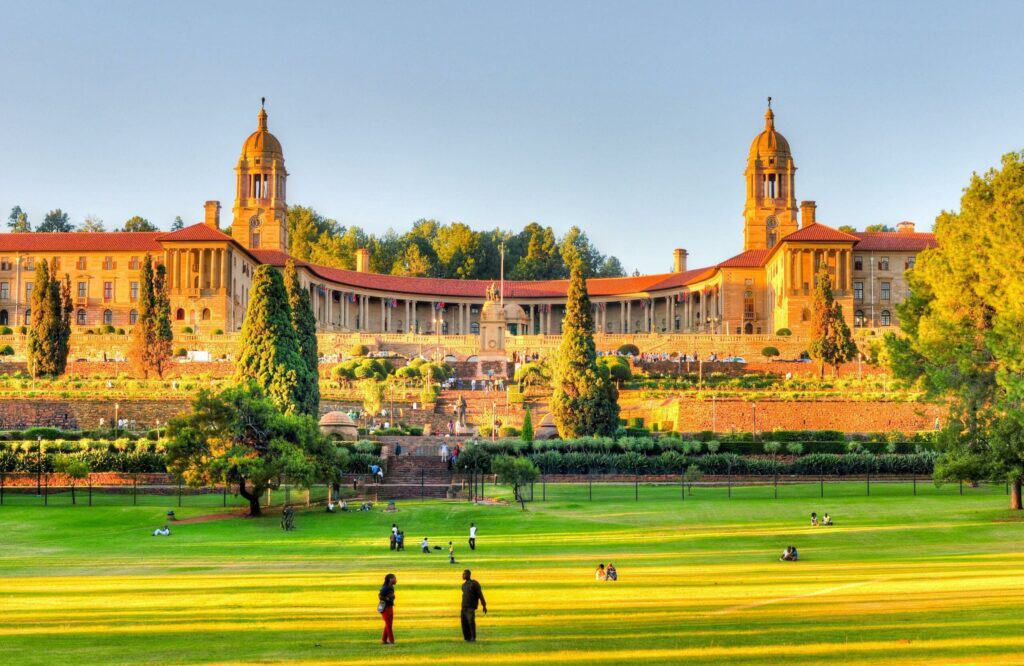
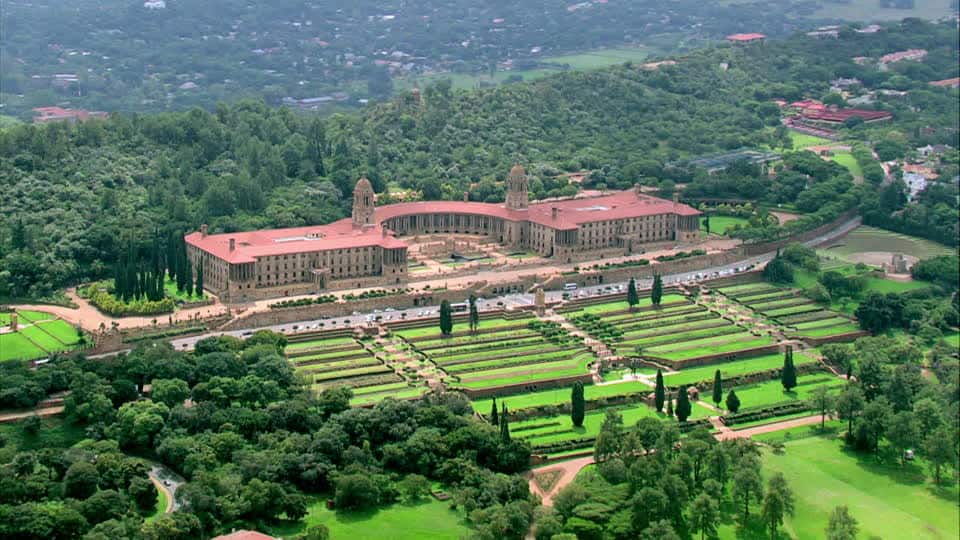
The Union Buildings sit on Meintjieskop and are one of Pretoria’s defining landmarks. Designed by architect Sir Herbert Baker, the sandstone complex houses the offices of South Africa’s executive government.
Visitors generally come to see the buildings from outside, walk through the terraced grounds where access is permitted and view the Nelson Mandela statue. The elevated position also provides a view across the city.
Security arrangements and access to parts of the grounds can change during official events. Check current information before visiting and don’t assume that the government buildings themselves are open for public tours.
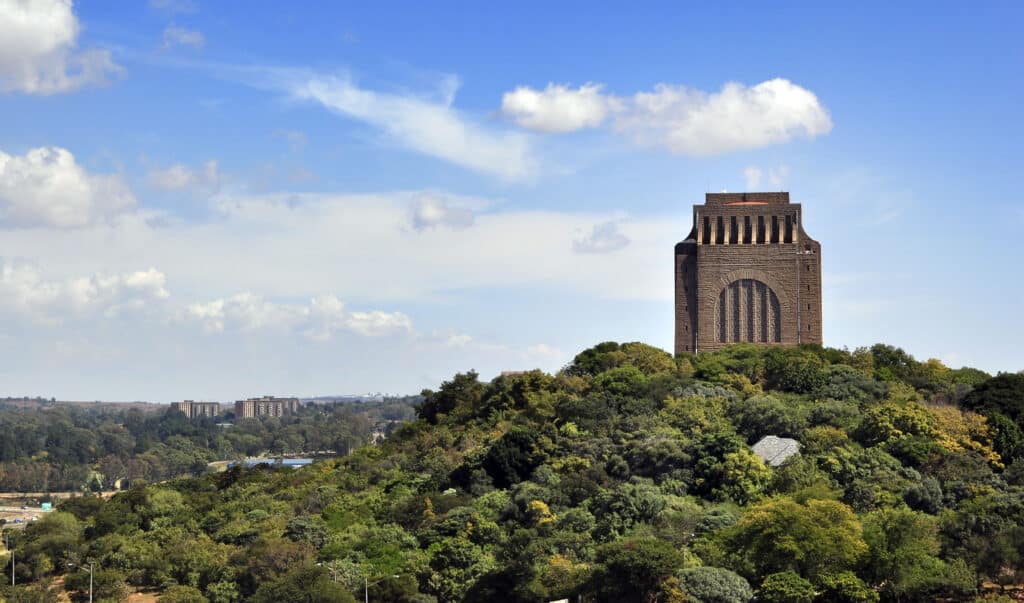
The Voortrekker Monument occupies a prominent hill south of central Pretoria. Exhibitions and architectural features focus on the Great Trek and the experiences of the Voortrekkers who left the Cape Colony during the nineteenth century.
The site is useful for understanding how this history was recorded and commemorated, as well as how it later became connected to Afrikaner nationalism. The hilltop setting also offers views over Pretoria.
Freedom Park stands on Salvokop, within sight of the Voortrekker Monument. It was developed as a place of remembrance and reflection, recognising people who died during conflicts that shaped South Africa and its path towards democracy.
The site includes memorial spaces and landscaped grounds, and provides a wider historical perspective. Visiting Freedom Park and the Voortrekker Monument on the same day can be useful. The two sites present different approaches to memory and illustrate how South Africa continues to interpret its past.
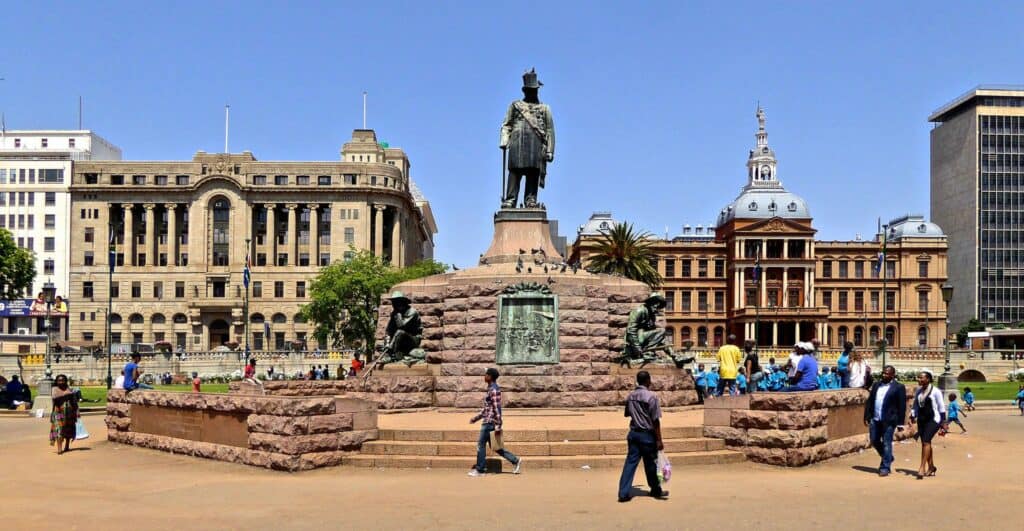
Church Square is the historic centre of Pretoria. Important buildings include the Palace of Justice, the Old Raadsaal and other structures associated with the former South African Republic and later government administrations.
The square is useful for travellers interested in architecture and the early development of the city. A statue of former South African Republic president Paul Kruger stands at its centre.
As with other parts of a working city centre, conditions can change. Use current local advice and consider visiting with a guide if you want historical explanation as well as coordinated transport.
The National Zoological Garden of South Africa, commonly known as the Pretoria Zoo, occupies a large site near the city centre. This is a great stop for families or travellers interested in zoology and conservation.
Because a zoo visit can take several hours, it’s usually better treated as a main activity. Check the current status of exhibits, facilities, entrance arrangements and animal-welfare information before deciding whether it suits your plans.
The Pretoria National Botanical Garden provides a quieter alternative to the city’s monuments and museums. A quartzite ridge divides the grounds into different natural areas, and the garden includes indigenous vegetation and opportunities for birdwatching.
The Botanical Garden can work well if you want an outdoor morning or afternoon after visiting several indoor or historically intensive attractions.
Pretoria has several additional heritage attractions, including Kruger House Museum, Melrose House and museums within the DITSONG group. Their operating arrangements can change, so confirm that a specific museum is open before building your itinerary around it.
Travellers interested in nature may also consider municipal reserves such as Groenkloof or Rietvlei. These offer outdoor experiences close to the city, but they should not be treated as substitutes for a dedicated multi-day safari.
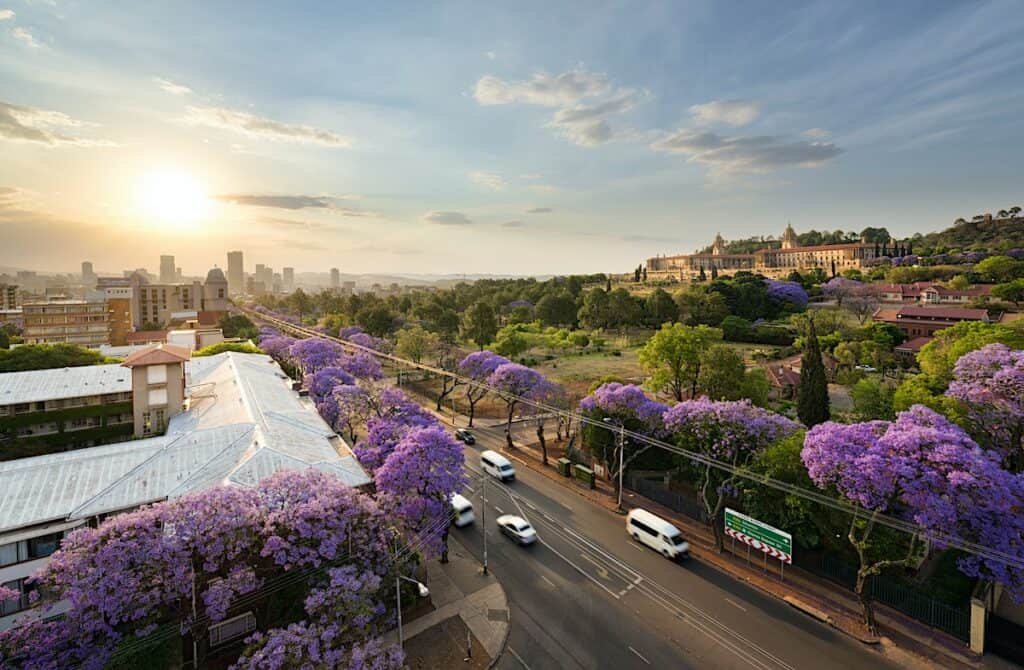
Pretoria is famous for its jacarandas, the purple-flowering trees planted along many of its streets. When large numbers flower at the same time, entire avenues are covered by a purple canopy.
The main flowering period usually falls in spring, broadly from late September into November. October is often associated with the most widespread colour, but there is no fixed peak date. Temperature and conditions earlier in the year can all affect when the flowers appear and how long they stay on the trees.
Different parts of the city can also bloom at slightly different times. A heavy storm can strip flowers from one neighbourhood while trees elsewhere are only beginning to open.
If seeing the jacarandas is central to your trip, monitor recent local reports and photographs close to your travel date. Don’t plan around an exact week several months in advance or assume that every well-known street will be at peak bloom simultaneously.
Arcadia, Brooklyn, Groenkloof and parts of the older eastern suburbs are commonly associated with jacaranda-lined streets. Remember that these are working residential and institutional areas. View the trees without blocking roads or disrupting residents.
Pretoria covers a large area, and the name is often used for places well beyond its historic centre. Understanding a few key districts will make it easier to choose accommodation and plan each day.
Arcadia is close to the Union Buildings and features numerous embassies, government offices and older residential streets. It can be convenient if the Union Buildings and nearby historical sites are priorities.
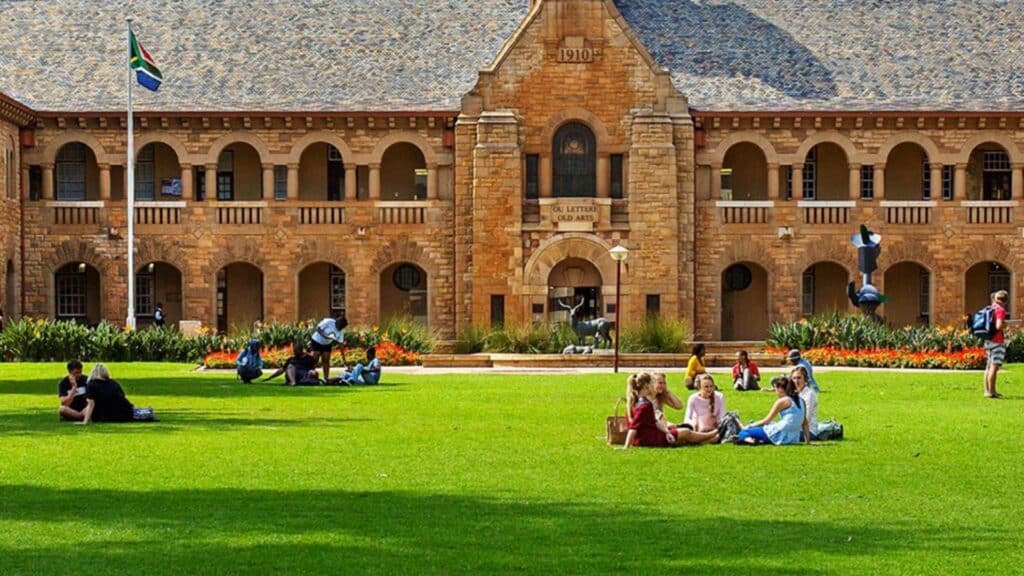
Hatfield is a university and commercial district east of the city centre. It has restaurants, shops, accommodation and a Gautrain station, which makes it practical for travellers arriving from Johannesburg or O.R. Tambo International Airport. Hatfield’s atmosphere is influenced by the nearby University of Pretoria.
Brooklyn is a leafy residential and commercial area with guesthouses and restaurants. It can suit travellers who want a suburban base within road reach of central and eastern Pretoria attractions.
Menlyn and the surrounding eastern suburbs have large shopping centres, hotels, restaurants and business developments. This area may be convenient for travellers with appointments or activities in eastern Pretoria, but it is some distance from several historic attractions.
Central Pretoria has Church Square, heritage architecture, museums and transport connections. It is important historically, although it may not suit every traveller as an accommodation base. Plan specific visits and seek current advice about walking routes and transport.
For most international travellers, one day is enough to cover the main Pretoria highlights.
A half-day visit works if you mainly want to see:
A full day gives you more breathing room and allows time for additional museums, lunch or another heritage attraction.
Two days make more sense if Pretoria itself is an important part of your trip and you want to include botanical gardens, nature, museums or slower exploration.
Time Available | What Usually Works |
Half day | Major historical landmarks |
Full day | Main landmarks plus additional heritage stops |
2 days | History, gardens, museums and slower sightseeing |
3+ days | Useful mainly if Pretoria is a base for surrounding attractions |
Most safari-focused travellers do not need three or four days in Pretoria. If wildlife is the main reason you came to South Africa, you will probably want to use that extra time in Pilanesberg, Kruger or another reserve.
Pretoria and Johannesburg are close enough that many travellers see both, but they offer quite different experiences.
Pretoria | Johannesburg |
Administrative capital | South Africa’s largest economic hub |
Strong government and political history | Strong mining, apartheid, and urban history |
Union Buildings | Apartheid Museum |
Voortrekker Monument | Constitution Hill |
Church Square | Soweto |
Quieter city-tour feel | Larger, busier urban experience |
Good for architecture and heritage | Good for modern South African social history |
Pretoria suits travellers interested in government, historical architecture, and the country’s earlier political history.
Johannesburg offers a different perspective, particularly through Soweto, Constitution Hill, and sites connected to apartheid and the development of modern South Africa.
If your itinerary allows it, the two cities complement one another rather than compete.
Pretoria and Johannesburg are both in Gauteng, but they are separate cities with extensive metropolitan areas. Your actual journey depends on where you start and where in Pretoria you are going.
Driving offers flexibility, but traffic can affect the journey, so avoid relying on a single estimated travel time.
The Gautrain connects Johannesburg and Pretoria, with Pretoria-area stations including Centurion, Pretoria and Hatfield. It can be useful if your accommodation and planned attractions are reasonably close to the rail network. However, most visitors will still need a ride-hailing service or transfer for the final part of the journey.
A private transfer removes the need to navigate traffic and parking and is convenient for families and small groups.
An organised day tour combines return transport from Johannesburg with several major Pretoria attractions. This option will suit you if you have only one day and don’t want to coordinate each part of the trip independently.
If you are spending time in both cities, the Johannesburg travel guide provides more detail on choosing a base and planning the Johannesburg portion of your stay.
You can explore parts of Pretoria independently, but this is one city where guided sightseeing makes sense.
Many of the main attractions are historical. Simply standing outside the Palace of Justice or looking across Church Square tells you only part of the story.
A local guide can explain:
Guided tours also remove the need to plan parking and transfers between attractions.
Travellers who prefer complete flexibility can still visit independently. It comes down to whether you mainly want to see the landmarks or understand them.

Pretoria is spread out enough that trying to cover all the major attractions on foot is impractical.
This is usually the easiest option for first-time international visitors. Transport and sightseeing are handled together, and you have someone explaining the history as you go.
Driving gives you freedom, particularly if you plan to explore areas beyond the main city attractions.
The Gautrain connects Pretoria with parts of Johannesburg and the wider Gauteng transport network.
It can be useful for moving between the cities, but remember that arriving at a station does not solve the entire sightseeing question. Pretoria’s attractions are spread across different areas, so you will still need local transport.
Ride-hailing can work well for individual journeys within the city, particularly if you have planned your stops.
Pretoria is a major working South African city, so normal urban precautions are sensible.
Visitors should avoid displaying valuables unnecessarily, pay attention to their surroundings and get local advice before walking around unfamiliar areas.
For sightseeing, especially if it is your first time in Gauteng, organised transport or a guided tour can remove much of the uncertainty around routes, parking and moving between attractions.
Do not assume every part of a large city has the same conditions. Ask your hotel, host or guide for current local advice.
Pretoria can be visited throughout the year.
The right time depends on what else you are doing in South Africa.
Spring is particularly popular because of the jacarandas.
October is usually associated with the city’s purple flowering trees, although the exact timing changes from year to year.
Days become warmer, and summer rainfall starts returning as the season progresses.
Summer is warm and wetter.
Rain often arrives as afternoon thunderstorms rather than settling in for days, although weather is never completely predictable.
If you are sightseeing outdoors, earlier starts can be more comfortable.
Autumn can be a pleasant period for city sightseeing as temperatures begin to cool.
It is a useful shoulder season if Pretoria forms part of a longer South African trip.
Winter days in Gauteng are generally dry and mild, but mornings and evenings can be cold.
Pack layers. A sunny Pretoria afternoon can feel very different from the start of an early morning tour.
Pretoria does not require specialised safari clothing, but a few practical items make sightseeing easier.
Bring:
If Pretoria forms part of a longer safari trip, keep your binoculars and neutral bush clothing for the reserve. You do not need to dress like you’re on a game drive to visit Church Square.

Yes, but it helps to distinguish between a wildlife attraction and a proper multi-day safari.
Pretoria and Johannesburg are useful starting points for several wildlife destinations in northern South Africa.
Pilanesberg is a popular option for travellers who want a Big Five safari without travelling as far as Kruger.
It is malaria-free and can be visited on a day safari, although staying overnight gives you more time in the reserve.
Dinokeng lies north of Pretoria and is another option for travellers wanting wildlife within Gauteng.
Travel time varies considerably depending on where you start and which entrance or lodge you are using, so check your route rather than relying on a general distance estimate.
Kruger is much further away and should be treated as a separate safari destination rather than a Pretoria day trip.
If safari is a major part of your South African holiday, give Kruger several days rather than trying to squeeze it into a city itinerary.
A sensible Pretoria day should leave enough time to understand the places you visit.
Time | Suggested Experience |
Morning | Depart from Johannesburg or Pretoria accommodation |
Morning | Visit the Voortrekker Monument |
Late morning | Explore Kruger House Museum |
Midday | Church Square and surrounding historical buildings |
Lunch | Break in Pretoria |
Afternoon | Union Buildings and gardens |
Late afternoon | Additional museum or return to accommodation |
Exact opening hours, access arrangements and routing can change, so check current conditions before setting out.
Trying to squeeze every Pretoria attraction into one day usually adds more driving than value.
If this is your first visit to Gauteng, don’t try to treat Pretoria as an enormous checklist.
Start with the Union Buildings, Voortrekker Monument, Kruger House Museum and Church Square. Together they give you a useful introduction to the city and some of the historical forces that shaped South Africa.
Travellers with more time can add Freedom Park or the botanical garden.
If you are primarily in South Africa for safari, a half-day or full-day Pretoria visit is usually enough. Save the extra nights for the bush.
Pretoria works particularly well near the beginning or end of a South African itinerary because of its position in Gauteng.
This is the most obvious combination.
Explore Pretoria’s government and historical landmarks, then use Johannesburg to learn more about the gold-mining era, apartheid, Soweto, and modern urban South Africa.
After city sightseeing, Pilanesberg gives you a very different side of South Africa.
It works particularly well for travellers with limited time who want to add a malaria-free Big Five safari to a Gauteng itinerary.
Pretoria is rarely the whole holiday.
It fits naturally into itineraries that continue to Johannesburg, Kruger National Park, Pilanesberg, Cape Town and other parts of the country.
Pretoria is rarely the whole holiday.
It fits naturally into itineraries that continue to Johannesburg, Kruger National Park, Pilanesberg, Cape Town and other parts of the country.
Explore our South Africa tours options.
If you would rather leave the transport and historical interpretation to a local guide, MoAfrika offers several Pretoria sightseeing options from Johannesburg and Pretoria.
Explore our Pretoria Day Tours options.
⭐⭐⭐⭐⭐
Renate A. Germany
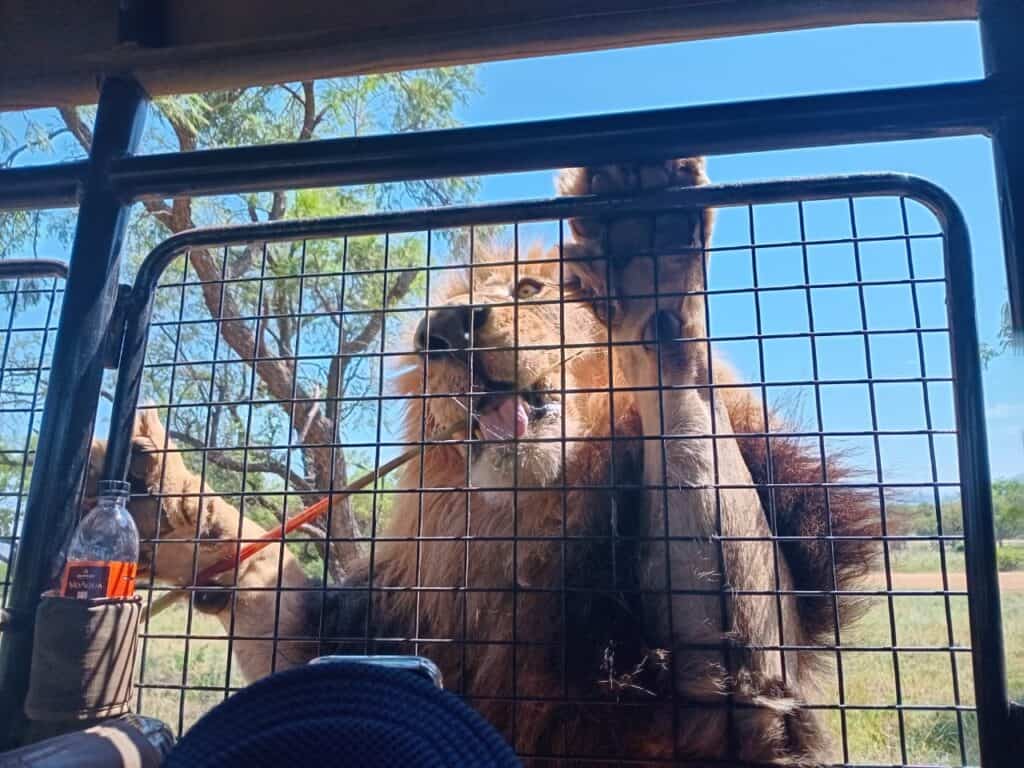
“Our guide Khutso was super punctual for our full day tour of Pretoria, handled the traffic challenges calmly and confidently, and also has profound expertise. He also patiently and clearly clarified follow-up questions that were sometimes necessary due to the English-language tour. Humorous and mindful of our safety, we were well taken care of at all times.”
Pretoria makes the most sense when you understand what you are looking at.
You can certainly explore independently, but travellers with limited time often find a guided visit easier.
Transport is taken care of, the major landmarks fit naturally into the day, and there is someone there to explain the history behind them.
MoAfrika offers scheduled and private Pretoria Day Tours from Johannesburg and Pretoria, with options ranging from a focused city tour to full-day combinations.
Or speak to the MoAfrika team if you are trying to work Pretoria into a wider Johannesburg, Pilanesberg or South African itinerary.
Sometimes one well-planned day is all you need to see the city properly.
Yes, particularly if South African history and heritage interest you. The Union Buildings, Voortrekker Monument, Church Square and Kruger House Museum can comfortably form part of a half-day or full-day visit.
Most international travellers need no more than one day for the main sights. Two days make sense if you want to explore museums, gardens and additional attractions at a slower pace.
Yes. Pretoria is roughly 50 kilometres north of Johannesburg, although journey times depend on your starting point and traffic. Many travellers stay in Johannesburg and visit Pretoria without changing hotels.
Pretoria is South Africa’s administrative capital and is known for the Union Buildings, its government institutions, historical architecture, jacaranda trees, and landmarks connected to different periods of South African history.
Jacarandas usually flower around October and sometimes continue into early November. Exact timing varies with weather and seasonal conditions, so flowering cannot be guaranteed for specific travel dates.
Pretoria is South Africa’s administrative capital. South Africa has three capital cities: Pretoria for the administrative branch, Cape Town as the legislative capital, and Bloemfontein in the country’s judicial-capital arrangement.
First-time visitors usually focus on the Union Buildings, Voortrekker Monument, Church Square and Kruger House Museum. Freedom Park and the Pretoria National Botanical Garden are worthwhile additions if you have more time.
They offer different experiences. Pretoria is particularly useful for government, architecture and historical landmarks, while Johannesburg offers important sites connected to mining, apartheid, Soweto and contemporary South African urban life. If time allows, visit both.
No, but a guide can add considerable context. Many of Pretoria’s important attractions are historical sites, so understanding the events behind the buildings often makes the visit more meaningful.
Yes. Pilanesberg and Dinokeng can be incorporated into a wider Gauteng itinerary. Kruger National Park is much further away and deserves several days rather than being treated as a Pretoria day trip.




WhatsApp Now