
Need more Info?

Tanzania is the safari destination where the wild heart of Africa still beats.
From the thundering herds of the Serengeti to the spice-scented alleys of Zanzibar, Tanzania is the kind of place that stays with you. It’s where you can wake to lion roars, summit Africa’s tallest peak, and end the day with your toes in the Indian Ocean.
Whether you’re chasing the Great Migration, dreaming of a Big Five safari, or craving barefoot luxury on white-sand beaches, Tanzania tours delivers it all with raw, untamed beauty and legendary warmth.
Tanzania offers one of the most diverse and captivating safari experiences in Africa, combining iconic wildlife viewing with striking natural landscapes. The country is home to the legendary Serengeti National Park, where over two million wildebeest and zebras participate in the Great Migration every year.
The Ngorongoro Crater, a UNESCO World Heritage Site, forms part of the Northern Safari Circuit and provides a concentrated wildlife experience where visitors can often see the Big Five in a single day, with lions, elephants, buffalo, leopards and black rhinos living in a self-contained ecosystem.
The unique topography of the crater, along with its permanent water source, makes it a reliable wildlife-viewing area throughout the year.
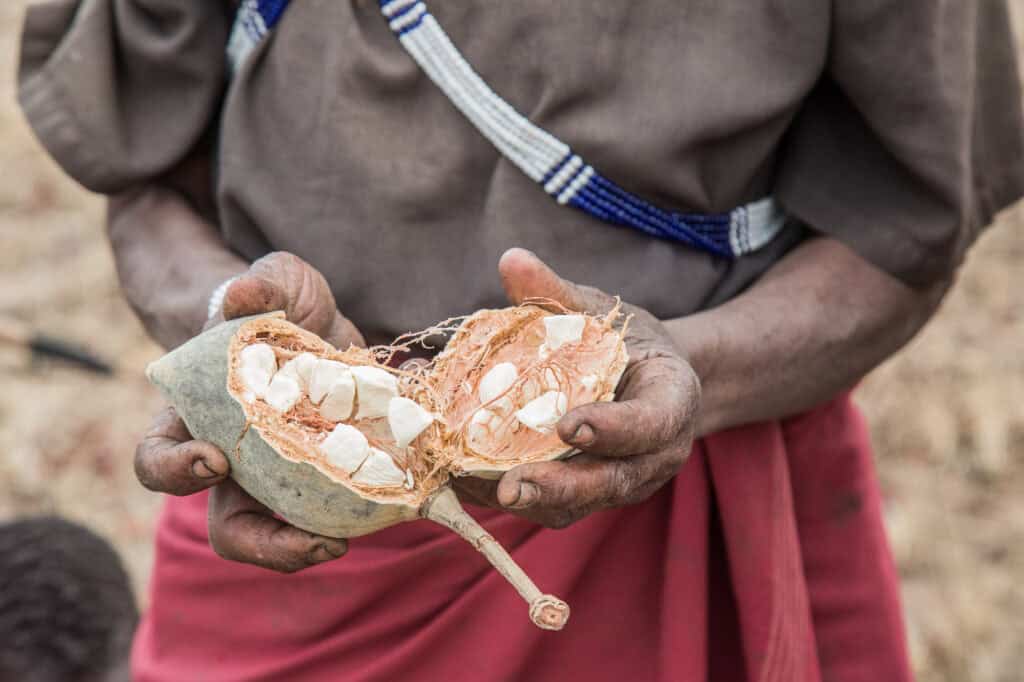
Tanzania also boasts less crowded parks such as Tarangire and Lake Manyara. Tarangire is known for its elephant populations and ancient baobab trees, while Lake Manyara offers varied habitats and the chance to spot tree-climbing lions, which are rare in most African destinations.
Southern parks like Selous (now Nyerere National Park) and Ruaha offer more remote experiences with fewer vehicles and wilder landscapes.
Unlike some neighbouring countries, Tanzania gives travellers the option to combine multiple experiences in one trip. Wildlife-rich savannas can be followed by coastal escapes to the Indian Ocean, including the spice-scented lanes of Zanzibar’s Stone Town and the turquoise waters along Nungwi’s beaches.
The cost of a Tanzanian safari is another reason for it being a top destination.
A mid-range safari in Tanzania typically costs between ZAR 45,000 and ZAR 70,000 (USD 2,500 to USD 3,900) per person for 6 to 7 days, including park fees, transport, accommodation and meals.
Budget options exist from ZAR 28,000 (USD 1,550) per person, while luxury packages can exceed ZAR 130,000 (USD 7,200) depending on lodge selection and private guiding.
Tanzania’s safari circuit is one of the most spectacular on the continent, offering everything from vast savannahs to volcanic craters and off-the-grid wilderness. Each park has something unique to offer, whether you’re after predators, rare sightings or iconic landscapes:


Most famous for the Great Migration, the Serengeti is Tanzania’s iconic safari destination. Spanning 14,763 square kilometres, it offers classic savannah scenery, dramatic predator-prey interactions and outstanding year-round game viewing.
The migration, which involves nearly two million wildebeest, zebra and gazelle, occurs in a circular path throughout the year. Calving season happens from January to March in the southern plains, while the dramatic river crossings take place in the north around July to September.
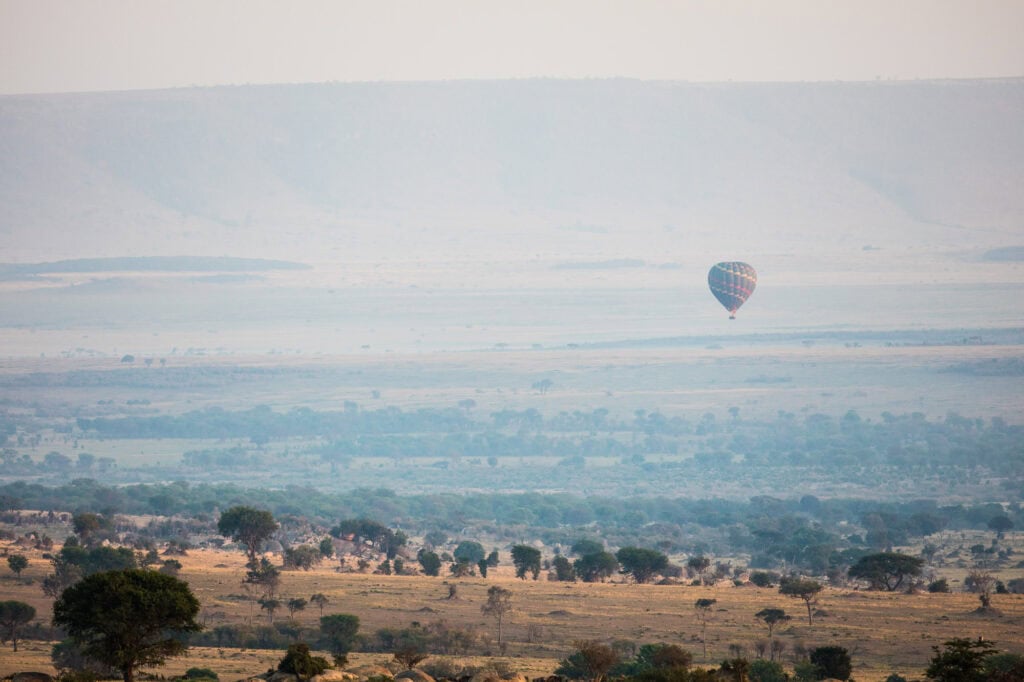
Beyond the migration, the Serengeti has abundant resident wildlife, including lions, cheetahs, leopards and elephants. Game drives are offered from both mobile camps and permanent lodges, and hot-air balloon safaris are a popular way to see the plains at sunrise.
The Ngorongoro Crater is the world’s largest intact volcanic caldera and a haven for wildlife. The floor of the crater spans 260 square kilometres and is home to more than 25,000 animals, including a healthy population of black rhinos.
Due to its enclosed geography, sightings are almost guaranteed, and the area is especially good for elephants, lions and hyenas. You’ll also see vast flocks of flamingos on Lake Magadi, which lies at the crater’s centre.
Because it’s a UNESCO World Heritage Site and heavily regulated, only a limited number of vehicles are allowed daily, which makes early booking essential, especially in peak season.
Note that entry fees to Ngorongoro are higher than in other parks.
Tarangire is often overshadowed by its more famous neighbours, but it’s a favourite among seasoned travellers for its dramatic baobab trees, elephant herds and fewer crowds.
In the dry season (June to October), the Tarangire River draws huge concentrations of elephants, buffalo, wildebeest and predators. Birdlife is also superb, with more than 500 recorded species.
The landscape is a mix of open savannah, woodlands and swamps, offering a quieter but diverse safari experience. It’s a popular first or last stop on the northern circuit due to its proximity to Arusha.
Known for its tree-climbing lions and scenic beauty, Lake Manyara National Park offers a compact yet rewarding safari. The park hugs the base of the Rift Valley escarpment and includes a soda lake that attracts flamingos, pelicans and hippos.
While the Big Five aren’t all present (you won’t find rhinos here), it’s a good spot to see elephants, giraffes, baboons and hundreds of bird species. Dense groundwater forests and open plains make for a varied drive.
Due to its size, Lake Manyara is often explored as a half-day trip en route to Ngorongoro or Tarangire.
For travellers looking to escape the crowds, Ruaha is a true wilderness. As the largest national park in Tanzania, it covers over 20,000 square kilometres and supports some of the highest densities of predators in Africa.
Ruaha is best known for its lion population and large elephant herds. Wild dogs, leopards and buffalo are also commonly seen. The terrain is rugged and dry, marked by ancient baobabs, rocky hills and the winding Ruaha River.
Because of its remote location in southern Tanzania, getting to Ruaha usually involves a flight from Dar es Salaam or Arusha, costing around ZAR 3,200 (USD 175) one way. Accommodation is more exclusive, with intimate tented camps and luxury lodges.
Nyerere is Tanzania’s largest protected area and one of the best places in East Africa for boat and walking safaris. Located in the south-east, it covers vast miombo woodlands, savannah, and riverine forests along the Rufiji River.
The park supports large populations of elephants, crocodiles, hippos, lions and hyenas, although animals can be harder to spot due to the dense vegetation. It’s ideal for an adventurous safari that combines game drives with boating and guided walks.
Safari pricing in Tanzania varies widely depending on your travel style, group size, choice of accommodation and the time of year. While it’s possible to travel on a budget, a quality safari experience usually starts around ZAR 30,000 (USD 1,700) per person for a short three-night trip.
The most common safari option is the Northern Circuit, which includes the Serengeti, Ngorongoro Crater, Lake Manyara and Tarangire. For a 7-day itinerary, the average cost falls between ZAR 45,000 and ZAR 70,000 (USD 2,500 to USD 3,900) for mid-range accommodation with full-board meals and a professional driver-guide.
Luxury travellers can expect to pay upwards of ZAR 120,000 (USD 6,500) per person for the same itinerary, particularly if staying in high-end lodges or flying between parks. These prices usually include all internal transfers, park fees, guiding services, meals and even sundowner drinks.
Budget group tours, often staying at campsites or basic lodges, can bring the price down to about ZAR 25,000 to ZAR 30,000 (USD 1,400 to USD 1,700), but may involve longer travel times and fewer included activities.
It’s also worth noting that park fees add significantly to overall costs. Serengeti fees alone are around ZAR 1,000 (USD 55) per day per person.
Entry fees to Ngorongoro are higher than in other parks, at ZAR 1,200 (USD 65) per adult per day, with an additional crater service fee of ZAR 1,000 (USD 55) per vehicle per day.
In general, expect park fees of ZAR 850 (USD 47) per adult per day, and accommodation options from basic camps to luxury lodges charging ZAR 9,000 (USD 490) or more per night.
A three-day fly-in safari to Nyerere from Dar es Salaam costs around ZAR 16,000 to ZAR 24,000 (USD 870 to USD 1,300) per person, including flights, transfers and accommodation. Park fees are ZAR 650 (USD 36) per day.
To maximise value, travel during shoulder seasons such as March or November when rates are slightly lower, and wildlife is still abundant.
Type of Safari | Duration | Approx. Cost per Person (ZAR) | Approx. Cost (USD) |
Budget Group Tour | 5 days | 25,000–30,000 | 1,400–1,700 |
Mid-Range Lodge Tour | 7 days | 45,000–70,000 | 2,500–3,900 |
Luxury Fly-In Safari | 7–10 days | 120,000–160,000 | 6,500–8,600 |
If your goal is to witness the Great Migration in the Serengeti, the dry season from late June to October is ideal. This is when wildlife gathers around water sources and the famous Mara River crossings occur in the northern Serengeti.
If interested in the calving season, the short dry spell between late January and February is perfect. During this period, the southern Serengeti becomes the stage for thousands of wildebeest births, which in turn attract predators. The landscape is green and dramatic, and the air is less dusty than in the mid-year peak season.
The rainy seasons fall between March and May (long rains) and November (short rains). While travel is still possible, some lodges close temporarily due to muddy roads and reduced access. However, these months are quieter, and prices are often 20 to 30 percent lower.
Season | Months | Key Features | Wildlife Viewing | Prices |
Dry Peak | June – October | Great Migration, fewer mosquitoes, clear skies | Excellent | High |
Calving Season | Late Jan – Feb | Wildebeest births, lush scenery | Very Good | Moderate |
Long Rains | March – May | Green landscapes, fewer tourists | Fair | Low |
Short Rains | November | Transitional weather, discounts | Good | Moderate |
Mount Kilimanjaro, Africa’s tallest peak at 5,895 metres, attracts trekkers from all over the world. The most popular route, the Machame Route, takes around seven days and costs between ZAR 30,000 and ZAR 50,000 (USD 1,650 to USD 2,750), including guides, permits, accommodation and meals.
Climbing Kilimanjaro does not require technical mountaineering skills, but good fitness and preparation.
Western Tanzania offers primate tracking opportunities in parks like Gombe Stream and Mahale Mountains, where chimpanzees can be observed in their natural forest habitat. These areas are more expensive to reach, with charter flights costing over ZAR 10,000 (USD 550) one way, but they offer an intimate and uncrowded experience.
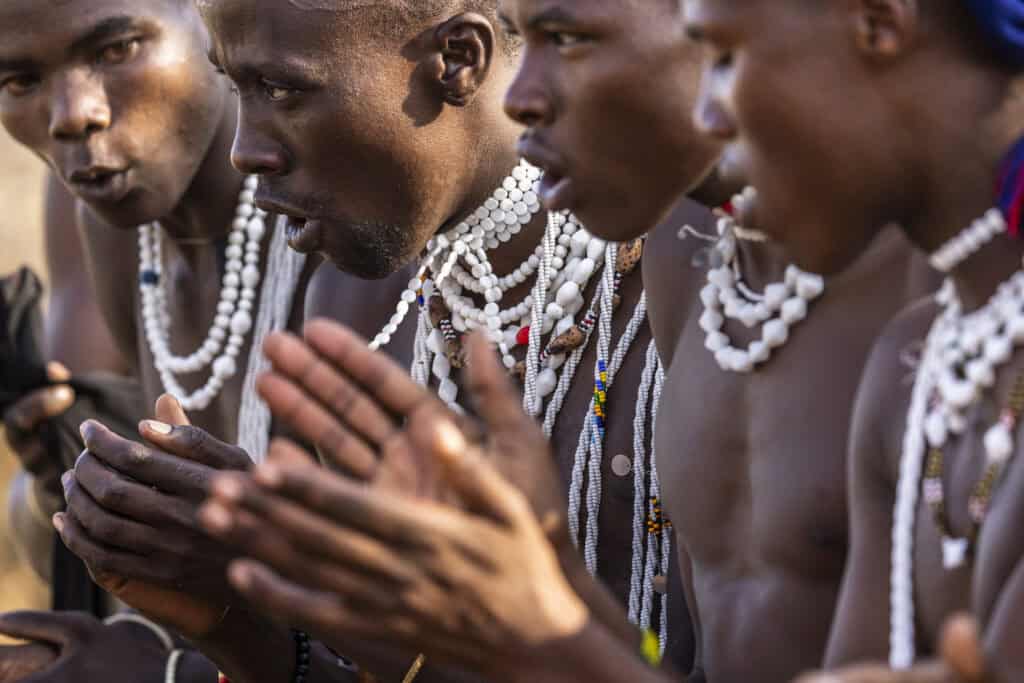
Cultural tourism is growing in popularity, especially around Mto wa Mbu and the slopes of Mount Meru, where you can engage with Maasai and Chaga communities. These visits often include village walks, traditional meals and handicraft markets.
Zanzibar, located just off the mainland, provides a relaxing contrast to the wild. The archipelago is famous for its white-sand beaches, coral reefs, and historic Stone Town. Whether you want to dive, sail, or explore local spice plantations, Zanzibar caters to a wide range of interests.
A well-planned 7 to 10-day itinerary in Tanzania allows you to combine world-famous safari parks with coastal relaxation or cultural exploration.
The Northern Safari Circuit is the most popular starting point, offering excellent infrastructure and abundant wildlife.
Extending the itinerary to 10 days lets you add either the southern circuit (Ruaha or Nyerere), a Kilimanjaro trek or three days in Zanzibar.
Private safaris allow full customisation, while group departures offer fixed routes at lower prices.
Tanzania is generally safe for tourists, especially in national parks and popular areas such as Arusha, Kilimanjaro, and Zanzibar. The country has a long-standing reputation for welcoming international visitors, and tourism is a key part of its economy.
In cities and towns, it is wise to take standard travel precautions. Avoid walking alone at night in unfamiliar areas, do not display valuables, and use registered taxis. Petty crime such as pickpocketing or bag snatching can occur in crowded markets or bus stations.
On safari, risks are very low. Park regulations are strictly enforced, and professional guides are well-trained in safety procedures. Always follow your guide’s instructions.
Health-wise, Tanzania is a malaria-risk area. Visitors should consult their travel clinic for advice on antimalarial medication and vaccines such as yellow fever and hepatitis A. Bring mosquito repellent and long sleeves for evenings.
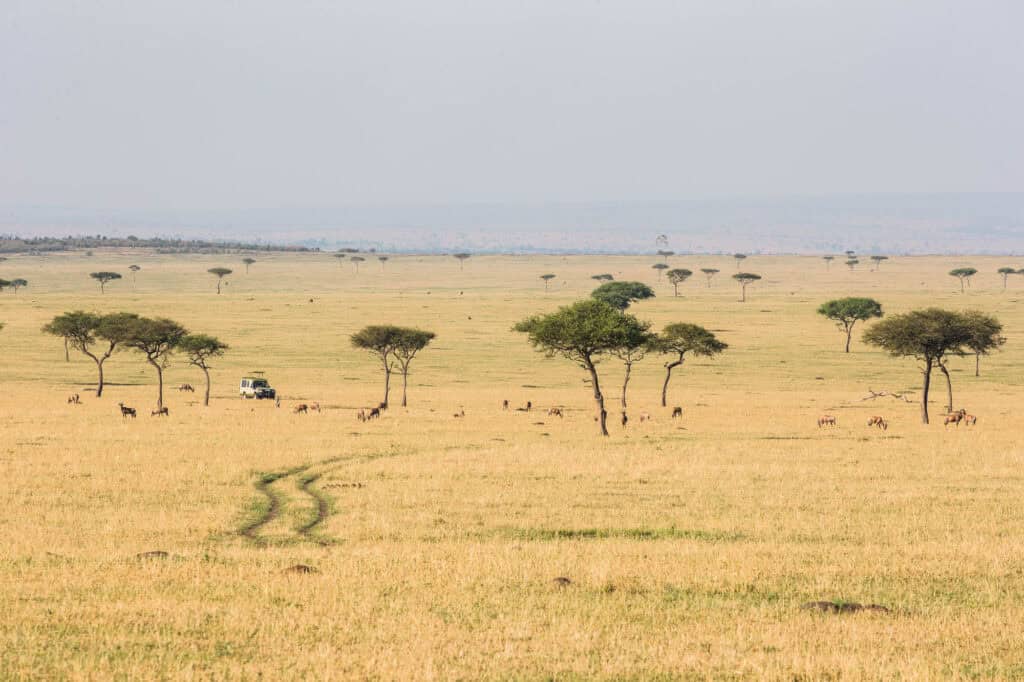
The most common transport modes include private vehicles, scheduled flights and public buses.
For safaris, the vast majority of travellers either book a private 4×4 vehicle with a driver-guide or join a small group tour. These vehicles are specially equipped for game viewing, with pop-up roofs and charging ports.
Flights between parks are a time-saving alternative, especially for long distances like Serengeti to Ruaha or Arusha to Zanzibar. Local airlines such as Coastal Aviation and Auric Air operate small aircraft between major airstrips.
Public transport, such as dala-dalas (minibuses), is cheap but not recommended for tourists due to safety and reliability issues.
In towns and cities, taxis are available but rarely metered. Always agree on the fare beforehand.
For Zanzibar, getting around is easy with taxis, bicycles or motorbike rentals.
Packing for Tanzania depends on the season and the activities planned, but there are a few essentials every traveller should include. Lightweight, breathable clothing in neutral tones is best for game drives. Avoid bright colours and dark blues, which can attract tsetse flies.
Mornings and evenings on safari can be cold, especially from June to August, so bring a warm fleece or jacket. Long trousers and sleeves also help protect against sunburn and mosquitoes.
Comfortable walking shoes or hiking boots are useful, even for general park visits. If you’re climbing Kilimanjaro, invest in quality thermal layers, waterproofs and broken-in boots.
Pack sun protection (hat, sunglasses, high-SPF sunscreen), a good insect repellent, and any personal medications. A headlamp or small torch is useful in camps without full lighting.
For electronics, consider a power bank, extra camera batteries and universal adapter. Most lodges have limited charging points.
Bring a soft-sided duffel bag rather than hard suitcases, especially if using small aircraft which often have strict luggage weight limits of 15kg.
Binoculars, a travel diary and reusable water bottle will enhance your safari and cultural experiences.
Choosing eco-certified tour operators and lodges that minimise water and electricity use is a good start. Many properties run on solar power and use boreholes to reduce strain on local resources.
Stay in community-owned lodges or those that employ local staff and contribute to education or healthcare initiatives. Booking locally guided experiences ensures money stays within the country and creates lasting economic benefits.
Wildlife viewing should always be done respectfully. Never ask your guide to get closer than permitted and avoid any operator that allows off-road driving in sensitive areas.
Stick to marked trails when hiking and always dispose of waste properly. If climbing Kilimanjaro, choose a responsible operator who adheres to porter welfare standards under KPAP (Kilimanjaro Porters Assistance Project).
Ask permission before taking photographs and respect local dress codes and customs.
A safari in Tanzania is very safe when guided by trained professionals and following park rules; usual city‑centre precautions apply in urban areas.
The optimal months are June to October for dry‑season wildlife viewing and migration sightings, while January‑February offers lush scenery and baby animals.
Yes, many travellers pair wildlife tours with a beach stay in Zanzibar or Pemba for a full‑service adventure.
Most nationalities require a visa, available on arrival or online; check your national requirements before travel.
Yellow fever vaccination is required if arriving from endemic regions, plus malaria prophylaxis is strongly recommended.
Yes if children are old enough to handle long game drives and nature scenes, though very young children may find some wildlife encounters intense.
Absolutely—visit between June and October to witness the Mara River crossing, or December‑February for calving events.
The Tanzanian shilling is official, but US dollars are widely accepted in lodges and safari camps.
Yes, Tanzania is excellent for first-timers due to its reliable infrastructure, experienced guides and diverse wildlife viewing.
No, it’s best to drink bottled or filtered water to avoid illness.
They are allowed, but roads are rough, and signage limited, so hiring a driver-guide is recommended.
Tipping is customary. Guides typically receive ZAR 150–250 (USD 8–14) per day, and camp staff ZAR 80–100 (USD 4–6).


WhatsApp Now