
Known as Mosi-oa-Tunya (The Smoke That Thunders), the natural wonder of Victoria Falls is more than just one of the world’s largest waterfalls. It’s a heart-pounding mix of roaring water, misty rainforests, and sky-high adventure.
Whether you’re chasing the perfect photo, craving adrenaline, or planning the trip of a lifetime, Victoria Falls tours delivers unforgettable moments at every turn.
Victoria Falls is on the Zambezi River, where the water drops into a series of deep basalt gorges along the border between Zimbabwe and Zambia. Known locally as Mosi-oa-Tunya, meaning “The Smoke that Thunders”, the falls stretch for more than 1.7 kilometres at their widest point.
Although the waterfall is the main attraction, Victoria Falls is also a destination in its own right. The experience changes with the seasons. At high water, spray can rise far above the gorge and soak nearby viewpoints. At lower water, more of the rock face becomes visible. Your choice of season and the side of the falls you visit will contribute to your experience.
If you are still deciding how Victoria Falls fits into a wider holiday, start with the Zimbabwe Travel Guide.
Yes. Victoria Falls is one of Southern Africa’s most remarkable natural attractions and is well worth including in a Zimbabwe or Southern Africa itinerary.
The Falls are spectacular throughout the year, although the experience changes with the Zambezi River’s water levels. The Zimbabwean side generally provides the most extensive views across the waterfall, while the Zambian side offers different perspectives and access to certain seasonal activities.
Most travellers should allow three to four days to visit the Falls, enjoy a Zambezi sunset cruise and explore the surrounding area. An extra day makes it easier to include a safari excursion or adventure activity.
Travel information | What to know |
Location | Zimbabwe–Zambia border |
River | Zambezi River |
UNESCO status | World Heritage Site since 1989 |
Waterfall width | Approximately 1.7 kilometres |
Maximum height | Approximately 108 metres |
Local name | Mosi-oa-Tunya, commonly translated as The Smoke That Thunders |
Main Zimbabwe gateway | Victoria Falls International Airport (VFA) |
Main Zambia gateway | Harry Mwanga Nkumbula International Airport (LVI), Livingstone |
Recommended stay | 3–4 days |
High-water period | Usually around March–May, with annual variation |
Lower-water period | Generally September–December |
Popular activities | Falls walks, river cruises, helicopter flights, adventure activities and safari excursions |
Nearby safari destinations | Chobe National Park and Hwange National Park |
Water levels, activity availability, and travel conditions vary from year to year.

Victoria Falls is one of the world’s largest waterfalls by the combined width and height of its falling curtain of water.
The Zambezi River flows across a broad plateau before plunging into a narrow basalt gorge. Much of the water disappears from view almost immediately, producing the mist that rises above the surrounding landscape.
The sound is often the first thing visitors notice.
At high water, you can hear the Falls long before reaching some of the viewpoints. On certain days, the spray drifts across the rainforest paths, leaving visitors thoroughly soaked despite clear skies overhead.
UNESCO recognises Mosi-oa-Tunya/Victoria Falls for both its natural beauty and its remarkable geological formation.
The waterfall and surrounding gorges form a protected World Heritage property shared by Zimbabwe and Zambia.According to UNESCO, the Falls extend approximately 1,708 metres across and reach a maximum depth of around 108 metres.
Victoria Falls is located on the border between Zimbabwe and Zambia in Southern Africa. The town of Victoria Falls is on the Zimbabwean side, while Livingstone is the main tourism base on the Zambian side.
The waterfall is part of the Zambezi River, which forms the international boundary at this point. Victoria Falls Bridge crosses the gorge downstream of the falls and connects the two countries.
You can visit from either side without crossing the border. However, visiting both Zimbabwe and Zambia requires you to pass through immigration and comply with the entry requirements for each country. This needs to be factored into your schedule if you have activities booked for a particular time.

One of the first decisions travellers face is whether to stay in Zimbabwe or Zambia.
Both countries offer worthwhile experiences, but the views, activities and practical arrangements are different.
For most first-time visitors whose main priority is seeing the waterfall, the Zimbabwean side is usually the easier choice. It has a longer network of viewpoints looking towards the main curtain of water, and the town is close to the Falls.
Zambia has its own appeal, particularly for travellers interested in Livingstone Island, seasonal Devil’s Pool excursions, and viewing the waterfall from a different angle.
Feature | Zimbabwe | Zambia |
Main tourism town | Victoria Falls | Livingstone |
Waterfall viewpoints | Extensive views across much of the Falls | Closer views of selected sections |
High-water experience | Impressive, but spray can obscure views | Dramatic spray and powerful water flow |
Low-water experience | Usually more consistent waterfall views | Some sections can become very dry |
Devil’s Pool | Not accessible from this side | Seasonal access through authorised operators |
Walking access | Town is close to the Falls entrance | Livingstone town is farther from the entrance |
Accommodation | Guesthouses, hotels and safari-style lodges | Hotels, river lodges and guesthouses |
Border crossing | Possible with appropriate travel documents | Possible with appropriate travel documents |
Generally suits | First-time visitors and waterfall-focused stays | Travellers wanting Zambian activities or river-based stays |
Zimbabwe is a practical base because the main town sits close to Victoria Falls National Park.
You can stay at a hotel or lodge, visit the Falls, browse local markets, and arrange activities without having to cross an international border every day.
The walking trail also gives visitors several viewpoints along the gorge.
In lower-water months, this becomes particularly useful. While sections of the waterfall on the Zambian side can have very little flowing water, Zimbabwe generally retains views of the main waterfall.
Zambia is worth including if you want to experience both sides or have a particular interest in Livingstone Island and Devil’s Pool.
The Zambian side can be especially impressive when water levels are high, although heavy spray may limit visibility.
Travellers planning to cross the border should check passport requirements, visa eligibility and any applicable re-entry conditions before travelling.
What MoAfrika Usually Recommends:
For a first visit of three or four days, staying in Victoria Falls, Zimbabwe, is usually the most straightforward arrangement.
You can still visit Zambia if your travel documents and schedule allow it. There is no need to change hotels simply to experience the other side.

There isn’t one obvious best month to visit Victoria Falls.
Some travellers want to see the waterfall at its most powerful. Others prefer clearer views of the gorge, warmer weather, or access to seasonal adventure activities.
The Zambezi River’s water levels make the biggest difference.
Period | Typical conditions | Main advantages | Trade-offs |
January–February | Rising water levels | Increasing waterfall volume, greener scenery | Hot, humid weather and possible heavy rain |
March–May | High water | Powerful waterfall and impressive spray | Mist can obscure some viewpoints |
June–August | Receding but often substantial flow | Good balance of water volume and visibility | Popular travel period; cooler mornings |
September–October | Lower water | Clearer views of the rock formations and gorges | Some sections have reduced flow |
November–December | Often the lowest water period, followed by early rains | Better visibility of the gorge and certain seasonal activities | Zambian sections may be largely dry |
These are typical seasonal patterns, not fixed dates. Upstream rainfall and river conditions affect the timing each year.
High-water season is when Victoria Falls often feels most powerful.
The volume of water flowing over the edge increases substantially, creating an enormous cloud of spray.
Visitors walking through the rainforest may find themselves soaked within minutes.
It is an extraordinary sight, but there is a trade-off. Heavy mist can make photography difficult and hide sections of the waterfall.
A helicopter flight can be particularly worthwhile during this period because it provides a broader perspective, although visibility still depends on weather and spray.
As the river level falls, more of the basalt rock formations and the deep gorge become visible.
Photographers often appreciate these conditions because the waterfall’s structure is easier to see.
It is also the period when certain activities, including Livingstone Island visits and Devil’s Pool, may become possible.
However, lower water does not mean every part of the Falls continues flowing equally.
The Zambian side can become very dry towards the end of the low-water period.
Travellers who mainly want to see a large curtain of falling water should take this into account.
Yes, particularly from Zimbabwe.
The Falls remain an impressive geological landmark, and the exposed rock formations provide a different perspective on the landscape.
Low-water conditions can also make certain activities more accessible.
The important thing is knowing what to expect. A visitor arriving in November should not expect the same waterfall experience as someone visiting in April.

The waterfall may be the reason you travel, but it’s not the only experience available. Your options can include relaxed river outings, cultural visits and high-adrenaline activities.
A self-guided or guided walk between the viewpoints is the most direct way to experience Victoria Falls from Zimbabwe. The rainforest beside the gorge is sustained by spray from the waterfall and can be wet even when the surrounding region is dry.
A guide can explain the geology and history of the area. Allow enough time to stop at the viewpoints.
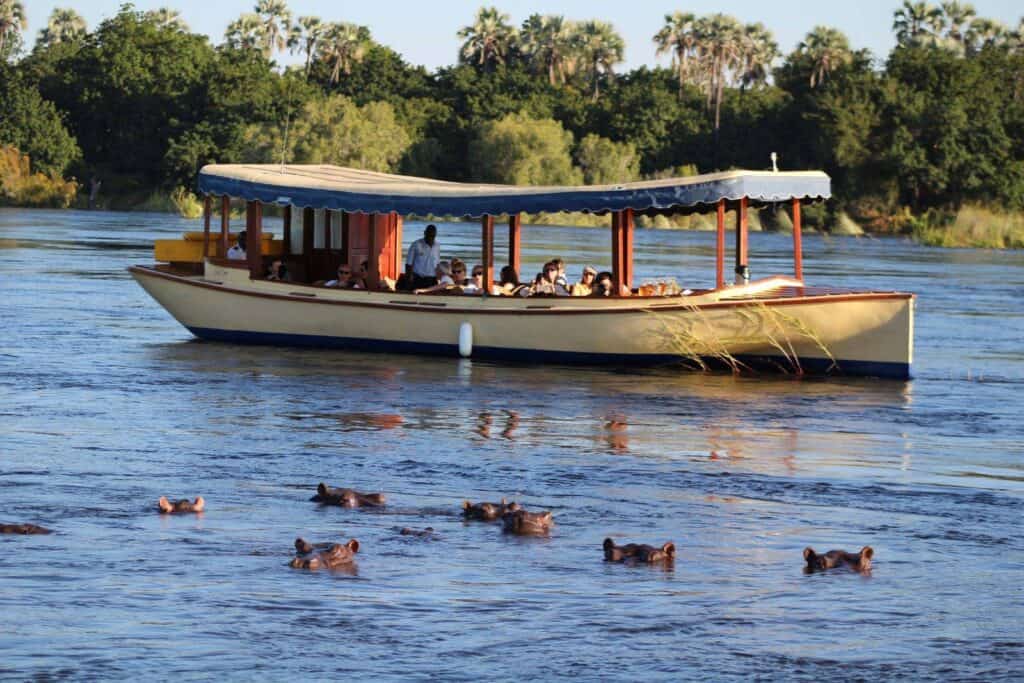
Sunset cruises operate on the upper Zambezi above the waterfall. These outings offer a calmer experience of the river and surrounding environment.
Wildlife may be seen along the riverbanks or in the water, but sightings depend on the conditions and movements of the animals.
Helicopter flights provide an aerial view of the waterfall and zigzagging gorges below. This can be especially useful when heavy spray makes the full formation difficult to appreciate from the ground.
Flight routes and durations vary, so compare what is included before booking. Flights are also weather-dependent.
Depending on current conditions, activities around Victoria Falls include white-water rafting, bungee jumping, gorge swings, ziplining and canoeing on suitable sections of the Zambezi.
Not every activity operates throughout the year. River levels and safety assessments can affect availability. Check age, weight, health and mobility requirements before booking.
Guided community experiences and cultural performances deepen the experience. Livingstone also has museums and historical sites for travellers spending time on the Zambian side.

Activity | Time to allow | Suitable for | Main consideration |
Guided Falls walk | 2–3 hours | Most travellers | Heavy spray during high water |
Zambezi sunset cruise | 2–3 hours | Couples, families, wildlife enthusiasts | Wildlife sightings vary |
Helicopter flight | Short flight plus transfers | Photographers and first-time visitors | Weather and additional costs |
Victoria Falls Bridge | 1–2 hours | Sightseeing and history | Border access arrangements |
White-water rafting | Half to full day | Active adventure travellers | Water levels and physical demands |
Devil’s Pool | Several hours including transfers | Eligible adventure travellers | Strict seasonal availability |
Craft markets | 1–2 hours | Cultural shopping and relaxed afternoons | Allow time to browse |
Chobe safari excursion | Full day | Wildlife enthusiasts | Border crossing and early departure |
For most visitors, a guided Falls walk, sunset cruise and one additional activity provide a satisfying introduction.
Trying to fit every attraction into two days usually makes the trip feel rushed.
Most visitors need between two and four days at Victoria Falls. This depends on whether you want to see the waterfall only or combine it with activities or a safari.
A short stay can work if Victoria Falls is one stop on a Southern African itinerary.
You should have enough time for the main Zimbabwean viewpoints and one additional activity, such as a sunset cruise.
Three days gives you a more comfortable amount of time. You can visit the falls and choose two or three activities.
This length also makes it more practical to cross to Zambia, provided your documents are in order. Alternatively, you could use the additional day for a river experience or nearby wildlife excursion.
A longer stay suits travellers who want to experience both sides and include several activities. Four or more days can also work when Victoria Falls forms part of a safari itinerary.

Accommodation in Victoria Falls ranges from affordable guesthouses to established hotels and safari-style lodges overlooking the surrounding bush or Zambezi River.
The right location matters as much as the accommodation category.
Some guests want to walk into town and visit the Falls independently. Others prefer a quieter lodge where they can spend afternoons beside the pool or watch wildlife near a waterhole.
Accommodation type | Main advantages | Things to consider | Usually suits |
Town-centre guesthouses | Convenient access to restaurants and activities | Less privacy and fewer resort facilities | Budget travellers and short stays |
Mid-range hotels and lodges | Comfortable facilities and organised transfers | Location and inclusions vary | Couples and families |
Safari-style lodges | Bush setting, wildlife atmosphere and quieter surroundings | Often require transfers into town | Wildlife enthusiasts and longer stays |
Riverside lodges | Scenic setting and relaxed atmosphere | Generally farther from the main attractions | Couples and luxury travellers |
Luxury hotels | Higher service levels, restaurants and established facilities | Higher accommodation costs | Special occasions and comfort-focused guests |
Town accommodation makes sense if convenience is important.
You are usually closer to restaurants, shops, activity collection points, and the entrance to Victoria Falls National Park.
This is particularly useful for travellers staying only two or three nights.
However, not every property advertised as being in Victoria Falls is within comfortable walking distance of the waterfall. Check the actual location before booking.
Safari-style accommodation gives visitors a different experience.
Some lodges overlook natural bushland or waterholes where wildlife may appear during the day.
These properties are often quieter than accommodation in the centre of town.
For guests combining sightseeing with relaxation, this can be worth the additional transfer time.
That depends on how much time you intend to spend at the property.
If your itinerary includes activities from morning until evening, a comfortable mid-range lodge may be all you need.
Luxury accommodation becomes more worthwhile when you want to enjoy the hotel itself, particularly on a honeymoon, special occasion, or longer stay.
A good view, comfortable facilities, and time to relax can matter more than adding another activity to an already busy itinerary.
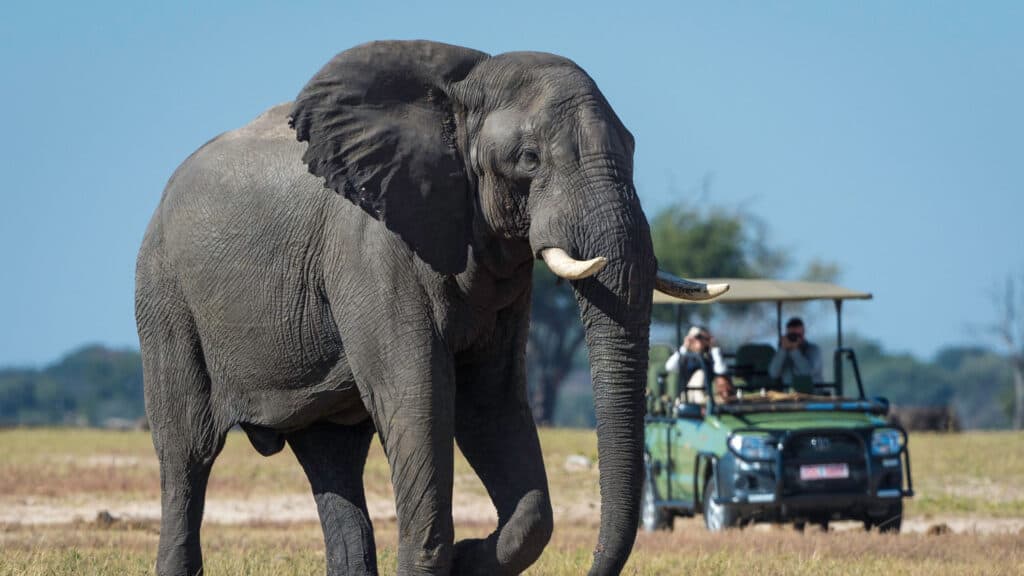
Yes. Victoria Falls works particularly well as part of a Southern African safari itinerary.
The waterfall is an excellent contrast to time spent in the bush. After several early mornings on game drives, many travellers enjoy a few days exploring the Falls, cruising the river and relaxing at their accommodation.
The most practical safari combinations depend on your available time.
Chobe National Park in northern Botswana is one of the most popular wildlife additions to a Victoria Falls holiday.
The Chobe River attracts elephants, buffalo, hippos, crocodiles and numerous bird species.
A day excursion can include a game drive and river-based wildlife viewing, depending on the operator and itinerary.
It is a long day, though.
Border formalities, road transfers and activity timings mean guests should expect an early start.
For travellers with more time, staying overnight in the Chobe area allows a more relaxed wildlife experience.
View our Chobe Safari packages
Hwange is Zimbabwe’s largest national park and offers a more traditional safari experience.
The park is known for its elephant populations, varied habitats, and wildlife viewing around waterholes, particularly during the drier months.
Unlike a short excursion to Chobe, Hwange generally deserves at least two or three nights.
The journey from Victoria Falls takes several hours depending on the lodge location and road conditions.
A longer stay allows more game drives and reduces the pressure of travelling in and out of the park.
Victoria Falls also fits naturally into longer Southern African holidays.
Many international travellers combine the Falls with destinations such as Kruger National Park, Cape Town or Botswana’s safari regions.
These itineraries usually involve flights and sometimes multiple border crossings, so the route should be planned around realistic travel times.
A good itinerary is not necessarily the one that includes the most destinations.
It is the one that gives you enough time to enjoy each place.

Most international travellers reach Victoria Falls by air, either directly through a regional connection or as part of a longer Southern African journey.
The two main airports are Victoria Falls International Airport in Zimbabwe and Harry Mwanga Nkumbula International Airport near Livingstone in Zambia.
Victoria Falls International Airport (VFA) is the main arrival point for travellers staying on the Zimbabwean side.
Regional air services connect Victoria Falls with selected Southern African destinations, although routes and frequencies change.
Travellers arriving from Europe, North America or other long-haul markets generally connect through a regional hub.
Check your full itinerary carefully, particularly if you have separate flight bookings.
Allow enough time for immigration, baggage collection, and any necessary transfers.
Livingstone is another useful gateway.
However, if your accommodation is in Zimbabwe, you will need to cross the international border.
This may involve additional visa requirements, transfer arrangements, and waiting time.
A flight that appears more convenient on paper is not always the easiest option once border logistics are included.
Pre-arranged airport transfers are often the simplest option for first-time visitors.
Your driver can meet you at the airport and take you directly to your accommodation.
Some Victoria Falls packages include transfers, while others charge separately.
Always confirm whether the transfer is private or shared, whether it covers both directions, and whether any cross-border arrangements are included.

Visa requirements depend on your nationality, the country you enter, and whether you plan to cross between Zimbabwe and Zambia.
Some travellers may qualify for visa-free entry, while others need to arrange a visa before departure or obtain one through an eligible entry process.
The KAZA Uni-Visa may be useful for eligible travellers visiting both Zimbabwe and Zambia, but it is not mandatory for every visitor and should not be assumed to be available at every entry point.
Before travelling, check:
Visa policies can change. Confirm the latest rules through the relevant immigration authorities or diplomatic missions rather than relying on older travel articles.
Victoria Falls is an established tourism destination that receives visitors from around the world.
Most travellers can explore the main tourist areas comfortably when taking normal precautions, although no destination is completely without risk.
The most important safety considerations are often practical rather than complicated.
The gorge is extremely deep, and conditions near the viewpoints can be slippery.
Stay on marked paths, follow park instructions, and avoid climbing barriers for photographs.
During high-water periods, heavy spray can make it difficult to see the ground clearly.
Good footwear matters.
Wild animals can occasionally move through areas around Victoria Falls, including roads and accommodation surroundings.
Elephants, baboons, and other animals should never be approached or fed.
Guests staying in lodges close to natural bushland should follow staff instructions, particularly after dark.
Bungee jumping, rafting, gorge activities, and seasonal swimming experiences involve varying degrees of risk.
Use reputable, appropriately licensed operators and ask about safety procedures before booking.
Be realistic about your fitness, swimming ability, and medical circumstances.
Keep valuables secure, use recognised transport services, and avoid walking alone in unfamiliar or poorly lit areas late at night.
If you are unsure about a route or neighbourhood, ask your accommodation staff.
Local advice is often more useful than relying on general assumptions about an entire country.

Victoria Falls can accommodate a range of budgets, but the total cost depends on accommodation, travel season, activities, and the number of days you stay.
The largest expenses are usually flights, accommodation and organised activities.
Entrance fees, visas, transfers and optional excursions can add to the overall cost.
Expense | What affects the price | Budget advice |
Accommodation | Location, comfort level, season, and room type | Compare what is included before booking |
Flights | Departure city, route, season, and booking date | Consider both regional gateways |
Falls entrance | Visitor category and current park tariffs | Confirm the latest official entrance fee |
Sunset cruise | Boat type, duration and inclusions | Check whether transfers and refreshments are included |
Helicopter flight | Flight duration and applicable fees | Compare the full cost, not only the advertised fare |
Adventure activities | Operator, activity type and safety arrangements | Choose established operators |
Safari excursions | Destination, transport, park fees and activities | Check border and visa costs |
Meals | Hotel meal plan and restaurant choices | Breakfast-inclusive accommodation can help |
Transfers | Distance, vehicle type, and shared or private service | Pre-book when practical |
A lower advertised package price does not always mean better value.
One itinerary may include airport transfers, park fees and a sunset cruise, while another may charge for these separately.
Before booking, compare the total amount you are likely to spend.
Start with the number of nights and the accommodation level you are comfortable with.
Then choose two or three activities that genuinely interest you.
There is little point in saving on accommodation if you then spend more than expected on transfers, meals, and activities that were not included.
Equally, not everyone needs an expensive hotel.
For guests who plan to spend most of their time exploring, a well-located mid-range property can be very good value.

Packing for Victoria Falls is straightforward, but the waterfall spray catches many first-time visitors by surprise.
Even on a sunny day, the rainforest path can be wet.
If you are combining Victoria Falls with a safari, neutral-coloured clothing and a warm jacket for early game drives are useful.
There is no need to pack an entirely separate wardrobe for each destination.

Most disappointing Victoria Falls experiences come down to expectations and planning rather than the destination itself.
The Falls do not look the same throughout the year.
High water brings enormous spray and powerful flow, while lower water reveals more of the gorge.
Check seasonal conditions before deciding when to travel.
Zimbabwe and Zambia provide different perspectives.
The Zimbabwean side generally offers more extensive views across the waterfall, particularly when the river is low.
If the waterfall itself is your main priority, choose your base accordingly.
It is tempting to fill every available hour.
However, airport transfers, border crossings, and activity collection times can make a short itinerary feel surprisingly busy.
Allow some time to enjoy the setting.
Entrance fees, transfers, visas, and optional activities are not always included in package prices.
Read the inclusions carefully.
Devil’s Pool, rafting, and certain river experiences depend on water levels and safety conditions.
Book with some flexibility where possible and have an alternative activity in mind.
A Chobe excursion or visit to Zambia involves international travel.
Border formalities can take longer than expected, particularly during busy periods.
Avoid planning tight onward connections on the same day.

Victoria Falls is often included in a safari holiday, but it offers a very different experience from spending time in a national park.
The waterfall is the main attraction. Wildlife, river activities and adventure experiences add variety, but they are not the primary reason most people visit.
This makes Victoria Falls a useful addition to a longer journey.
A few days at the Falls can provide a change of pace after early-morning game drives in Kruger, Chobe or Hwange.
It also suits travellers who want to experience Southern Africa’s natural landscapes without spending their entire holiday on safari.
Destination | Main attraction | Recommended time | Usually suits |
Victoria Falls | Waterfall, scenery, river cruises, and adventure | 3–4 days | First-time visitors, couples and families |
Chobe National Park | Elephant sightings, river safaris and game drives | 2–3 nights | Wildlife enthusiasts and photographers |
Hwange National Park | Traditional game drives and varied wildlife habitats | 3–4 nights | Travellers wanting a longer safari experience |
For travellers with limited time, Victoria Falls and Chobe can work well together.
With a week or more available, adding several nights in Hwange or another safari destination often creates a more relaxed and rewarding itinerary.
MoAfrika Tours has been introducing travellers to Southern Africa’s wildlife destinations for over two decades.
Our local safari specialists and professional guides help guests plan experiences that suit their interests, available time and travel budget.
For Victoria Falls, that means looking beyond the number of days in a package.
The right arrangement depends on when you are travelling, where you want to stay, which activities interest you and whether you intend to visit nearby safari destinations.
Some travellers prefer a comfortable hotel close to town with a guided Falls visit and sunset cruise.
Others want a safari-style lodge, additional activities, and time to explore Chobe or Hwange.
Neither approach is automatically better.
The important thing is choosing a trip that gives you enough time to enjoy the experiences that matter to you.
For a first-time visit, we generally suggest:
If you have already spent several days on safari elsewhere, you may not need another full-day wildlife excursion.
A quieter afternoon overlooking the Zambezi can be just as worthwhile.
⭐⭐⭐⭐⭐
Savvy M. – USA
“My husband and I had the trip of a lifetime thanks to MoAfrika Tours. We are seasoned travelers but had never been to this part of the world (South Africa, Zimbabwe, and Zambia). The various packages had options offered by this tour company gave us a lot to think about while also making the task of planning a trip like this quite manageable. The main liaison for the trip (Ruben) was very responsive and went as far as to contact us while the trip was underway to ensure everything was going well. The sister company that assisted us in Zimbabwe (Wild Horizons) was also excellent (especially Wilma). Every tour guide and driver we encountered on this trip truly added something positive and something special. I cannot possibly thank everyone enough for making this a wonderful experience.”

Victoria Falls is worth visiting for more than the size of the waterfall.
There is something unusual about standing beside a river that appears relatively calm upstream, then watching it disappear into a gorge with enough force to send mist high above the surrounding landscape.
The experience changes with the seasons. Some visitors remember the roar of the Falls at high water. Others prefer the clearer views, exposed rock formations and activities available when the river is lower.
For most travellers, three or four days is enough to appreciate the destination without rushing.
If you are planning a longer Southern African holiday, Victoria Falls also combines naturally with wildlife experiences in Botswana, Zimbabwe and South Africa.
The right trip is not about fitting in every activity. It is about choosing the experiences you will genuinely enjoy and allowing enough time for them.
Explore MoAfrika’s Victoria Falls tours and safaris or speak to our travel team about the accommodation, activities and length of stay that suit your plans.
Victoria Falls lies on the border between Zimbabwe and Zambia. The Zambezi River forms the boundary, and both countries offer access to the waterfall. Zimbabwe generally has more extensive viewpoints across the main Falls, while Zambia offers different perspectives and certain seasonal activities.
April and May are often good months for seeing powerful water flow, although heavy spray can obscure the view. June to August can offer a useful balance between waterfall volume and visibility. Travellers interested in exposed rock formations or seasonal activities may prefer lower-water months.
Three to four days is usually enough for a first visit. This allows time to see the Falls, enjoy a Zambezi cruise, and choose an additional activity. Five days makes sense if you want a Chobe excursion or a more relaxed stay.
For most first-time visitors, Zimbabwe is the more practical choice because it offers extensive waterfall viewpoints and accommodation close to the main attractions. Zambia is worth considering for Livingstone Island, Devil’s Pool and alternative views of the Falls.
Yes. Victoria Falls is a year-round destination, although water levels change considerably. High-water months bring powerful spray, while lower-water months reveal more of the gorge. Certain activities operate only when river conditions are suitable.
Yes, wildlife can sometimes be seen along the Zambezi River and in the surrounding protected areas. Hippos, crocodiles, elephants, and various bird species may be encountered, although sightings are unpredictable. Travellers wanting dedicated game drives should consider Chobe or Hwange.
Yes. Families can enjoy the waterfall viewpoints, river cruises, and suitable sightseeing activities. Parents should supervise children closely around the gorge and choose age-appropriate activities. Some adventure experiences have minimum age, weight, or fitness requirements.
Yes. Chobe is a popular day excursion from Victoria Falls. Trips generally involve an early departure, a border crossing into Botswana, and wildlife activities. Travellers who want more time on safari may prefer to stay overnight in the Chobe area.
Yes. Crossing between Zimbabwe and Zambia is an international border crossing, so you need valid travel documents. Visa requirements depend on your nationality and circumstances. Check the latest entry and re-entry rules before travelling.
Yes. Lower water reveals more of the gorge and rock formations, which many photographers appreciate. However, parts of the waterfall, particularly on the Zambian side, may have little or no flowing water. Knowing what to expect makes a big difference.




WhatsApp Now