
Kruger National Park Safaris
Pilanesberg Safaris
Johannesburg Tours
Cape Town Tours
Garden Route Tours
Southern Africa Tours
Victoria Falls Packages
Botswana Safaris
Namibia Safaris
Uganda Safaris
Kenya and Tanzania Safaris
Indian Ocean Islands Packages
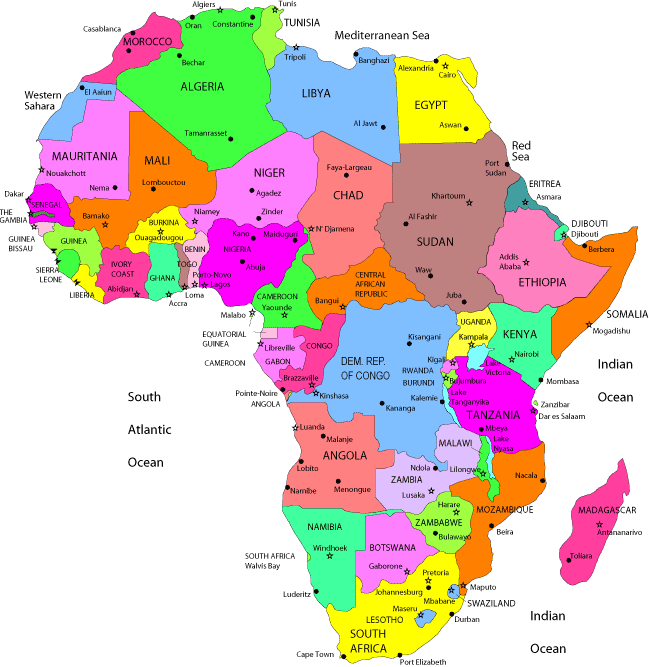
Africa has 54 countries recognised as members of the United Nations, but you may have seen the number 55 mentioned elsewhere. Both figures make sense, and the difference depends on how Western Sahara is classified.
Africa is the world’s second-largest continent, covering approximately 30.3 million square kilometres, including its islands. It stretches from the Mediterranean coastline in the north to the Cape of Good Hope in South Africa, with deserts, tropical forests, mountain ranges, grasslands and some of the world’s most remarkable wildlife areas in between.
For travellers planning a visit, it helps to understand that Africa is not one destination. Each country has its own history, cultures, landscapes and travel requirements. A safari in Botswana’s Okavango Delta, for example, feels very different from exploring the Serengeti in Tanzania or visiting Cape Town in South Africa.
Africa has 54 countries that are members of the United Nations. The African Union has 55 member states because it also recognises the Sahrawi Arab Democratic Republic, which claims sovereignty over the disputed territory of Western Sahara.
The difference is not because a new country has recently joined Africa. It comes from the way different international organisations recognise states.
Organisation or classification | Number of African countries | Explanation |
United Nations | 54 | African sovereign states with UN membership |
African Union | 55 | Includes the Sahrawi Arab Democratic Republic |
UN M49 geographical classification | 54 UN member states | Also identifies Western Sahara as a separate geographical area |
Common school and geography references | Usually 54 | Generally follows UN membership |
South Sudan is Africa’s newest UN member country, having gained independence from Sudan on 9 July 2011.
The easiest answer to remember is 54 countries in Africa, or 55 African Union members.

Below are Africa’s 54 UN member countries, listed alphabetically, along with their capitals and geographical regions.
Some countries have more than one capital or divide government functions between different cities. South Africa is a well-known example, with Pretoria, Cape Town and Bloemfontein serving different functions.
Country | UN geographic region |
Algeria | North Africa |
Angola | Central Africa |
Benin | West Africa |
Botswana | Southern Africa |
Burkina Faso | West Africa |
Burundi | East Africa |
Cabo Verde | West Africa |
Cameroon | Central Africa |
Central African Republic | Central Africa |
Chad | Central Africa |
Comoros | East Africa |
Congo (Republic of the Congo) | Central Africa |
Côte d’Ivoire | West Africa |
Democratic Republic of the Congo | Central Africa |
Djibouti | East Africa |
Egypt | North Africa |
Equatorial Guinea | Central Africa |
Eritrea | East Africa |
Eswatini | Southern Africa |
Ethiopia | East Africa |
Gabon | Central Africa |
Gambia | West Africa |
Ghana | West Africa |
Guinea | West Africa |
Guinea-Bissau | West Africa |
Kenya | East Africa |
Lesotho | Southern Africa |
Liberia | West Africa |
Libya | North Africa |
Madagascar | East Africa |
Malawi | East Africa |
Mali | West Africa |
Mauritania | West Africa |
Mauritius | East Africa |
Morocco | North Africa |
Mozambique | East Africa |
Namibia | Southern Africa |
Niger | West Africa |
Nigeria | West Africa |
Rwanda | East Africa |
São Tomé and Príncipe | Central Africa |
Senegal | West Africa |
Seychelles | East Africa |
Sierra Leone | West Africa |
Somalia | East Africa |
South Africa | Southern Africa |
South Sudan | East Africa |
Sudan | North Africa |
Tanzania (United Republic of Tanzania) | East Africa |
Togo | West Africa |
Tunisia | North Africa |
Uganda | East Africa |
Zambia | East Africa |
Zimbabwe | East Africa |
Some names are different from those on older maps. Eswatini was previously called Swaziland, while Cabo Verde is often known in English as Cape Verde. Côte d’Ivoire is also known to many people as Ivory Coast.
The two Congos are separate countries: the Republic of the Congo and the Democratic Republic of the Congo. Sudan and South Sudan are also separate states.

The difference usually comes from membership rules or the treatment of disputed political entities. A geographic list can also include territories that are not independent countries.
What is being counted? | How to interpret the total |
African UN member states | The standard count of 54 countries used in this guide |
African Union members | 55 members, including the Sahrawi Arab Democratic Republic |
Countries and territories | A broader list that can include dependencies and other non-sovereign areas |
Disputed political entities | Totals depend on which entities the source includes and its stated recognition criteria |
A sovereign state is an independent political entity. UN membership and African Union membership are membership categories, while diplomatic recognition is granted by individual states. These concepts are related, but they aren’t interchangeable.
Western Sahara’s final status is still disputed. The UN has listed Western Sahara as a Non-Self-Governing Territory since 1963.
The African Union includes the Sahrawi Arab Democratic Republic among its 55 members. It is not a UN member state. This explains the usual difference between the 54-country UN-member-state count and the AU’s 55-member total.
Somaliland is not included in the 54-country UN-member-state count and is not an African Union member. Somaliland declared independence from Somalia in 1991 and operates its own administration, but its status is still disputed.
Israel announced recognition of Somaliland on 26 December 2025, so older statements that it’s recognised by no country are outdated. The African Union continues to support Somalia’s unity and territorial integrity. That recognition doesn’t change the UN-member-state count used here.
An area can be geographically associated with Africa without being an independent African country. Réunion, for example, is part of France, while Saint Helena is part of a UK overseas territory.

Africa is divided into Northern, Western, Middle, Eastern and Southern Africa. In everyday language, these are usually called North, West, Central, East and Southern Africa.
Regional boundaries depend on the organisation. The UN places Zambia and Zimbabwe in Eastern Africa, for instance, while the African Union groups them in Southern Africa. Travel guides also commonly use a broader definition of Southern Africa.
For readers exploring destinations, MoAfrika’s South Africa, Namibia and Kenya pages give country-specific starting points.
Africa covers approximately 30 million square kilometres and is the world’s second-largest continent. Africa’s geography includes mainland countries and island states in both the Atlantic and Indian oceans.
The Mediterranean lies to its north, the Atlantic to its west and the Indian Ocean to its east. Africa crosses the equator, extending into both the Northern and Southern hemispheres.
Algeria is Africa’s largest country by total surface area. The five largest are:
Rank | Country |
1 | Algeria |
2 | Democratic Republic of the Congo |
3 | Sudan |
4 | Libya |
5 | Chad |
Seychelles is Africa’s smallest sovereign country by surface area, at approximately 457 km² in the UN Demographic Yearbook 2024. Seychelles is an island state in the Indian Ocean. The smallest country on the African mainland is Gambia, at approximately 11,295 km².
São Tomé and Príncipe, Mauritius, Comoros and Cabo Verde are also among Africa’s smallest countries by area.
Nigeria is Africa’s most populous country, with an estimated population of more than 230 million people in 2025.
Nigeria’s largest city, Lagos, is one of Africa’s major commercial and cultural centres, while Abuja is the country’s capital.
Other highly populated African countries include Ethiopia, Egypt, the Democratic Republic of the Congo and Tanzania.
Population estimates change every year. For accurate comparisons, it is better to use a consistent source such as the United Nations World Population Prospects rather than combining figures from different years.
Africa as a whole had approximately 1.55 billion inhabitants in 2025, making it the world’s second-most-populous continent after Asia.
Its population is also relatively young, with many countries experiencing significant demographic growth.
South Sudan is Africa’s newest internationally recognised country.
It gained independence from Sudan on 9 July 2011 following a referendum in which an overwhelming majority voted for independence.
South Sudan became a member of the United Nations on 14 July 2011 and subsequently joined the African Union.
Its capital is Juba.
Independence marked an important moment in African history, although the country has since faced serious political, economic and humanitarian challenges.
South Sudan’s independence also changed Africa’s geography. Sudan became smaller, Algeria became the continent’s largest country, and the number of African UN member countries increased from 53 to 54.
Using the World Bank’s GDP in current US dollars for 2024, the five largest African economies were:
Rank | Country | Nominal GDP, 2024 |
1 | South Africa | US$401.1 billion |
2 | Egypt | US$389.1 billion |
3 | Algeria | US$269.3 billion |
4 | Nigeria | US$252.3 billion |
5 | Morocco | US$160.6 billion |
No. A large economy can reflect a large population, and total GDP doesn’t show how income is distributed. Household living standards and poverty measures each give different information.
Exchange-rate movements can also change a country’s position in a US-dollar ranking. This is why “largest economies” is a more accurate description of the table than “richest countries”, and why a low total GDP should not be treated as evidence that a country is the poorest.
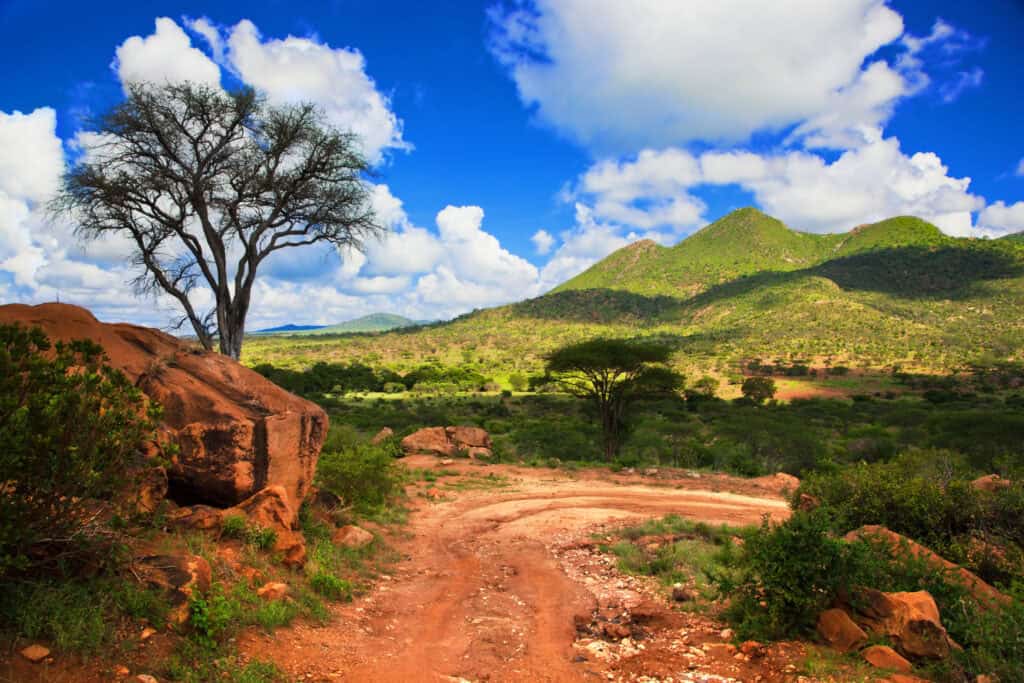
Africa’s countries differ enormously in size, population, language, climate, and geography.
Here are a few facts that help put the continent into perspective.
Fact | Answer |
Number of African UN member countries | 54 |
Number of African Union member states | 55 |
Largest country by area | Algeria |
Smallest sovereign country by area | Seychelles |
Smallest mainland country | The Gambia |
Most populous country | Nigeria |
Newest UN member country | South Sudan |
Highest mountain | Mount Kilimanjaro, Tanzania |
Largest lake by surface area | Lake Victoria |
Largest hot desert | Sahara Desert |
Longest river traditionally recognised in Africa | Nile River |
Most widely spoken languages | Varies by first-language and total-speaker measures |
Africa is home to more than 2,000 languages, although estimates vary depending on how languages and dialects are classified.
Arabic, Swahili, Hausa, Amharic, Yoruba, and Zulu are among the many widely spoken African languages.
English, French, and Portuguese are also used in numerous countries, often alongside indigenous languages.
South Africa alone has 12 official languages, including South African Sign Language.
For travellers, language use can change considerably within the same country. English may be common in major tourism centres, while local languages dominate in rural communities.
Africa has 16 landlocked countries, meaning they do not have direct access to the sea.
They are Botswana, Burkina Faso, Burundi, Central African Republic, Chad, Eswatini, Ethiopia, Lesotho, Malawi, Mali, Niger, Rwanda, South Sudan, Uganda, Zambia and Zimbabwe.
Being landlocked does not mean a country lacks rivers, lakes or wetlands.
Botswana, for example, is home to the Okavango Delta, one of Africa’s most remarkable inland wetland systems.
Africa includes several sovereign island countries:
Madagascar is the largest of these island countries and is especially well known for its unique wildlife, including lemurs.
Many species found in Madagascar occur naturally nowhere else on Earth.
Not all 54 African countries are traditional safari destinations.
For travellers interested in wildlife, a smaller group of countries has particularly well-established national parks, reserves, safari lodges, and guiding infrastructure.
Some of the most recognised safari destinations are found in Southern and Eastern Africa.
Country | Well-known safari destination | What travellers can expect |
South Africa | Kruger National Park | Big Five game drives, varied accommodation and accessible safari options |
Botswana | Okavango Delta and Chobe | Wetland safaris, elephants and quieter wilderness areas |
Kenya | Maasai Mara | Open grasslands, big cats and seasonal migration activity |
Tanzania | Serengeti and Ngorongoro | Extensive savannah ecosystems and diverse wildlife |
Namibia | Etosha National Park | Waterhole viewing and open landscapes |
Zimbabwe | Hwange National Park | Elephant populations and varied game viewing |
Zambia | South Luangwa National Park | Guided walking safaris and river-based wildlife habitats |
Uganda | Bwindi Impenetrable National Park | Mountain gorilla trekking |
Rwanda | Volcanoes National Park | Guided mountain gorilla trekking |
The right destination depends on what you want from your trip.
South Africa is often a practical starting point for first-time safari travellers because it offers a wide choice of accommodation, established road infrastructure and both guided and self-drive options.
Botswana appeals to travellers who want more remote wilderness areas, although safari costs can be higher in certain concessions.
Kenya and Tanzania are particularly well known for their savannah ecosystems and the seasonal movements of wildebeest and zebra.
Wildlife sightings are never guaranteed. Seasons, rainfall, animal movements, and the amount of time spent on safari all influence what guests may see.

For travellers visiting Africa for the first time, it often makes sense to choose one country and explore it properly rather than trying to fit several destinations into a short holiday.
A few days in Kruger National Park, for example, gives guests more time to settle into the rhythm of game drives.
Travelling between too many countries can leave surprisingly little time for the experiences that brought you to Africa in the first place.
If you have two or three weeks available, combining destinations can work well. South Africa and Botswana, or South Africa and Victoria Falls in Zimbabwe, are examples of journeys that can offer different landscapes and experiences.
MoAfrika Tours is an owner-run South African safari operator with more than two decades of experience introducing travellers to the region. Our local safari specialists and professional guides help guests choose experiences that suit their time, interests and budget.
The important part is choosing destinations that work together, rather than simply collecting countries on a map.
Africa has 54 UN member countries, but a country count tells only a small part of the continent’s story.
The landscapes of Namibia are very different from the forests of Central Africa. The wildlife areas of Kenya and Tanzania have their own seasonal rhythms, while South Africa offers everything from mountain scenery and coastal routes to Big Five safaris.
For travellers, there is no need to try to see everything in one journey.
A well-planned visit to one or two countries often gives you more time to appreciate the places, wildlife and people you have travelled so far to experience.
If you’re considering a safari, explore MoAfrika Tours’ African safari options, or learn more about travelling in South Africa, Botswana and Kenya.
Our safari team can help you work out which destinations suit your travel dates, interests and budget.
Africa has 54 countries that are members of the United Nations. The African Union has 55 member states because it also includes the Sahrawi Arab Democratic Republic, which claims independence in Western Sahara.
The difference comes from the African Union’s recognition of the Sahrawi Arab Democratic Republic. It is an African Union member but not a United Nations member state.
The standard count is 54 UN member countries or 55 African Union member states. A count of 56 is not an official UN or African Union total and may result from including additional territories or self-declared states.
Algeria is Africa’s largest country, covering approximately 2.38 million square kilometres. It became the largest after South Sudan separated from Sudan in 2011.
Seychelles is the smallest sovereign African country by land area. If you are considering mainland Africa only, The Gambia is the smallest country.
Nigeria has the largest population in Africa, with more than 230 million inhabitants estimated in 2025. Ethiopia and Egypt are also among the continent’s most populous countries.
South Africa is a country at the southern end of the continent. Southern Africa is also the name of a geographical region that includes South Africa and several neighbouring countries.
Yes. Madagascar is an independent African island country in the Indian Ocean, off the southeastern coast of the continent. It is included in the UN’s Eastern Africa geographical region.
Egypt is primarily in northeastern Africa, although the Sinai Peninsula lies geographically in Asia. Egypt is therefore considered a transcontinental country.
South Sudan became independent from Sudan on 9 July 2011. It is the newest African country to join the United Nations.



WhatsApp Now