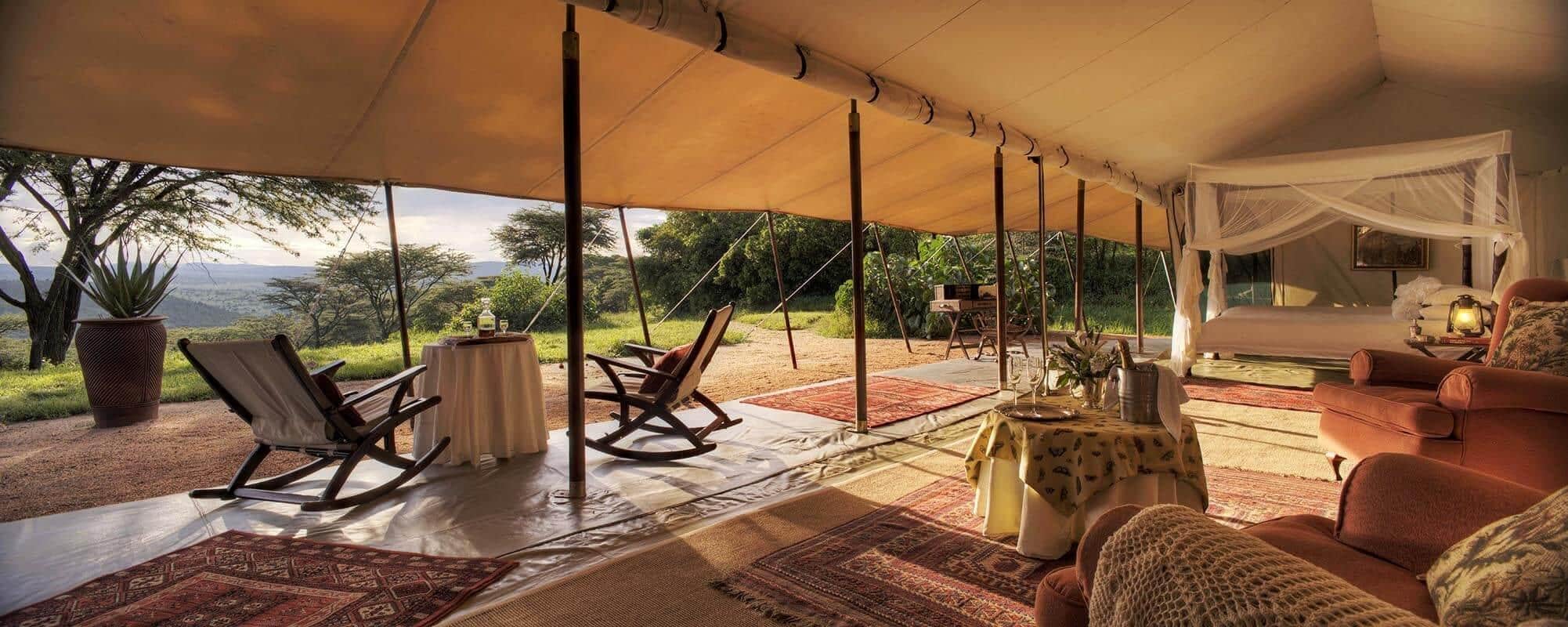
Best Areas in Kruger National Park for Leopard Sightings
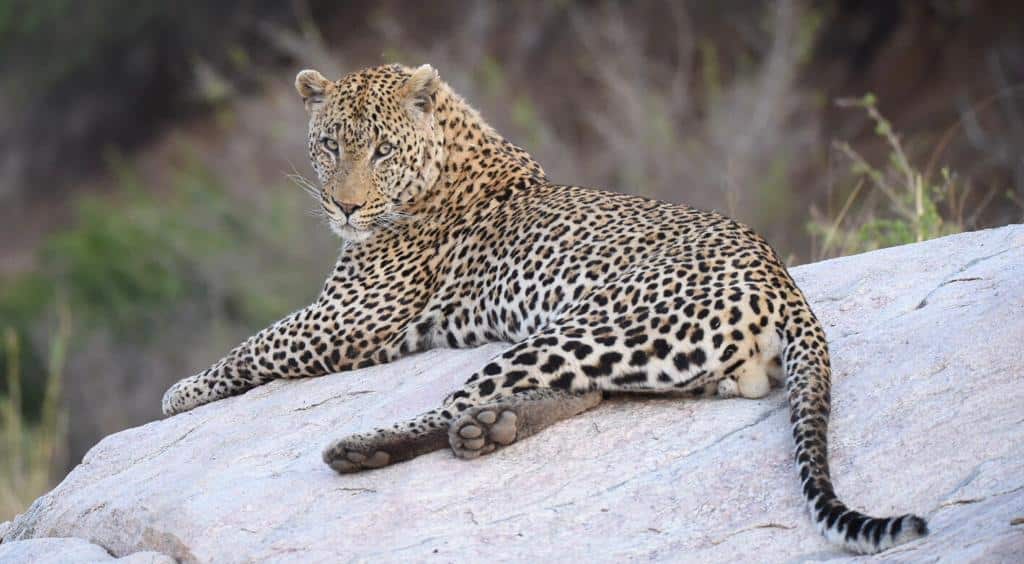
Apart from everything there is to see, one thing is what many leave Kruger talking about, the leopard. It might be sprawled on a tree branch, a form crossing the road in front, or a few seconds of movement before it vanishes into the bush. That brief interaction frequently becomes the story people repeat for months to come.
No leopard sighting ever completely lives up to our imagination of it. Which is why leopards make an impression.
First-time visitors sometimes think that every part of the park has the same probability of spotting one. Leopard activity distribution is not uniform across Kruger.
Food sources, nearby cover, and roadways are often all taken into account as to where sightings occur more consistently. The leopard areas in Kruger generally comprise:
- River systems
- Dense vegetation
- Large trees
- Strong prey populations
- Productive predator road networks
The best overall leopard territory for most visitors is still southern Kruger.
Comparing The Best Leopard Areas in Kruger
🧡Kruger Region | 💯 Leopard Sightings Quality | 🍃Best Season | 🍂Habitat Type | 🏠Best Nearby Camp |
Lower Sabie | Outstanding | Year-round | Riverine woodland | Lower Sabie |
Skukuza Region | Excellent | Year-round | River systems | Skukuza |
Berg-en-Dal | Very Good | Summer | Rocky bushveld | Berg-en-Dal |
Satara Surroundings | Very Good | Dry season | Mixed savannah | Satara |
Crocodile Bridge Area | Good | Dry season | Open grassland & rivers | Crocodile Bridge |
Letaba Region | Moderate | Summer | Riverine forest | Letaba |
Lower Sabie and Skukuza regularly offer the greatest overall leopard safari experiences for first-time tourists.

Why Leopards Thrive in Certain Kruger Areas
Leopards prefer habitats that provide:
- Thick cover
- Large trees
- River access
- Strong prey populations
- Quiet hunting zones
Unlike lions, leopards rely heavily on stealth and camouflage.
This makes riverine ecosystems especially important.
Ideal Leopard Habitat Features
🍂Habitat Feature | ✅Why It Matters |
River systems | Reliable prey and water |
Dense bush | Ambush cover |
Large trees | Resting and feeding |
Impala populations | Reliable prey source |
Quiet roads | Less disturbance |
Southern Kruger’s river systems create nearly perfect leopard territory.
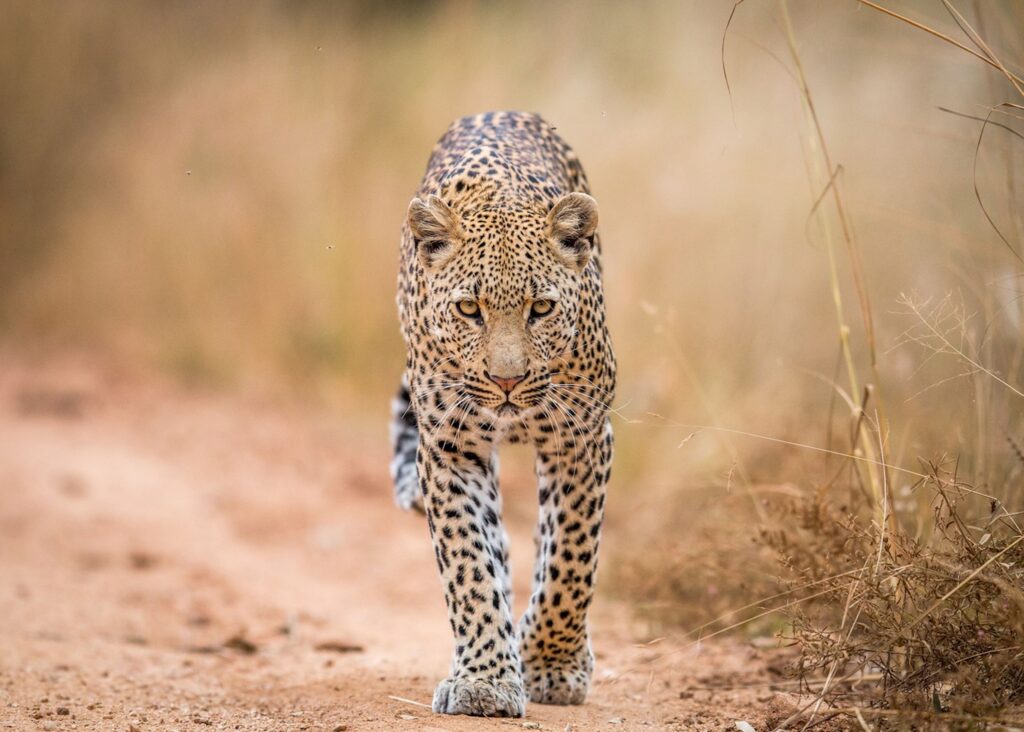
Lower Sabie — Best Overall Leopard Area in Kruger
Why Lower Sabie Is Legendary for Leopards
Lower Sabie consistently produces some of Africa’s best leopard sightings.
The Sabie River ecosystem supports:
- Dense prey concentrations
- Mature riverine trees
- Excellent cover
- High predator density
Leopards are regularly seen:
- Resting in trees
- Walking on roads at dawn
- Hunting near riverbeds
- Crossing bridges
Leopard Sightings Near Lower Sabie
🎉Leopard Activity | ⭐Frequency |
Tree sightings | Excellent |
Road sightings | Excellent |
Hunting behaviour | Very Good |
Daytime sightings | Good |
Best Leopard Roads Near Lower Sabie
🚗Road | 🌟Leopard Potential |
H4-1 | Outstanding |
S28 | Excellent |
H10 | Very Good |
River loops | Excellent |
Best For
- First-time leopard safaris
- Leopard photography
- Big Five safaris
- Sunrise predator drives
Limitations
❗Limitation | ⚠️Impact |
Popular safari area | Busy sightings |
High demand accommodation | Early booking needed |
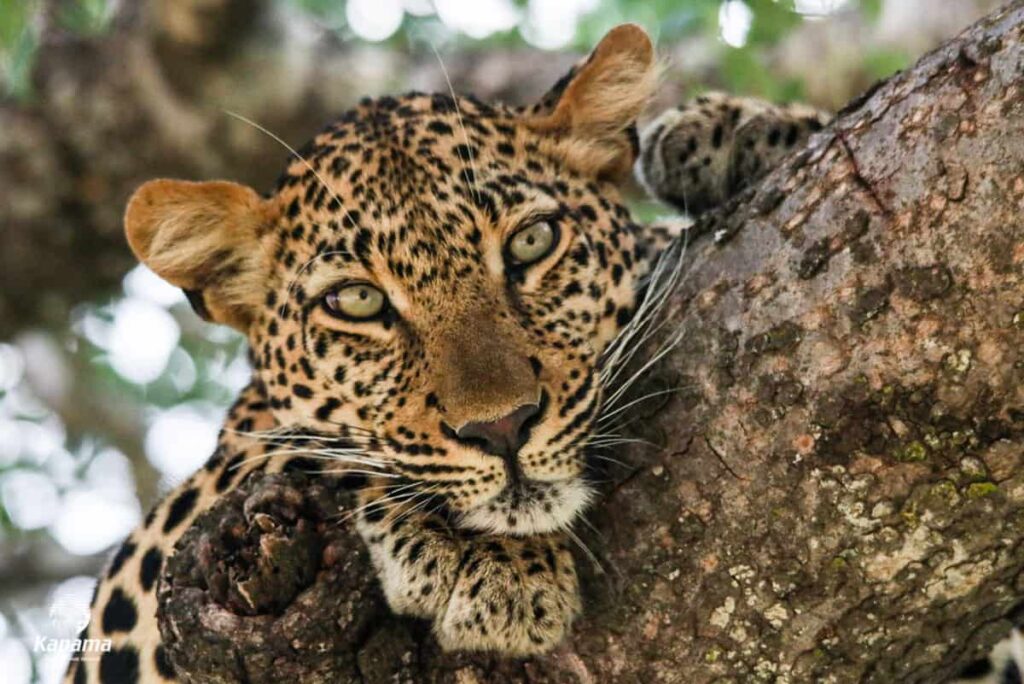
Skukuza Region — Best Leopard Diversity Area
Why Skukuza Produces Reliable Leopards
The Skukuza region combines:
- Multiple river systems
- Dense woodland
- High prey density
- Extensive safari roads
This creates an outstanding all-around predator territory.
Leopard Sightings Near Skukuza
🎉Leopard Activity | ⭐Frequency |
General sightings | Excellent |
Tree leopards | Very Good |
Night movement | Excellent |
Predator interactions | Good |
Best Leopard Roads Near Skukuza
🚗Road | 🌟Leopard Potential |
H4-1 | Outstanding |
S65 | Excellent |
H1-2 | Very Good |
River roads | Excellent |
Best For
- Flexible safari itineraries
- Mixed predator safaris
- Repeat game drives
- Leopard-focused photography
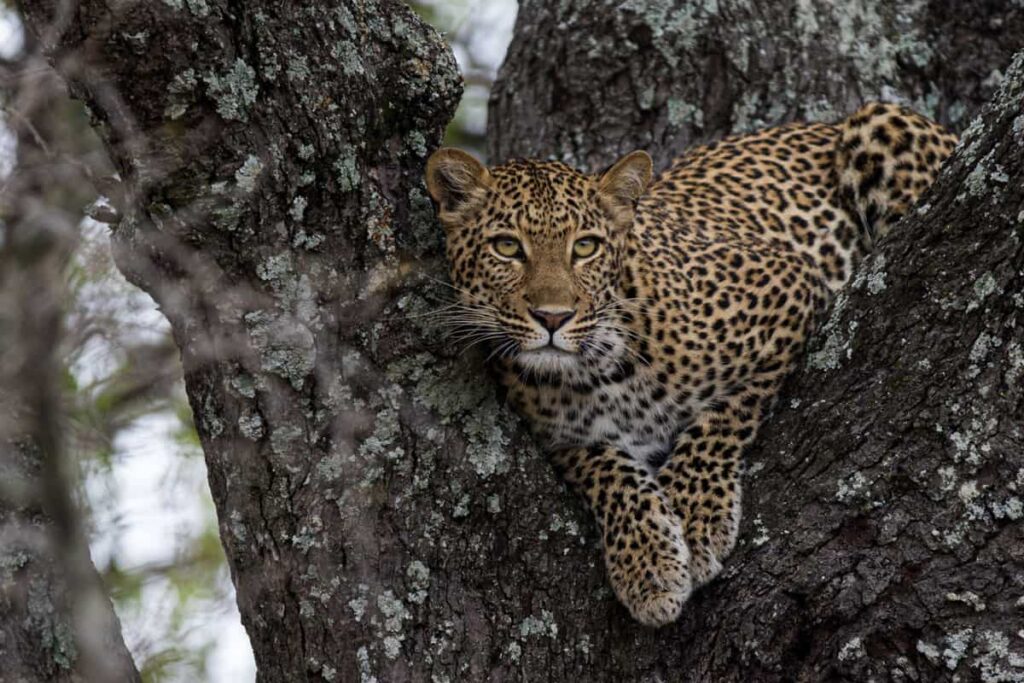
Berg-en-Dal — Best Scenic Leopard Region
Why Berg-en-Dal Is Underrated
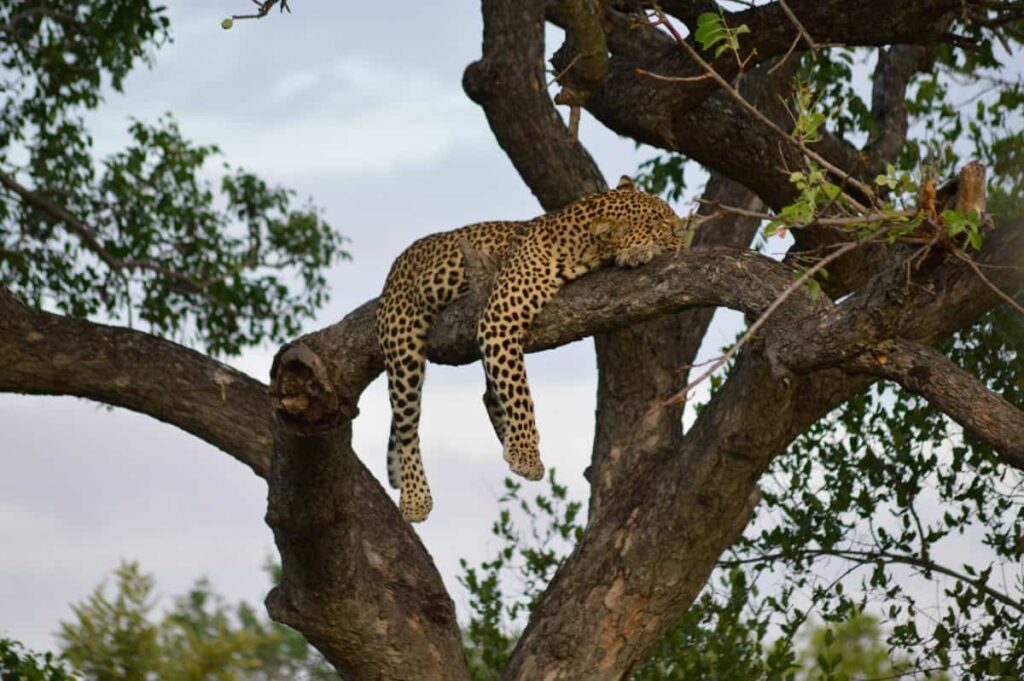
Berg-en-Dal’s rocky surroundings with thicker bushveld naturally attract many leopards.
The region feels:
- More secluded
- Less crowded
- More wilderness-focused
Leopards are commonly found in rocky hills and areas with dense vegetation.
Leopard Sightings Near Berg-en-Dal
🎉Leopard Activity | ⭐Frequency |
Bush sightings | Very Good |
Rocky habitat sightings | Excellent |
Tree sightings | Moderate |
Best For
- Scenic safaris
- Quiet leopard safaris
- Summer safaris
- Photographers seeking unique backgrounds
Limitations
❗Limitation | ⚠️Impact |
Lower general predator density | Fewer lion sightings |
Thicker vegetation | Harder visibility |
Satara Region — Best for Leopard and Lion Combination
Why Satara Is Better Than Most Visitors Expect
Although Satara is famous for lions, the surrounding mixed habitats also support strong leopard populations.
Leopards here often use:
- Drainage lines
- Bush thickets
- Open-edge habitats
Leopard Sightings Near Satara
🎉Leopard Activity | ⭐Frequency |
Road sightings | Good |
Early morning movement | Excellent |
Predator overlap | Very Good |
Best For
- Combined lion & leopard safaris
- Dry-season predator safaris
- Open-environment sightings
Crocodile Bridge Region — Best for Open Leopard Viewing
Why This Region Works Well
The Crocodile Bridge region combines:
- Open visibility
- Productive prey areas
- Mixed predator habitats
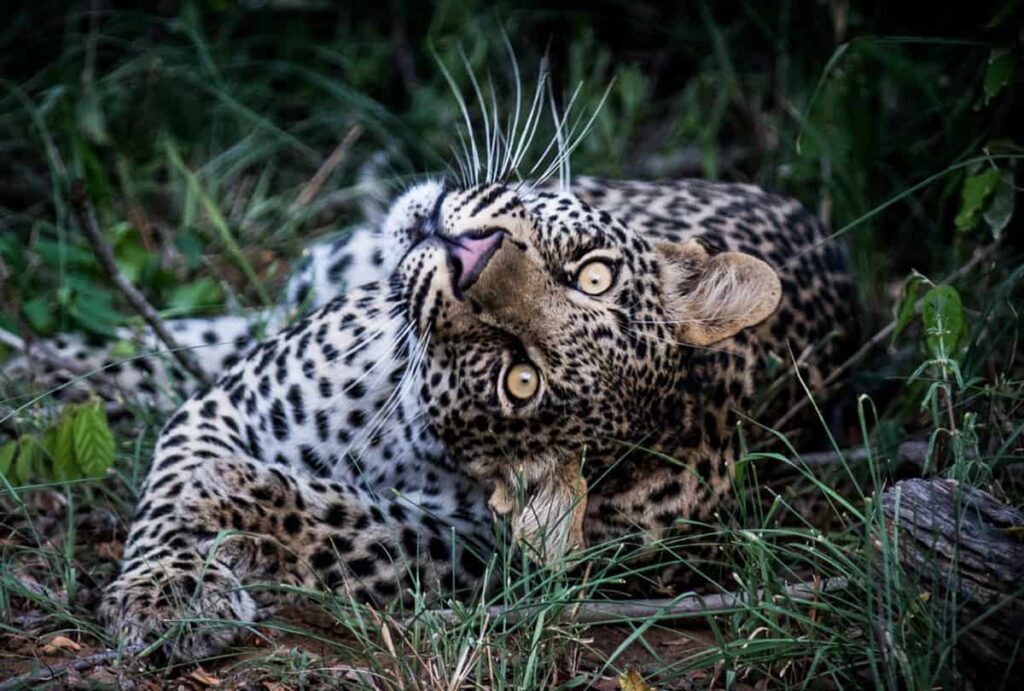
Leopards are slightly easier to spot here because the vegetation is more open than in riverine regions.
Leopard Sightings Near Crocodile Bridge
🎉Leopard Activity | ⭐Frequency |
Open-road sightings | Good |
Sunrise movement | Excellent |
Hunting activity | Good |
Best For
- Beginner safari travellers
- Predator-focused safaris
- Open-environment photography
Best Time for Leopard Sightings in Kruger
Dry Season (May–September)
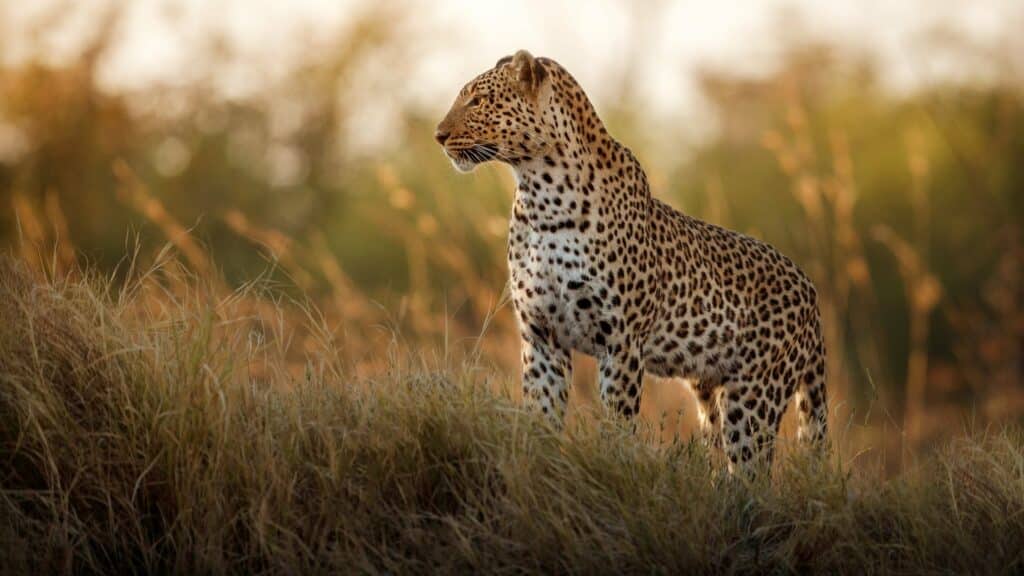
Dry season generally improves leopard sightings because:
- Vegetation becomes thinner
- Visibility improves
- Animals use roads more frequently
- Water sources become important gathering areas
Dry Season Leopard Advantages
💯 Advantage | ✅Benefit |
Easier spotting | Sparse vegetation |
Better photography | Cleaner backgrounds |
Cooler temperatures | Increased activity |
Green Season (October–April)
The green season still provides excellent leopard sightings, especially in river systems.
However:
- Visibility decreases
- Vegetation thickens
- Leopards become harder to spot quickly
Best Time of Day for Leopard Sightings
⌚Time | 🎉Leopard Activity |
Sunrise | Outstanding |
Early morning | Excellent |
Midday | Moderate |
Late afternoon | Excellent |
Sunset | Outstanding |
Leopards are most active during cooler periods.
Leopard Photography Tips
🧡Tip | ✅Why It Helps |
Start before sunrise | Increased road activity |
Focus on river roads | Higher leopard density |
Drive slowly | Easier spotting |
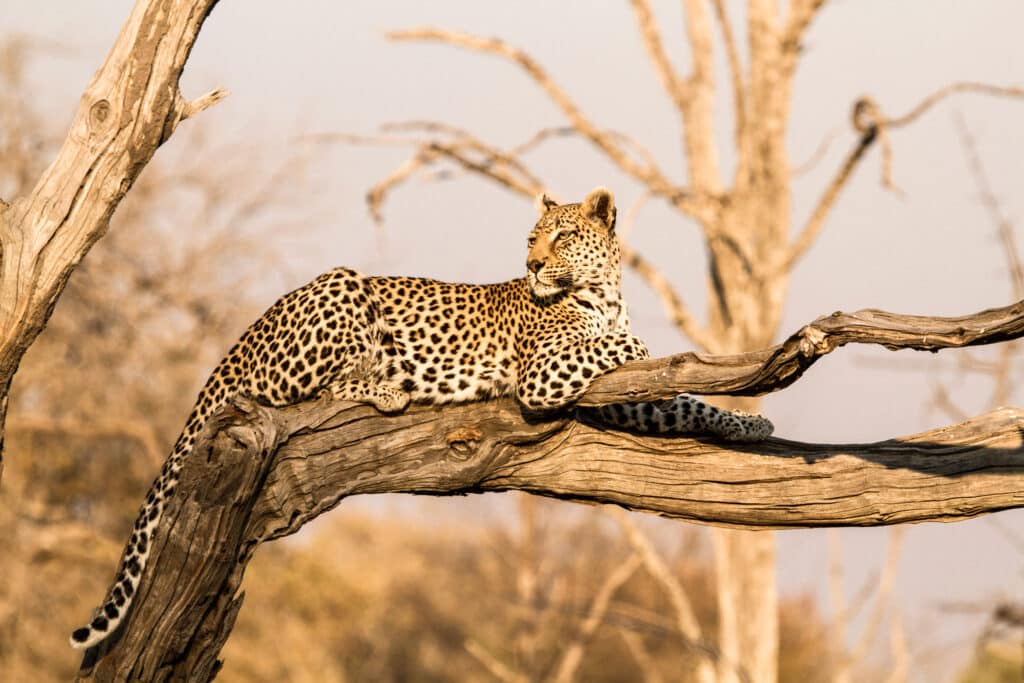
Scan tree branches carefully | Common resting behaviour |
Repeat productive roads | Increased opportunities |
Patience is essential for successful leopard photography.
Why Leopard Sightings Require Patience
Leopards are naturally:
- Solitary
- Secretive
- Camouflaged
- Nocturnal
Even excellent leopard regions can produce quiet days.
Common Leopard Safari Mistakes
❗Mistake | 🙈Why It Reduces Sightings |
Driving too fast | Missed movement |
Ignoring trees | Missed resting leopards |
Safariing only midday | Lower activity |
Constant route changes | Reduced territory familiarity |
Staying too few nights | Lower sighting probability |
Pros and Cons of Southern Kruger Leopard Safaris
✅Pros | ❌Cons |
Higher leopard density | More vehicles |
Better safari infrastructure | Busier sightings |
Strong Big Five opportunities | Higher accommodation demand |
Better road networks | Peak-season traffic |
Pros and Cons of Quieter Leopard Regions
✅Pros | ❌Cons |
Fewer safari vehicles | Lower sighting frequency |
More wilderness atmosphere | Harder tracking |
Better solitude | Reduced infrastructure |
Expert Leopard Safari Advice
Years spent guiding safaris through Kruger National Park have shown that regular time in the field, patience, and repeated game drives usually count for more than good fortune.
The best leopard safari strategy involves:
- Staying multiple nights
- Repeating productive river roads
- Driving very slowly
- Prioritising sunrise safaris
- Scanning trees constantly
- Watching prey behaviour carefully
Experienced guides often pick up leopard locations from animal behaviour, before spotting the cat itself.
Final Verdict: Best Leopard Areas in Kruger
For the highest probability of leopard sightings, the strongest Kruger regions are:
- Lower Sabie
- Skukuza
- Berg-en-Dal
- Satara surroundings
- Crocodile Bridge region
Travellers wanting exceptional leopard safaris should prioritise:
- Southern Kruger
- River systems
- Early morning game drives
- Multi-night stays
- Dry-season travel
Kruger National Park brings safari travellers from around the world, hoping to spot one animal above most others: the leopard.
People on their first safari, as well as photographers heading back for another visit, frequently place these cats high on their list because encounters happen more regularly than many expect.
You Might Also Like:
- Best Gates to enter Kruger National Park Based on wildlife
- How to avoid tourist mistakes on safari
- Kruger Park Safaris
- Private Kruger Park Safaris
- SANParks Kruger National Park
Frequently Asked Questions
Where are the best leopard sightings in Kruger National Park?
Safari travellers seeking leopards tend to pay regular attention to the Lower Sabie and the Skukuza region.
Rivers run through these locations, the cover of vegetation, and the movement of prey animals through the surrounding habitat. Regular morning and late afternoon game drives yield memorable sights.
Which Kruger camp is best for leopard safaris?
If seeing leopards is the major objective of your vacation, many travellers put Lower Sabie at the top of their list. Around the Sabie River, leopards move between hunting areas, cross nearby roads, and spend time resting high in large trees.
What time of day is best for leopard sightings?
You’ll normally see more animals during the early morning and late afternoon drives. As the day gets hot, animals spend more time in the shade of trees and under denser cover.
Is the dry season best for leopard sightings in Kruger?
Winter is the time of less dense vegetation and better viewing conditions. In some parts of the south, animal life also spends more time in the vicinity of rivers and water sources in dry spells.
Are leopard sightings common in Kruger National Park?
Southern Kruger has earned a name for frequent leopard activity, particularly around rivers and nearby vegetation. Sightings never come with certainty, although many visitors leave with memorable photographs, stories, and unexpected moments.
Which roads are best for leopard sightings near Lower Sabie?
Leopard conversations in Kruger usually end up circling back to the H4-1 road linking Skukuza and Lower Sabie. The S28, H10, and roads following the river sections near the southern camps also come up quite frequently.
Why are river areas better for leopards?
Leopard sightings frequently happen near rivers because these areas offer food sources, vegetation, and large trees in one location. Since leopards hunt by getting close before making a move, river habitats work naturally in their favour within Kruger National Park.
Can travellers see leopards during self-drive safaris?
Self-drive travellers will certainly encounter leopards in Kruger, particularly while driving slowly along fruitful river routes at daybreak or sunset.
All major safari seasons in the southern Kruger safari zones offer considerably improved leopard sightings with patience, repeated drives, and attentive observation.
Is Berg-en-Dal good for leopard sightings?
Berg-en-Dal is perfect for spectacular leopard safaris. Rocky bushveld terrain and less busy roads provide for a productive leopard area.
You may have to be a bit more patient for sightings than in the Lower Sabie area, but the overall experience for photographers and regular visitors is frequently more serene and atmospheric for leopard safari sightings.
How many nights improve leopard sighting chances?
Three to four nights in Kruger changes the pace of the trip. You can return to roads where there was activity instead of trying to fit every corner of the park into one visit. Leopard sightings usually reward time spent in one territory.