
Cape Town is easy to underestimate when planning a South African trip. Many first-time visitors allow two or three days, then discover that Table Mountain, the Cape Peninsula, Robben Island, the Winelands and the city’s beaches can comfortably fill four or five days.
The trick isn’t trying to see everything. It’s choosing the parts of Cape Town that suit the way you travel.
Yes. Cape Town is one of South Africa’s most varied destinations, combining Table Mountain, beaches, Cape Peninsula scenery, Robben Island, food, history and easy access to the Cape Winelands. Most first-time travellers should allow at least four days, with five or more giving you a less rushed trip.
If you want… | Prioritise |
Iconic scenery | Table Mountain & Cape Peninsula |
History | Robben Island & District Six |
Penguins | Boulders Beach |
Wine | Stellenbosch & Franschhoek |
Beaches | Camps Bay, Clifton & Muizenberg |
Guided sightseeing | Cape Town day tours |
Wildlife | Cape safari/day safari |
A first visit | 4–5 days |
MoAfrika Tours has been helping international and South African travellers explore Southern Africa for more than two decades. Our Cape Town guides and travel team work with guests visiting the city, Cape Peninsula, Winelands and surrounding destinations throughout the year.
That local experience matters in Cape Town because weather, traffic, seasonal demand and attraction availability can change how you plan the day. Sometimes changing the order of two attractions makes far more sense than sticking rigidly to an itinerary.
Cape Town is not only one of the most visually striking cities in the world, but also one of the most historically layered. Known as the Mother City, it holds a central place in South Africa’s story, where centuries of migration, trade, struggle and triumph have shaped a diverse and complex cultural identity.
Cape Town’s history begins long before European arrival. The Khoisan people, the original inhabitants of the region, lived off the land and sea, leaving behind rich oral traditions and ancient rock art.
When Dutch settlers arrived in 1652, led by Jan van Riebeeck, the city became the first permanent European settlement in South Africa. This marked the beginning of Cape Town’s role as a strategic refreshment station along the global trade routes between Europe and the East.
From Dutch control to British rule, Cape Town’s early colonial history brought architectural changes, the building of fortifications like the Castle of Good Hope, and the forced movement of enslaved people from East Africa, Madagascar and Southeast Asia. These early communities would go on to shape the city’s language, food, religion and traditions.
Today, the Bo-Kaap area stands as a vivid symbol of this heritage. Its brightly painted houses, cobbled streets and the call to prayer from mosques echo the presence of the Cape Malay community, descendants of slaves brought by the Dutch East India Company.
Walking through the neighbourhood is like stepping into a living museum, where generations of families have preserved recipes, customs and language that blend African, Asian and European influences.
Cape Town played a critical role during the apartheid era. Perhaps the most well-known symbol of this period is Robben Island, where former President Nelson Mandela was imprisoned for 18 of his 27 years in captivity.
A visit to the island, now a UNESCO World Heritage Site, offers a sobering but essential understanding of South Africa’s path to democracy.
The District Six Museum tells the story of an inner-city community forcibly removed under apartheid’s segregation laws. The museum is housed in a former church and its exhibits use photographs, testimonials and personal artefacts to show how thousands of people were displaced from a vibrant, multicultural neighbourhood.
Cape Town’s cultural scene today is just as compelling as its past. It’s a city of storytellers, artists and musicians.
The Zeitz Museum of Contemporary Art Africa (MOCAA) has brought global attention to African artists, housing one of the continent’s most important collections in a transformed grain silo at the V&A Waterfront.
With creativity spilling far beyond museum walls, markets like The Neighbourgoods Market at the Old Biscuit Mill or street art in Woodstock reveal Cape Town’s urban pulse and its ability to reinvent itself through art, fashion and cuisine.
Live music is everywhere – from jazz performances in intimate bars to traditional marimba bands playing near tourist hotspots. The blend of Xhosa rhythms, gospel, soul and Cape jazz is uniquely local and deeply expressive of the city’s multicultural spirit.
Cape Town is linguistically rich. English, Afrikaans and isiXhosa are widely spoken, reflecting the city’s complex social fabric. You’ll hear street vendors switching between tongues, and schoolchildren comfortably navigating between languages. This multilingualism is part of everyday life, adding layers to the cultural experience of being in Cape Town.
Throughout the year, Cape Town hosts a range of cultural festivals that celebrate its diversity. The Cape Town Minstrel Carnival, which takes place in early January, is one of the oldest in the country and has roots in the slave heritage of the city. Performers dress in colourful outfits, sing traditional songs and parade through the streets in a celebration of freedom and identity.
Other notable events include the Cape Town International Jazz Festival, often dubbed “Africa’s Grandest Gathering”, and the Infecting the City public arts festival, which transforms urban spaces with performances and installations.
Cape Town’s most iconic attraction is Table Mountain, a flat-topped giant that dominates the skyline. Whether you take the cable car or hike up via Platteklip Gorge or Skeleton Gorge, the views from the top are magnificent. On clear days, you can see Robben Island and the Twelve Apostles stretching along the coast.
Another essential experience is a visit to Robben Island. A guided tour offers personal stories and historical context, often led by former political prisoners. Ferries to the island depart several times a day from the V&A Waterfront.
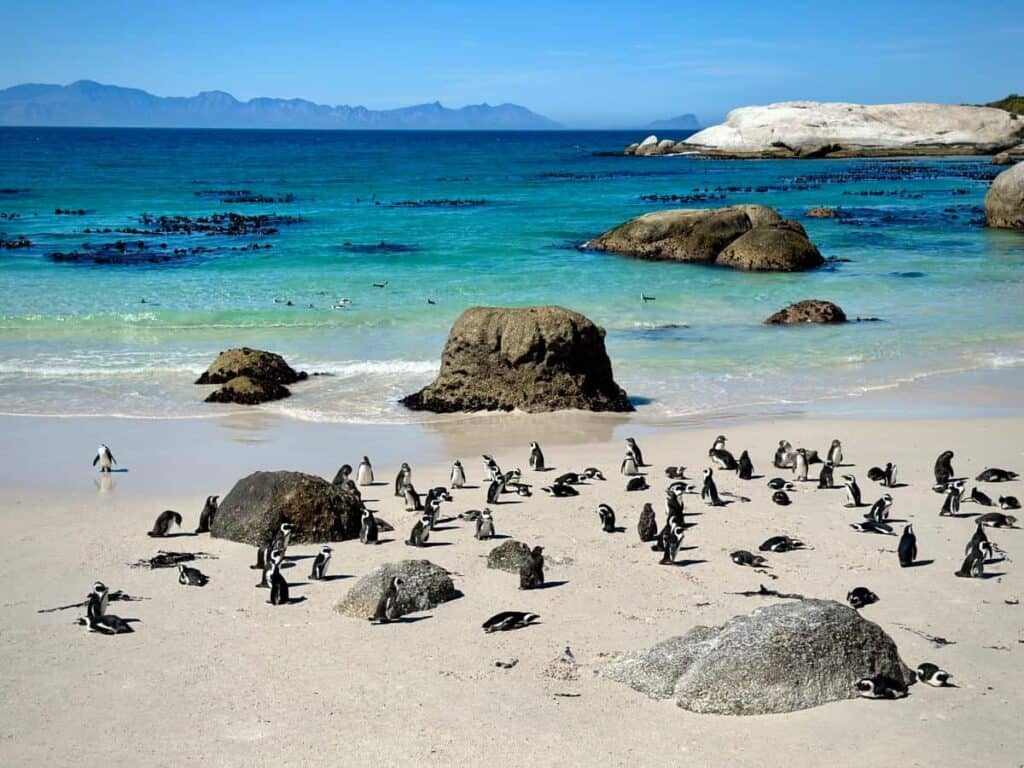
The Cape Point Nature Reserve is part of the Table Mountain National Park and offers coastal drives, wildlife sightings, and scenic walks. Many travellers stop at Boulders Beach on the way there to see the resident colony of African penguins.
Kirstenbosch Botanical Garden against the eastern slopes of Table Mountain, is ideal for a relaxed afternoon. The treetop canopy walkway offers a unique perspective, while the lawns are perfect for picnics.
Also, don’t miss the colourful Bo-Kaap district, famous for its cobbled streets and brightly painted houses. Guided walking tours reveal the area’s Cape Malay history and culinary heritage.

Cape Town’s coastline offers beaches for every type of traveller.
Boulders Beach is a family favourite, famous for its colony of African penguins. The beach is protected by granite boulders, creating calm pools that are safe for children.
Clifton’s four beaches are ideal for sunbathing and people-watching, although the Atlantic water is icy year-round. Clifton 4th Beach is particularly family-friendly and often has lifeguards on duty during summer.
Camps Bay Beach offers wide sandy stretches and a lively promenade with restaurants and cafés. It’s perfect for families wanting facilities close at hand.
Muizenberg is a top choice for beginner surfers and children thanks to its gentle waves and colourful beach huts. The local surf schools cater for all ages, and the beach has a cheerful atmosphere.

Cape Town is particularly good for travellers who want to combine sightseeing with time outdoors.Table Mountain and Lion’s Head offer rewarding hikes for all skill levels. Lion’s Head is especially popular for sunrise and sunset climbs, with panoramic views of the city and ocean.
The Cape Peninsula Drive to Cape Point is one of the world’s most scenic routes. You can stop along the way at Chapman’s Peak Drive, Noordhoek Beach, and Simon’s Town.
Ocean-based adventures include sea kayaking with dolphins or seals from Hout Bay, shark cage diving in Gansbaai, and seasonal whale watching from June to November.
Cape Town is the gateway to some of South Africa’s best wine regions. Constantia is the closest, just a 20-minute drive from the city centre. This historic wine area offers elegant estates like Groot Constantia, known for its wooded Sauvignon Blancs and rich reds.
Stellenbosch and Franschhoek are further afield but well worth the trip. Stellenbosch is South Africa’s second-oldest town and a hub of wine production. Many estates offer tastings, cellar tours, and gourmet dining.
Franschhoek combines French heritage with world-class food and wine. The Franschhoek Wine Tram is a convenient and scenic way to explore multiple estates without driving.
Paarl is often overlooked but produces award-winning reds and offers a quieter alternative. Some estates also offer picnics, art galleries, and even horse riding.
Be sure to view MoAfrika’s list of Cape Winelands Tours.

Cape Town’s food scene is a blend of innovation and heritage. Bree Street is a foodie hotspot, home to restaurants offering everything from tapas and sushi to Cape Malay curries. Jason Bakery and Clarke’s Bar & Dining Room are popular brunch stops.
Seafood is a highlight, with places like The Codfather in Camps Bay offering fresh catches without set menus. The Old Biscuit Mill in Woodstock hosts a Saturday market with a wide selection of global cuisines.
Cape Town has a strong fine-dining scene, but restaurants change, and popular tables can book out well ahead. If food is an important part of your trip, ask your hotel or guide for current recommendations and reserve before you arrive during busy periods.
When it comes to nightlife, Long Street is lively with its bars, clubs, and rooftop venues. For a more refined evening, try The Gin Bar hidden behind a chocolate shop, or the rooftop bar at The Silo Hotel for views of the city and Table Mountain.
Start with Robben Island and the District Six Museum for a powerful account of the apartheid era and to better understand modern South Africa.
The Bo-Kaap district offers insights into Cape Malay heritage, including religion, music, and cuisine. Many tours include visits to local homes or cooking classes where you can learn to make traditional dishes like bobotie or samoosas.
Cape Town is also home to contemporary arts and culture. The Zeitz MOCAA at the V&A Waterfront is the largest museum of contemporary African art on the continent. Street art tours in Woodstock reveal vibrant murals and the stories behind them.
The summer months from December to February bring sunny skies and high temperatures, perfect for beach lovers. This is also the peak tourist season, so attractions are busy, and prices are higher.
March to May is widely considered a good time to visit. The weather remains warm but the summer winds ease, crowds begin to thin, and wine harvest festivals take place in nearby regions. Autumn colours also appear in the Winelands.
Winter, from June to August, sees cooler weather and rain, but this season has its own charm. It’s the ideal time for exploring indoor attractions like museums and galleries. Accommodation is also more affordable.
Spring arrives in September, bringing wildflowers to the West Coast and pleasant temperatures. It’s a good time for hiking, as the landscapes are green, and the trails are quieter.
A comparative table showing the best times of year for popular activities in Cape Town, based on real seasonal patterns, weather data, and traveller feedback:
Activity | Best Months | Why It’s Ideal |
Beach Days & Swimming | December to March | Warmest months with long, sunny days and ideal beach temperatures (25°C–30°C) |
Hiking Table Mountain | September to April | Dry weather, clear skies, and comfortable temperatures for outdoor adventures |
Whale Watching (Hermanus) | June to November | Southern Right whales migrate along the coast during this period |
Cape Winelands Tours | February to April | Grape harvest season with vibrant vineyard activity and autumn colours |
Flower Season (West Coast) | August to September | Namaqualand and West Coast bloom into a wildflower spectacle |
Penguin Viewing (Boulders Beach) | Year-round | Penguins are present all year, but mornings in spring and autumn have fewer crowds |
Shark Cage Diving (Gansbaai) | Year-round | Conditions, species, and sightings vary throughout the year. Check current operator information when planning your trip. |
Scenic Drives (Chapman’s Peak) | October to April | Best visibility and safest road conditions with minimal rain |
Cultural & Food Tours | Year-round | Indoor and city-based experiences are enjoyable in all seasons |
Photography & Scenic Views | May to October (Golden Light) | Crisp air and dramatic skies ideal for photography, especially at sunrise/sunset |
Cape Town International Airport is the primary gateway into the city, with regular flights from London, Johannesburg, and major hubs across Africa and the Middle East.
The airport is about 20 kilometres from the city centre and is connected by airport shuttle services, metred taxis, and rideshare apps like Uber.
Rideshare services, pre-arranged transfers and metered taxis are available from Cape Town International Airport. MyCiTi buses operate on selected routes around the city, while hiring a car can be useful for travellers planning independent trips to the Winelands or beyond Cape Town.
Taxis are available but can be expensive and often need to be booked in advance. Uber is widely used and generally safe and affordable.


Cape Town’s diversity extends to its neighbourhoods, each offering a unique experience. The V&A Waterfront is one of the most popular areas to stay, especially for first-time visitors. It’s well-located, safe, and close to many attractions, shops, and restaurants.
The City Bowl area, which includes the suburbs of Gardens, Tamboerskloof, and Oranjezicht, is a great base for those wanting a mix of local culture and nightlife. These areas have a vibrant feel, with independent cafés, art galleries, and boutique hotels.
For beach access, Camps Bay and Clifton offer luxury accommodation with sea views and direct access to sandy beaches. This is also the area for trendy restaurants and cocktail bars.
Sea Point and Green Point offer a quieter seaside experience and are popular with joggers and cyclists thanks to the scenic promenade.
Some popular accommodation options in Cape Town used by tour operators:
The following boutique and luxury hotels are recommended by travellers and are great for clients seeking extra comfort or style.
Some popular accommodation options at a glance:
Category | Property | Location | Key Features |
Budget-Friendly | Cape Town Central Guesthouses | City Centre | Private rooms; basic breakfast; friendly service; well‐placed for city access |
Mid-Range | Signature Lux Hotel by ONOMO Waterfront | V&A Waterfront | Four-star; breakfast included; modern comforts and proximity to attractions |
Exclusive | Dorp Hotel | Bo-Kaap / Signal Hill | Stylish boutique; rooftop views; creative character |
Exclusive | Tintswalo Atlantic | Hout Bay | Luxury suites; cliffside location; fine dining and sea vistas |
Exclusive | Ellerman House | Camps Bay | Elegant service; sea views; top-tier amenities and privacy |
Most visitors travel around Cape Town without problems, but it is still a major city and sensible precautions matter. Use reputable transport after dark, avoid walking through unfamiliar or quiet areas alone, keep valuables out of sight, and ask your hotel or guide for local advice. Tourist areas such as the V&A Waterfront, Sea Point, and Camps Bay are generally safe, especially during the day. It’s wise to avoid walking alone at night in quiet areas and to use Uber rather than public minibus taxis after dark.
Keep personal belongings close, especially in busy markets or public areas. Hiking should be done in groups, and always let someone know your route. Most hotels and guesthouses offer reliable travel advice, and organised tours are a safe way to explore the region.
Cape Town provides excellent value across a range of budgets. Mid-range accommodation typically costs between R1,500 and R2,500 per night, while luxury hotels can range from R3,000 upwards. There are also plenty of affordable guesthouses and hostels available from R500.
Meals at casual restaurants usually cost around R150 to R300 per person, with high-end dining experiences ranging from R800 to R1,500. Uber rides around the city typically cost under R200.
Entrance to key attractions such as the Table Mountain cable car, Robben Island, and museums ranges from R100 to R400. Full-day tours to the Cape Winelands or Cape Point can cost between R600 and R1,500, depending on what’s included
Pack layers, as Cape Town’s weather can change quickly, even in summer.
Book popular attractions in advance, particularly during peak season. This includes the Table Mountain cableway and Robben Island tours. Support local businesses by visiting neighbourhood markets and choosing community-led tours for more personal and meaningful experiences.
Also, try to learn a few local words in Afrikaans or Xhosa as a sign of respect.
Time in Cape Town | What You Can Realistically Cover |
2 days | City highlights + Cape Peninsula |
3 days | Add Robben Island or Winelands |
4 days | Peninsula + city + Winelands + flexible day |
5 days | More relaxed first visit |
7 days | Cape Town plus wider day trips |
Day | Suggested Plan |
Day 1 | City Bowl, Bo-Kaap, V&A Waterfront |
Day 2 | Table Mountain + Camps Bay |
Day 3 | Cape Peninsula, Cape Point & Boulders Beach |
Day 4 | Stellenbosch & Franschhoek Winelands |
Day 5 | Robben Island + free afternoon |
Experience | Time Needed | Best For | Main Trade-Off |
Cape Town city tour | Half/full day | First-time visitors | Limited time at each stop |
Cape Peninsula | Full day | Scenery, penguins | Long day |
Cape Winelands | Full day | Food & wine | Less suitable for young children |
Robben Island | Half day | History | Weather/ferry dependent |
Cape safari | Full day+ | Wildlife | Long transfer from city |
Garden Route | 3–5+ days | Road-trip travellers | Needs extra nights |

Cape Town can give you sunshine, wind, and cool evenings on the same day, so layers are more useful than packing purely for the season.
Bring:
If you’re planning Table Mountain or Lion’s Head, don’t assume warm weather in the city means the summit will feel the same.
⭐⭐⭐⭐⭐
Ahmad H. – India
“We had a wonderful day on the Mo Afrika Full-Day Cape Peninsula Tour, and we were truly blessed to have Alfred as our guide. From the moment the tour started, his friendly personality, professionalism, and extensive knowledge made the experience even more memorable. What made the day even more special was Alfred himself. He was engaging, caring, and passionate about what he does. By the end of the tour, we felt like we had made a new friend, and as we talked after the trip, we realized we already missed him! Thank you, Alfred and Mo Afrika Tours, for an unforgettable experience. We highly recommend this tour to anyone visiting Cape Town.”
Cape Town trips work best when the itinerary leaves a little room for weather, travel times, and the things you decide you want to see once you’re here.
Explore MoAfrika’s Cape Town tours or speak to our team if you’d like help choosing between the city, Cape Peninsula, Winelands and longer Cape itineraries.
Family friendly activities in Cape Town include spotting penguins at Boulders Beach and visiting the Two Oceans Aquarium.
Yes, tipping is customary – 10 % in restaurants, R5–10 for car guards and petrol attendants.
Cape Point, Winelands, whale watching in Hermanus and Cederberg National Park are all possible day trips.
Most travellers visit Cape Town without problems, but sensible precautions still matter. Use reputable transport after dark, avoid isolated areas, keep valuables out of sight, and ask your hotel or guide for local advice.
There isn’t one best month for everyone. March is a good option for warm weather with slightly fewer crowds, while December to February suits beach trips, and winter can work well for travellers interested in museums, food and lower accommodation demand.
Cape Town is affordable by global standards, offering great value for money on accommodation, food, and experiences compared to other major tourist cities.
Yes, you can swim at Cape Town’s beaches, but be aware that Atlantic Ocean waters are cold, and you should only swim in designated safe areas with lifeguards.
The currency used in Cape Town is the South African Rand (ZAR), and most businesses accept credit or debit cards.
English, Afrikaans and isiXhosa are widely spoken in Cape Town. English is commonly used in hotels, restaurants, tours and other tourism services, so international travellers generally find it easy to communicate.
Yes, the tap water in Cape Town is generally safe to drink, though bottled water is readily available if preferred.




WhatsApp Now