
Kruger National Park is one of South Africa’s most iconic wildlife destinations, known for its vast landscapes, remarkable biodiversity and unforgettable encounters with nature.
Prefer a guided trip? Explore MoAfrika’s Kruger safari options or compare all available packages on our Kruger National Park Safaris page.
Kruger National Park stretches across northeastern South Africa, with wildlife habitats that change as you travel through the park. You can stay in a camp in the park or join a guided safari. What you choose will affect how much ground you cover and what your days are like.
Kruger’s size is the first thing to understand. This isn’t a place you can see in a single drive: the south, centre and north offer different bushveld environments, and travelling between them takes time. For a first visit, it helps to choose an area you can explore properly without trying to cover the whole park.
This guide will help you decide where to enter, when to go, where to stay and how to plan your time.
Planning question | Quick answer |
Where is it? | Northeastern South Africa, across parts of Mpumalanga and Limpopo. |
What is it known for? | Extensive wildlife habitat, including the Big Five, with different regions from south to north. Sightings are never guaranteed. |
How long should you stay? | At least two nights is a useful starting point for a first visit; more time lets you explore without rushing between camps. |
Where should you go first? | The south is a good first choice for many visitors. Choose a camp and entrance gate that fit your route. |
Can you self-drive? | Yes. You can drive yourself on visitor roads or book guided activities. |
When should you go? | Drier winter conditions can make spotting wildlife easier; summer brings greener scenery, heat and rain. Both seasons offer a worthwhile visit. |
What costs should you check? | Daily conservation fees, accommodation, transport, meals and any guided activities. Current rates depend on your visitor category and travel dates. |
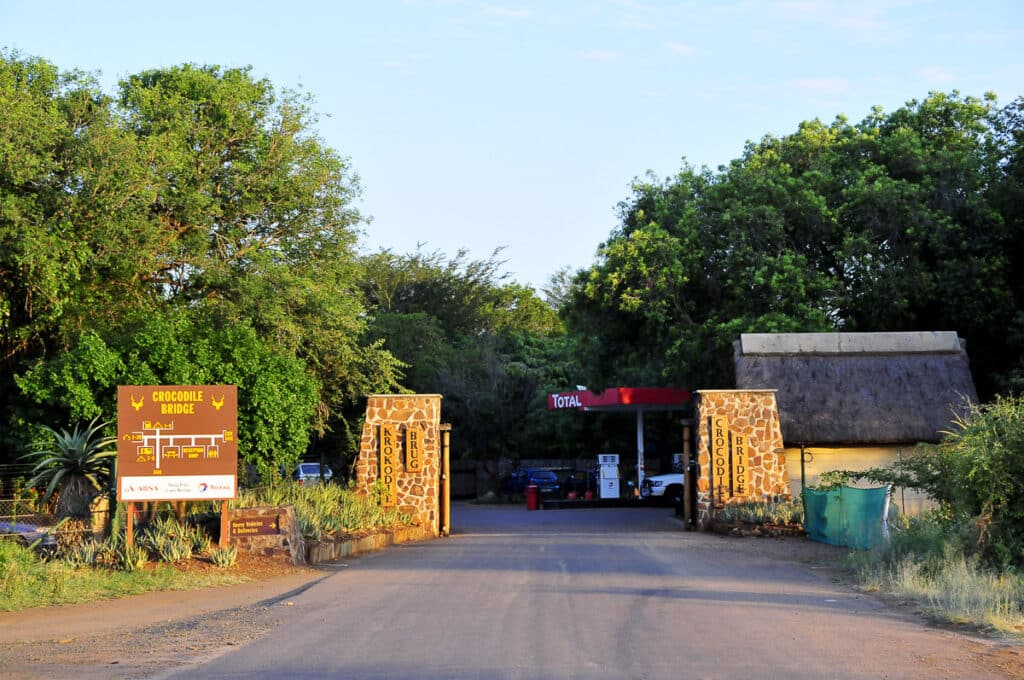
Kruger National Park is located along South Africa’s northeastern border, across parts of Mpumalanga and Limpopo. It runs a long way from north to south, which is why the park has multiple entrance gates and camps serving different areas.
If you’re arriving from Johannesburg or another South African city, your route will depend on where you intend to enter and stay. You can also fly into the wider region and continue by road. Either way, check the location of your accommodation before choosing a gate or booking transport.
Distances inside Kruger are just as important. Roads are driven at park speed limits, and you’ll probably want to stop for wildlife along the way. A camp that looks reasonably close on a map can take longer to reach than you expect. SANParks provides park maps and route information to help you plan.
Kruger’s habitats change across its length. You don’t need to know every area before your first visit, but a broad sense of the south, centre and north will help you choose where to base yourself.
Southern Kruger is a popular choice for first-time visitors. This part has several well-known camps and access gates, and many visitors come here for wildlife-viewing. It can also be busier on popular roads or during holiday periods. If you have only a few nights, staying in one part of the south lets you spend more time exploring and less time travelling between camps.
Central Kruger has a different mix of open areas, river landscapes and camps. Satara and Olifants are among the names you’ll see when looking at this part of the park. This region is a good option if you want to explore beyond the southern routes without committing to a journey into the far north.
Northern Kruger tends to feel more remote. The vegetation and birdlife make it rewarding for visitors interested in the park as an ecosystem. Reaching and exploring the north takes more planning, especially if your trip begins near the southern gates.
Think about the time you have, the gate you can reach conveniently and the sort of visit you want. You can return to explore another area on a future trip.
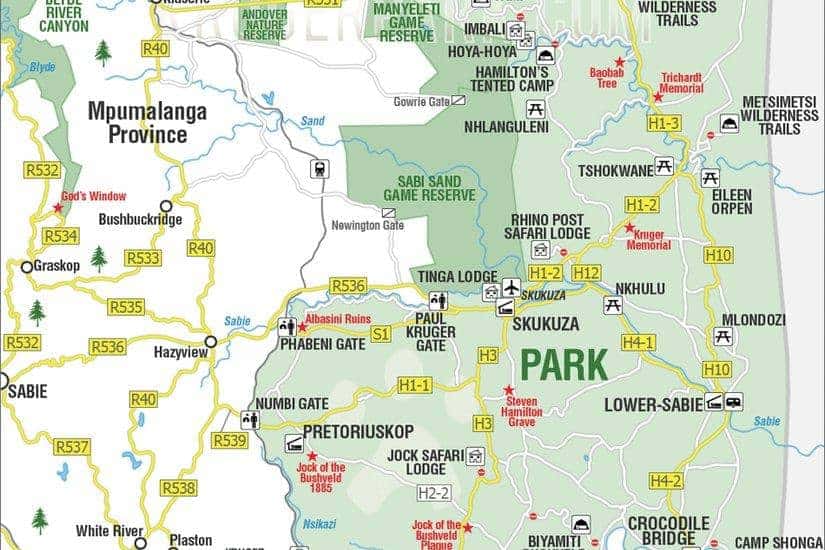
Kruger has nine entrance gates, spread across different sides of the park. Your choice should follow your accommodation and route.
For the south, Phabeni, Numbi and Paul Kruger gates are commonly considered by visitors approaching from the Hazyview side, while Malelane and Crocodile Bridge provide access farther south. Orpen Gate connects with the central part of the park. Phalaborwa Gate offers access farther north, while Punda Maria and Pafuri serve northern areas.
That’s a starting point, not a substitute for checking your route. Find your camp on a park map, then look at the recommended gate and the distance from that gate to the camp. Allow for a slower drive once you’re inside and for the possibility that you’ll stop to watch wildlife.
Entrance and camp gates close at set times, which vary through the year. Access can also be affected by local conditions. Before travelling, check SANParks’ current gate information and any notices affecting your planned route.
The dry and wet seasons offer different conditions, and your preference may depend on the scenery you’d like to see and the kind of wildlife experience you hope to have.
The drier winter months bring cooler mornings and evenings, less dense vegetation and less surface water in some areas. These conditions can make wildlife easier to spot, especially around remaining water sources. The trade-off is that some periods and routes are popular, and early drives can be cold.
The wetter summer months bring warmer conditions and greener bushveld. Vegetation can make animals harder to see in places, but the season offers its own interest, including changes in birdlife and the bush. Rain and heat can affect how you plan your days.
Weather and wildlife don’t follow a perfect schedule. Park conditions vary from year to year, and no season guarantees a particular sighting. The best time to visit Kruger National Park depends on the experience you want, so choose dates that suit your holiday and prepare for the conditions you’re likely to encounter.
Kruger is in a malaria-risk area. South Africa’s National Institute for Communicable Diseases generally identifies the higher transmission season as September to May, though risk can exist outside those months. Check current official malaria advice and speak to a qualified travel-health professional before your trip.
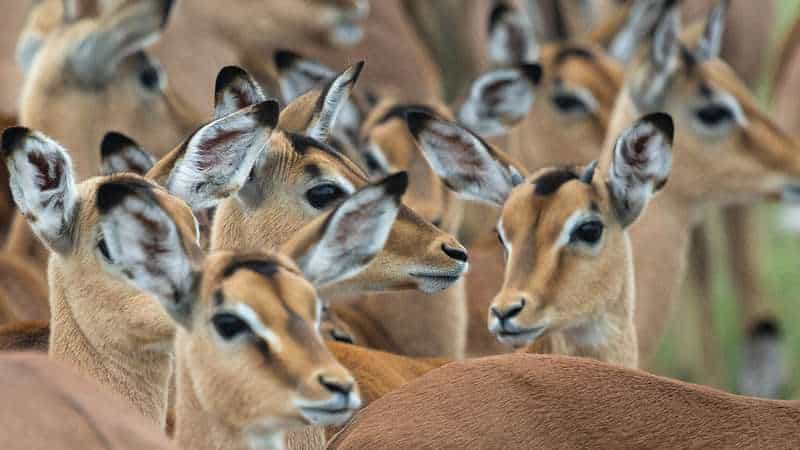
Kruger is renowned for its wildlife, including the Big Five: lion, leopard, elephant, buffalo and rhino. You can also spot giraffe, zebra, hippo, crocodile, wild dog and many kinds of antelope. For birders, the variety of habitats offers plenty to look for.
What you actually see depends on your route, the season, weather, habitat and chance. Some animals are easier to spot than others. A nearby leopard can be completely hidden; another day, a memorable sighting may happen close to a road you’ve driven before. No individual animal or Big Five sighting can be guaranteed.
Give yourself time to enjoy what is in front of you. Watching a herd of elephants interact or stopping to identify an unfamiliar bird can be as absorbing as finding an animal you set out to see. Moving slowly and paying attention to the environment often makes for a better day than racing between reported sightings.
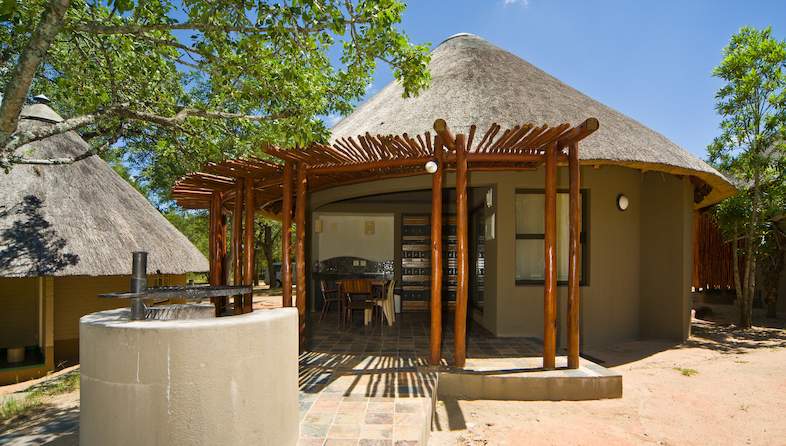
Rest camps inside the national park are a popular choice for self-drive visitors. They vary in size and location, with accommodation that can include camping and self-catering units, depending on the camp. Main camps such as Skukuza, Lower Sabie, Satara, Letaba and Punda Maria give you bases in different parts of Kruger. Check the facilities and accommodation types at the specific camp before booking.
Kruger also has smaller bushveld and satellite camps. These can be a quieter stay, though facilities may be more limited. SANParks’ camp information explains the differences and is the place to check what each camp currently provides.
Private lodges and safari properties offer another style of visit. Some are inside Kruger, while others are in neighbouring reserves or elsewhere in the Greater Kruger region. These locations should not be treated as interchangeable. The access arrangements and daily experience can differ, so check exactly where a property is and which wildlife area its drives explore.
How much does it cost to visit Kruger? You should budget for the daily conservation fee, then add the costs that apply to your plans like accommodation, guided activities, food and transport.
SANParks publishes conservation fees by visitor category, with different rates for South African citizens and residents, SADC nationals and international visitors. Fees can also differ for adults and children. Accommodation prices depend on the camp and dates you choose, while activities are priced separately where applicable.
Check whether a quoted accommodation or organised-safari price includes the conservation fee. If you’re self-driving, consider your vehicle hire, fuel and meals too. A guided trip bundles some of these costs, but inclusions vary by itinerary.
Rates change. Consult the official Kruger National Park rates and entry fees page for the dates of your visit. If you’re booking a package, read its inclusions to see which park fees and activities are covered.
A first trip becomes easier to organise when you make a few decisions in the right order.
Choose a manageable area. Start with how you’re getting to Kruger and how many days you have. For a short visit, concentrate on one part of the park instead of building a route that takes you from one end to the other.
Pick your accommodation, then your gate. Once you know where you’ll sleep, find the most practical entrance and check the internal drive to your camp. A convenient gate for a day visitor may not be the right one for your overnight booking.
Allow enough nights. A single night gives you limited time around arrival and departure. More nights let you explore at a gentler pace and take different routes without feeling that every drive must reveal a sighting. The number you need depends on your wider trip, but count your available mornings and afternoons rather than looking only at the total days.
Decide how you want to explore. You can self-drive, book guided activities or combine the two. Check what you’re comfortable arranging yourself and what is available from your camp or chosen operator.
Plan around the season. Think about daylight, temperatures, rain and what you’ll need to pack. Also check current park notices, gate hours and travel-health guidance shortly before departure.
Finally, leave slack in the schedule. Kruger rewards patience, and a drive that takes longer than planned isn’t necessarily a problem. This may be the part of the trip you remember.

A self-drive safari in Kruger gives you control over your route and stops. You can spend time watching an animal or pause at a designated facility when it suits you. In return, you’re responsible for navigating, following park rules and reaching your camp or exit before the gates close.
A guided drive is a fantastic option for travellers who would rather concentrate on the surroundings than on the road. A professional guide shares knowledge of the area and interprets animal behaviour while handling the driving. Some visitors choose guided activities for part of a stay and self-drive at other times.
Pack for time outdoors and for temperatures that change between an early start and the middle of the day:
Check the forecast for the part of Kruger you’re visiting instead of packing for “South Africa” in general. If you’re unsure about health precautions, seek current professional advice before you travel.
For a more detailed preparation guide, download our complete safari checklist before your trip.

Once those details are in place, you can let the days work their magic. Choose an area you have time to explore and enjoy the wildlife you encounter.
Prefer an organised trip? Compare MoAfrika’s Kruger National Park safari packages, including guided, budget, luxury and private options.
Choose where you’ll stay before choosing an entrance gate. Kruger is too large to cover in one visit, and driving inside the park takes longer than a map suggests. For a short first trip, base yourself in one area for at least two nights. You can explore in your own car, join guided drives or combine both. Check your gate times and camp booking before setting off.
Yes. A day visit can give you a taste of the park if you choose a manageable route near your entrance gate. Daily visitor limits apply, so an advance reservation is sensible for busy dates like public holidays and long weekends. You’ll still need to pay the applicable conservation fee.
No. You can explore the main visitor roads in an ordinary car. A higher vehicle will give you a different viewing position, but it isn’t essential for a first trip. Stay on permitted roads and check current access notices for your chosen route.
Self-drive visitors must plan their day around the applicable gate and camp closing times. If you want to experience the bush after dark, look for an authorised guided night drive from your camp and book it in advance.
Only at designated places where getting out is permitted. Do not leave your vehicle at a wildlife sighting, even if the road seems quiet or the animal is far away. Use a rest camp or marked viewpoint when you need a break.
There are different facilities between the camps, and some smaller camps offer fewer services. Check the facilities at your booked camp and along your route before departure. Carry drinking water and anything you’ll need between planned stops, especially on a long drive.
Yes, guided drives are offered from various rest camps, subject to availability and the activities offered at your camp. They can complement a self-drive stay if you’d like a guide’s perspective or an outing outside normal self-drive hours.
Yes, provided you plan for their ages and the time they can comfortably spend in a vehicle. Choose shorter drives with regular stops and check age limits for guided activities before promising an outing. A camp with facilities that suit your family can make the quieter hours easier.
Don’t count on continuous coverage. Signal may be available around some camps and roads but unreliable elsewhere. Save your route and booking information before entering, and tell someone your planned destination if you’re travelling independently.
No. “Greater Kruger” refers to neighbouring private reserves as well as the national park. A lodge will offer a different style of safari and different access arrangements. Check the exact location and whether your booking includes entry into Kruger National Park.


WhatsApp Now