
Many safari-goers rush directly to the dry months because they’ve heard that winter is the prime season in Kruger National Park. Wildlife observations are wonderful at that time, but the greener months have a lot to offer as well.
There isn’t an obvious front-runner for a season. Each season has its own blend of animal watching, landscape, photographic conditions, transport costs, birdlife activity, visitor volume, and availability. Some tourists have a particular experience in mind, while others are more concerned with convenience or budget.
Some travellers come away from Kruger surprised that green season gave them a more delightful trip than the popular dry season months.
Comparing The Dry Season vs. Green Season in Kruger
🔍Feature | 🍂Dry Season (May–September) | 🍃Green Season (October–April) |
Wildlife Viewing | Excellent | Very Good |
Predator Sightings | Excellent | Good |
Vegetation | Sparse | Lush & green |
Photography Conditions | Excellent visibility | Dramatic scenery |
Birdwatching | Moderate | Outstanding |
Crowds | High | Lower |
Prices | Higher | Lower |
Baby Animals | Limited | Excellent |
Temperatures | Cooler | Hotter |
Rainfall | Minimal | Frequent storms |
Most first-time visitors booking Kruger National Park safaris will prefer the dry season, as animals are easier to spot around water sources and open areas. The green season is often better suited to travellers who enjoy photography, birdwatching, or who have already experienced a few safaris.

What Is the Dry Season in Kruger?
The dry season generally runs from:
- May
- June
- July
- August
- September
Rain becomes much less common, temperatures dip, and the bush starts to thin out as the plants dry off and fade away. Animals spend more time near rivers, waterholes, and permanent water places, making them far easier to find.
Why Tourists Love the Dry Season
Wildlife Is Easier to Spot
Guests will have a better experience seeing the park’s animals during the dry season. The grass is shorter, and there is less foliage, which makes it much easier to see:
- Lions
- Leopards
- Elephants
- Rhinos
- Buffalo
- Wild dogs
Animals also spend more time near roads and waterholes.
Better Predator Activity
Cooler temperatures increase daytime predator movement.
During dry winter months, travellers often see:
🦁Predator | 🍂Dry Season Viewing Quality |
Lions | Excellent |
Leopards | Excellent |
Wild Dogs | Very Good |
Hyenas | Excellent |
Cheetahs | Very Good |
Predators remain active longer during cooler conditions
More Comfortable Safari Temperatures
Mornings can be a little cool in the dry season, but the rest of the day is normally lovely and warm.
🌟Season | 💯 Average Experience |
Early mornings | Cold |
Midday | Mild |
Evenings | Comfortable |
This improves full-day safari comfort significantly.

What Most Tourists Get Wrong About Dry Season Safaris
Many travellers assume dry season automatically guarantees perfect safaris.
That is not always true.
Mistake #1: Expecting Empty Parks
Dry season is Kruger’s busiest safari season.
Popular regions around:
- Skukuza
- Lower Sabie
- Satara
- Crocodile Bridge
Can become crowded during peak months.
This sometimes leads to:
- Traffic at sightings
- Busy camps
- Limited accommodation
- Reduced wilderness feeling
Mistake #2: Ignoring Dry Landscapes
By late winter, some areas become:
- Extremely dry
- Dusty
- Brown
- Less visually dramatic
Photography can occasionally feel repetitive compared with lush green-season scenery.
Mistake #3: Assuming Wildlife Is Always Better
Although visibility improves, some wildlife behaviour changes negatively.
Animals can become:
- More concentrated
- Less active in the afternoons
- Predictable around water sources
This can reduce the feeling of exploration for some safari travellers.
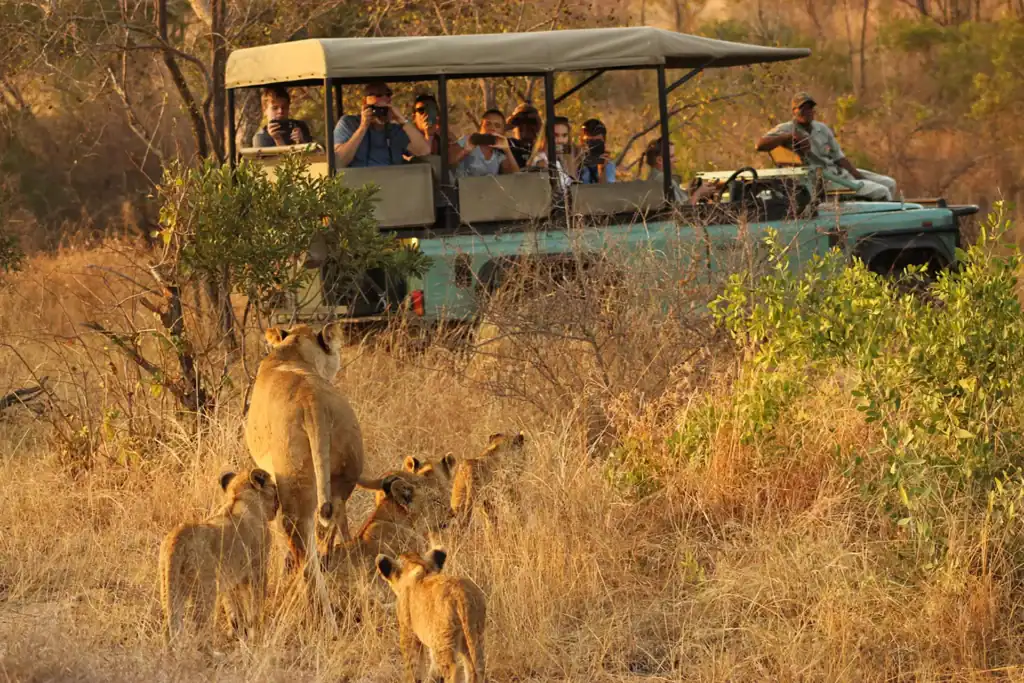
What Is Green Season in Kruger?
Green season usually runs from:
- October
- November
- December
- January
- February
- March
- April
This period brings:
- Rainfall
- Green landscapes
- Migratory birds
- Dramatic skies
- Newborn animals
Many experienced safari guides consider this Kruger’s most beautiful season.
Why Green Season Is Underrated
Incredible Landscapes
Green-season Kruger transforms dramatically.
The park becomes:
- Vibrant
- Lush
- Scenic
- Photogenic
This creates far more dynamic safari photography opportunities.
Baby Animal Season
Rainy months are a common time for many herbivores to have their young, with greener conditions helping support growing animals. Here’s what visitors can expect:
🦁Animal | 🍼Green Season Baby Sightings |
Impala | Excellent |
Wildebeest | Excellent |
Zebra | Very Good |
Giraffe | Good |
This increases predator activity naturally.
Outstanding Birdwatching
Green season is a great time to go birding in Kruger, as there is a lot more activity from the birds. Species arrive from Europe and areas of central Africa, and the bird list is substantially broader.
Many birds are also in breeding form, and colours become brighter and more conspicuous.
🐦Birding Feature | 🍃Green Season Quality |
Migratory birds | Outstanding |
Colourful breeding plumage | Excellent |
Bird diversity | Peak season |
For bird photographers, green season is often superior.
Lower Prices & Fewer Crowds
Green season usually offers:
- Lower lodge prices
- Better accommodation availability
- Fewer safari vehicles
- Quieter camps
This can dramatically improve safari value.

What Tourists Get Wrong About Green Season Safaris
Mistake #1: Assuming Wildlife Disappears
Wildlife remains excellent during green season.
Animals simply become:
- More spread out
- Harder to spot quickly
- Less concentrated near water
Skilled guides continue helping visitors spot plenty of wildlife during every season of the year.
Mistake #2: Thinking It Rains All Day
Kruger’s rainy season usually involves:
- Short afternoon storms
- Brief heavy showers
- Sunny periods between rain
Expect rain to show up in patches during the day rather than all at once.
Mistake #3: Passing Up Good Photography Moments
Green-season safaris produce:
- Dramatic storm skies
- Rich landscape colours
- Better sunrise/sunset conditions
- Cleaner air
- More dynamic compositions
Many professional photographers actually prefer green season.
Wildlife Comparison: Dry vs Green Season
🦁Wildlife Factor | 🍂Dry Season | 🍃Green Season |
Big Five sightings | Excellent | Very Good |
Predator sightings | Excellent | Good |
Birdwatching | Moderate | Outstanding |
Baby animals | Limited | Excellent |
General game density | Higher visibility | More dispersed |
Wildlife photography | Easier tracking | Better scenery |

Photography Comparison
Dry Season Photography Advantages
✅Advantage | ❤️Benefit |
Sparse vegetation | Easier animal visibility |
Predictable wildlife | Easier tracking |
Soft winter light | Better midday shooting |
Green Season Photography Advantages
✅Advantage | ❤️Benefit |
Green landscapes | More dramatic images |
Storm clouds | Dynamic skies |
Cleaner air | Better image clarity |
Baby animals | Emotional storytelling |

Crowd Comparison
🔍Factor | 🍂Dry Season | 🍃Green Season |
Accommodation demand | High | Moderate |
Vehicle traffic | Heavy in south | Lower |
Booking availability | Limited | Better |
Wilderness feeling | Reduced | Improved |
Travellers wanting quieter safaris often prefer green season.
Best Season for Different Traveller Types
🙂Traveller Type | 🍂Best Season |
First-time safari visitors | Dry season |
Wildlife photographers | Green season |
Birdwatchers | Green season |
Budget travellers | Green season |
Big Five travellers | Dry season |
Luxury safari travellers | Both seasons |
Families | Dry season |
Repeat safari visitors | Green season |

Pros and Cons of Dry Season Safaris
✅Pros | ❌Cons |
Easier wildlife sightings | More crowds |
Better predator visibility | Higher prices |
Comfortable temperatures | Dry landscapes |
Easier self-drive safaris | Reduced wilderness atmosphere |
Pros and Cons of Green Season Safaris
✅Pros | ❌Cons |
Beautiful scenery | Harder wildlife spotting |
Lower prices | Hotter temperatures |
Fewer crowds | Afternoon storms |
Baby animals | Thicker vegetation |
Excellent birdwatching | Humidity |
So, Which Season Is Actually Better?
There is no universal “best” safari season.
Safari timing is not a one-size-fits-all. Each month provides a different experience inside the park.
Choose the dry season if you want:
- Easier Big Five sightings
- Cooler temperatures
- First-time safari simplicity
- Better predator visibility
Choose green season if you want:
- Better scenery
- Lower prices
- Fewer crowds
- Baby animals
- Exceptional birdwatching
- More dramatic photography
Many people who have been on safari multiple times love green season more because the terrain is amazing, the wildlife is in a more natural environment, and the experience is more fulfilling.
Expert Safari Recommendation
After decades of guiding safaris across Kruger National Park, the most common tourist mistake is assuming the dry season automatically guarantees the best overall safari.
Dry season usually delivers easier wildlife viewing.
But green season often delivers:
- Better atmosphere
- Better photography
- Better value
- Better scenery
- More emotional wildlife moments
Doing your first safari and hoping to see the Big Five? You’ll generally have better chances during the dry season.
Green season surprises a lot of people, though. Everything looks fresh, there’s more happening in the bush, and people regularly leave wishing they had not overlooked it.
Final Verdict: Dry Season vs Green Season in Kruger
Travellers visiting Kruger primarily for wildlife sightings often favour the dry season, when animals are easier to spot around waterholes and in open vegetation. If seeing plenty of game is your top priority, this is generally the best time to visit.
The experience is quite different during the green season. Birdlife is at its most active, the landscapes are lush, and there are usually fewer vehicles at sightings, creating a more peaceful safari experience. It’s also the time of year when budget Kruger safaris often offer excellent value, with lower accommodation rates and more affordable tour options.
Many people think that the busiest season is the best season, but this isn’t always the case. The best choice is the one that delivers you the kind of safari you are looking for.
Frequently Asked Questions
Should you plan a Kruger safari during the dry months?
The dry season is a fantastic time to watch wildlife as there is less green foliage, and animals like to gather near the few water sources.
However, don’t forget green season when the parks are quieter, the scenery is greener, the photo opportunities are better, and there is superb birdlife all over Kruger National Park.
When are the dry winter months in Kruger?
Rainfall typically stops in Kruger from around May, with drier conditions continuing until September. During that time, the park gradually starts showing a different side of itself as the season unfolds.
Animals still roam over the area, but water sources become increasingly important meeting places.
Are wildlife sightings harder during the green months?
Wildlife viewing in green season may take a little more patience. The added growth provides animals with more places to hide, and many animals go farther over the region. Even with that, regular sightings are common as guides know the customary pathways of the animals and seasonal patterns.
Should I expect constant rain during Kruger’s green months?
Do not expect a full day of rain during Kruger’s green season. Wet weather usually passes through in shorter bursts, and early hours are still great for seeing animals.
Which season should you choose for your first Kruger safari?
Most people opt for the dry season when they first go. There is less foliage around you, so you are not looking through heavy bush all day. It is easier to spot the animals, especially if you have never been on safari before.
Is green season a better time for safari photography?
Things look pretty different during green season. The landscape fills out, colours stand out more, and there is always a chance of catching something worth photographing. Baby animals and sudden weather changes can also make some moments stand out.
When is Kruger less crowded?
Green season usually sees fewer visitors because many people focus on booking trips during the winter. This can make the overall experience feel calmer, with fewer crowds around camps and wildlife sightings.
Is green season the cheaper time to book a safari?
This is often where you’ll discover better deals. There are also more options available for booking, as the prices are usually lower because fewer people travel during this period. You can still have a great visit in the Kruger National Park without booking at peak travel times.
Which season is best for birdwatching in Kruger?
Birdwatchers get a greater variety in green season since many migratory species come to Kruger in the summer months. Bird populations are higher, colours are brighter during breeding seasons, and safari trips can yield a significantly wider diversity of sightings across the park.
Are Big Five sightings still possible in the green months?
You can still have excellent Big Five sightings during green season. Experienced guides know how animals respond to changing seasons and still track wildlife regularly throughout Kruger.