
Few wildlife destinations stir the imagination quite like South Africa’s Kruger National Park and Tanzania’s Serengeti National Park, two of Africa’s most iconic safari regions offering unforgettable encounters with nature at its wildest.
Choosing between Kruger and Serengeti is difficult, as the better park isn’t the same for everyone.
What kinds of animals will I see in Kruger vs Serengeti?
Kruger supports a huge variety of species across its vast terrain: all of the Big Five (lion, leopard, elephant, buffalo, rhino), plus abundant antelope, predators, smaller mammals and over 500 bird species. It is one of Africa’s most reliably diverse parks.
Serengeti is famous for the mass herds of plains species like wildebeest, zebra, and gazelle, as well as great predator density. It is central to the Great Migration, when millions of animals move across the plains. During that time, sightings can be spectacular. Serengeti also claims to have more than 500 bird species.
Kruger offers more variety in habitat (woodland, riverine, bushveld, savannah), which helps you see animals in different settings. Serengeti gives dramatic, sweeping plains views with emphasis on movement and predator encounters.
Many travellers prefer Serengeti’s dramatic density; others prefer Kruger’s richness and breadth.
Which park is more affordable, Kruger or Serengeti?
Based on traveller data, the average daily cost per person in Serengeti (including food, transport, lodging and activities) is around USD 157, while Kruger averages about USD 99. That equates roughly to ZAR 2,900 vs ZAR 1,800, depending on exchange rates.
Because Kruger supports self-drive, public rest camps, flexible lodge levels and lower overheads, your dollars (or rands) go further. Serengeti tends to use fixed guided packages, flight transfers, and higher lodge premiums, which raises the baseline.
If cost control matters, Kruger gives you more leeway to choose budget or mid-level options without losing core wildlife experience.
How do logistics and access compare?
Serengeti is in Tanzania and often accessed by flying into Arusha, then by light aircraft into one of Serengeti’s airstrips or by road transfer. Some roads can be rough in wet seasons.
Kruger is much easier to reach from South Africa’s major hubs. You can drive or fly short domestic legs to airstrips near the park. The internal road system is well signposted, many sections are tarred, and self-driving is feasible.
If you prefer simplicity, fewer transfers and more routing flexibility, Kruger is often more forgiving. If you enjoy the thrill of regional flights and remote arrival, Serengeti offers that sense of wild frontier.
Which park gives more in a short safari vs a longer stay?
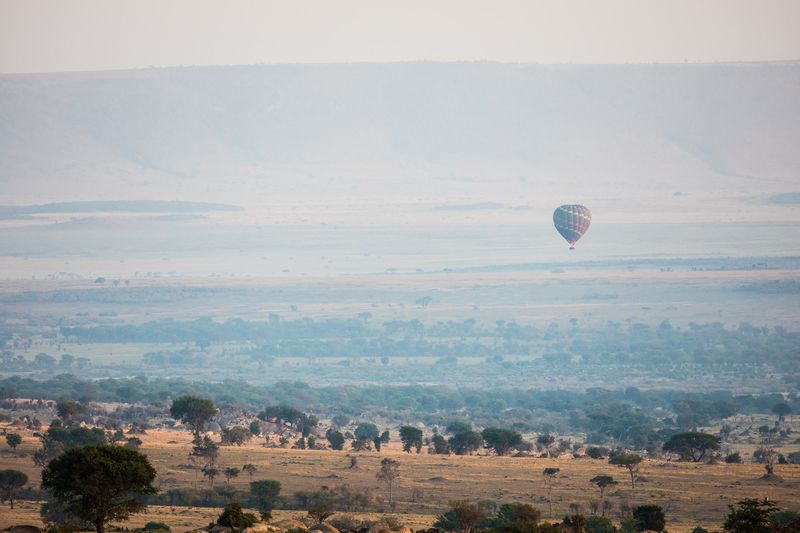
In a 3- to 5-day safari, Serengeti often rewards you richly, especially during migration periods. With high wildlife density, you’re likely to see many species in a contained space.
Kruger shines when you stay 7 days or more. Its size means that a short stay barely scratches the surface. But over a week, you can span multiple regions, explore quieter sectors, and see contrasts in ecosystems.
How do seasons, crowds and migration affect experience?
The dry season (June to October) is prime time in both parks because animals concentrate near water, visibility improves, and vegetation thins.
Serengeti’s Great Migration usually peaks between June and September for the northern circuit. Witnessing river crossings is a big draw, but that also brings crowds to key crossing zones.
In Kruger, crowds tend to cluster near popular rest camps and southern zones. But because of its size, you can drive to less busy areas and get more solitude. During peak months in the Serengeti, competition for the best viewing spots can be high.
Can I drive or have night drives in Kruger vs Serengeti?
Kruger offers organised night drives with rangers, which give access to nocturnal species like hyenas, civets or genets. Serengeti Reserve generally prohibits night driving, though some private concessions nearby may allow it.
Kruger vs Serengeti – a quick comparison
Feature | Kruger National Park (South Africa) | Serengeti National Park (Tanzania) |
Wildlife diversity | High across many habitats | Great plains species + predator concentrations |
Cost per day (average) | ~ USD 99 (lower) | ~ USD 157 (higher) |
Access & logistics | Easier, domestic flights or drive | Requires internal flights or longer transfers |
Night drives allowed | Only official excursions | Generally no |
Self-drive | Permitted (many routes) | Very restricted, guided drives are typical |
Crowd dispersion | Spread; quieter zones available | Peaks at migration points, concentrated traffic |
Migration spectacle | Not applicable | Core draw during migration months |
Which park suits which traveller?
If your priority is to see large herds, cross-river drama and predator action in a short time, Serengeti is compelling, especially during migration season. If your priority is flexibility, cost control, easy access, optional night drives and exploring a wide variety of habitats, Kruger is better suited.
Frequently Asked Questions
Is Kruger cheaper than Serengeti?
Yes, Kruger generally has lower daily costs, entry fees, and greater flexibility in accommodation, meaning your safari budget stretches further.
Can I drive myself in Serengeti or Kruger?
You can self-drive in Kruger using the park’s roads and systems; in Serengeti, self-driving is highly limited, and most safaris use guided vehicles.
Do night drives work in Kruger or Serengeti?
Organised night drives are allowed in Kruger; Serengeti National Park typically prohibits driving at night.
Which park is better for a 5-day safari?
For a 5-day safari, Serengeti often gives denser sightings, but Kruger gives more variety if you can diversify your route.
Which park is easier to reach from major cities?
Kruger is easier to reach from South African hubs via road or domestic flight; Serengeti requires long transfers or internal flights from Arusha or Kilimanjaro.